
Chef Juliana
Amalá de Xangô
You don't need mystery for this pot. You need okra, dendê, onion, dried shrimp, and the patience to stir until the quiabo gives up its own caldo.
A cooking platform built around craft, culture, and the stories behind what we eat.
Created by
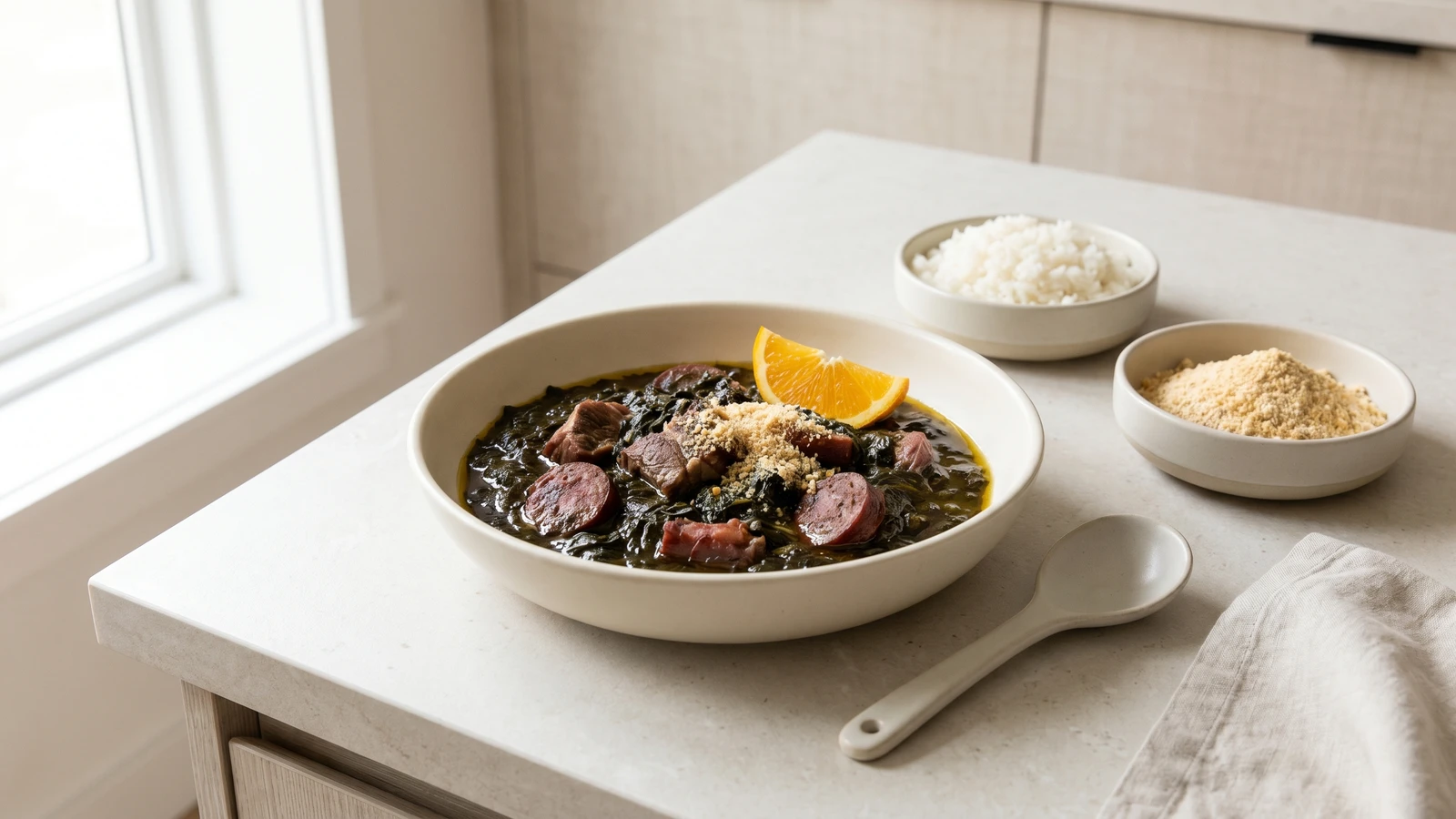
You don't need courage. You need cooked maniva, a heavy pot, and patience. This is the feijoada paraense with no feijão, dark, rich, and made to feed the table.
You may look at maniçoba and hear that little voice: isso não é pra mim. Too regional, too long, too serious, too much like something only someone's aunt in Belém knows how to make. I understand the fear. I also refuse it. Cozinhar não é dom, é um aprendizado, and the first lesson here is simple: you are not going to boil raw manioc leaves in your apartment and gamble with dinner. You are going to buy maniva already boiled for the proper time, from people who know what they're doing.
This is comida de verdade with a warning label, and a good cook respects both parts. Manioc leaf from the bitter cassava plant carries toxic compounds when raw, so the Pará kitchen learned patience: boil, boil, boil, until the danger leaves and the leaf becomes that dark, earthy base people wait for at Círio. The home-kitchen path is to start with cooked maniva, then build flavor the way a gente always does: real fat, onion, garlic, time, pork browning properly, no packet pretending to be tradition.
Maniçoba sits beside the everyday Brazilian plate like a celebration cousin of the pê-efe. Rice underneath or alongside, meat in the stew, the green already cooked into the pot, farinha d'água for texture. No feijão, and still the logic is familiar: starch, broth, fat, leaf, salt, a spoonful that makes sense. It feeds a crowd because celebration food should make room at the table.
Anota aí: the difficult part is shopping, not cooking. Read the bag. You want maniva cozida, already boiled for several days, not raw leaf and not some powdered imitation of dinner. Buy farinha d'água for the table if you can, because it's crisp and irregular in a way farinha seca is not. Then we put the pot on and let time do its honest work.
Maniçoba is strongly associated with Pará and the Círio de Nazaré table in Belém, where families traditionally start cooking it days before the October celebration. It is often called feijoada paraense because it uses the logic of a rich meat stew, but there are no beans: the base is maniva, the ground leaf of bitter cassava, boiled for days to remove its natural toxicity. Regional families and cooks differ on the meats, the length of simmering, and the exact texture, and the specifics belong to the Pará cooks who carry them.
Quantity
2 kilograms
manioc leaves already boiled for several days, thawed if frozen
Quantity
500 grams
cut into 3 cm pieces
Quantity
300 grams
cut into 2 cm pieces
Quantity
300 grams
cut between the bones
Quantity
250 grams
sliced thickly
Quantity
250 grams
sliced thickly
Quantity
2 tablespoons
Quantity
2 large
finely chopped
Quantity
6 cloves
minced
Quantity
3
Quantity
1/2 teaspoon
Quantity
4 cups, plus more as needed
Quantity
1 teaspoon, plus more to taste
Quantity
as needed
for serving
Quantity
as needed
for serving
Quantity
as needed
optional, for serving
| Ingredient | Quantity |
|---|---|
| cooked manivamanioc leaves already boiled for several days, thawed if frozen | 2 kilograms |
| pork shouldercut into 3 cm pieces | 500 grams |
| pork belly or bacon slabcut into 2 cm pieces | 300 grams |
| smoked pork ribscut between the bones | 300 grams |
| calabresa sausagesliced thickly | 250 grams |
| paio sausagesliced thickly | 250 grams |
| lard or neutral oil | 2 tablespoons |
| onionsfinely chopped | 2 large |
| garlicminced | 6 cloves |
| bay leaves | 3 |
| black pepper | 1/2 teaspoon |
| hot water | 4 cups, plus more as needed |
| salt | 1 teaspoon, plus more to taste |
| cooked white ricefor serving | as needed |
| farinha d'águafor serving | as needed |
| orange wedges (optional)optional, for serving | as needed |
Check the package before you start. It must say cooked, boiled, or maniva cozida, and it should come from a source you trust. Raw manioc leaf is not a home shortcut; it carries toxic compounds and needs long, proper boiling before it becomes food. If the bag is raw or unclear, stop here and cook something else. Dinner is not a bravery test.
Taste a small cooked edge of the smoked rib or bacon. If it is very salty, cover the pieces with water, simmer for 10 minutes, drain, and repeat once. You are not washing away flavor; you are making room for the stew to season evenly. If you skip this, the pot can turn sharp and salty before the maniva has had time to soften into the meat.
Warm the lard or oil in a heavy 6-liter pot over medium-high heat. Add the pork shoulder and belly in batches and brown until the edges take on deep color, about 4 to 5 minutes per batch. Don't crowd the pot. When too much meat goes in at once, it releases water, the heat drops, and you steam grey pork instead of building the browned flavor this stew needs.
Lower the heat to medium and add the onions to the same pot. Cook, stirring and scraping the browned bits from the bottom, until the onion murcha, softens, and turns see-through, about 6 minutes. Add the garlic and cook for 1 minute, just until you smell it. Burnt garlic is bitter and bossy, and it will follow you through three hours of simmering. Ask me how I know. Actually, don't.
Return the browned pork to the pot with the smoked ribs, calabresa, paio, bay leaves, and black pepper. Stir for 2 minutes, until the sausages gloss over and the fat begins to stain the onion. This little frying step wakes up the cured meats before they enter the long stew, so they taste like themselves instead of like boiled slices.
Add the cooked maniva and stir slowly until it loosens and coats the meat. Pour in 4 cups hot water, enough to make the pot thick but stirrable, then bring it to a steady bubble. The maniva should look dark green, almost black, and earthy, not dry and clumped. Hot water keeps the pot moving without shocking everything cold.
Drop the heat to low, cover the pot partly, and simmer for about 2 1/2 to 3 hours, stirring every 20 minutes and scraping the bottom. Add splashes of hot water if it gets dry before the meats soften. You are watching for three things: pork that yields to a spoon, maniva that looks glossy instead of fibrous, and a broth thick enough to drag a trail through before it closes.
Taste only after the cured meats have given up their salt. Add salt little by little, then simmer 10 more minutes so the seasoning settles into the whole pot. Salt early and you may punish yourself for the sausage's decisions. Salt late and you stay in charge.
Turn off the heat and let the maniçoba rest for 15 minutes before serving. The fat rises a little, the leaf relaxes, and the spoonful gets rounder. Serve with arroz branco soltinho and farinha d'água at the table. Orange wedges are optional, but nice against the richness. This is not a delicate plate. It's a serious one.
1 serving (about 560g)
Culinary guides, cultural storytelling, and the editorial depth that makes cooking meaningful.
Discover Culinary ExplorerChef Juliana
You don't need mystery for this pot. You need okra, dendê, onion, dried shrimp, and the patience to stir until the quiabo gives up its own caldo.

Chef Juliana
You think a Polish hunter's stew is not for your kitchen. Wrong. Brown meat properly, build a real refogado, simmer cabbage low, and tomorrow's lunch is already better.
Chef Juliana
Whole fish in a pot looks like a test. It isn't. Build the refogado, layer the filhote, let tucupi do its work, and the Círio table starts making sense.
Chef Juliana
You don't need river wisdom in your bones to cook tambaqui well. You need real tucupi, a calm simmer, and the sense to let the fish stay whole until it gives.