
Chef Thomas
A Bloomer
A proper British bloomer, slashed deep and baked until the cuts open wide and the crust turns deep, glossy gold. The kind of loaf that makes the rest of the day feel deliberate.
A cooking platform built around craft, culture, and the stories behind what we eat.
Created by Chef Thomas
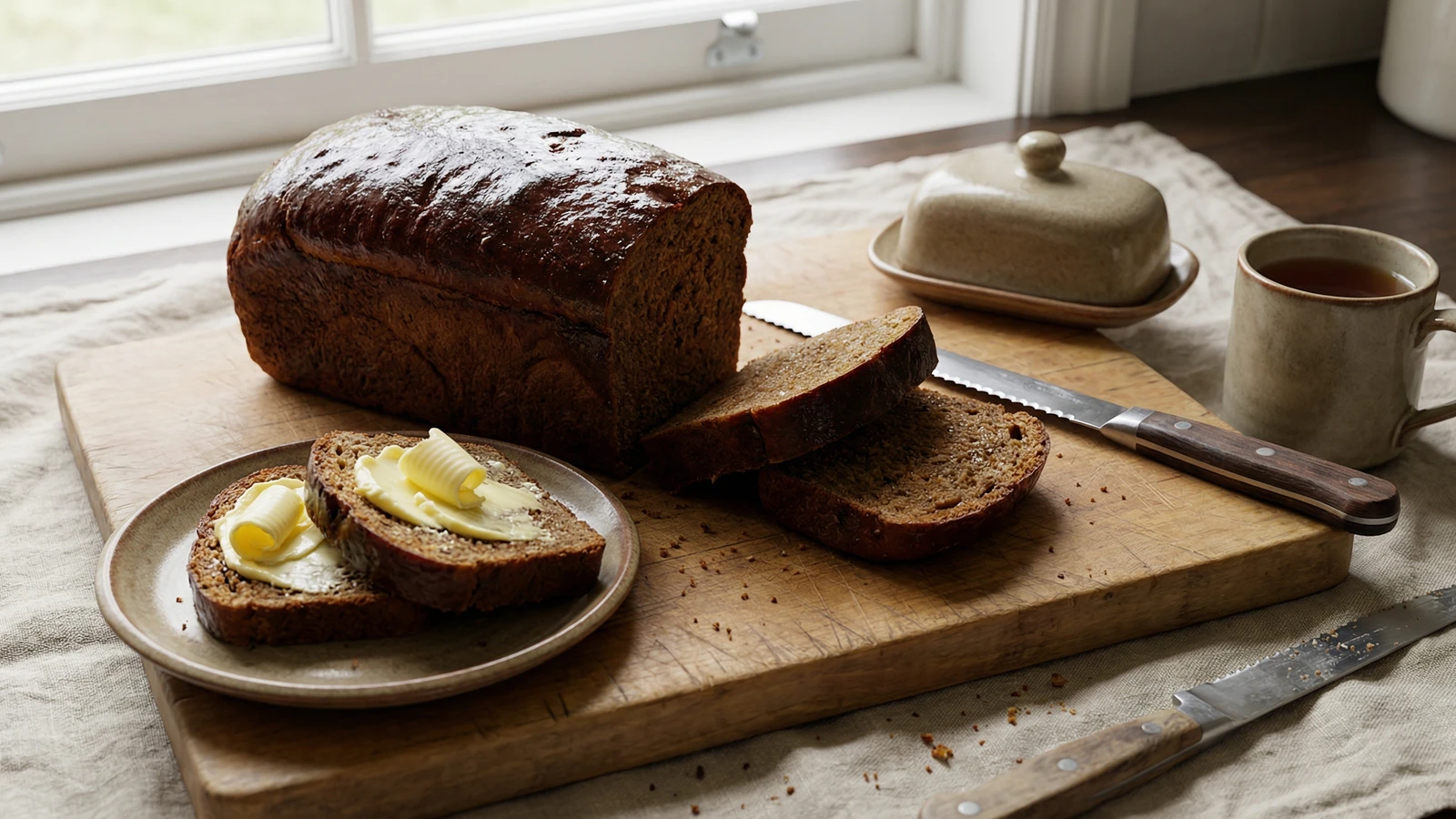
A dark, sticky loaf of malted treacle and tea-soaked fruit, the kind that improves with patience and tastes of every cold afternoon you've ever wanted to fall into.
Malt loaf belongs to a particular kind of afternoon. The light has gone flat by three. The kettle is on for the second time. Outside the window, the garden has done its winter thing of going still and waiting. This is when you want a slice of something dark and sticky on a small plate, with butter that's almost too cold to spread.
It isn't really a cake. It isn't really a bread. It sits in its own quiet corner of the British teatime tradition, dense and chewy, sweet but not in a showy way, smelling of treacle and stewed tea and something deeper that comes from the malt extract itself. There's nothing else quite like it. The Americans don't have it. The French don't have it. It's ours, and it's better than we give it credit for.
The trick, and there is only really one trick, is to wait. A freshly baked malt loaf is fine, but a malt loaf that has sat wrapped on the counter for two or three days is a different thing entirely. The crumb tightens. The stickiness deepens. The flavour pulls itself together into something that tastes like it's been around for longer than it has. A recipe is a conversation, not a contract, but on this one I'd ask you to trust me. Bake it on a Saturday. Forget about it until Tuesday. Then put the kettle on.
I wrote it down in the notebook years ago and the note was short: malt loaf, Tuesday, butter, rain. That's all it needed. Some meals mark themselves.
Quantity
250g
Quantity
200ml
Quantity
175g, plus 1 tbsp extra for glazing
Quantity
75g
Quantity
75g
Quantity
1
beaten
Quantity
250g
Quantity
1 tsp
Quantity
pinch
Quantity
to serve
| Ingredient | Quantity |
|---|---|
| sultanas | 250g |
| strong hot black tea | 200ml |
| malt extract | 175g, plus 1 tbsp extra for glazing |
| black treacle | 75g |
| dark muscovado sugar | 75g |
| large eggbeaten | 1 |
| self-raising flour | 250g |
| baking powder | 1 tsp |
| fine sea salt | pinch |
| salted butter | to serve |
Put the sultanas in a bowl and pour the hot tea over them. Stir once and leave them alone for at least an hour, or better, overnight on the counter. The sultanas should plump up and drink most of the tea, going soft and dark and slightly sticky. Don't drain them. The tea that's left becomes part of the loaf.
Heat the oven to 150C/130C fan. Line a 900g loaf tin with baking parchment, leaving an overhang on the long sides so you can lift the loaf out later. Malt loaf is sticky stuff, and a well-lined tin saves you a lot of swearing.
Spoon the malt extract and treacle into a small saucepan with the muscovado sugar. Warm them gently over a low heat, stirring, until the sugar has dissolved and the mixture is loose enough to pour. Don't let it boil. You're just coaxing it into something pourable. Take it off the heat and let it cool for a few minutes. It should be warm to the touch, not hot.
Tip the soaked sultanas and any tea still in the bowl into a large mixing bowl. Pour in the warm malt and treacle mixture and stir to combine. It should look glossy and dark, the sort of brown that promises something. Add the beaten egg and stir it through.
Sift the flour, baking powder, and salt over the bowl and fold everything together with a wooden spoon or a spatula. Stop the moment the flour disappears. The batter will be thick, dark, and a bit unwieldy, more like a wet pudding mix than a cake batter. That's right. Don't be tempted to loosen it.
Scrape the batter into the lined tin and level the top with the back of a spoon. Bake on the middle shelf for an hour and fifteen minutes, give or take. The loaf is ready when the top has darkened and gone slightly cracked, and a skewer pushed into the centre comes out with a few moist crumbs clinging to it. Not wet batter. Sticky crumbs. The smell will be unmistakable: dark, malted, treacly, the kind that pulls people into the kitchen without them quite knowing why.
While the loaf is still warm in the tin, brush the top generously with the extra tablespoon of malt extract. It will sink in and leave the surface glossy and tacky. Let the loaf cool completely in the tin, then lift it out using the parchment. Wrap it tightly in fresh parchment and then in foil, or in cling film if that's what you have. Now leave it. Two days, three if you can manage it. The loaf needs the rest as much as the bake.
When the time comes, unwrap and slice it thin with a serrated knife. Spread each slice thickly with cold salted butter. The butter against the dark, sticky crumb is the whole reason any of this matters. Make a pot of tea. Sit down. There are few better feelings than putting a buttered slice of malt loaf in front of someone on a grey afternoon.
1 serving (about 100g)
Culinary guides, cultural storytelling, and the editorial depth that makes cooking meaningful.
Discover Culinary ExplorerChef Thomas
A proper British bloomer, slashed deep and baked until the cuts open wide and the crust turns deep, glossy gold. The kind of loaf that makes the rest of the day feel deliberate.

Chef Thomas
A simple white loaf made from flour, water, yeast, and salt. The kind of bread that fills the kitchen with the smell of a Saturday morning and teaches you, slowly, everything you need to know about baking.

Chef Thomas
A dark, fruit-heavy Welsh tea loaf, soaked overnight in strong tea and baked slowly until the kitchen smells of spice and orange peel. Sliced thick and buttered cold.

Chef Thomas
Rich, butter-laden Georgian buns from Bath, glazed deep gold and crowned with crushed sugar nibs that crack beneath your teeth, the kind of bake that turns a Sunday afternoon into something deliberate.