
Chef Jeong-sun
Agwi-jjim (Braised Monkfish with Bean Sprouts)
Firm monkfish buried under crisp soybean sprouts, minari, and a red gochugaru sauce thickened at the end; Masan's market dish asks for heat, timing, and a steady hand.
A cooking platform built around craft, culture, and the stories behind what we eat.
Created by
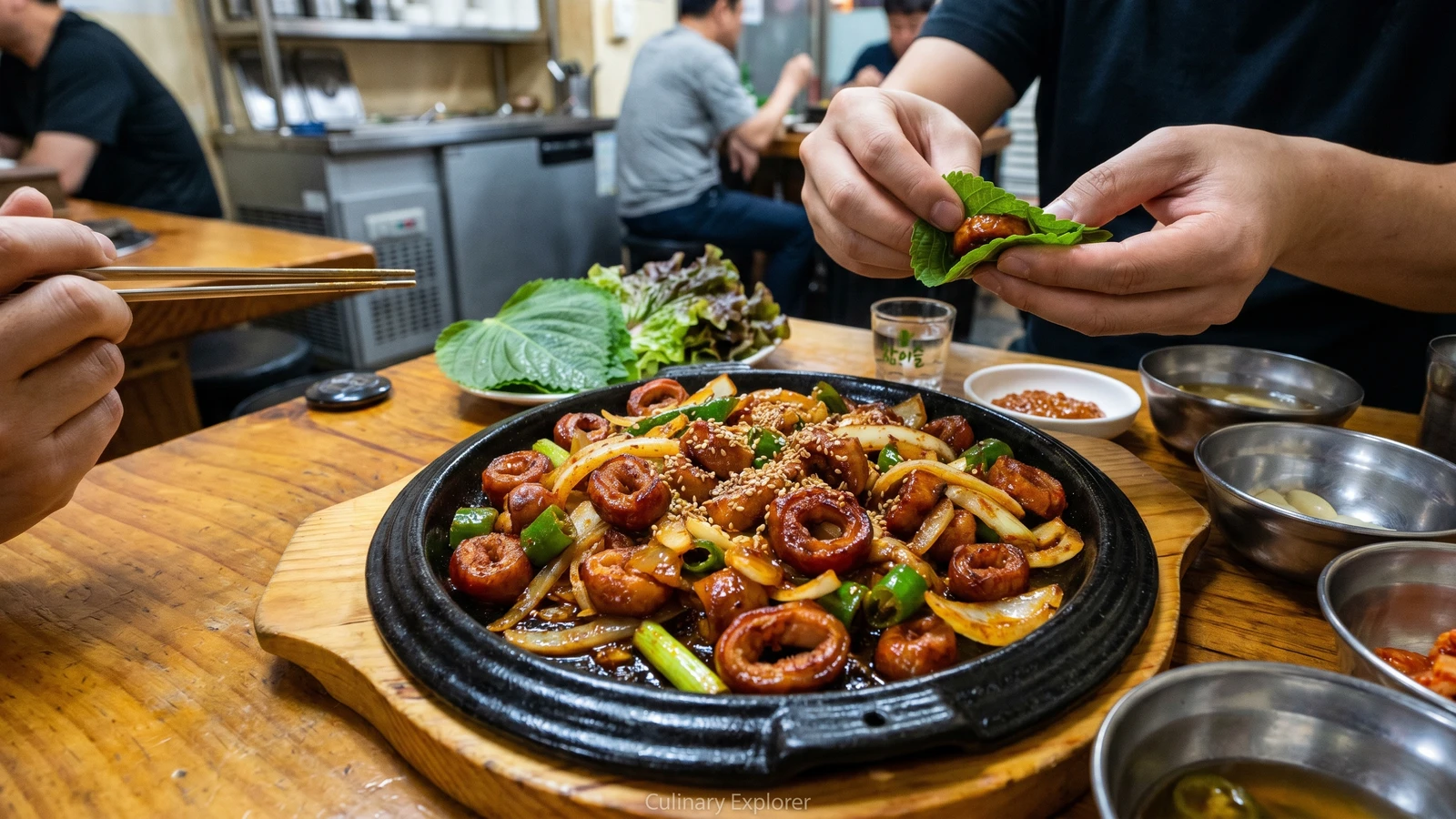
Chewy pork makchang, cleaned with flour and soju, simmered with ginger, then stir-fried hard with onion and cheongyang chili until the fat renders and the sauce clings.
Makchang-bokkeum lives or dies before the sauce ever touches the pan. If the makchang is not cleaned, simmered, drained, and browned properly, no amount of gochujang will rescue it. People try. The pan tells on them.
Daegu knows makchang better than most cities. At night, around Anjirang and the older alleys, it belongs to tables with metal chopsticks, lettuce, garlic, and soju glasses that keep being refilled by someone who says they are done and is not done. The home version asks for the same discipline, only in a smaller pan: remove the smell first with flour, salt, soju, ginger, and a proper simmer, then cook it hot enough that the fat renders and the edges tighten.
Do not bury it under sugar and chili paste. Makchang should still taste like makchang, chewy, rich, a little smoky at the edge if your pan is honest. The onion softens, the cheongyang chili cuts through the fat, and the sauce should cling, not puddle. Write it down. Memory is a borrowed bowl, and dishes like this are too often left to the street to remember for us.
Daegu became especially known for makchang in the late twentieth century, with Anjirang Gopchang Alley growing into one of the city's best-known eating streets for grilled makchang and gopchang. Pork makchang in Korea refers to a chewy intestinal cut rather than the beef fourth stomach used for some beef makchang, and its popularity grew from inexpensive postwar and market drinking food into a regional specialty. Bokkeum, the stir-fried form, brings that same Daegu taste into the home pan with vegetables and a measured spicy sauce.
Quantity
600g
fresh or thawed
Quantity
2 tablespoons
Quantity
1 tablespoon
Quantity
1 tablespoon
Quantity
6 cups
for simmering
Quantity
1/2 cup
Quantity
20g
sliced
Quantity
4
smashed
Quantity
1/2 medium
left in one piece
Quantity
1 tablespoon
Quantity
2 tablespoons
Quantity
1 tablespoon
Quantity
2 tablespoons
Quantity
1 tablespoon
Quantity
1 tablespoon maesil-cheong or 2 teaspoons sugar
Quantity
2 teaspoons
Quantity
1 tablespoon
minced
Quantity
1 teaspoon
minced
Quantity
1/4 teaspoon
Quantity
1 tablespoon
Quantity
1 large
sliced 1/2 inch thick
Quantity
2
sliced on the diagonal
Quantity
1
sliced on the diagonal
Quantity
3
cut into 2-inch lengths
Quantity
1 cup
cut into 2-inch lengths
Quantity
1 teaspoon
Quantity
1 teaspoon
Quantity
to serve
| Ingredient | Quantity |
|---|---|
| cleaned pork makchangfresh or thawed | 600g |
| all-purpose flour | 2 tablespoons |
| coarse salt | 1 tablespoon |
| rice vinegar | 1 tablespoon |
| waterfor simmering | 6 cups |
| soju | 1/2 cup |
| fresh gingersliced | 20g |
| garlic clovessmashed | 4 |
| onion for simmeringleft in one piece | 1/2 medium |
| doenjang (fermented soybean paste) | 1 tablespoon |
| gochugaru (Korean chili flakes) | 2 tablespoons |
| gochujang (Korean chili paste) | 1 tablespoon |
| soy sauce | 2 tablespoons |
| mat-sul or mirin | 1 tablespoon |
| maesil-cheong (green plum syrup) or sugar | 1 tablespoon maesil-cheong or 2 teaspoons sugar |
| rice syrup or corn syrup | 2 teaspoons |
| garlicminced | 1 tablespoon |
| gingerminced | 1 teaspoon |
| black pepper | 1/4 teaspoon |
| neutral oil | 1 tablespoon |
| onionsliced 1/2 inch thick | 1 large |
| cheongyang chiliessliced on the diagonal | 2 |
| red chili (optional)sliced on the diagonal | 1 |
| scallionscut into 2-inch lengths | 3 |
| garlic chives (optional)cut into 2-inch lengths | 1 cup |
| toasted sesame oil | 1 teaspoon |
| toasted sesame seeds | 1 teaspoon |
| perilla leaves, lettuce, sliced raw garlic, and ssamjang (optional) | to serve |
Put the makchang in a bowl with the flour, coarse salt, and rice vinegar. Rub it firmly for 3 minutes, turning and squeezing the pieces so the flour pulls away surface fat and odor. Rinse under cold running water until the water runs clear, then drain well. This is not ceremony. This is the first place the smell is won or lost.
Put 6 cups water, soju, sliced ginger, smashed garlic, the onion half, and doenjang in a pot and bring it to a boil. Add the makchang and simmer uncovered for 35 to 40 minutes, until a chopstick passes through with some resistance. The soju and ginger clear the smell; the doenjang adds savor and helps tame the fat. Do not boil it violently, or the outside tightens before the inside softens.
Lift out the makchang, discard the simmering liquid and aromatics, and rinse the pieces briefly under warm water. Drain, then pat very dry. Cut into 1/2-inch rings or bite-size pieces. Wet makchang steams in the pan; dry makchang browns and gives you the chewy edge Daegu tables expect.
Stir together the gochugaru, gochujang, soy sauce, mat-sul, maesil-cheong, rice syrup, minced garlic, minced ginger, and black pepper. Taste it now. It should be spicy, salty, and only lightly sweet. Gochujang is here for body, not for drowning the dish, so keep it to one tablespoon.
Heat a wide cast-iron skillet or wok over medium-high heat until hot, then add the oil and the dried makchang. Spread it in one layer and cook 6 to 8 minutes, turning only now and then, until the edges brown and some fat has rendered into the pan. If liquid collects, raise the heat and let it cook off before moving on. This dish needs high heat so the fat renders, not steams.
Add the sliced onion and stir-fry for 3 minutes, scraping the browned bits from the pan as the onion softens. The onion should bend but not collapse. It gives sweetness without asking the sugar bowl to do all the work.
Lower the heat to medium and add the sauce. Stir-fry 2 to 3 minutes, tossing constantly, until the sauce darkens slightly and clings to the makchang and onion. If it looks dry before it coats, add 1 tablespoon water, no more. A glossy coating is the aim; a puddle at the bottom means the sauce has not finished its work.
Add the cheongyang chilies, red chili if using, scallions, and garlic chives. Toss for 45 to 60 seconds, just until the greens turn bright and the chilies release their bite. Turn off the heat and finish with the sesame oil and sesame seeds. Serve at once with rice, perilla leaves, lettuce, raw garlic, and ssamjang.
1 serving (about 360g)
Culinary guides, cultural storytelling, and the editorial depth that makes cooking meaningful.
Discover Culinary ExplorerChef Jeong-sun
Firm monkfish buried under crisp soybean sprouts, minari, and a red gochugaru sauce thickened at the end; Masan's market dish asks for heat, timing, and a steady hand.

Chef Jeong-sun
A quick Korean rice bowl built on contrast: warm rice, cold popping flying-fish roe, chopped vegetables, gim, sesame oil, and the crisp rice bottom a hot stone bowl gives you.
Chef Jeong-sun
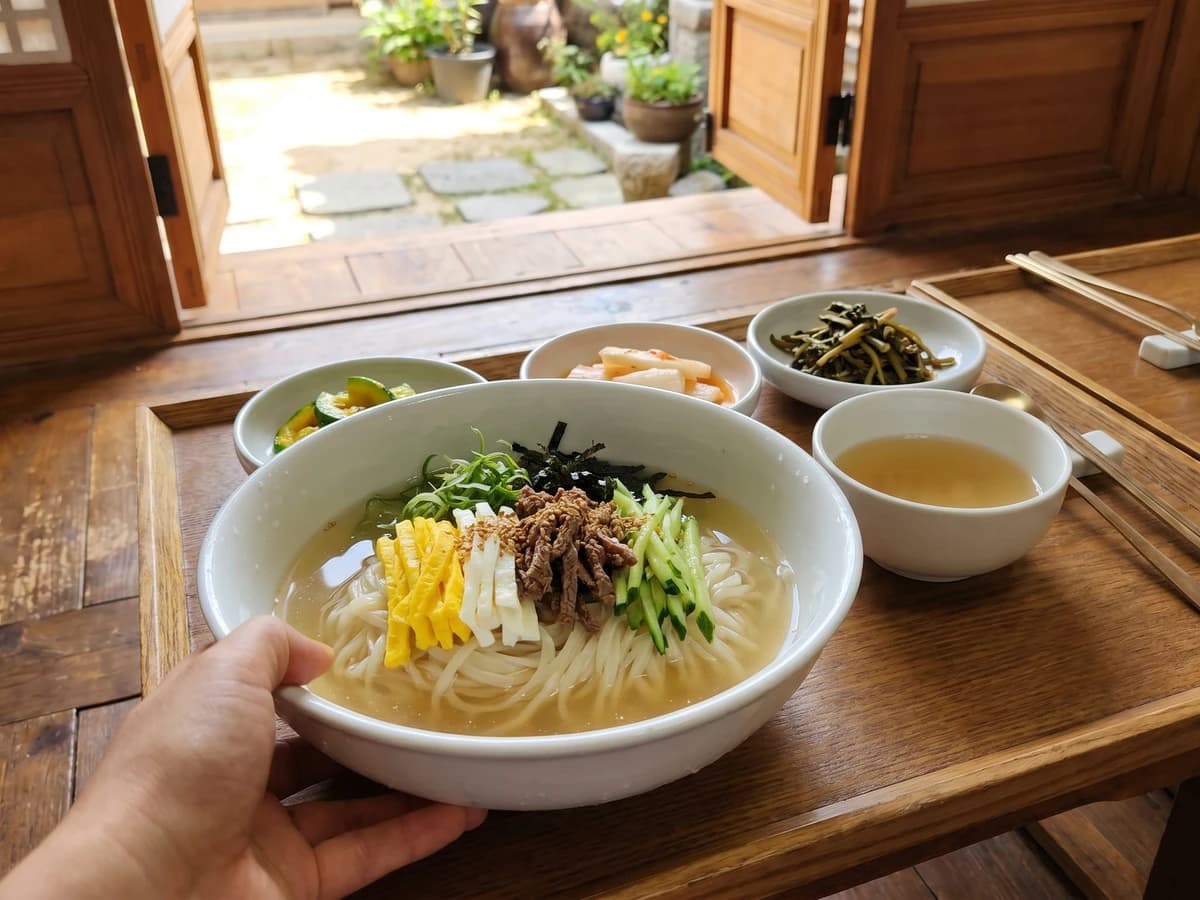
Andong's guest noodles, wheat and roasted soybean flour rolled thin, boiled and rinsed cold, then set in a clear chilled anchovy broth with careful strips of beef, egg, and cucumber.

Chef Jeong-sun
Andong's ritual-table rice served on an ordinary day: separate soy-sesame namul, warm rice, and clear radish soup, mixed without gochujang so every vegetable keeps its own voice.