
Chef Jeong-sun
Agwi-jjim (Braised Monkfish with Bean Sprouts)
Firm monkfish buried under crisp soybean sprouts, minari, and a red gochugaru sauce thickened at the end; Masan's market dish asks for heat, timing, and a steady hand.
A cooking platform built around craft, culture, and the stories behind what we eat.
Created by
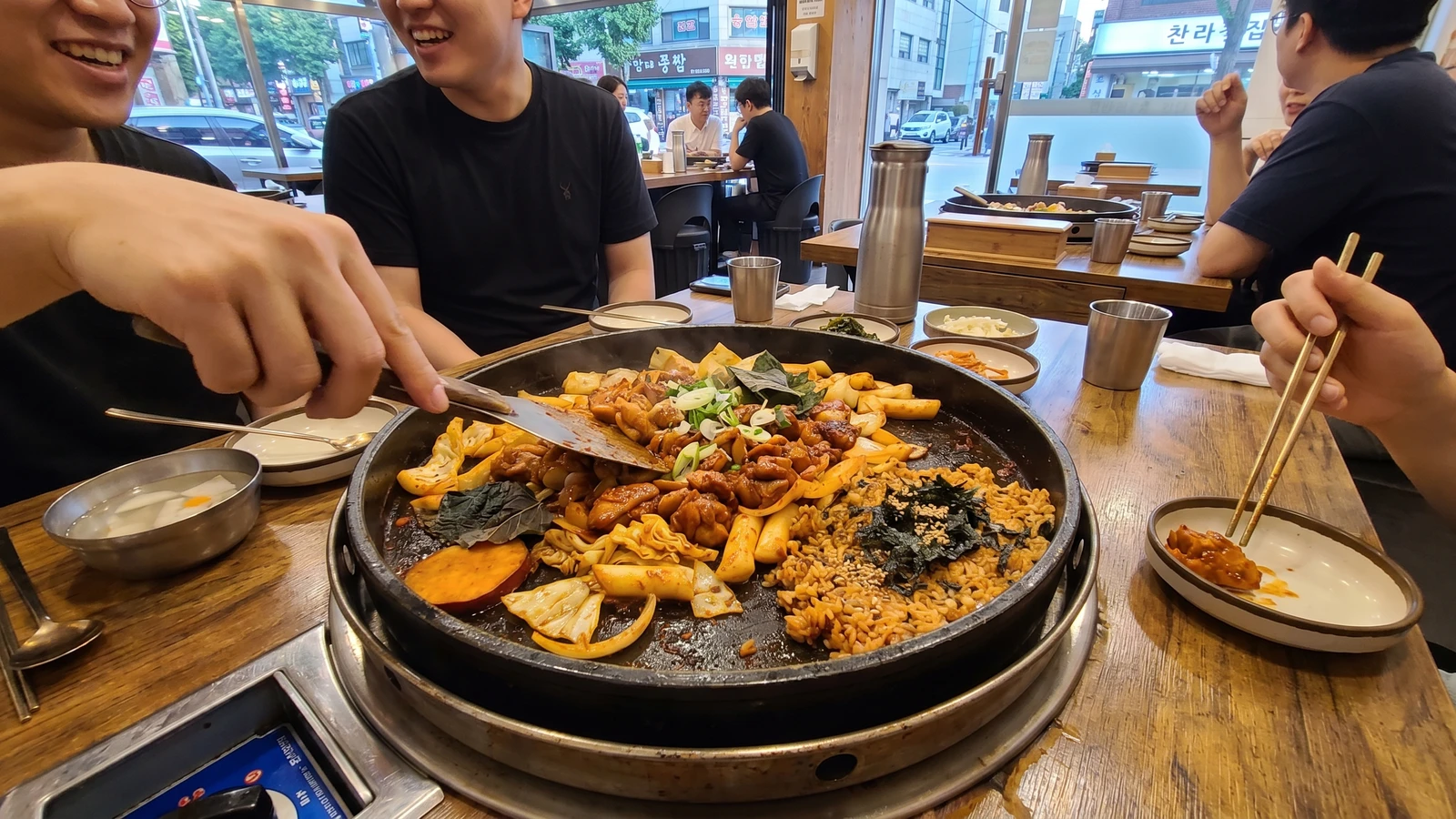
Chuncheon's iron-pan chicken, seared with cabbage, sweet potato, rice cakes, and a measured gochujang sauce, then finished properly with fried rice in the leftover pan.
Dak-galbi lives or dies on the pan. People think first of the red sauce, but the better cook watches the heat, waits for the cabbage to collapse and give its water, and keeps the chicken moving until the sauce clings instead of puddling. Too much gochujang and sugar make every bite taste the same. Let the chicken taste like chicken, the sweet potato like sweet potato, the perilla leaves like themselves.
I first wrote this one down from a Chuncheon cook who did not bother to smile while she taught. Good. Smiling is not the seasoning. She spread the cabbage under the chicken to protect it from scorching, then turned the heap with two wide spatulas as if she were folding laundry for a large family. That is the lesson here: build the pan in layers, then stir only after the vegetables begin to soften and the sauce has somewhere to go.
Tonight this dish asks for a wide pan, careful cutting, and patience at the table. Cut the sweet potato thin enough to cook before the chicken dries out, soak the rice cakes so they bend, and save enough sauce on the pan for bokkeumbap, fried rice, at the end. Write it down. Memory is a borrowed bowl. The fried rice is not leftovers. In many Chuncheon houses, it is the reason people leave one spoonful of chicken behind.
Dak-galbi is closely tied to Chuncheon in Gangwon Province, where it became popular in the 1960s as an inexpensive anju, food for drinking, made from chicken when beef and pork were costly for students and soldiers. The name means chicken ribs, but modern dak-galbi is usually boneless thigh meat cooked on a wide iron pan with cabbage, sweet potato, rice cakes, and a gochujang-based seasoning. Chuncheon's Myeongdong Dakgalbi Street still marks the dish's local identity, with makguksu often served beside it.
Quantity
700g
cut into 1 1/2-inch pieces
Quantity
250g
cut into 2-inch squares
Quantity
1 small, about 180g
cut into 1/4-inch half-moons
Quantity
150g
soaked 15 minutes if firm
Quantity
1/2 medium
sliced 1/2 inch thick
Quantity
1 medium
sliced thin on the diagonal
Quantity
2
cut into 2-inch lengths
Quantity
12 leaves
torn or sliced thick
Quantity
2 tablespoons
Quantity
3 tablespoons
Quantity
2 tablespoons
medium-coarse
Quantity
2 tablespoons
Quantity
1 tablespoon
Quantity
1 tablespoon
Quantity
1 tablespoon
Quantity
1 tablespoon
Quantity
5 cloves
minced
Quantity
1 teaspoon
grated
Quantity
1/4 teaspoon
Quantity
2 tablespoons
Quantity
2 cups
cooled, for fried rice
Quantity
1/2 cup
chopped, for fried rice
Quantity
1 sheet
crushed, for fried rice
Quantity
1 teaspoon
for fried rice
Quantity
1 teaspoon
for finishing
| Ingredient | Quantity |
|---|---|
| boneless skinless chicken thighscut into 1 1/2-inch pieces | 700g |
| green cabbagecut into 2-inch squares | 250g |
| Korean sweet potato or Japanese sweet potatocut into 1/4-inch half-moons | 1 small, about 180g |
| garaetteok (Korean rice cakes)soaked 15 minutes if firm | 150g |
| onionsliced 1/2 inch thick | 1/2 medium |
| carrotsliced thin on the diagonal | 1 medium |
| scallionscut into 2-inch lengths | 2 |
| perilla leaves (kkaennip)torn or sliced thick | 12 leaves |
| neutral oil | 2 tablespoons |
| gochujang (Korean red chili paste) | 3 tablespoons |
| gochugaru (Korean chili flakes)medium-coarse | 2 tablespoons |
| soy sauce | 2 tablespoons |
| maesil-cheong (green plum syrup) or rice syrup | 1 tablespoon |
| sugar | 1 tablespoon |
| mirin or rice wine | 1 tablespoon |
| toasted sesame oil | 1 tablespoon |
| garlicminced | 5 cloves |
| gingergrated | 1 teaspoon |
| black pepper | 1/4 teaspoon |
| water (optional) | 2 tablespoons |
| cooked short-grain ricecooled, for fried rice | 2 cups |
| well-fermented kimchichopped, for fried rice | 1/2 cup |
| roasted gim (seaweed)crushed, for fried rice | 1 sheet |
| toasted sesame oilfor fried rice | 1 teaspoon |
| toasted sesame seedsfor finishing | 1 teaspoon |
Stir together the gochujang, gochugaru, soy sauce, maesil-cheong or rice syrup, sugar, mirin, sesame oil, garlic, ginger, and black pepper. Taste the sauce before it touches the chicken. It should be salty, warm, and lightly sweet, not candy-red. The cabbage and rice cakes will soften it later, so season it clearly now.
Add the chicken thigh pieces to the sauce and mix by hand until every piece is coated. Cover and marinate 30 minutes at room temperature, or up to 6 hours in the refrigerator. Thigh meat can take the seasoning, but it does not need overnight. Longer than that and the garlic begins to bully the chicken.
Set a wide cast-iron skillet, electric griddle, or heavy saute pan over medium heat and add the oil. Spread the cabbage across the bottom first, then scatter over the sweet potato, onion, carrot, and rice cakes. Put the marinated chicken and all its sauce on top. The cabbage goes underneath because it releases water and protects the sauce from burning before the chicken is cooked.
Let the pan cook undisturbed for 3 minutes, then begin turning everything with two spatulas. Keep the heat at medium to medium-high, folding from the bottom so the cabbage and sauce trade places. Cook 12 to 15 minutes, until the chicken is cooked through and the sweet potato bends easily when pressed. If the pan threatens to scorch before the chicken is done, add only 1 tablespoon water at a time. You are helping the pan, not making soup.
Add the scallions and perilla leaves and fold for 1 to 2 minutes, just until the leaves darken and soften. Perilla is the breath of this dish, so do not cook it to nothing. Taste a piece of chicken and a rice cake together. If it needs salt, add 1 teaspoon soy sauce around the edge of the pan, not over one spot.
Serve straight from the pan with rice, lettuce leaves if you like wrapping, and a plain soup or cool dongchimi beside it. Keep a few spoonfuls of sauce and vegetables in the pan for the fried rice. This is not thrift alone. It is the proper ending.
When most of the chicken is eaten, leave about 1/3 cup sauce and bits of cabbage in the pan. Add the cooked rice and chopped kimchi, then press and scrape for 4 to 5 minutes until the grains turn red and begin to toast against the pan. Stir in the crushed gim and 1 teaspoon sesame oil at the end, then scatter sesame seeds over the top. Eat from the pan while the bottom is still a little crisp.
1 serving (about 460g)
Culinary guides, cultural storytelling, and the editorial depth that makes cooking meaningful.
Discover Culinary ExplorerChef Jeong-sun
Firm monkfish buried under crisp soybean sprouts, minari, and a red gochugaru sauce thickened at the end; Masan's market dish asks for heat, timing, and a steady hand.

Chef Jeong-sun
A quick Korean rice bowl built on contrast: warm rice, cold popping flying-fish roe, chopped vegetables, gim, sesame oil, and the crisp rice bottom a hot stone bowl gives you.
Chef Jeong-sun
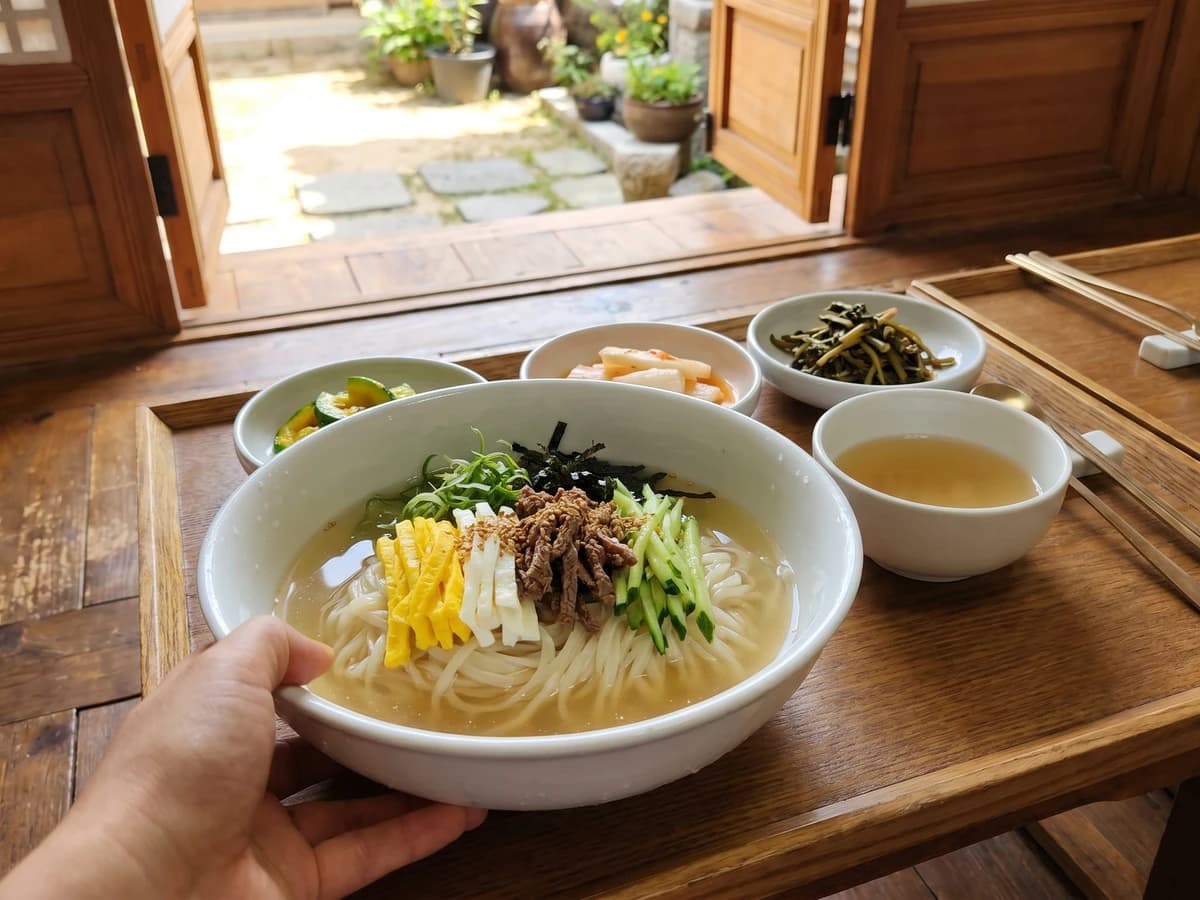
Andong's guest noodles, wheat and roasted soybean flour rolled thin, boiled and rinsed cold, then set in a clear chilled anchovy broth with careful strips of beef, egg, and cucumber.

Chef Jeong-sun
Andong's ritual-table rice served on an ordinary day: separate soy-sesame namul, warm rice, and clear radish soup, mixed without gochujang so every vegetable keeps its own voice.