
Chef Jeong-sun
Agwi-jjim (Braised Monkfish with Bean Sprouts)
Firm monkfish buried under crisp soybean sprouts, minari, and a red gochugaru sauce thickened at the end; Masan's market dish asks for heat, timing, and a steady hand.
A cooking platform built around craft, culture, and the stories behind what we eat.
Created by
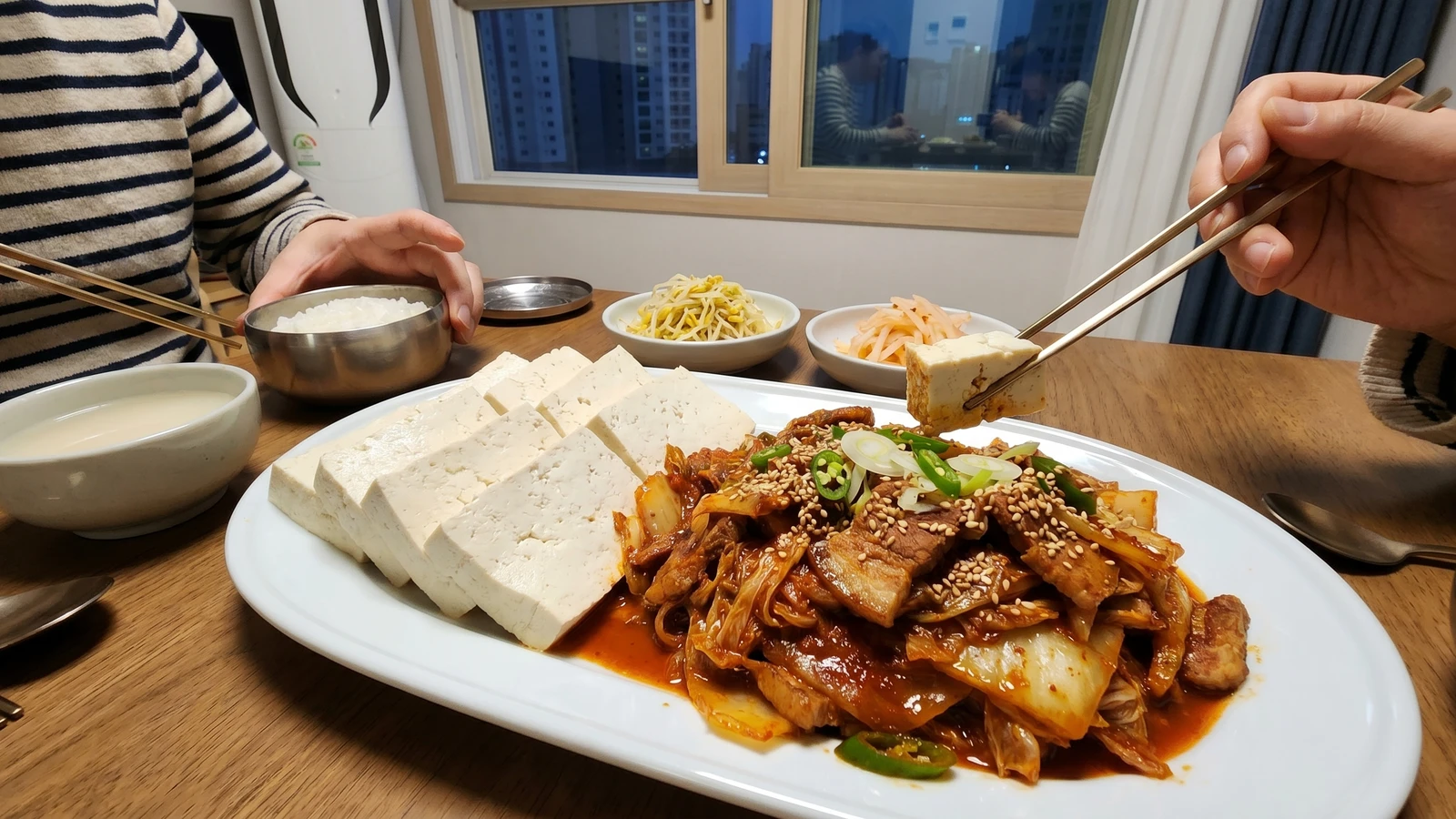
Warm blocks of plain tofu set beside sour aged kimchi and pork, fried until the edges darken and the kimchi tastes deeper than when it left the jar.
Dubu-kimchi lives or dies by contrast. The tofu stays plain, warm, and soft. The kimchi must be sour enough to bite back, then fried with pork until its edges darken and the cabbage gives up its sharpness for depth. Mix everything together and you lose the dish. Keep them side by side and each one tells you why the other is there.
This is weeknight food, drinking food, leftover-kimchi food, and it deserves measuring as much as any holiday dish. My teacher Master Seong-nyeo would say the old kimchi has already done half the cooking for you, but only if you respect it. Do not bury it under sugar or gochujang. A little sugar rounds the sourness, a little gochugaru wakes the color, and the pan does the rest.
Tonight this dish asks for three things: kimchi old enough to smell sour when you open the container, pork with enough fat to carry the cabbage, and tofu handled gently so it does not crumble before it reaches the plate. 손맛 is real; I measure it anyway. Once you know how sour your kimchi is, write down the sugar and kimchi juice you needed, because the next jar will not behave exactly the same.
Dubu-kimchi is a modern everyday and anju (drinking food) dish, strongly tied to the way Korean households use kimjang kimchi after it has fermented past the fresh-eating stage. It became familiar on home tables, pojangmacha stalls, and makgeolli houses in the twentieth century, when tofu was cheap, pork became more available, and sour kimchi was treated not as leftovers but as an ingredient with its own season. The dish has no palace story to borrow; its history is the ordinary Korean pantry making one more meal from a jar that is still alive.
Quantity
1 block (500g)
Quantity
1 teaspoon
for warming the tofu
Quantity
250g
cut into bite-size pieces
Quantity
450g
cut into 1 1/2-inch pieces
Quantity
1/4 cup
Quantity
1/2 medium
sliced 1/4 inch thick
Quantity
2
cut into 2-inch lengths
Quantity
2 cloves
minced
Quantity
1 tablespoon
use only with lean pork shoulder
Quantity
1 tablespoon
Quantity
1 teaspoon, plus 1/2 teaspoon more if needed
Quantity
1 tablespoon
Quantity
1 teaspoon
Quantity
1 teaspoon
Quantity
1 small
thinly sliced
| Ingredient | Quantity |
|---|---|
| firm tofu | 1 block (500g) |
| saltfor warming the tofu | 1 teaspoon |
| thin-sliced pork belly or pork shouldercut into bite-size pieces | 250g |
| well-fermented napa cabbage kimchicut into 1 1/2-inch pieces | 450g |
| kimchi juice | 1/4 cup |
| onionsliced 1/4 inch thick | 1/2 medium |
| scallionscut into 2-inch lengths | 2 |
| garlicminced | 2 cloves |
| neutral oil (optional)use only with lean pork shoulder | 1 tablespoon |
| soy sauce | 1 tablespoon |
| sugar | 1 teaspoon, plus 1/2 teaspoon more if needed |
| gochugaru (Korean chili flakes) | 1 tablespoon |
| toasted sesame oil | 1 teaspoon |
| toasted sesame seeds | 1 teaspoon |
| green chili (optional)thinly sliced | 1 small |
Cut the kimchi into pieces about 1 1/2 inches wide and save 1/4 cup of its juice. Use kimchi that is properly sour, not just newly red from the jar. Fresh kimchi will taste flat in the pan, so if yours is young, let it sit at room temperature for a day before cooking, or choose another dish tonight.
Bring a wide pot of water to a gentle simmer with 1 teaspoon salt. Slide in the whole tofu block and warm it for 5 minutes, then lift it out carefully and drain it on a clean towel. This firms the outside just enough to slice cleanly and seasons the tofu faintly, while keeping the center soft and plain.
Set a wide skillet over medium-high heat. Add the pork belly and spread it into one layer. If you are using lean pork shoulder, add 1 tablespoon neutral oil first. Cook 4 to 5 minutes, stirring only now and then, until the pork gives off fat and the edges begin to brown. The kimchi needs that fat; without it, the dish tastes sharp but thin.
Add the onion and cook 2 minutes, just until it starts to bend. Add the kimchi, garlic, soy sauce, sugar, and gochugaru. Stir-fry 7 to 9 minutes, pressing the kimchi against the pan so some edges darken. You are not making kimchi stew. The liquid should cook off and the cabbage should look glossy, deeper red, and a little collapsed.
Pour in the reserved 1/4 cup kimchi juice and stir for 1 to 2 minutes, scraping up the browned bits from the pan. Taste one piece of kimchi with a little pork. If it bites too hard, add only 1/2 teaspoon more sugar. Turn off the heat and fold in the sesame oil, scallions, sesame seeds, and sliced green chili if using.
Slice the warmed tofu into thick pieces, about 1/2 inch, and arrange them around one side of a platter. Pile the stir-fried kimchi and pork beside it, not on top. Each bite should let you choose how much plain tofu and how much hot sour kimchi you want. Serve at once with rice, or with makgeolli if this is the late table.
1 serving (about 350g)
Culinary guides, cultural storytelling, and the editorial depth that makes cooking meaningful.
Discover Culinary ExplorerChef Jeong-sun
Firm monkfish buried under crisp soybean sprouts, minari, and a red gochugaru sauce thickened at the end; Masan's market dish asks for heat, timing, and a steady hand.

Chef Jeong-sun
A quick Korean rice bowl built on contrast: warm rice, cold popping flying-fish roe, chopped vegetables, gim, sesame oil, and the crisp rice bottom a hot stone bowl gives you.
Chef Jeong-sun
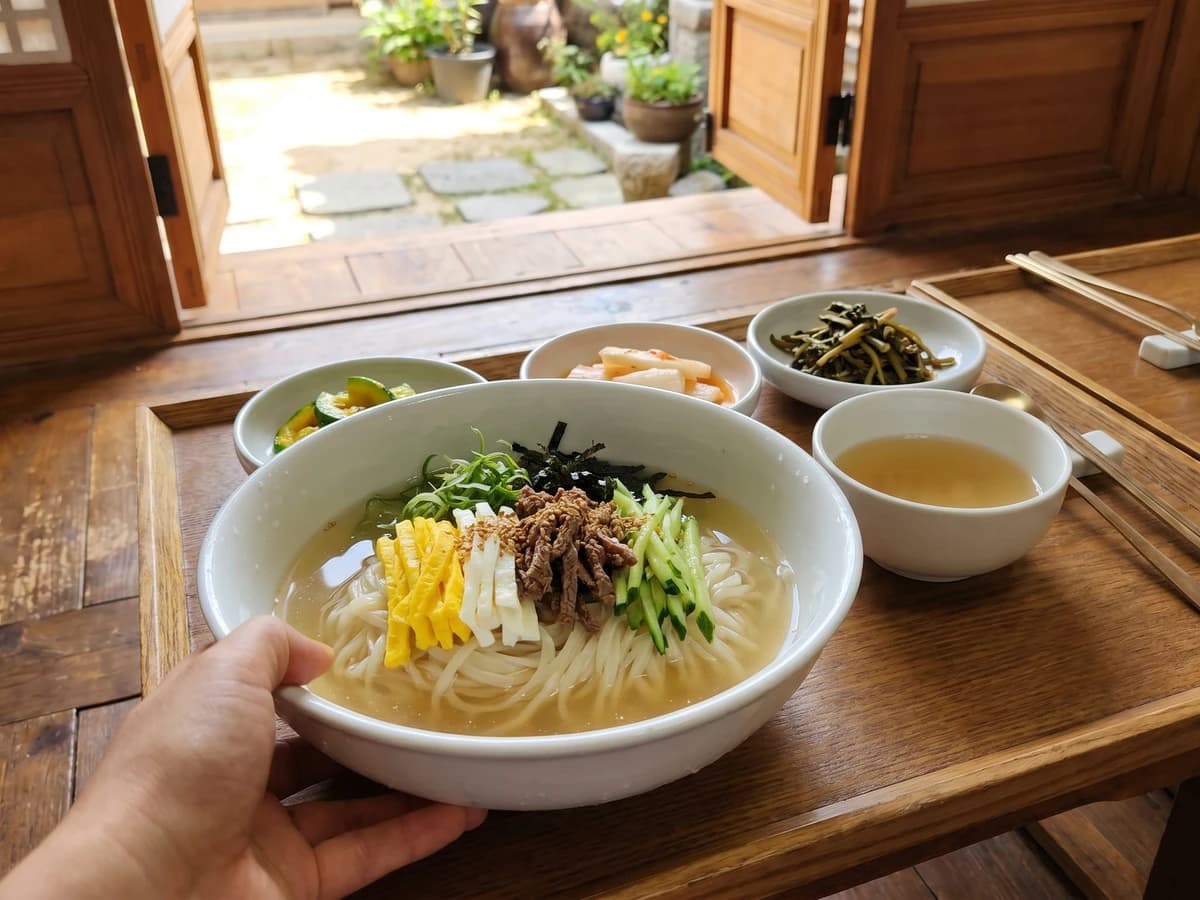
Andong's guest noodles, wheat and roasted soybean flour rolled thin, boiled and rinsed cold, then set in a clear chilled anchovy broth with careful strips of beef, egg, and cucumber.

Chef Jeong-sun
Andong's ritual-table rice served on an ordinary day: separate soy-sesame namul, warm rice, and clear radish soup, mixed without gochujang so every vegetable keeps its own voice.