
Chef Dimitra
Chios Nerantzi Glyko Koutaliou (Νεράντζι Γλυκό Κουταλιού)
Chios bitter orange peel rolled into tight coils, blanched through clean waters, then preserved in a clear fragrant syrup for the spoon-sweet tray.
A cooking platform built around craft, culture, and the stories behind what we eat.
Created by
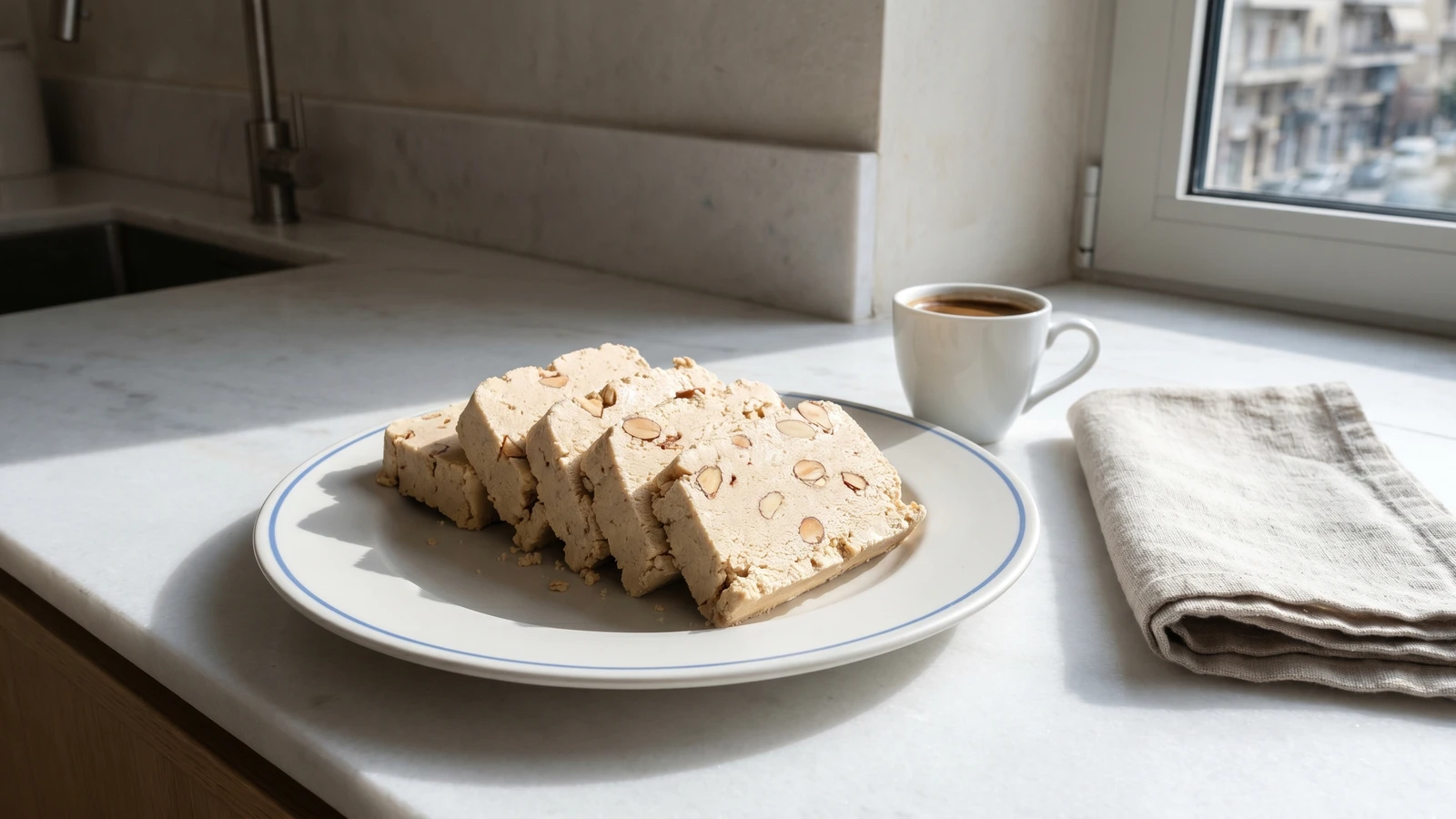
Macedonian tahini halva is the fasting sweet of sesame and sugar, pressed into a loaf and sliced thin, rich enough that a small piece is plenty.
Halvas Tahiniou belongs to Macedonia, and especially to Thessaloniki's sweet counters: a dense sesame loaf cut in pale, crumbly slices, sometimes plain, sometimes marbled with cocoa or studded with almonds. It is not the semolina halva from the pot. This one is tahini and boiled syrup, worked just enough to turn from glossy paste into a sliceable block.
The whole sweet depends on the syrup. Cook it to 118C, the firm thread stage, then fold it into warm tahini with a steady hand. Too cool and the halva stays sticky. Too hot or beaten too long, and it turns dry and harshly grainy. The good texture should break under the knife in soft flakes, then melt into sesame and vanilla on the tongue.
I make the plain version first because it teaches your hand what the sweet wants. After that you can add cocoa or almonds, both old shop-counter habits, but don't bury the sesame. Λίγα και καλά: good tahini, clean sugar work, and patience while it sets.
Tahini halva entered northern Greek confectionery through Ottoman and Asia Minor trade routes where sesame sweets were everyday fasting food, then became strongly associated with Thessaloniki's Macedonian sweet shops in the twentieth century. In Greek homes it is tied to Sarakosti, the Lenten season, because sesame, sugar, and nuts fit the nistisima table. The industrial loaves made the sweet famous, but the older principle is simple: sesame paste preserved with boiled sugar, sliced in small pieces because it is rich.
Quantity
500g
well stirred
Quantity
300g
Quantity
120g
Quantity
80ml
Quantity
1 tbsp
Quantity
1/2 tsp
Quantity
2 tsp
Quantity
80g
toasted and roughly chopped
Quantity
20g
for marbling
| Ingredient | Quantity |
|---|---|
| stone-ground tahiniwell stirred | 500g |
| granulated sugar | 300g |
| honey or glucose syrup | 120g |
| water | 80ml |
| lemon juice | 1 tbsp |
| fine sea salt | 1/2 tsp |
| vanilla extract | 2 tsp |
| blanched almonds (optional)toasted and roughly chopped | 80g |
| unsweetened cocoa powder (optional)for marbling | 20g |
Line a 20 x 10cm loaf tin with baking paper, leaving overhang on the long sides. Stir the tahini very well, all the way to the bottom of the jar, then put it in a heatproof bowl with the salt and vanilla. Set the almonds nearby if using them.
Set the bowl of tahini over a pan of barely simmering water for 5 minutes, stirring once or twice, until it feels warm and loose. Don't cook it. Warm tahini accepts the syrup instead of making it seize into hard streaks.
Put the sugar, honey or glucose, water, and lemon juice in a small heavy saucepan. Bring to a boil over medium heat, washing any sugar crystals from the sides with a damp pastry brush. Boil without stirring until the syrup reaches 118C on a sugar thermometer and falls from a spoon in a firm thread.
Take the tahini off the heat. Pour in the hot syrup in a thin stream, folding with a sturdy spatula. Work steadily for 45 to 60 seconds, just until the mixture thickens, dulls slightly, and begins to pull into soft ropes. Stop there. This is the point that decides the halva.
Fold in the toasted almonds quickly, if using. For cocoa halva, remove one-third of the mixture to a small bowl, fold in the cocoa, then return it to the plain halva with two broad turns for a loose marble. Don't make it tidy. Shop halva has a generous hand, not a combed pattern.
Scrape the halva into the lined tin and press it down firmly with the back of the spatula. Cover the surface with the paper overhang and weight it lightly with a second loaf tin or a small board. Leave at cool room temperature for at least 8 hours, or overnight, until firm enough to slice.
Lift the halva from the tin and cut thin slices with a sharp knife. Serve small pieces with Greek coffee, bitter orange spoon sweet, or nothing at all. It is rich. Let it be rich.
1 serving (about 57g)
Culinary guides, cultural storytelling, and the editorial depth that makes cooking meaningful.
Discover Culinary ExplorerChef Dimitra
Chios bitter orange peel rolled into tight coils, blanched through clean waters, then preserved in a clear fragrant syrup for the spoon-sweet tray.

Chef Dimitra
Chios gives vanilla submarine its mastic breath: a pearly spoon sweet stirred stiff, served cold in water, and offered as the simplest kerasma.
Chef Dimitra
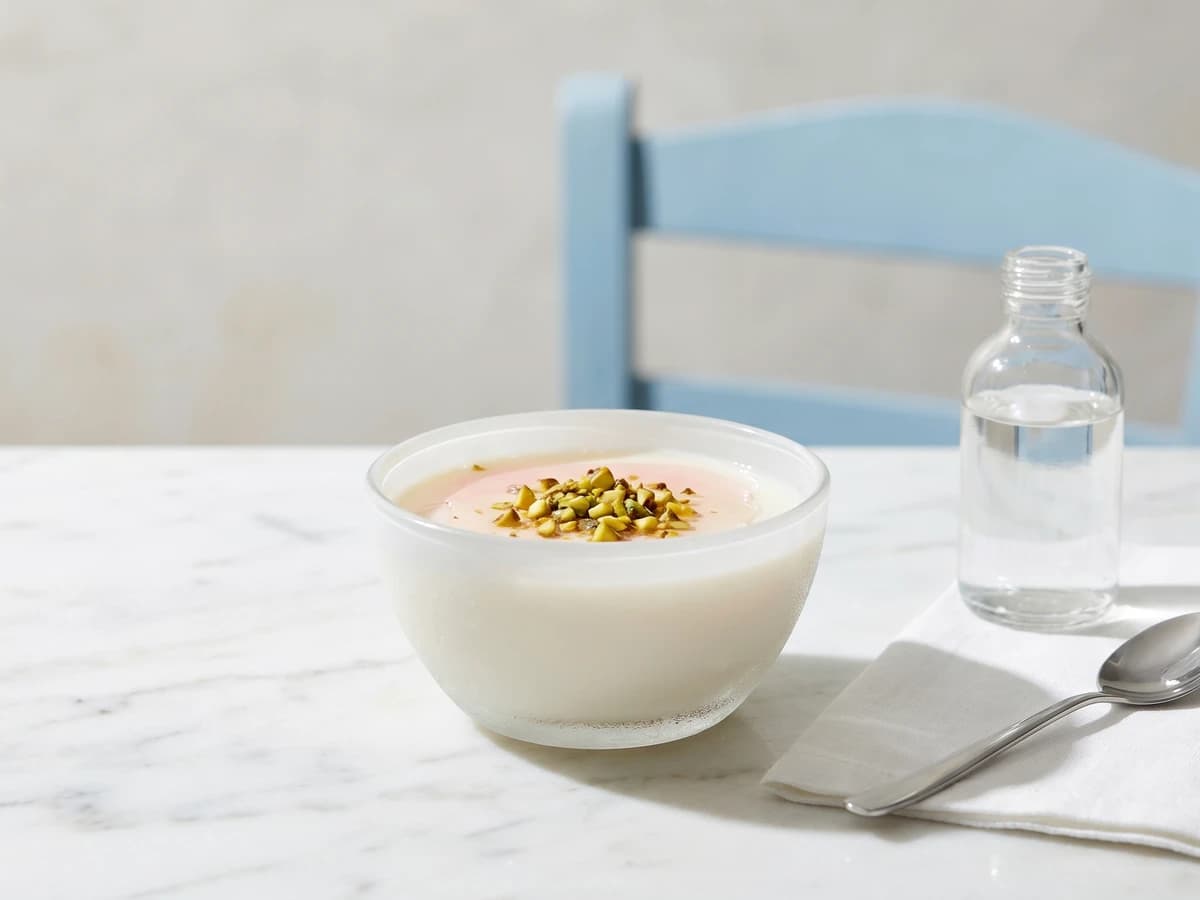
Mahalepi is the cooling milk pudding of Cyprus and the Politiki table: pale, trembling, and loosened at the spoon with cold rosewater syrup.
Chef Dimitra
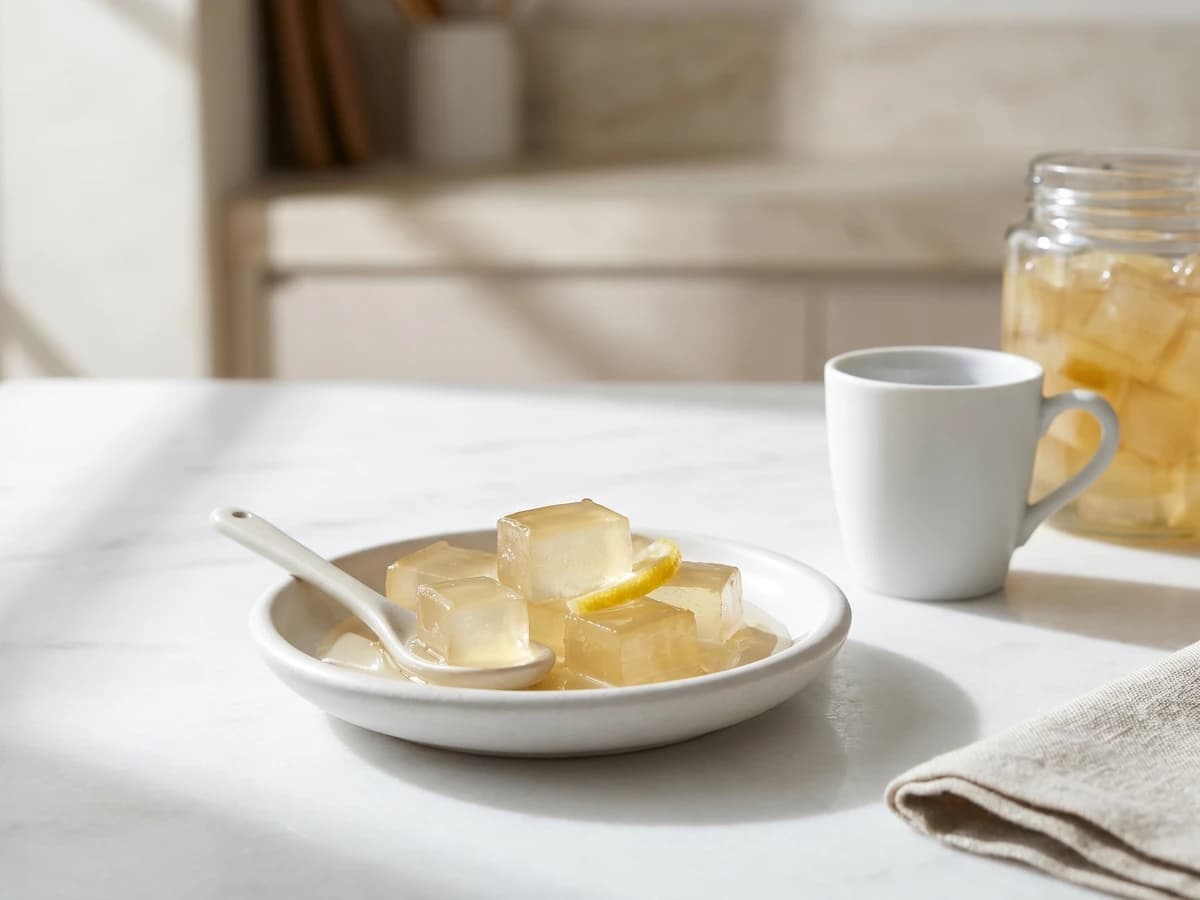
Cyprus keeps the watermelon after the red flesh is gone: firm white rind, lime-soaked for snap, simmered slowly in lemon syrup until each piece shines on the spoon.