Chef Graziella
Arrosto di Maiale alle Erbe Aromatiche
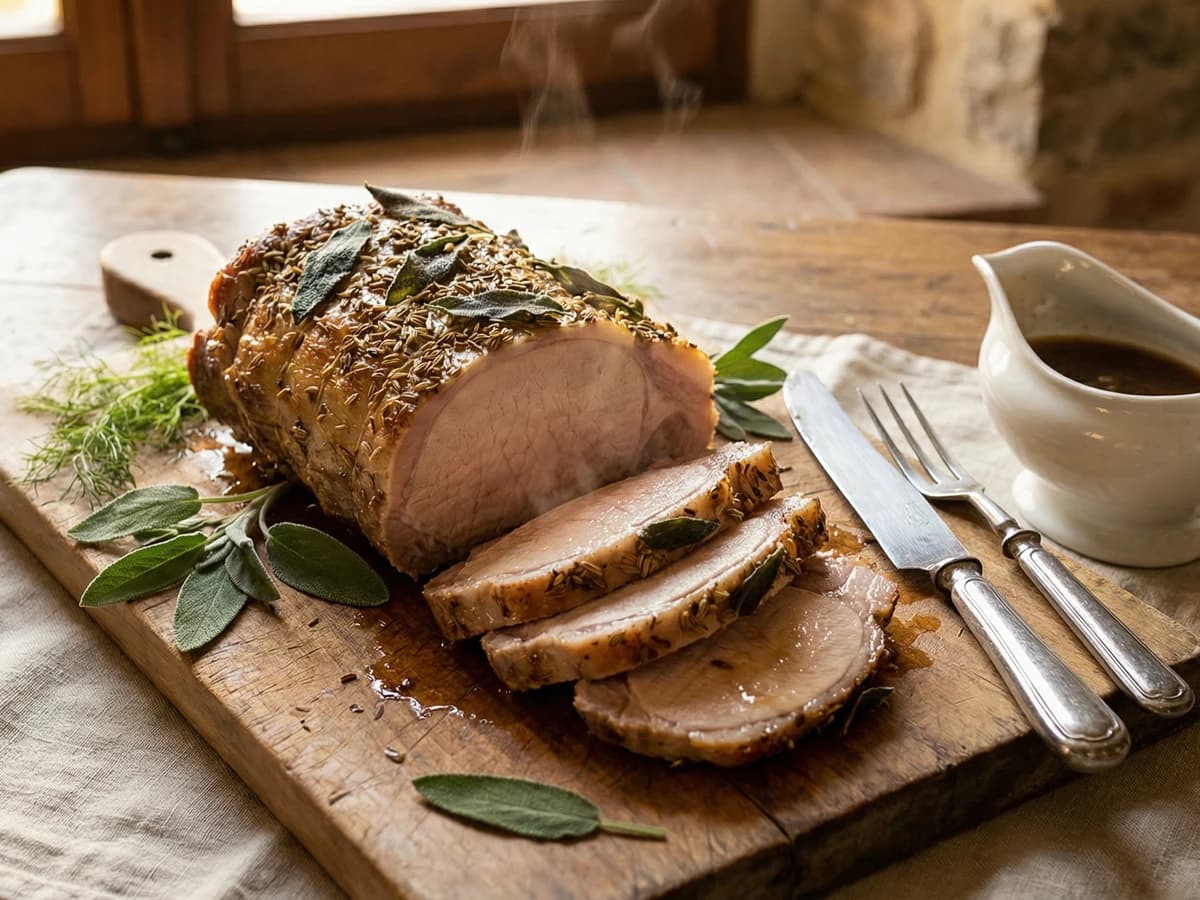
Bone-in pork loin rubbed with fennel, rosemary, and sage, roasted until the herbs form a crackling crust and the meat stays pink and succulent. This is the roast that brings Sunday to life.
A cooking platform built around craft, culture, and the stories behind what we eat.
Created by
The wire-cut pasta of Abruzzo, where a wooden frame strung like a guitar transforms egg dough into square strands with unmatched texture. The tool is simple. The results are precise.
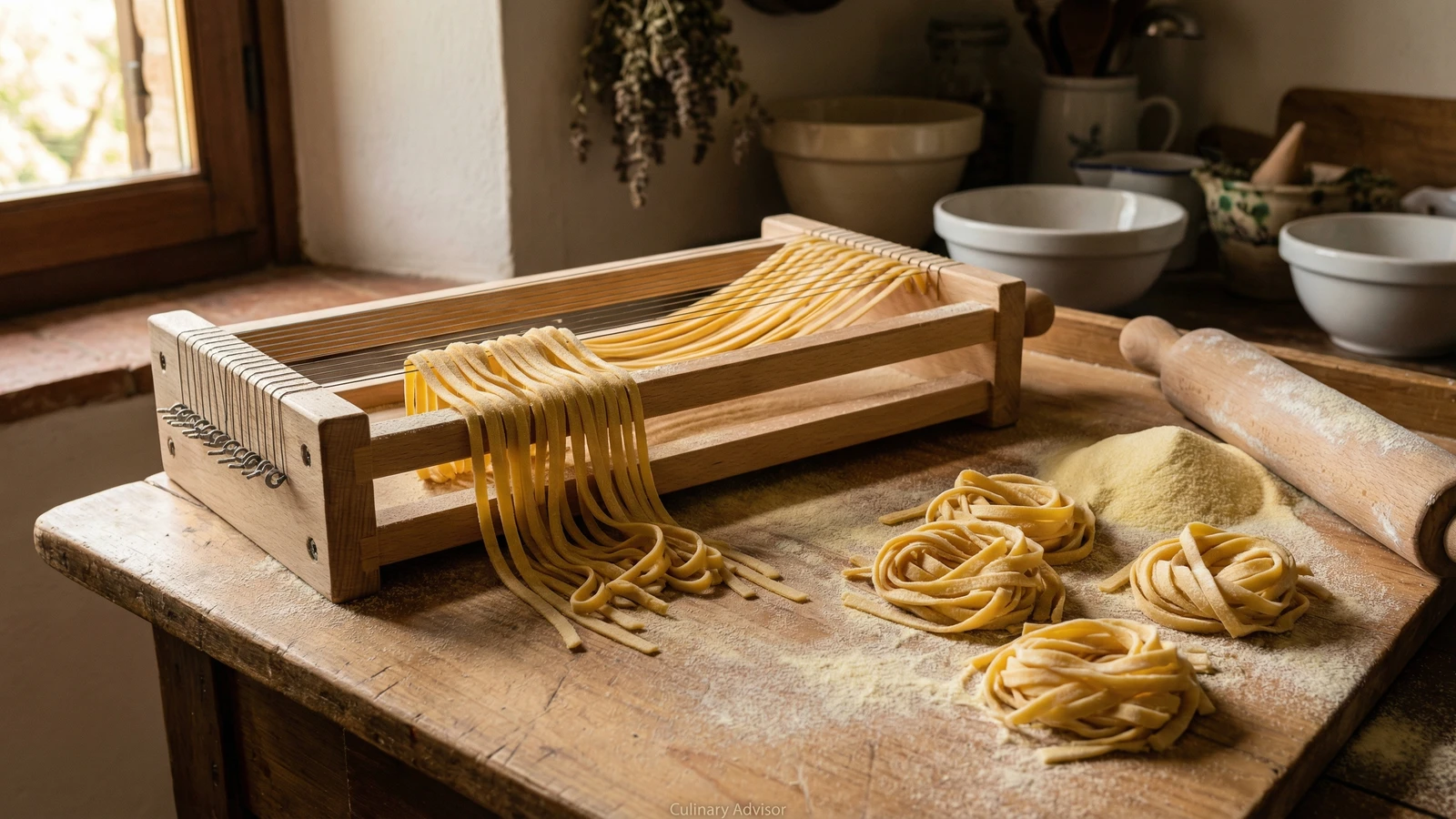
The chitarra is a rectangular wooden frame strung with thin steel wires, spaced two or three millimeters apart. You roll a sheet of pasta dough, lay it across the strings, and press it through with a rolling pin. The wires cut the dough into strands with square cross-sections and rough surfaces. This is not complicated. It is, however, unlike anything you can achieve with a knife or a machine.
What makes maccheroni alla chitarra distinctive is the texture. The wires do not slice cleanly. They press and tear, leaving microscopic ridges on all four surfaces of each strand. Sauce clings to this pasta as it clings to nothing else. The square shape provides bite. The roughness provides grip. A bowl of chitarra dressed with lamb ragù is a different experience than the same ragù on smooth spaghetti.
Abruzzo is mountain country, isolated for centuries from the rest of Italy by the Apennines. The chitarra developed here because the tool was simple to make and the results were superior to hand-cutting. Every family had one. Grandmothers passed them to daughters. The technique requires no special skill, only the right tool and the willingness to learn.
If you do not own a chitarra, you cannot make this pasta. There is no adequate substitute. Buy one. They cost less than a good pan and will last generations.
The chitarra appears in Abruzzese households by the mid-19th century, though the design likely dates earlier. Shepherds and farmers in the mountain villages of the Gran Sasso made their own frames from local wood, stringing them with wire or even horsehair. The pasta became so identified with the region that Abruzzo is sometimes called 'the land of the chitarra.'
Quantity
300g
Quantity
100g
Quantity
4
at room temperature
Quantity
1/2 teaspoon
Quantity
for dusting
| Ingredient | Quantity |
|---|---|
| semola rimacinata | 300g |
| tipo 00 flour | 100g |
| large eggsat room temperature | 4 |
| fine sea salt | 1/2 teaspoon |
| semolina flour | for dusting |
Mix the semola rimacinata and tipo 00 flour together on a clean wooden board or in a large bowl. The combination gives you the golden color and nutty flavor of semolina with enough gluten development from the soft wheat to make rolling easier. Make a well in the center large enough to hold the eggs without them escaping.
Crack the eggs into the well. Add the salt. With a fork, beat the eggs gently while gradually incorporating flour from the inner walls of the well. Work slowly. If you break the walls too quickly, the eggs will run everywhere and you will have a mess instead of dough. Continue until a shaggy mass forms and the fork becomes useless.
Push the remaining flour over the wet mass and begin kneading with the heels of your hands. Push the dough away from you, fold it back, rotate it a quarter turn, and repeat. The dough will feel dry and resistant at first. This is the semolina. Keep working. After 8 to 10 minutes of steady kneading, the dough should become smooth, elastic, and firm. It will not be as soft as pure egg pasta. This is correct.
Wrap the dough tightly in plastic wrap and let it rest at room temperature for at least 30 minutes. One hour is better. The gluten relaxes, making the dough easier to roll. The semolina hydrates fully. Do not skip this step. Unrested dough springs back when rolled and will not pass through the chitarra cleanly.
Dust your work surface, rolling pin, and chitarra strings with semolina flour. Have a sheet pan lined with parchment and dusted with semolina ready to receive the cut pasta. Clear enough space to work comfortably. Pasta making should not feel cramped.
Divide the rested dough into four equal pieces. Keep the pieces you are not working with covered. Roll one piece into a rectangle slightly narrower than your chitarra frame and approximately 2 to 3 millimeters thick. If using a pasta machine, roll to setting 4 or 5 on most machines. The sheet should be thick enough to maintain substance when cut. Chitarra pasta is not delicate.
Lay the rolled sheet across the strings of the chitarra. The dough should cover the strings without hanging over the edges. Using your rolling pin, press firmly and roll back and forth across the dough. You will feel the wires cutting through. Continue until all the strands fall through to the tray below. If the dough sticks to the strings, it was too wet or the strings needed more flour.
Lift the cut strands gently and toss them with semolina to prevent sticking. Gather them into loose nests on your prepared sheet pan. The strands should be roughly 10 to 12 inches long. If they are longer, the sheet was too wide for your frame. Adjust for the next portion. Repeat with the remaining dough.
Fresh maccheroni alla chitarra can be cooked immediately or dried for later use. To dry, leave the nests on the sheet pan at room temperature for 2 to 3 hours until the surface feels leathery but the pasta is still pliable. For longer storage, dry completely overnight, then store in airtight containers. To cook fresh, boil in abundant salted water for 3 to 4 minutes until tender with pleasant resistance. Dried pasta takes 5 to 7 minutes.
1 serving (about 170g)
Culinary guides, cultural storytelling, and the editorial depth that makes cooking meaningful.
Discover Culinary ExplorerChef Graziella
Bone-in pork loin rubbed with fennel, rosemary, and sage, roasted until the herbs form a crackling crust and the meat stays pink and succulent. This is the roast that brings Sunday to life.

Chef Graziella
The ancient technique of salt-baking creates a sealed chamber where the fish steams in its own moisture. What emerges is flesh of remarkable purity, seasoned perfectly, ready for nothing but your best olive oil.

Chef Graziella
The ugly fish that cooks like veal, braised in tomatoes until the firm white flesh absorbs the briny sweetness of olives and capers. Fishermen's wives along the Adriatic knew its worth before restaurants discovered it.

Chef Graziella
A fifteen-minute lesson in restraint: pork chops, butter, sage, and the understanding that what you leave out matters as much as what you put in.