
Chef Joost
Aardappelschotel met Gehakt
A plain name for a quietly clever dish: fresh mince, sweet fried onion, nutmeg, and mashed potato baked until the top goes golden and the table goes silent.
A cooking platform built around craft, culture, and the stories behind what we eat.
Created by
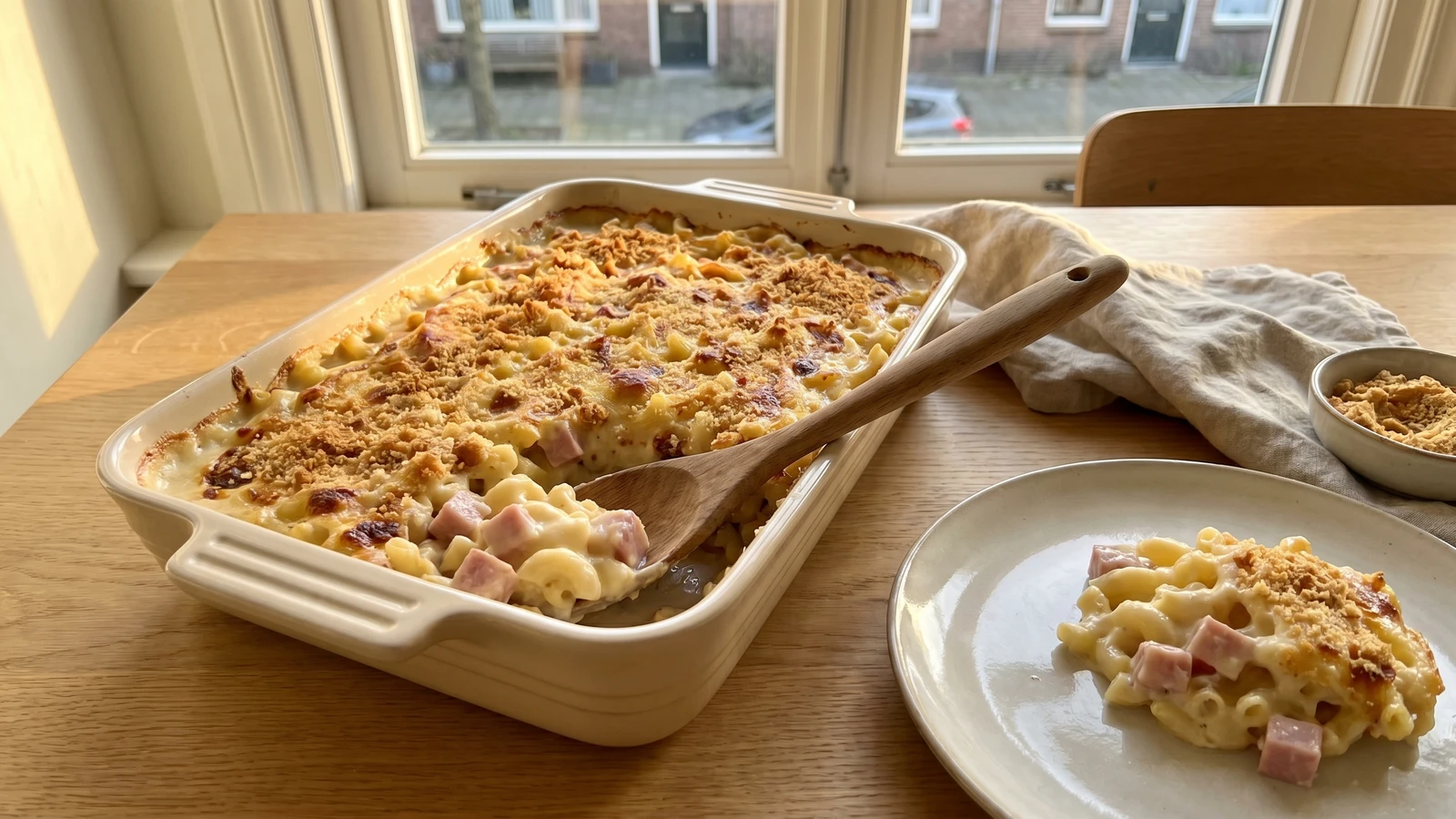
The macaroni dish Dutch children met before they met Italy: ham, cheese sauce, and a breadcrumb lid, baked into the weeknight ovenschotel that never pretended to be Roman.
In my grandmother's second notebook, between the pea soup and the apple pancakes, there is a page with no romance in the title: macaroni met ham en kaas, macaroni with ham and cheese. Not an old Zeeland dish from the tide flats, not a feast-day relic, not a word smuggled in by exiles. Just supper. But let me tell you a secret: the Dutch family table keeps its history in exactly these plain-looking dishes.
Macaroni came to Dutch cupboards as dried pasta, long before most households had any serious knowledge of Italian regional cooking. By the late twentieth century it had become something thoroughly domestic: boiled short pasta, cubes of ham, a mild kaassaus, cheese sauce, and a crisp lid from breadcrumbs or beschuit, Dutch rusks, crushed under the palm. This is not American mac and cheese. It is leaner, quieter, and usually carries ham, because a Dutch cook sees a little leftover meat and immediately gives it a second profession.
The method matters because the dish is simple enough to punish laziness. Cook the pasta just shy of done, or the oven will finish it into softness. Make a real roux, not a gluey shortcut, because flour cooked in butter becomes silk while raw flour tastes like school paste (for obvious reasons, nobody asks for seconds of that). Then bake it until the top is golden and the sauce has found every hollow in the macaroni. Hou het altijd simpel, always keep it simple, but simple is not the same as careless.
Dried macaroni was known in the Netherlands by the nineteenth century, but dishes like macaroni met ham en kaas became common household fare after the Second World War, when packaged pasta, factory cheese, and convenience-minded family cookery reshaped weeknight meals. Dutch manufacturers such as Honig helped normalize macaroni as a pantry staple in the mid-twentieth century, often paired with ham, cheese, or tomato-based sauces in home economics cookbooks and packet recipes. The baked ovenschotel version reflects a Dutch thrift pattern: yesterday's ham, grated cheese, and breadcrumbs turned into a filling family dish under a crisp oven lid.
Quantity
300g
Quantity
200g
diced
Quantity
60g, plus more for the dish
Quantity
60g
Quantity
750ml
warmed
Quantity
1 teaspoon
Quantity
1/4 teaspoon
Quantity
200g
grated
Quantity
50g
grated, for the top
Quantity
50g or 3 rusks
crushed
Quantity
to taste
| Ingredient | Quantity |
|---|---|
| short macaroni or elbow pasta | 300g |
| cooked hamdiced | 200g |
| butter | 60g, plus more for the dish |
| plain flour | 60g |
| whole milkwarmed | 750ml |
| Dijon or Dutch mustard | 1 teaspoon |
| freshly grated nutmeg | 1/4 teaspoon |
| young Goudagrated | 200g |
| mature Goudagrated, for the top | 50g |
| breadcrumbs or beschuitcrushed | 50g or 3 rusks |
| salt and black pepper | to taste |
Heat the oven to 200C and butter a medium baking dish. Boil the macaroni in well-salted water for two minutes less than the packet says, then drain it. It should still have a little bite at the centre; the oven will finish the work, and pasta that goes in soft comes out apologizing.
Melt the butter in a saucepan over medium heat, stir in the flour, and cook for two minutes, stirring steadily, until it smells gently nutty and no longer raw. This small pause is what separates a cheese sauce from wallpaper paste. Add the warm milk a little at a time, whisking until smooth after each addition.
Let the sauce simmer quietly for three to four minutes until it coats the back of a spoon. Stir in the mustard, nutmeg, black pepper, and most of the young Gouda, saving a handful for the top if you like a generous crust. Taste before salting; ham and cheese have already been doing some of that work for you.
Fold the drained macaroni and diced ham through the sauce until every hollow is coated. Spoon it into the buttered dish, keeping the surface level rather than packed down. A loose dish bakes creamy; a compressed one bakes like a brick, and we have enough masonry in the Low Countries.
Mix the breadcrumbs or crushed beschuit with the mature Gouda and scatter them evenly over the top. Bake for twenty to twenty-five minutes, until the edges are bubbling thickly and the lid is golden, crisp, and freckled with browned cheese. Let it stand for five minutes before serving so the sauce settles back into the pasta.
1 serving (about 475g)
Culinary guides, cultural storytelling, and the editorial depth that makes cooking meaningful.
Discover Culinary ExplorerChef Joost
A plain name for a quietly clever dish: fresh mince, sweet fried onion, nutmeg, and mashed potato baked until the top goes golden and the table goes silent.

Chef Joost
Ajam Besengek is the golden chicken stew of the Indo-Dutch table: coconut milk, turmeric, and candlenut cooked down until the sauce clings to the meat like memory.

Chef Joost
The old Dutch spelling says ajam, the city says Batavia, and the pot says exactly what the rijsttafel always was: memory, trade, and dinner in one dish.

Chef Joost
The name means simply fried chicken, but the Dutch spelling carries a whole Indies kitchen: turmeric, coriander, garlic, and a golden crust that remembers the boemboe.