
Chef Dimitra
Chios Nerantzi Glyko Koutaliou (Νεράντζι Γλυκό Κουταλιού)
Chios bitter orange peel rolled into tight coils, blanched through clean waters, then preserved in a clear fragrant syrup for the spoon-sweet tray.
A cooking platform built around craft, culture, and the stories behind what we eat.
Created by
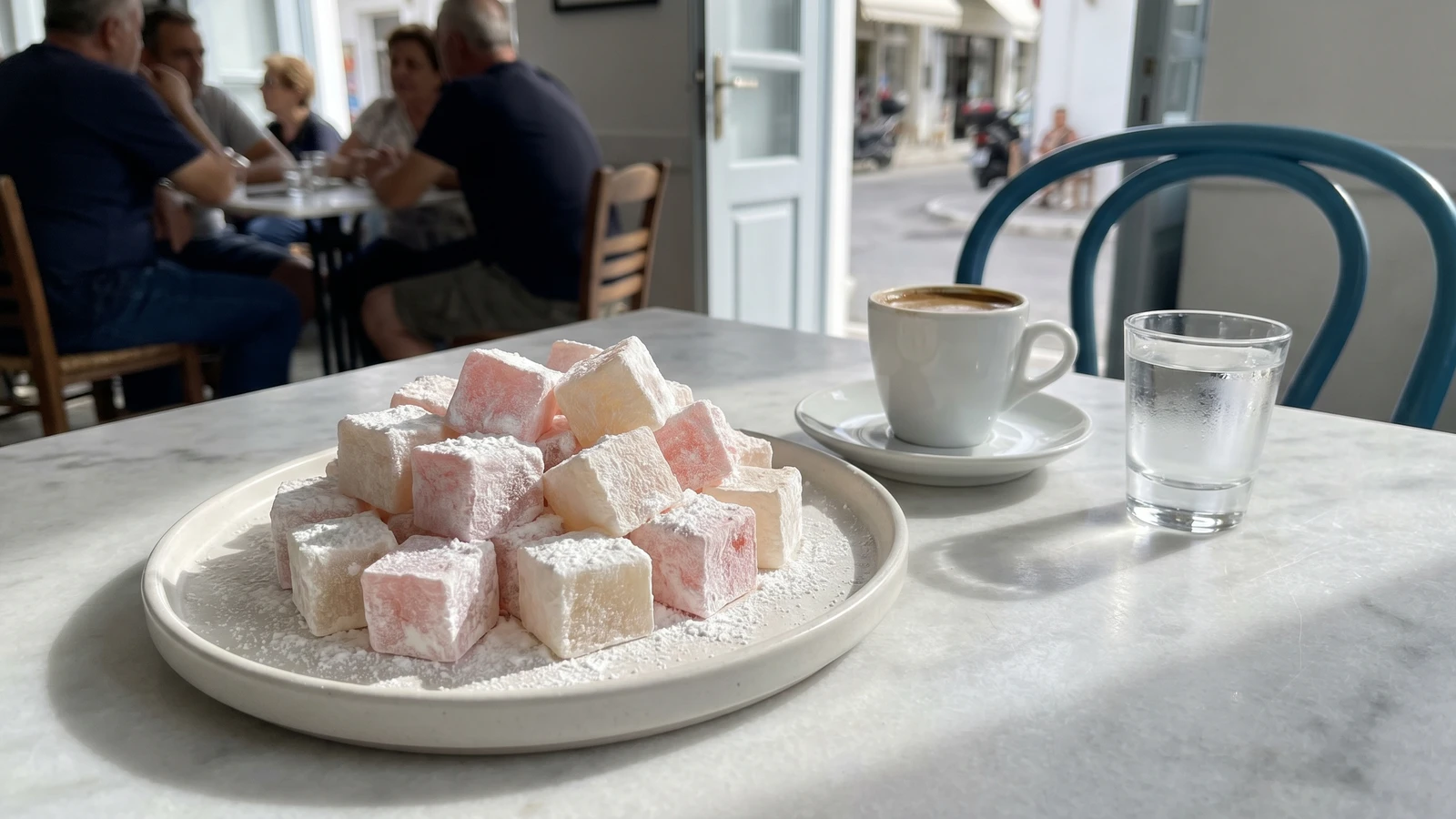
Syros loukoumi is soft, clear starch-and-sugar candy scented with rosewater or mastic, cooked slowly until the paste turns glossy, then cut into snowy cubes for Greek coffee.
Loukoumi Syrou is Syros's small square of sugar and starch, scented with rosewater or Chios mastic and buried in a white coat of icing sugar. It should be tender, clear at the edges, and faintly elastic, the kind of sweet you set beside Greek coffee and take in two bites. The region is the dish's surname here: Syros made loukoumi its harbor sweet.
One method decides it. After the syrup goes into the starch, you cook the paste low and long until it turns glossy and heavy. Stop while it still looks milky and it tastes floury; push the heat and the bottom catches. Good loukoumi asks for patience, not force.
I give you rosewater as the main version because it is the old cafe scent most cooks recognize, with mastic offered as its Syros cousin. My notebook has several island versions, but this one keeps the basic shop method a home cook can manage: sugar syrup, cooked starch, clean scent, and a night to set. A recipe written down is a recipe saved.
Loukoumi on Syros is tied to Ermoupoli, the port city that grew after the Greek War of Independence, when refugees and merchants brought confectionery methods from Chios, Constantinople, and Asia Minor. Workshops were active on the island by the 1830s, and by the late nineteenth century boxed loukoumi had become the sweet travelers carried away from the Syros harbor. Its old Cycladic form is plain starch gel scented with rose, mastic, or bergamot, dusted white and served with coffee.
Quantity
800g
Quantity
360ml
for the syrup
Quantity
60g
or light corn syrup
Quantity
15ml
Quantity
130g
for the gel
Quantity
600ml
for the starch slurry
Quantity
20ml
for rose loukoumi
Quantity
0.4g
pounded with 1 teaspoon of the measured sugar; use instead of rosewater
Quantity
100g
for dusting
Quantity
30g
for dusting
Quantity
1 teaspoon
for smoothing and cutting
| Ingredient | Quantity |
|---|---|
| granulated sugar | 800g |
| waterfor the syrup | 360ml |
| liquid glucose (glikozi)or light corn syrup | 60g |
| fresh lemon juice | 15ml |
| cornstarch (niseste)for the gel | 130g |
| cold waterfor the starch slurry | 600ml |
| rosewaterfor rose loukoumi | 20ml |
| Chios mastic tears (masticha) (optional)pounded with 1 teaspoon of the measured sugar; use instead of rosewater | 0.4g |
| icing sugarfor dusting | 100g |
| cornstarchfor dusting | 30g |
| neutral oil (optional)for smoothing and cutting | 1 teaspoon |
Line a 20cm square tray with parchment, leaving two sides overhanging. Mix the 100g icing sugar with the 30g cornstarch, then sift a thick spoonful over the base. Keep the rest for cutting. If you're making the mastic version, take 1 teaspoon from the measured sugar and pound the mastic tears with it until fine.
Put the sugar, 360ml water, and glucose in a heavy 3L saucepan. Warm over medium heat, stirring only until the sugar dissolves. Add the lemon juice, then boil without stirring until the syrup reaches 115 C, about 12 to 15 minutes.
While the syrup boils, whisk the 130g cornstarch with 600ml cold water in a wide heavy pan until smooth. Set it over medium-low heat and whisk until it thickens into a heavy white paste, then keep whisking until it bubbles and loses the raw white look, 5 to 7 minutes.
Pour the hot syrup into the starch paste in a thin stream, whisking all the time. It will loosen, look alarming for a minute, then come together. Once all the syrup is in, switch to a sturdy spatula and scrape the base and corners clean.
Lower the heat as far as you can while keeping the paste moving in slow, heavy bubbles. Cook 45 to 55 minutes, stirring and scraping every minute, until the loukoumi is glossy, elastic, and almost clear at the edges. It should fall from the spatula in thick ribbons and reach 106 to 108 C. This is the step you don't shorten. The long cooking takes away the floury taste and gives Syros loukoumi its tender pull.
Take the pan off the heat. Stir in the rosewater, or the pounded mastic sugar if you're making the mastic version. Pour the loukoumi into the prepared tray and smooth the top with a lightly oiled spatula. Leave it uncovered at cool room temperature for 8 to 12 hours. The refrigerator makes the sugar sweat, so leave it alone on the counter.
Sift more dusting mix over the set slab, turn it out, and peel away the parchment. Oil a long knife lightly and cut the slab into 2.5cm cubes. Toss every cube generously in the icing sugar and starch mixture, then let them sit 1 hour and dust again if any damp spots show.
Serve loukoumi in small pieces with Greek coffee and a glass of cold water. Store it at cool room temperature in a tin or box, layered with extra dusting mix and parchment, for 10 to 14 days. If the surface wets in humid weather, sift over more dusting mix. Λίγα και καλά.
1 serving (about 36g)
Culinary guides, cultural storytelling, and the editorial depth that makes cooking meaningful.
Discover Culinary ExplorerChef Dimitra
Chios bitter orange peel rolled into tight coils, blanched through clean waters, then preserved in a clear fragrant syrup for the spoon-sweet tray.

Chef Dimitra
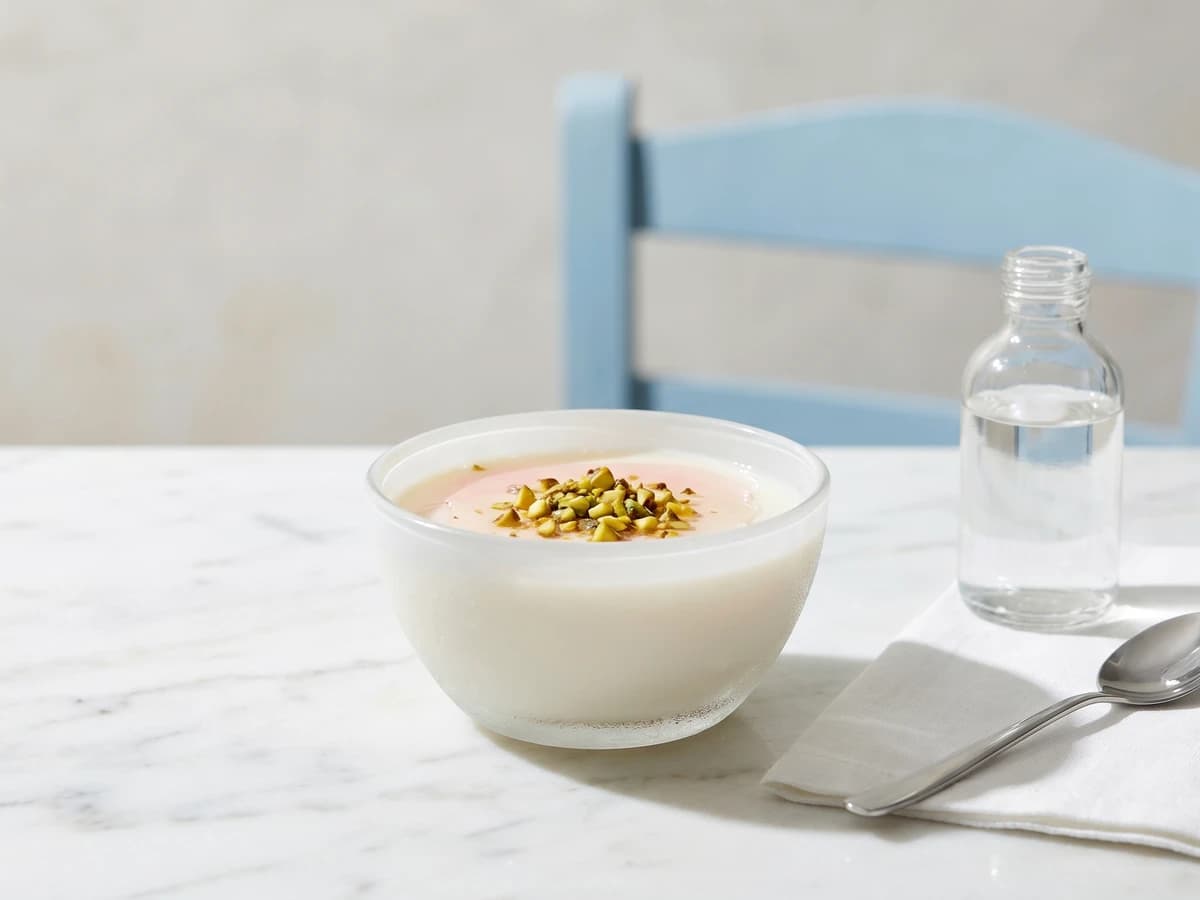
Chios gives vanilla submarine its mastic breath: a pearly spoon sweet stirred stiff, served cold in water, and offered as the simplest kerasma.
Chef Dimitra
Mahalepi is the cooling milk pudding of Cyprus and the Politiki table: pale, trembling, and loosened at the spoon with cold rosewater syrup.
Chef Dimitra
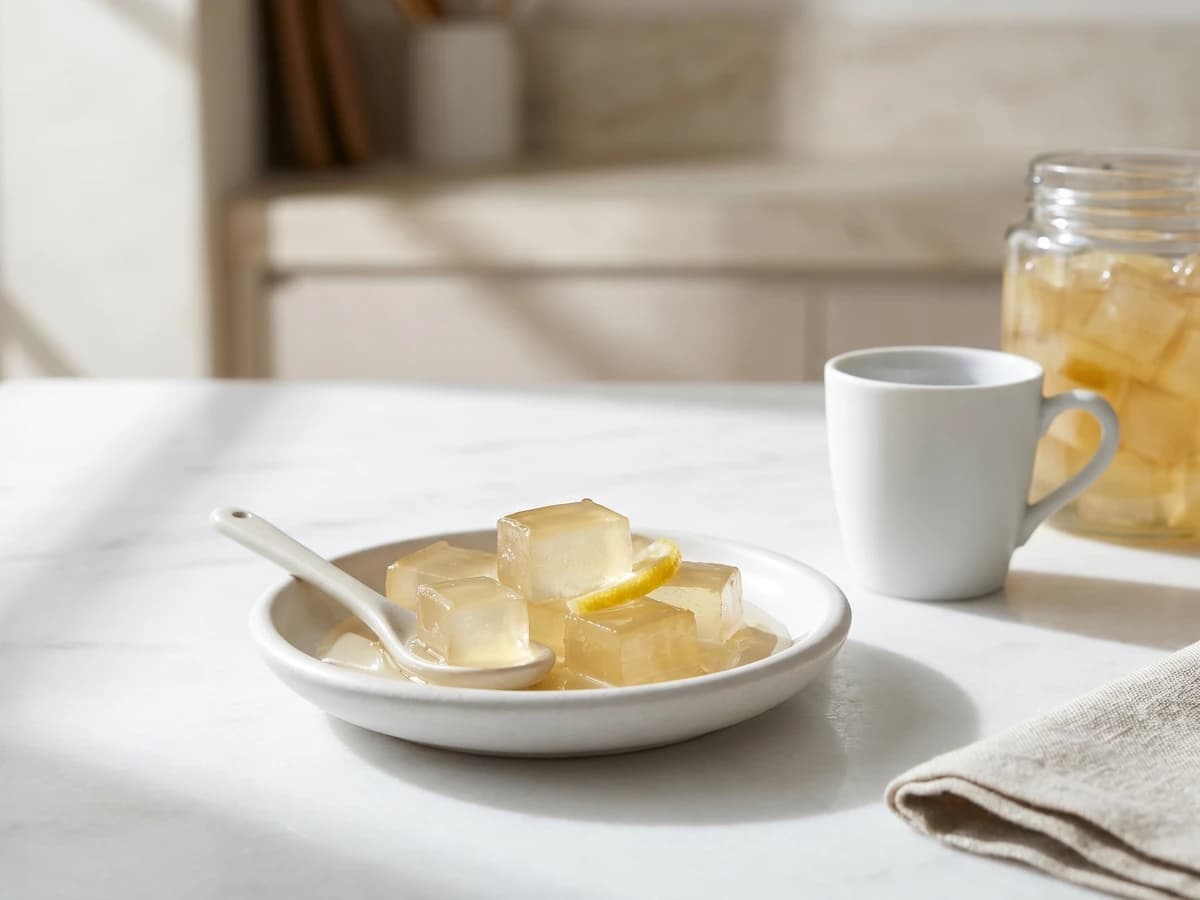
Cyprus keeps the watermelon after the red flesh is gone: firm white rind, lime-soaked for snap, simmered slowly in lemon syrup until each piece shines on the spoon.