Culinary Explorer

A cooking platform built around craft, culture, and the stories behind what we eat.
Discover Culinary Explorer
Louisiana Fried Chicken

Louisiana Fried Chicken

Created by Chef Remy

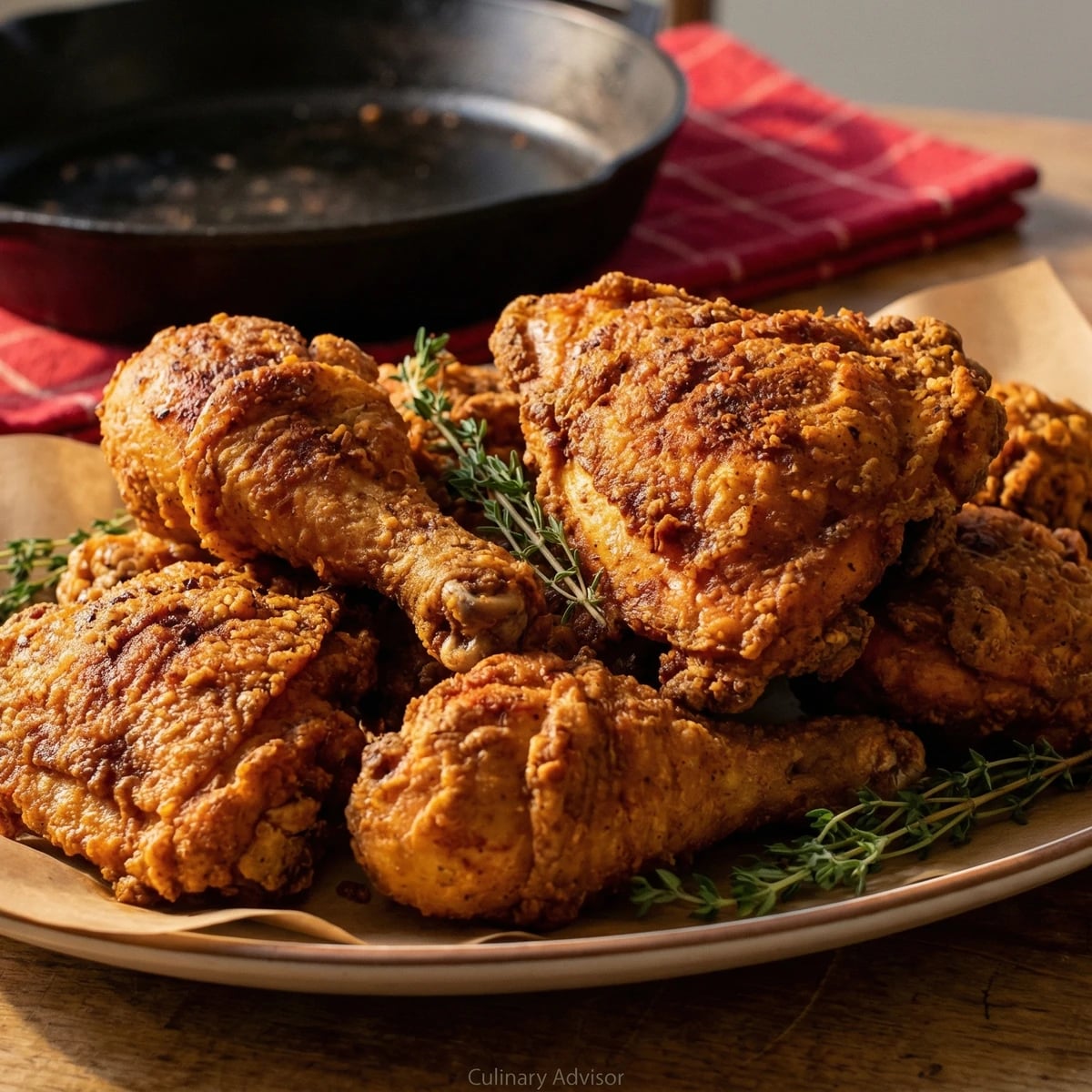
Bone-in chicken soaked overnight in spiced buttermilk, then fried in a bold Cajun-seasoned crust until the outside shatters and the inside stays so juicy you will forget every piece of fried chicken that came before.

Main Dishes
Cajun
Comfort Food
Potluck
Game Day
30 min
Active Time
45 min cook13 hr 15 min total
Yield8 pieces (serves 4)

Good fried chicken is not complicated. It is just patient. That buttermilk soak cannot be rushed, the oil temperature cannot be guessed at, and the seasoning must happen in layers from start to finish. This is the bayou way.

My grandmother Evangeline fried chicken in a cast iron skillet that weighed more than I did as a boy. She would start the night before, mixing buttermilk with hot sauce and letting those chicken pieces soak until the meat turned silky and tender. The next day, she would stand at that stove in the Louisiana heat, turning pieces with a long fork, never letting the oil get too hot or too cool. She cooked by sound and color, not by timer.

The secret to Louisiana fried chicken lives in the seasoning. You season the meat before it goes in the buttermilk. You season the flour with enough spice to make you cough when you whisk it. Then you season again the moment the chicken comes out of the oil, when it is still hot enough to grab onto that final layer. Three chances to build flavor, and you take every one of them.

At Lagniappe, we have served thousands of pieces of this chicken. Folks drive across the parish for it. The crust shatters when you bite through, and underneath you find meat so moist and flavorful it makes you wonder what you have been eating your whole life. This is not hard to make at home. You just have to respect the process.

The technique, the tradition, and the story behind every dish.

Discover Culinary Explorer

Ingredients

bone-in chicken pieces

Quantity

3 1/2 pounds

thighs, drumsticks, and breasts

buttermilk

Quantity

2 cups

Louisiana-style hot sauce

Quantity

2 tablespoons

garlic cloves

Quantity

4

smashed

all-purpose flour

Quantity

2 cups

cornstarch

Quantity

1/2 cup

Cajun seasoning

Quantity

2 tablespoons

paprika

Quantity

1 tablespoon

garlic powder

Quantity

1 teaspoon

onion powder

Quantity

1 teaspoon

cayenne pepper

Quantity

1 teaspoon

black pepper

Quantity

1 teaspoon

freshly ground

kosher salt

Quantity

1 teaspoon

dried thyme

Quantity

1/2 teaspoon

dried oregano

Quantity

1/2 teaspoon

peanut or vegetable oil

Quantity

about 3 quarts

for frying

Equipment Needed

  • 12-inch cast iron skillet or 6-quart Dutch oven
  • Deep-fry or candy thermometer
  • Wire cooling rack
  • Sheet pan
  • Long-handled tongs or spider strainer

Instructions

  1. 1

    Season the chicken

    Pat your chicken pieces completely dry with paper towels. Season them generously with salt and black pepper on all sides. This is your first layer of flavor, and it matters. The seasoning needs to touch the meat directly before anything else happens. Four generations of Boudreaux cooks taught me this: you build flavor from the inside out.

    Dry chicken is essential. Wet skin will not absorb the marinade properly and will spatter violently in hot oil.
  2. 2

    Make the buttermilk marinade

    Whisk together the buttermilk, hot sauce, and smashed garlic in a large bowl. The buttermilk does two things: the acid tenderizes the meat while the fat carries flavor deep into the flesh. Add your seasoned chicken pieces, turning to coat completely. Cover and refrigerate for at least twelve hours, preferably overnight. This is not optional. The difference between good fried chicken and great fried chicken lives in that long, cold soak.

    Twenty-four hours is even better if you have the time. The chicken will not get mushy. It will get more tender and flavorful.
  3. 3

    Build the seasoned flour

    Combine the flour, cornstarch, Cajun seasoning, paprika, garlic powder, onion powder, cayenne, black pepper, salt, thyme, and oregano in a large shallow dish. Whisk until the spices are evenly distributed throughout. The cornstarch is my secret: it creates that shatteringly crisp crust that stays crisp even after the chicken cools. Taste the flour mixture. It should taste boldly seasoned, almost too much. The chicken will temper it.

  4. 4

    Dredge with intention

    Remove each piece of chicken from the buttermilk, letting excess drip off for a few seconds but not shaking it dry. You want a thin coating of buttermilk clinging to the surface. Press the chicken firmly into the seasoned flour, turning to coat all sides. Really work the flour into the crevices and folds. Lift the piece and shake off loose flour, then set on a wire rack. Let the coated chicken rest for fifteen minutes before frying. This rest helps the coating adhere and prevents it from sliding off in the oil.

    For extra-craggy crust, drizzle a tablespoon of buttermilk into the flour and work it in with your fingers. Those little clumps become crispy bits of heaven.
  5. 5

    Heat the oil properly

    Pour oil into a large cast iron skillet or Dutch oven to a depth of about two inches. Heat over medium-high until a thermometer reads 350 degrees Fahrenheit. This temperature is critical. Too hot and the crust burns before the meat cooks through. Too cool and the chicken absorbs oil and turns greasy. At Lagniappe, we check the temperature obsessively. A deep-fry thermometer is not optional here.

  6. 6

    Fry in batches

    Carefully lower three or four pieces of chicken into the hot oil, skin side down. Do not crowd the pan. Overcrowding drops the temperature and steams the chicken instead of frying it. You should hear an aggressive, confident sizzle the moment the chicken hits the oil. If you do not, your oil is not hot enough. Wait.

    Dark meat and white meat cook at different rates. Fry them in separate batches so you can pull each when it is perfectly done.
  7. 7

    Cook to golden perfection

    Fry without moving the pieces for the first four minutes. This builds that initial crust. Then turn and continue frying, adjusting heat to maintain 325 to 350 degrees. Total frying time is twelve to fifteen minutes for drumsticks and thighs, eight to twelve for smaller pieces. The chicken is done when the crust is deep golden brown, almost mahogany in spots, and an instant-read thermometer inserted into the thickest part reads 165 degrees at the bone.

    The color tells you as much as the thermometer. Pale golden means underdone. Rich amber to mahogany means you have arrived.
  8. 8

    Drain and season again

    Transfer fried chicken to a wire rack set over a sheet pan. Never drain on paper towels because the bottom crust will steam and turn soggy. While the chicken is still glistening with oil, hit it with a light sprinkle of kosher salt and a dusting of cayenne. This final seasoning layer wakes up all the flavors. Let rest for five minutes before serving. The juices need to redistribute, and the crust needs to set.

Chef Tips

  • Peanut oil has the highest smoke point and cleanest flavor for frying. Vegetable oil works fine, but avoid olive oil entirely.
  • Let your chicken come to room temperature for thirty minutes before frying. Cold chicken drops the oil temperature dramatically and cooks unevenly.
  • Save your frying oil. Strain it through cheesecloth after it cools, store it in the refrigerator, and use it twice more. The oil actually improves with use.
  • If you are nervous about the cayenne, start with half the amount in the flour. You can always add heat with hot sauce at the table. But do not leave it out entirely. That warmth is what makes this Louisiana fried chicken instead of just fried chicken.

Advance Preparation

  • Chicken must marinate in buttermilk for at least 12 hours, up to 24 hours. Plan accordingly.
  • The seasoned flour mixture can be prepared up to one week ahead and stored in an airtight container at room temperature.
  • Fried chicken is best eaten within two hours of frying. If you must hold it, keep it on a wire rack in a 200-degree oven for up to one hour. Never cover it or the crust will steam and soften.

Frequently Asked Questions

Nutrition Information

1 serving (about 325g)

Calories
885 calories
Total Fat
57 g
Saturated Fat
14 g
Trans Fat
0 g
Unsaturated Fat
40 g
Cholesterol
210 mg
Sodium
750 mg
Total Carbohydrates
38 g
Dietary Fiber
1 g
Sugars
1 g
Protein
56 g

Note: Chef personas and recipes are created with AI assistance. Cook with care: follow safe food-handling practices, check doneness with a thermometer when needed, and adapt for allergies and your kitchen.

Where cooking meets culture.

Culinary guides, cultural storytelling, and the editorial depth that makes cooking meaningful.

Discover Culinary Explorer

More from Chef Remy's Main Dishes

Browse the full collection