Chef Isabel
Abanico Ibérico a la Plancha
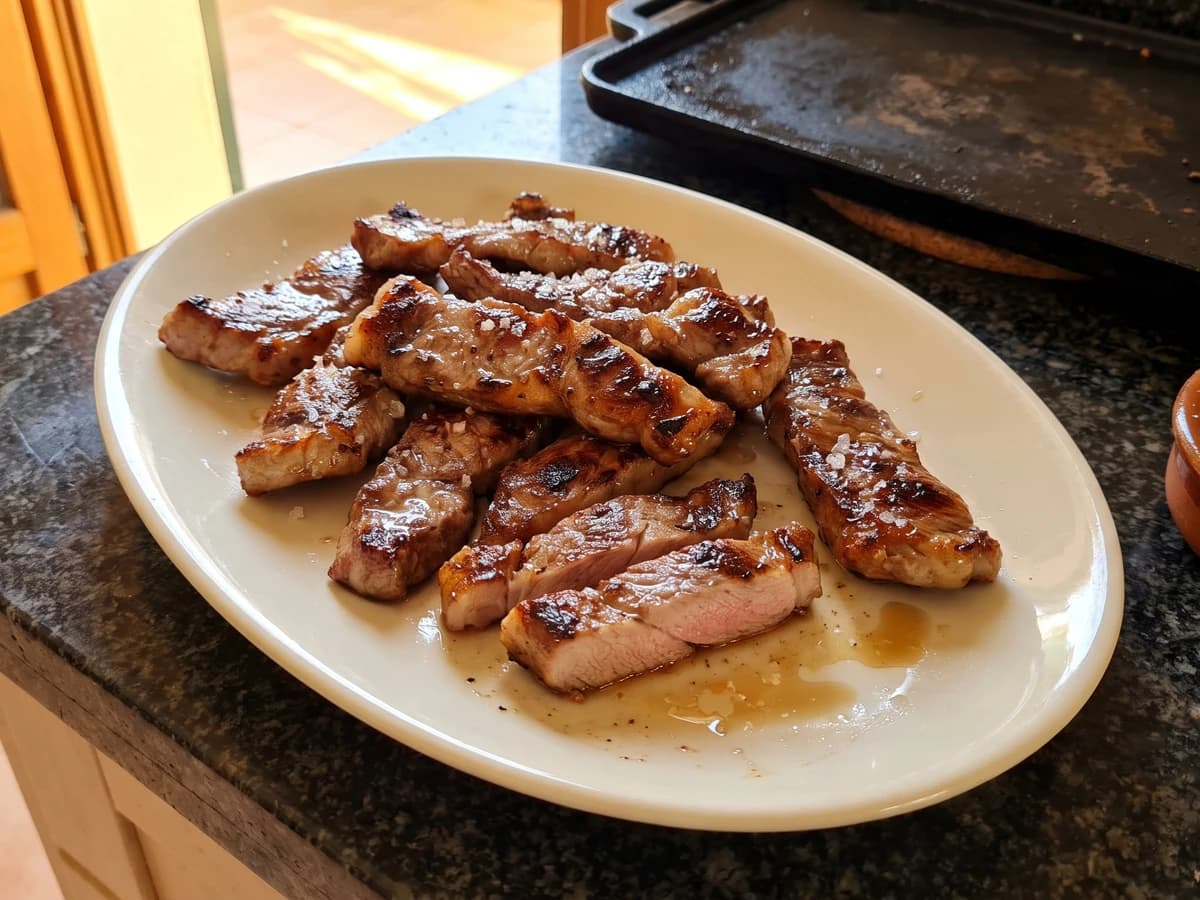
Extremadura's dehesa gives us this fan-shaped, marbled rib cut: salt it at the last moment, lay it on a fierce plancha, and count in seconds so the centre stays juicy.
A cooking platform built around craft, culture, and the stories behind what we eat.
Created by
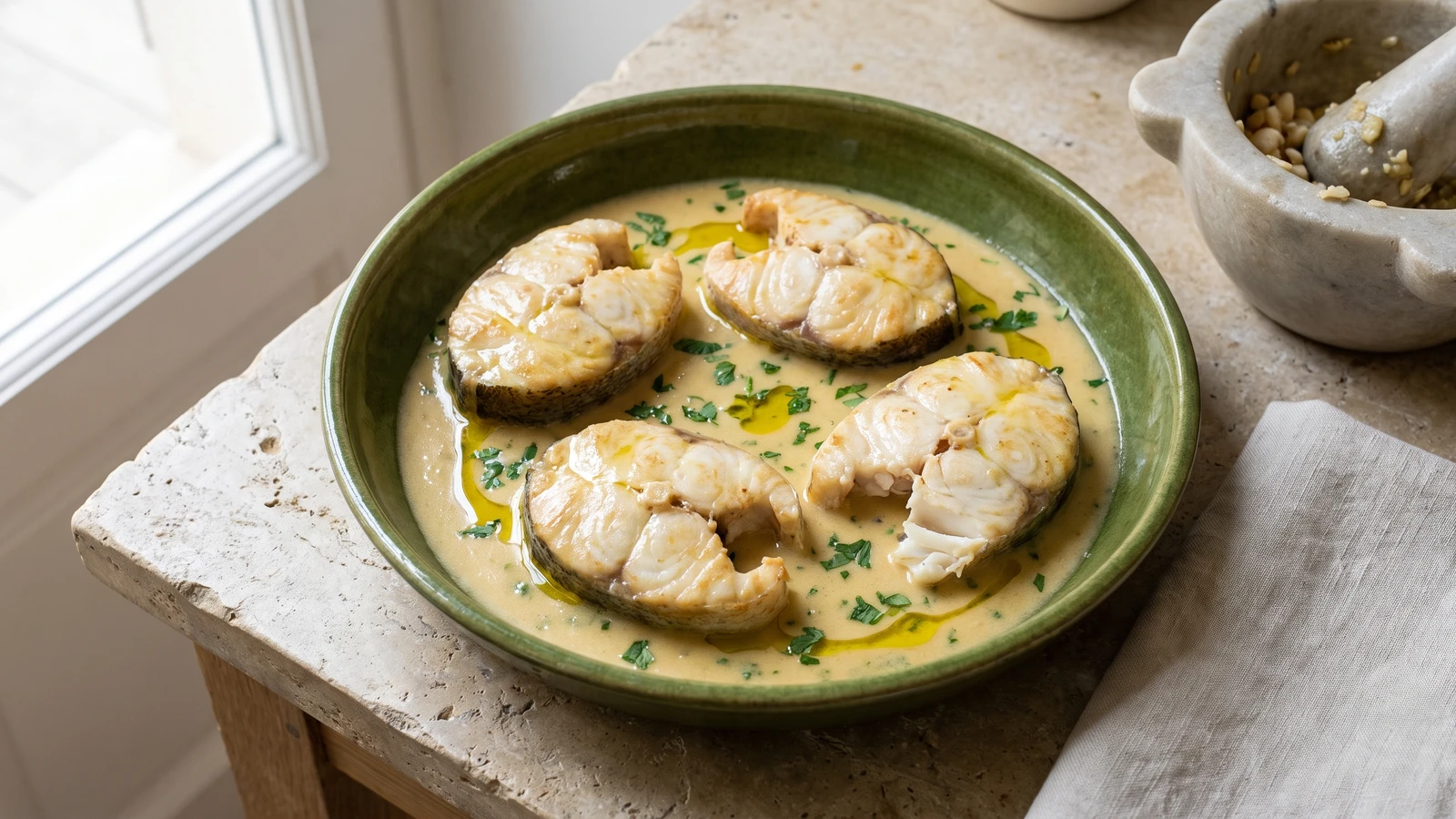
Catalonia cooks hake gently in fish stock and finishes the sauce with toasted almonds, garlic, and parsley pounded in a mortar, a picada that turns a plain pan into supper.
Lluç amb salsa d'ametlles is Catalan: thick hake steaks cooked in a light fish sauce and finished with a picada of toasted almonds, garlic, bread, and parsley pounded in the mortar. The almond picada, rather than the parsley-led salsa verde of the Basque coast, gives this dish Catalonia's hand. It is quiet food, but not plain.
The point that decides the sauce is when the picada goes in. First cook the sofregit, the slow onion base, until dark gold and jammy, then reduce the wine and stock. Only now stir in the mortar paste and let it barely simmer. The almonds bind the liquid without burying the hake, while the garlic and parsley stay clear. Grind it to nut butter or boil it hard and the sauce turns heavy. I want it glossy and loose enough to run from a spoon.
Frozen-at-sea hake is often better than tired fresh fish, so buy it without apology and thaw it slowly in the refrigerator. If hake isn't sold where you live, use thick fresh cod loin, bacalao fresco, never salt cod. The cod will be firmer and break into broader flakes, but the method stays the same. The Margin beside mine says the sauce should run, not stand. Siempre sale, si lo sigues. It turns out if you follow it.
Lluç has long held an important place in Catalan fish markets, while almonds from the inland larder supplied body to sauces without overwhelming delicate fish. The medieval Catalan recipe collection Llibre de Sent Soví already recorded almond-thickened sauces, well before tomato became part of the regional pot. The picada carries that older method forward: nuts, bread, garlic, and herbs pounded in a mortar and added near the end to bind and season the cooking liquid.
Quantity
800g
cut into 4 equal 200g portions about 3cm thick
Quantity
10g
divided
Quantity
30g
for dusting
Quantity
70ml
divided
Quantity
50g
Quantity
20g
cut into 2cm pieces
Quantity
2 cloves (about 10g)
peeled
Quantity
180g
finely chopped
Quantity
100ml
Quantity
350ml
Quantity
1
Quantity
12g
10g for the picada and 2g finely chopped for finishing
| Ingredient | Quantity |
|---|---|
| center-cut hake steakscut into 4 equal 200g portions about 3cm thick | 800g |
| fine sea saltdivided | 10g |
| plain flourfor dusting | 30g |
| extra virgin olive oildivided | 70ml |
| raw blanched whole almonds | 50g |
| day-old country breadcut into 2cm pieces | 20g |
| garlicpeeled | 2 cloves (about 10g) |
| onionfinely chopped | 180g |
| dry white wine | 100ml |
| unsalted white fish stock | 350ml |
| bay leaf | 1 |
| flat-leaf parsley leaves and tender stems10g for the picada and 2g finely chopped for finishing | 12g |
Check the hake for scales and stray bones, then blot it thoroughly dry. Season all over with 6g of the salt and leave it for 10 minutes. Blot away the moisture drawn to the surface. Spread the flour on a plate, dust each steak lightly on both cut faces, and shake off every loose bit. You want a veil, not a coat.
Warm 20ml of the olive oil in a wide pan over medium-low heat. Add the almonds and cook for about 2 minutes, turning them until pale gold. Add the bread and whole garlic cloves, then cook for another 1 to 2 minutes. Remove everything with a slotted spoon as soon as the bread is crisp and the garlic lightly colored. Leave the oil in the pan.
Add 25ml more oil and raise the heat to medium-high. When the oil looks loose and glossy, lay in the hake without crowding. Cook the first cut face for 75 to 90 seconds and the second for about 60 seconds, just until lightly golden. Transfer the steaks to a plate. They must still be raw at the center because they finish in the sauce.
Lower the heat and add the remaining 25ml oil, the onion, 2g salt, and the bay leaf. Scrape up the pale browned flour left by the fish. Cook gently for 16 to 20 minutes, stirring often, until the onion is very soft, dark gold, and jammy without crisp edges. This slow sofregit gives the sauce its sweetness. If it catches, loosen it with a spoonful of the measured stock, not more oil.
Pour in the wine, raise the heat to medium, and scrape the bottom of the pan. Boil for 3 to 4 minutes, until only about 30ml remains and the sharp wine smell has softened. Add the fish stock and bring it to a gentle simmer. Cook uncovered for 6 minutes so the onion and stock come together.
Put the fried almonds, bread, and garlic in a mortar with 10g parsley and 1g salt. Pound until no large almond pieces remain but stop before it becomes a smooth nut paste. Ladle about 30ml of the hot sauce into the mortar, work it through the picada, then scrape the whole mixture back into the pan. Stir and simmer very gently for 2 minutes. The sauce should lightly coat a spoon while still pouring freely.
Set the hake back into the pan in one layer and spoon sauce over it. Hold the pan at the barest bubble for 4 to 6 minutes, depending on thickness. Do not stir or turn the steaks; shake the pan gently by its handle instead. The hake is ready when the flesh is opaque beside the central bone, separates into moist flakes under light pressure, and reaches 63°C at its thickest point. Add the remaining 1g salt only if the sauce needs it.
Remove the bay leaf and take the pan off the heat. Rest the hake in its sauce for 3 minutes. If the sauce has become too thick, loosen it with 15 to 30ml hot water; if it is thin, lift out the fish and simmer the sauce alone for another minute. Scatter over the remaining 2g chopped parsley and serve at once, with plenty of sauce around each steak.
1 serving (about 300g)
Culinary guides, cultural storytelling, and the editorial depth that makes cooking meaningful.
Discover Culinary ExplorerChef Isabel
Extremadura's dehesa gives us this fan-shaped, marbled rib cut: salt it at the last moment, lay it on a fierce plancha, and count in seconds so the centre stays juicy.

Chef Isabel
Aletría Murciana is Murcia's humble noodle guiso: fine fideos, pork ribs, potato, saffron, and a dark sweet sofrito. Get that base right and the pot knows where it's going.

Chef Isabel
Andrajos are Andalucía's dough-rag stew from Jaén and Granada: a slow rabbit guiso thickened with torn sheets of flour dough, rolled thin so they cook tender instead of gummy.
Chef Isabel
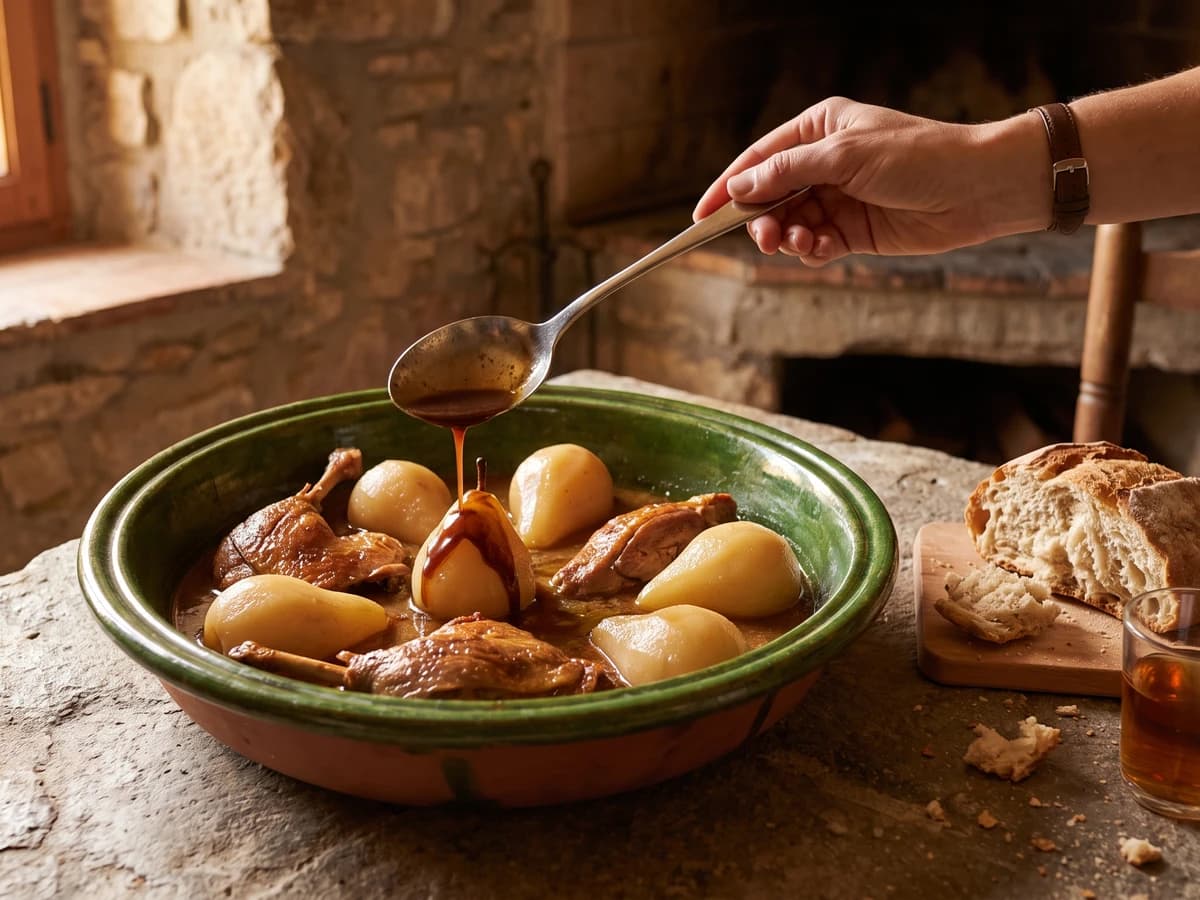
Ànec amb peres is Catalan celebration cooking: duck braised in a dark sofregit, firm autumn pears added near the end, and an almond-garlic picada that turns the juices into a close, glossy sauce.