
Chef Dean
Affogato
Hot espresso meets frozen gelato in a collision of temperature and texture that Italians perfected centuries ago. Two ingredients. Thirty seconds. A dessert worthy of standing ovations.
A cooking platform built around craft, culture, and the stories behind what we eat.
Created by
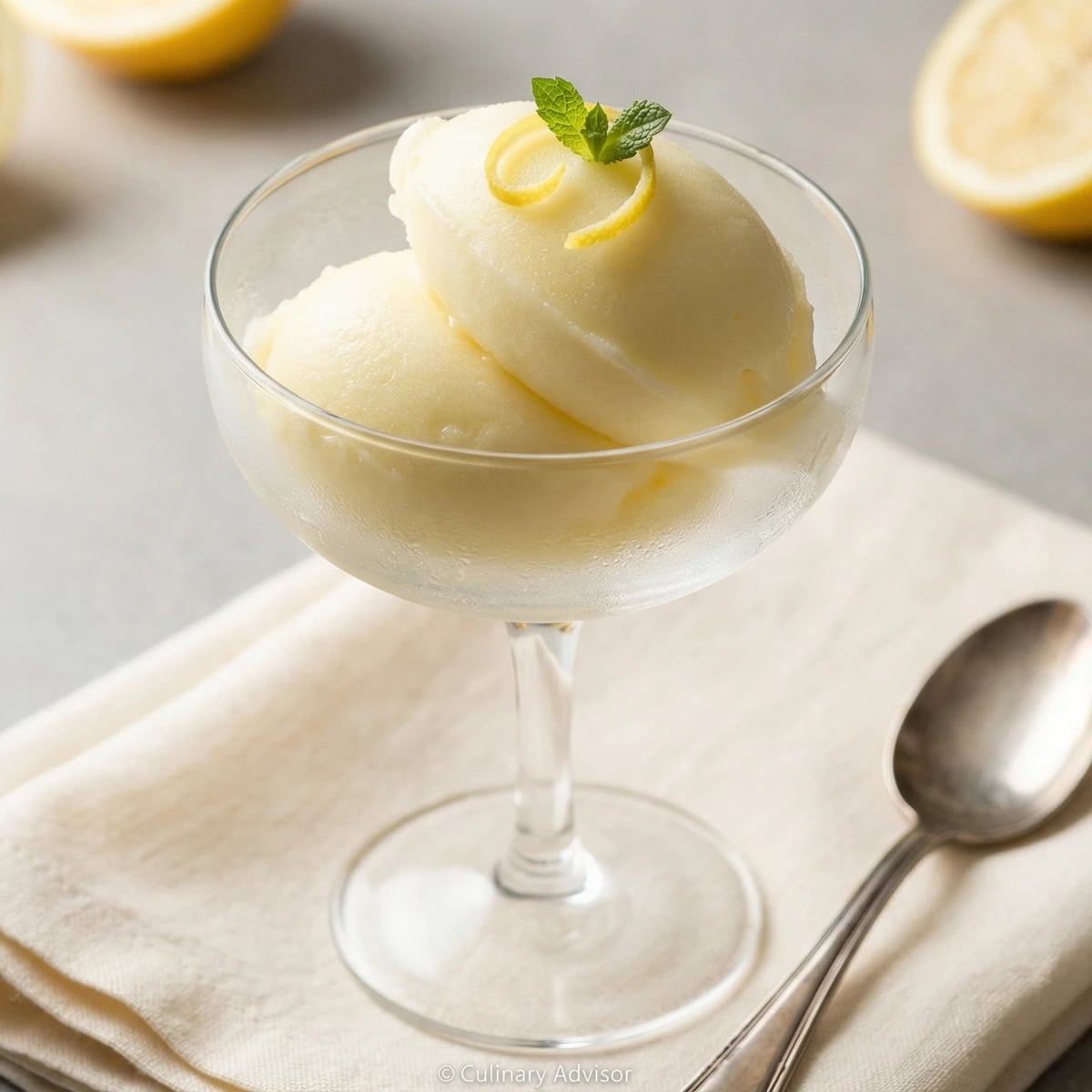
Pure frozen lemon essence, impossibly smooth and bracingly tart, the kind of clean, bright finish that makes a dinner party feel complete and leaves guests wondering how something so simple can taste so refined.
The French have understood for centuries what Americans are only now remembering: the best desserts are often the simplest. Lemon sorbet requires three ingredients. Water. Sugar. Lemons. From this trinity comes a frozen dessert so pure it cleanses the palate between courses and so satisfying it can close a meal with grace.
I learned to make sorbet in a cramped Parisian kitchen where the chef measured nothing and tasted everything. He would dip a spoon into the base, close his eyes, and adjust. Too sweet, add lemon. Too tart, a touch more syrup. The balance point is personal. Your lemons, your palate, your call.
The technique rewards attention but not anxiety. You'll make a simple syrup, combine it with fresh lemon juice, and churn until frozen. The magic happens in that churning, when air incorporates into the mixture and transforms syrup into silk. Without proper technique, you get an icy block. With it, you achieve something that shatters on the tongue and melts into pure citrus.
Quantity
1 cup (200g)
Quantity
1 cup (240ml)
Quantity
1 tablespoon
finely grated, from about 2 lemons
Quantity
1 cup (240ml)
freshly squeezed, from 5-7 lemons
Quantity
pinch
Quantity
1 tablespoon
| Ingredient | Quantity |
|---|---|
| granulated sugar | 1 cup (200g) |
| water | 1 cup (240ml) |
| lemon zestfinely grated, from about 2 lemons | 1 tablespoon |
| fresh lemon juicefreshly squeezed, from 5-7 lemons | 1 cup (240ml) |
| fine sea salt | pinch |
| vodka (optional) | 1 tablespoon |
Combine sugar and water in a small saucepan over medium heat. Stir occasionally until the sugar dissolves completely. You'll know it's ready when the liquid turns from cloudy to crystal clear, about 3 to 4 minutes. Do not let it boil vigorously. Remove from heat immediately once clear.
Stir the lemon zest into the hot syrup. Cover the pan and let it steep for 15 minutes. The heat extracts the aromatic oils from the zest, giving your sorbet a deeper lemon flavor than juice alone provides. Those oils live in the yellow skin, not the white pith beneath.
While the syrup steeps, juice your lemons. Roll each lemon firmly against the counter before cutting, pressing down with your palm. This breaks the cell walls inside and yields more juice. Strain through a fine mesh strainer to catch seeds and pulp. You need one full cup.
Strain the steeped syrup into a medium bowl, pressing on the zest to extract every drop of flavor. Add the lemon juice, salt, and vodka if using. Whisk to combine. Now taste. The base should seem slightly too sweet and too tart at room temperature. Freezing dulls both sensations. Trust the balance.
Cover the bowl and refrigerate until very cold, at least 4 hours or overnight. Cold base churns faster and produces smaller ice crystals, which means smoother sorbet. Patience here pays dividends. Do not skip this step or rush it.
Pour the chilled base into your ice cream maker and churn according to manufacturer instructions, typically 20 to 25 minutes. The sorbet is ready when it holds soft peaks and pulls away from the sides of the canister. It will have the texture of a thick slushie, not solid ice cream. This is correct.
Transfer the churned sorbet to a freezer-safe container, pressing plastic wrap directly against the surface to prevent ice crystals from forming on top. Freeze for at least 2 hours until firm enough to scoop cleanly. It will never freeze rock-hard like water ice because the sugar acts as antifreeze.
Remove from freezer 5 minutes before serving. Sorbet scoops best when it softens just slightly. Use a warm scoop dipped in hot water and dried between each portion. The texture should shatter gently under a spoon, then melt cleanly on the tongue into pure lemon essence.
1 serving (about 125g)
Culinary guides, cultural storytelling, and the editorial depth that makes cooking meaningful.
Discover Culinary Explorer
Chef Dean
Hot espresso meets frozen gelato in a collision of temperature and texture that Italians perfected centuries ago. Two ingredients. Thirty seconds. A dessert worthy of standing ovations.

Chef Dean
A tumble of cinnamon-kissed apples beneath a shaggy, golden oat topping that shatters into buttery crumbs with every spoonful. This is the dessert that makes your kitchen smell like autumn and your guests ask for seconds before they've finished firsts.

Chef Dean
A crustless wonder from San Sebastián with a dramatic caramelized top that cracks like crème brûlée, giving way to a center so impossibly creamy it trembles when you slice it.

Chef Dean
A golden-topped New England treasure where tender butter cake, jammy wild berries, and a craggy cinnamon streusel buckle and crack into something your grandmother would recognize as honest summer baking.