
Chef Thomas
A Proper Hot Toddy
A winter glass of whisky, honey, and lemon, stirred together in a warm mug and carried up to bed when the cough won't leave and the evening has asked you politely to stop.
A cooking platform built around craft, culture, and the stories behind what we eat.

Created by Chef Thomas
A jug of pearl barley simmered with lemon rind and a handful of sugar, strained and chilled until it tastes like a late June afternoon with the tennis on in the next room.
There's a fortnight at the end of June when the garden goes slightly mad and the afternoons stretch out into something that feels longer than it is. The strawberries are in. The tennis is on somewhere in the background. The windows are open and the kitchen is too warm to cook anything ambitious. This is when a jug of lemon barley water earns its place in the fridge.
It's an old-fashioned drink, and I mean that as praise. Pearl barley, lemon rind, sugar, water. Simmered gently until the kitchen smells faintly of citrus and warm cereal, then strained, sweetened, sharpened with fresh juice, and chilled until the jug beads with cold. It isn't trying to be anything other than what it is: a quiet, slightly cloudy, properly refreshing thing to drink on a hot afternoon.
I make a jug most Saturdays through July. It lives in the fridge and I pour it into whichever glass is nearest whenever I come in from the garden with grass on my ankles. I wrote it down in the notebook years ago: barley, lemons, ice, shade. That was the whole entry. Some drinks don't need more detail than that.
The only real trick is the lemon rind. Pare it thinly, yellow only, no white pith, or the whole jug turns bitter and sulky. Everything else is just patience and a gentle simmer. We're only making a drink.
Quantity
100g
Quantity
1.5 litres
plus extra for rinsing the barley
Quantity
3
pared and juiced
Quantity
75g
or to taste
Quantity
small pinch
Quantity
to serve
| Ingredient | Quantity |
|---|---|
| pearl barley | 100g |
| cold waterplus extra for rinsing the barley | 1.5 litres |
| unwaxed lemonspared and juiced | 3 |
| golden caster sugaror to taste | 75g |
| fine sea salt | small pinch |
| ice and lemon slices (optional) | to serve |
Tip the pearl barley into a sieve and rinse it under cold running water until the water runs clear. It'll look cloudy and slightly starchy at first, which is exactly what you're washing away. A minute of rinsing, a gentle shake, and you're done.
With a vegetable peeler, take the rind off the lemons in long strips. You want the yellow only, not the white pith underneath, which will turn the drink bitter. Work slowly. If you catch any pith, shave it off with a small knife. Keep the naked lemons for juicing later.
Put the rinsed barley into a heavy-bottomed saucepan with the 1.5 litres of cold water and the lemon rind. Bring it slowly up to the boil, then drop the heat right down so it barely murmurs. Let it simmer, half-covered, for about forty minutes. The kitchen will start to smell faintly of lemons and something warm and cereal, like a pantry on a summer morning. The barley should be soft and the liquid slightly cloudy, the colour of weak straw.
Take the pan off the heat. Stir in the sugar and the pinch of salt while the liquid is still hot, so the sugar dissolves completely. Leave it to sit, lid on, for another twenty minutes or so. This is where the lemon rind really does its work, perfuming the barley water as it cools.
Set a fine sieve over a jug or bowl and pour the barley water through, pressing gently on the barley with the back of a spoon to get every last drop. Discard the spent barley and the rind. Squeeze the juice of the three lemons and stir it in. Taste it. If it's too sharp, add a touch more sugar. If it's too sweet, another squeeze of lemon. A recipe is a conversation, not a contract.
Cover the jug and chill it for at least two hours, longer if you can manage. It needs to be properly cold, the kind of cold that fogs the outside of the glass. Serve over plenty of ice with a slice of lemon and, if you're feeling generous, a sprig of mint from the garden.
1 serving (about 200g)
Culinary guides, cultural storytelling, and the editorial depth that makes cooking meaningful.
Discover Culinary ExplorerChef Thomas
A winter glass of whisky, honey, and lemon, stirred together in a warm mug and carried up to bed when the cough won't leave and the evening has asked you politely to stop.

Chef Thomas
Hot spiced ale with roasted apples bobbing on the surface, honeyed and fragrant with cinnamon and orange peel, the oldest winter drink in the British kitchen and still the best.

Chef Thomas
A deep, inky cordial made from a glut of August blackcurrants, bottled for the months when summer feels like something you dreamed, and poured over ice when you need proof it happened.
Chef Thomas
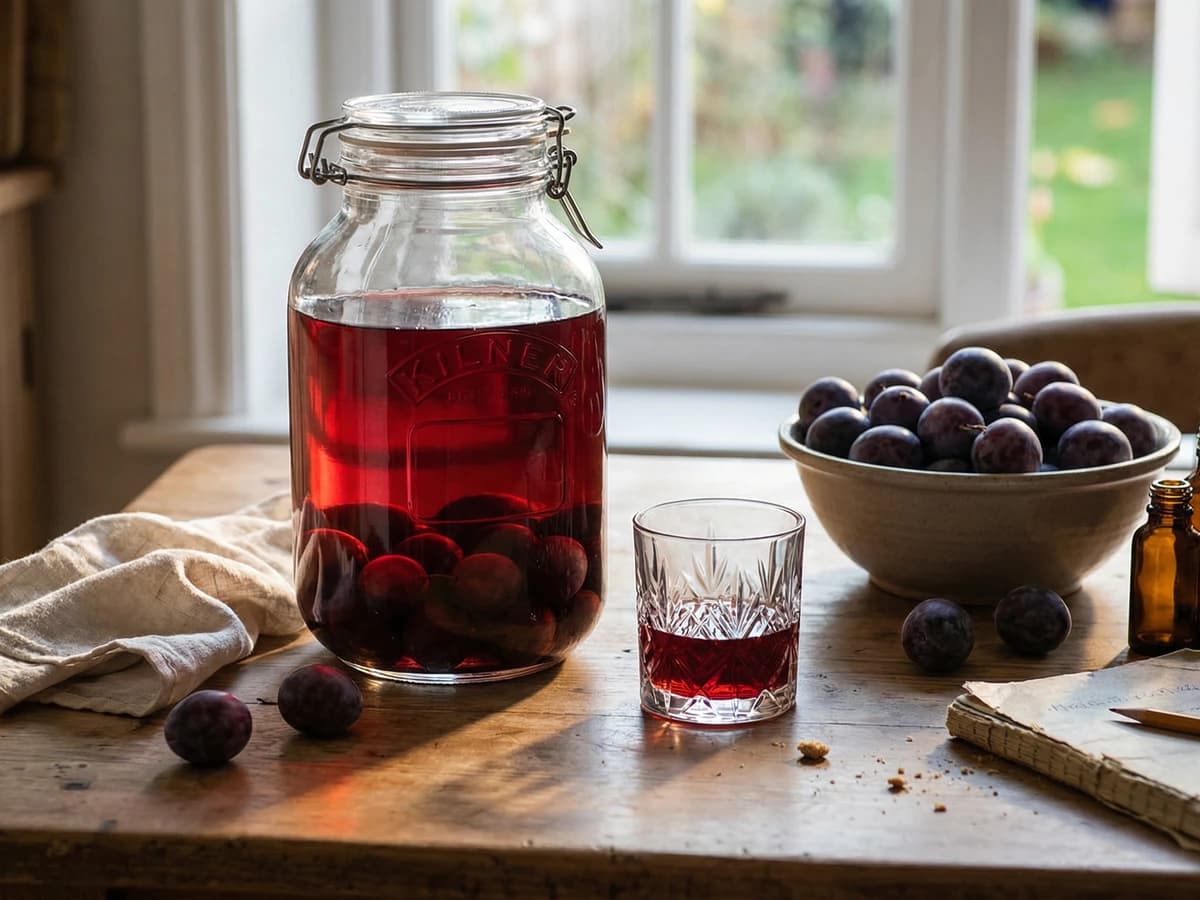
A slow autumn ritual that turns a glut of sharp purple plums into a bottle of ruby warmth, ready to pour on dark December evenings when the kitchen smells of woodsmoke and the year is winding down.