Chef Lupita
Acúmara Tatemada al Comal
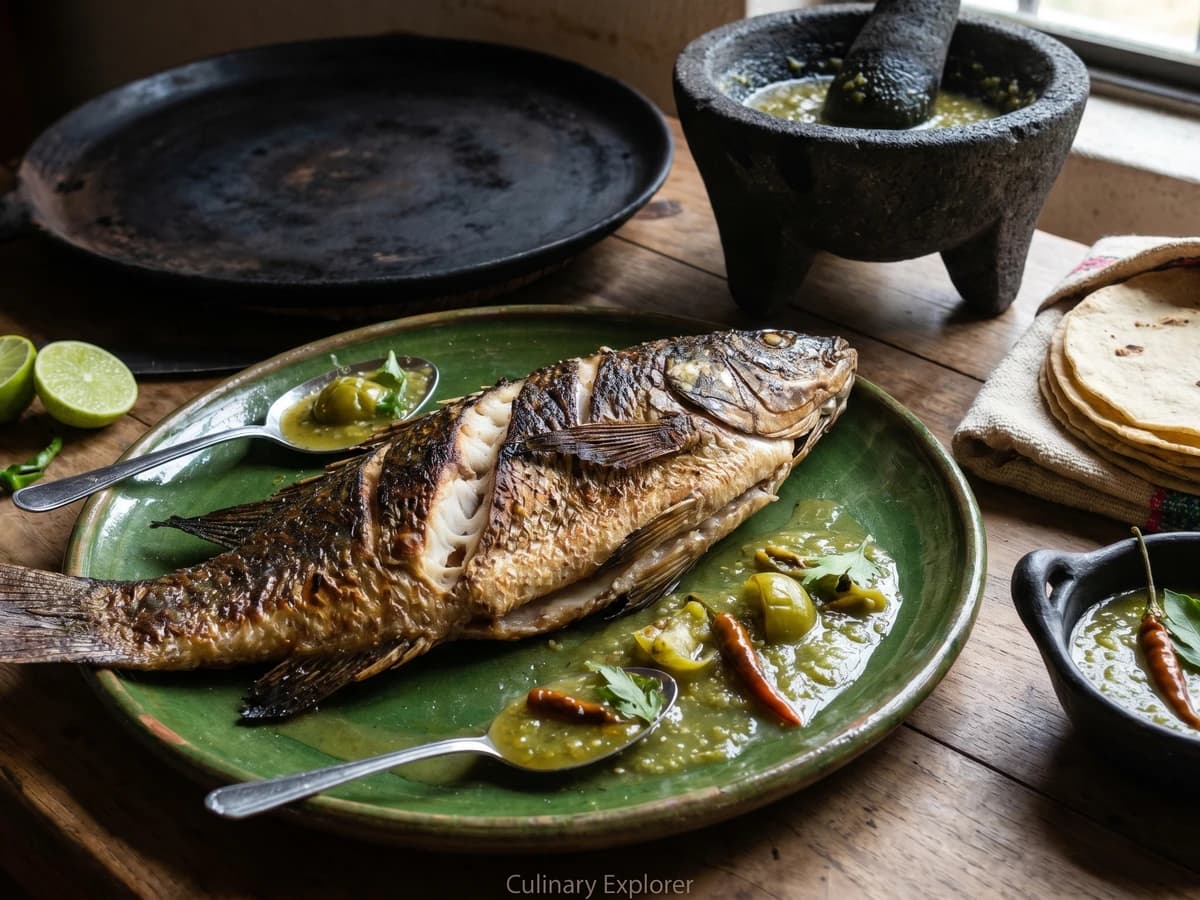
Michoacán's Lake Pátzcuaro acúmara, a whole kurucha from the lago tatemada on a comal de leña and served with chile perón atápakua, corn tortillas, and P'urhépecha discipline.
A cooking platform built around craft, culture, and the stories behind what we eat.
Created by
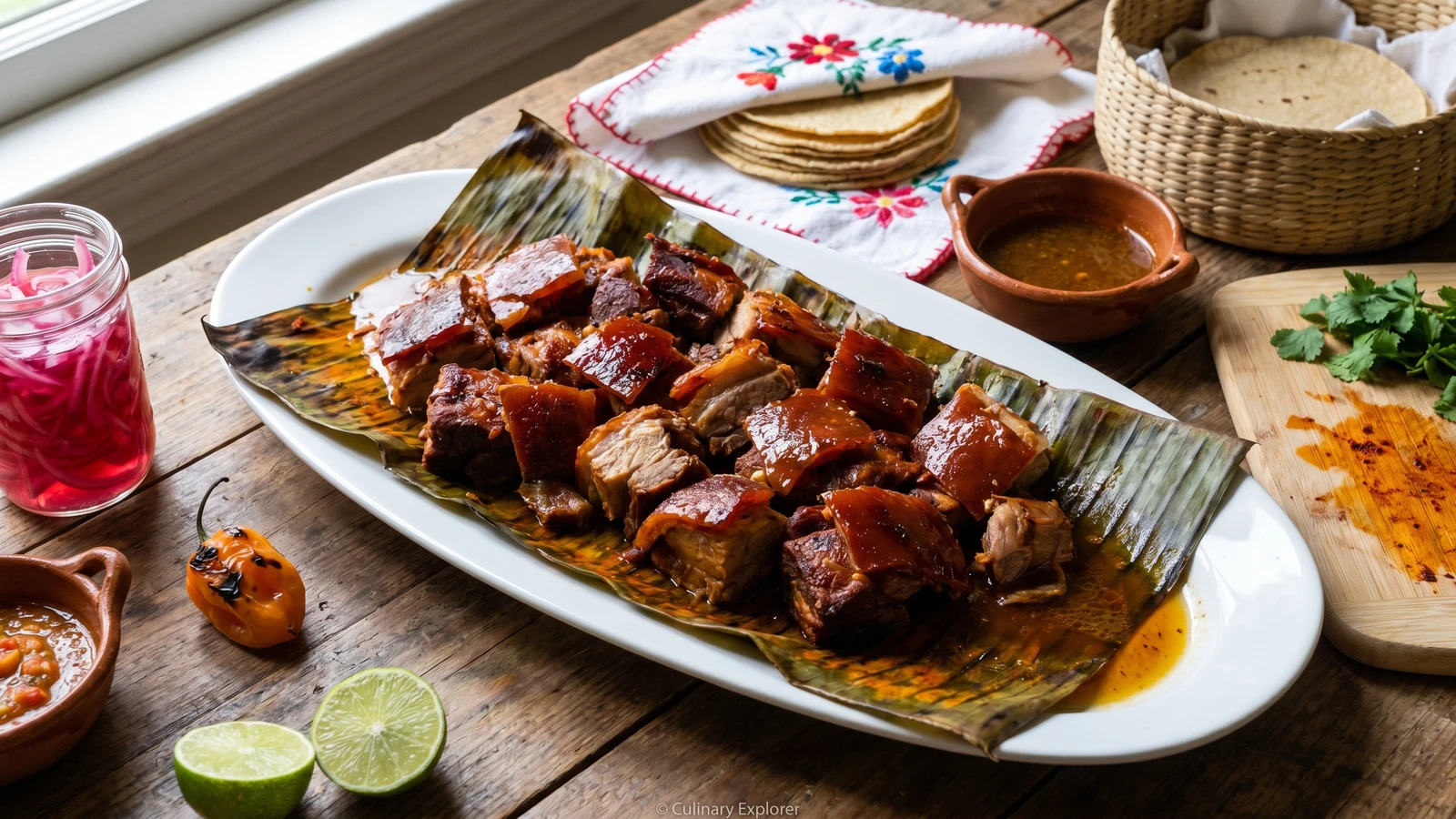
Yucatán's celebration pig, rubbed with recado rojo and bathed in sour orange, slow-roasted under banana leaves until the meat pulls apart and the skin crackles like glass under a spoon.
This is from Yucatán. Specifically from the kitchens between Mérida, Valladolid, and Izamal where a suckling pig means a wedding, a baptism, a Hanal Pixán, or a name day worth remembering. The pueblo cook who knows how to do this right is the cook the whole town calls when there is something to celebrate.
The recado rojo is the dish. Achiote ground with pimienta gorda, cumin, clove, peppercorn, garlic, and Yucatecan oregano, loosened with naranja agria until it is the color of wet terracotta. That paste, pushed into a scored pig and left to work overnight, is what makes this lechón Yucatecan and not just roast pork. Without the achiote, you have nothing peninsular. Without the sour orange, the marinade cannot cut the fat. Without the banana leaf wrap in the oven, the meat dries out before the skin crackles. Each piece does a job.
Do not confuse this with cochinita pibil. Cochinita is the cousin: shoulder, pit-buried, banana-wrapped, the underground oven called pib. Lechón al horno is the cousin who came in from the milpa, the same flavor profile cooked in a home oven for families who do not have a pib in the backyard. Both belong to Yucatán. Both use recado rojo and naranja agria. Both end with pickled onions and habanero on the table.
My notebook from Valladolid has a page from doña Cony, a señora who runs a comedor near the convent of San Bernardino. She told me three things and made me write them down. Naranja agria, not regular orange. Banana leaves passed over flame, never raw. And the pig sits in the recado overnight, never less. Cada estado, su propia cocina, and Yucatán defends its kitchen with more conviction than almost any state in Mexico. Saber cocinar es saber vivir, and on the peninsula, knowing how to roast a lechón is knowing how to feed a family on the day that matters.
The pig itself is Spanish, arriving on the peninsula with the conquest of Yucatán in the 1540s, but the cooking method, achiote paste, sour orange marinade, banana leaf wrapping, and slow underground roasting in a pib, is direct Maya inheritance from the pre-Columbian world. The word 'recado' comes from the Spanish for a prepared message or errand and was adapted in colonial Yucatán to mean a pre-blended seasoning paste, of which the peninsula recognizes at least eight (rojo, negro, blanco, bistec, escabeche, chilaquil, mechado, and adobo). Achiote (Bixa orellana) was used by the Maya as both food coloring and body paint for centuries before the conquest, and the bright orange-red it gives Yucatecan cooking is one of the most visible continuities between pre-Hispanic and contemporary peninsular cuisine.
Quantity
1 (12 to 14 pounds)
cleaned, with head and skin on
Quantity
1 1/2 cups, plus more for basting
Quantity
1 brick (3.5 ounces)
preferably El Yucateco or homemade
Quantity
8
peeled
Quantity
1 tablespoon
preferably Yucatecan oregano
Quantity
1 tablespoon
Quantity
1 teaspoon
Quantity
1 teaspoon
Quantity
4
Quantity
2 tablespoons, plus more for the cavity
Quantity
1/2 cup
melted
Quantity
2 large
passed over an open flame until pliable
Quantity
2 medium
sliced into thin half-moons
Quantity
1 cup
Quantity
2
charred whole on a comal
Quantity
1 teaspoon
Quantity
1 teaspoon
Quantity
for serving
warmed
Quantity
for serving
| Ingredient | Quantity |
|---|---|
| whole suckling pigcleaned, with head and skin on | 1 (12 to 14 pounds) |
| sour orange juice (naranja agria) | 1 1/2 cups, plus more for basting |
| recado rojo (achiote paste)preferably El Yucateco or homemade | 1 brick (3.5 ounces) |
| garlic clovespeeled | 8 |
| dried Mexican oreganopreferably Yucatecan oregano | 1 tablespoon |
| whole black peppercorns | 1 tablespoon |
| whole allspice berries (pimienta gorda) | 1 teaspoon |
| whole cumin seed | 1 teaspoon |
| whole cloves | 4 |
| kosher salt | 2 tablespoons, plus more for the cavity |
| manteca de cerdo (pork lard)melted | 1/2 cup |
| banana leavespassed over an open flame until pliable | 2 large |
| red onionssliced into thin half-moons | 2 medium |
| sour orange juice (for the pickled onions) | 1 cup |
| fresh chile habanerocharred whole on a comal | 2 |
| dried Mexican oregano (for the onions) | 1 teaspoon |
| kosher salt (for the onions) | 1 teaspoon |
| hand-pressed corn tortillas (optional)warmed | for serving |
| salsa xnipec (optional) | for serving |
Heat a dry comal over medium. Toast the peppercorns, allspice, cumin, and cloves for about 90 seconds, shaking the pan, until the kitchen smells like a Mérida spice stall. The allspice (pimienta gorda) is the spice that locates this rub on the peninsula. Tip the spices onto a plate to cool. Toasting wakes the oils. Skip it and the recado tastes flat.
Grind the toasted spices and the Mexican oregano to a fine powder in a spice mill. Transfer to a blender with the achiote brick broken into pieces, the garlic, the 1 1/2 cups of sour orange juice, the 2 tablespoons salt, and the melted lard. Blend until you have a smooth, brick-red marinade the color of wet terracotta. It should coat the back of a spoon. La manteca es el sabor and the achiote is the color, both at once.
Pat the suckling pig completely dry with paper towels, inside and out. Dry skin is crisp skin. Wet skin steams. Score the skin in a tight diamond pattern with a very sharp knife, cutting through the skin and just into the fat but not into the meat. Salt the cavity generously. The scoring lets the recado push past the skin and lets the rendered fat escape during the roast.
Pour about two-thirds of the recado into the cavity and rub it into every corner with your hands. Rub the remaining recado over the entire outside of the pig, pushing it down into the scored cuts. Your hands will be stained orange for two days. That is the achiote doing what it does in every Yucatecan kitchen from Mérida to Tizimín. Cover loosely and refrigerate for at least 4 hours, preferably overnight. No me vengas con atajos on the marinade time.
Heat oven to 325°F. Pass the banana leaves over an open flame, one side then the other, until they turn deep green and pliable and release their grassy perfume. This is how you wake up a banana leaf. Line a large roasting pan with the leaves so they overhang the edges. Lay the pig breast-down on the leaves and fold the leaves up over the back, tucking around the legs. Pour 1 cup of sour orange juice into the bottom of the pan.
Cover the pan tightly with heavy-duty aluminum foil, sealing every edge. Roast for 3 1/2 hours. You are creating a peninsular oven inside your oven. The banana leaves steam the meat from above while the juices reduce below, and the recado works into every fiber. Do not open the foil. Every time you peek, you lose the steam that is making the meat surrender.
Remove the foil. Carefully pull the banana leaves back to expose the skin. Brush the skin with melted lard from the pan. Raise the oven to 450°F and roast for another 30 to 45 minutes, basting twice with the pan juices and a splash of fresh sour orange. The skin is done when it is the color of mahogany and it crackles audibly when you press a spoon against it. The fat below should be glossy and rendered, not pale. This is what a Yucatecan home cook calls the moment de la verdad.
While the pig roasts, place the sliced red onions in a glass jar. Char the habaneros whole on the comal until blistered black on all sides, then add them to the jar. Pour the 1 cup of sour orange juice over the onions, add the teaspoon of oregano and salt, and stir. Let sit at room temperature for at least 1 hour. The onions will turn bright pink. This is cebolla morada en escabeche and it is not optional on a Yucatecan table.
Lift the pig onto a large carving board. Tent loosely with foil and rest for 25 minutes. Skim the fat off the pan juices and reserve the juices in a small clay bowl for serving. With a sharp knife and your hands, pull the skin off in shards and break the meat into rough chunks the way carniceros in the Lucas de Galvez market in Mérida pull cochinita. Pile the meat on a warm platter and crown it with the cracked skin.
Set the platter at the center of the table. Surround with bowls of pickled onions, salsa xnipec, the reserved pan juices, and a stack of warm corn tortillas wrapped in a servilleta. Each diner builds their own taco: meat, a piece of skin for the crackle, a tangle of pink onions, a few drops of pan juice, a sliver of habanero from the jar if they are brave. Recetas probadas y garantizadas. Así se hace y punto.
1 serving (about 335g)
Culinary guides, cultural storytelling, and the editorial depth that makes cooking meaningful.
Discover Culinary ExplorerChef Lupita
Michoacán's Lake Pátzcuaro acúmara, a whole kurucha from the lago tatemada on a comal de leña and served with chile perón atápakua, corn tortillas, and P'urhépecha discipline.

Chef Lupita
Puebla's weekday adobo of pork shoulder braised in a thick guajillo and ancho sauce sharpened with vinegar, cumin, and clove. The deep red of a market spice stall, the dish a poblana cooks without thinking.

Chef Lupita
Loreto's pit-roasted clams, planted hinge-up in beach sand and tatemadas under a fast fire of dried romerillo brush, the resinous Baja desert shrub that gives this dish its smoke.

Chef Lupita
Oaxaca's eighth mole, the silky, almond-and-cinnamon almendrado, served over poached chicken. Mild, sweet, restrained, and a quiet rebuttal to anyone who thinks Mexican food has to be hot to be Mexican.