Chef Isabel
Abanico Ibérico a la Plancha
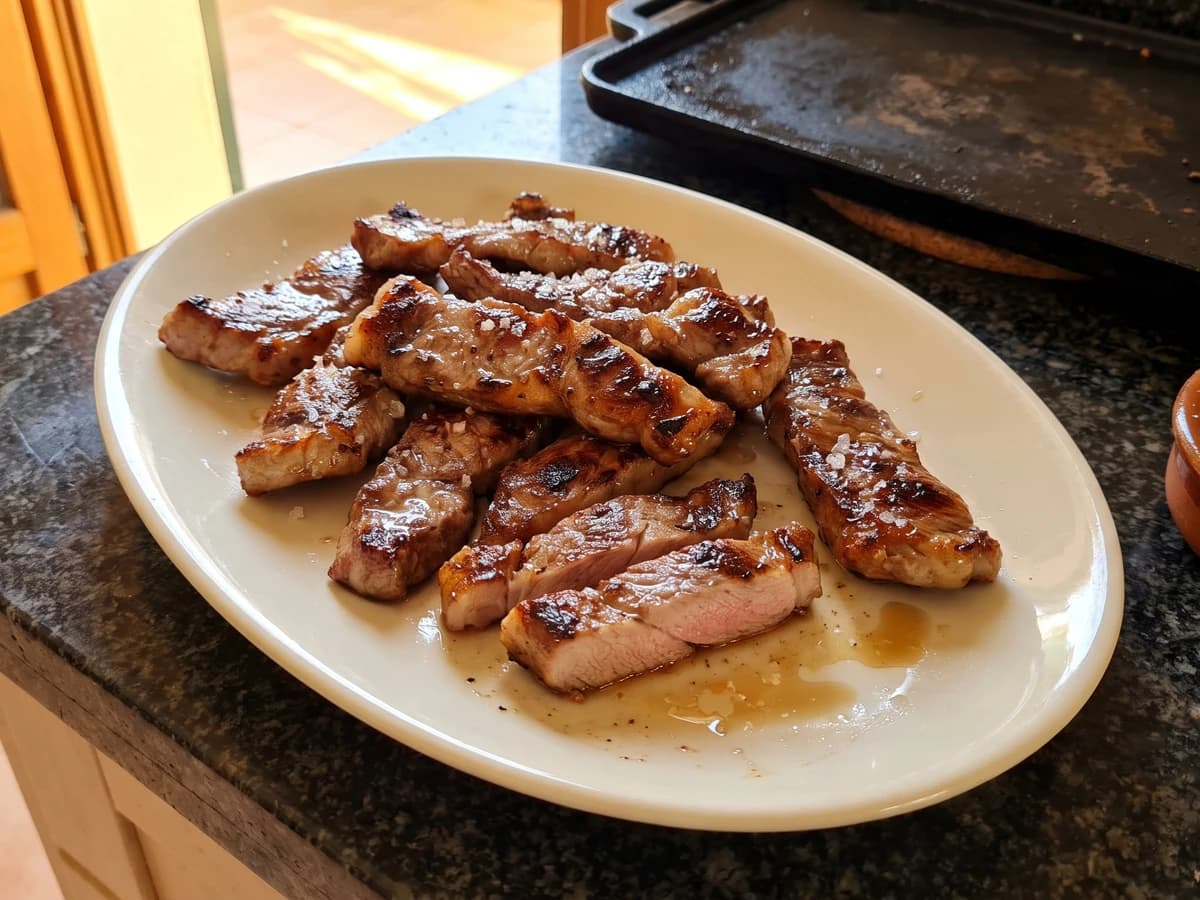
Extremadura's dehesa gives us this fan-shaped, marbled rib cut: salt it at the last moment, lay it on a fierce plancha, and count in seconds so the centre stays juicy.
A cooking platform built around craft, culture, and the stories behind what we eat.
Created by
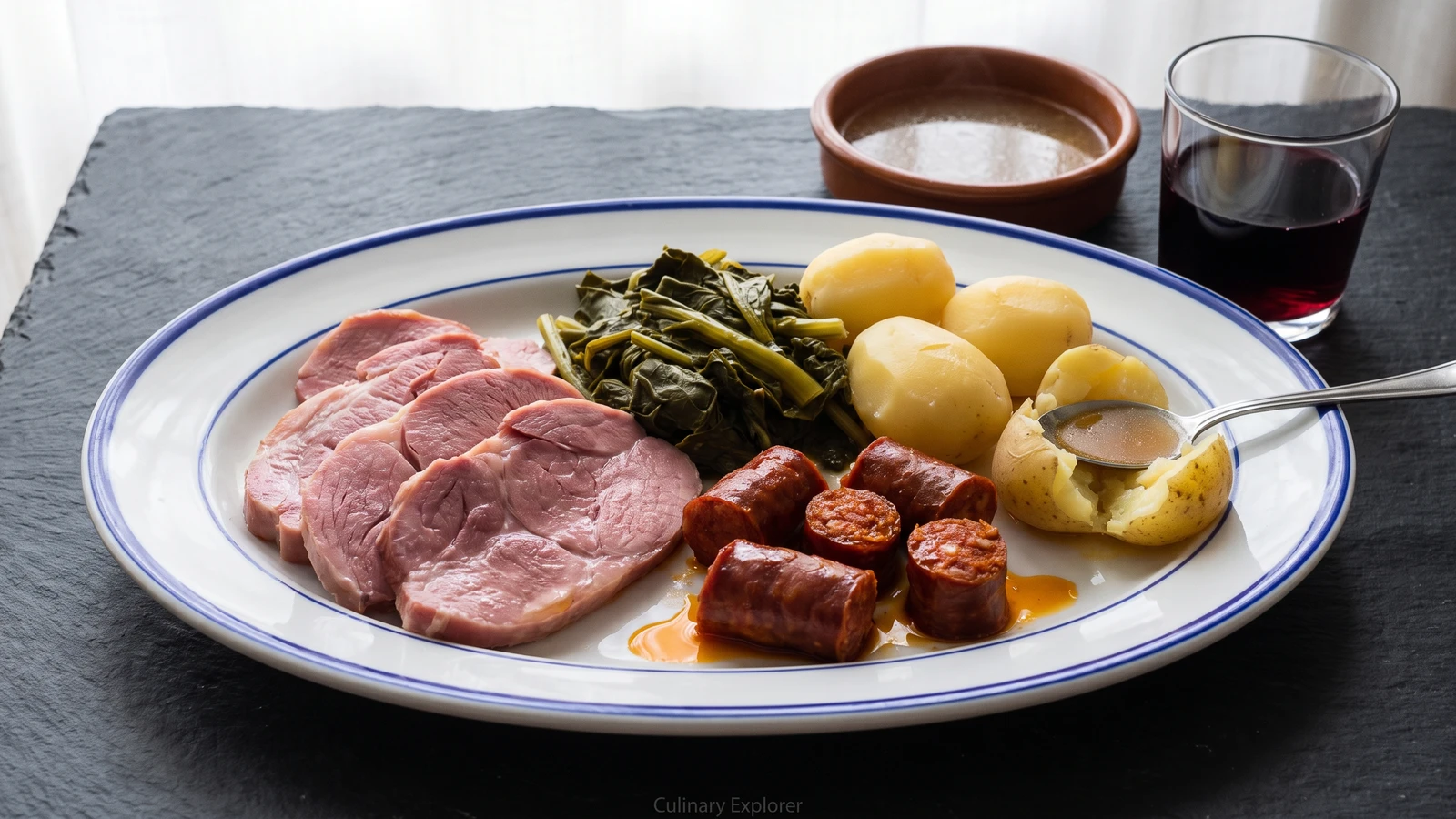
Lacón con grelos is Galicia's winter plate: salt-cured pork shoulder, turnip tops, chorizo, and potatoes cooked in one pot, with the soaking doing the work that decides the dish.
Lacón con grelos is Galician, a winter platter of salt-cured pork foreleg, grelos, chorizo, and potatoes cooked in the pork's own broth. The grelos, the tender leaves and flowering shoots of the turnip, make it this dish and not just another boiled pork supper. There is no sofrito and nothing is browned. The clean broth, pleasantly bitter greens, and rich cured meat are the point.
Desalting decides whether it works. Give a thick piece of lacón a full 24 hours in cold water, changing that water every eight hours. Rush this and the salt passes into the potatoes and greens until everything tastes of the same mistake. Once soaked, I keep the pot at a quiet simmer and add each ingredient according to the time it needs. Siempre sale, si lo sigues, it turns out if you follow it.
Far from Galicia, use an unsmoked salt-cured picnic shoulder or an unsmoked gammon hock. A smoked hock will still feed you well, but the smoke changes the dish. Broccoli rabe is the closest widely available substitute for grelos; it is sharper and stalkier, so blanch it briefly if the bitterness is fierce. No hace falta haber pisado España. The Margin beside my recipe says only this: change the soaking water, because the pot cannot undo salt you left in the meat.
Lacón con grelos belongs to Galicia's Entroido, the Carnival season when winter grelos are at their best and the salted foreleg from the household matanza, the annual pig slaughter, is ready for the pot. Salting preserved the pig's front leg through winter, while potatoes and turnip shoots stretched that prized meat across a full family table. Grelos are not simply mixed greens; they are gathered before their yellow flowers fully open, while the stalks remain tender and their bitterness can stand against the rich pork.
Quantity
1.5kg
skin on, soaked in cold water for at least 24 hours
Quantity
250g, about 2 links
left whole and unpricked
Quantity
1.2kg
washed, with tough stalks removed
Quantity
1kg
peeled and left whole
Quantity
4 litres for each soaking change, plus about 4.5 litres for cooking
Quantity
only if needed after tasting
| Ingredient | Quantity |
|---|---|
| bone-in salt-cured lacónskin on, soaked in cold water for at least 24 hours | 1.5kg |
| chorizo gallego or Spanish semi-cured cooking chorizoleft whole and unpricked | 250g, about 2 links |
| fresh greloswashed, with tough stalks removed | 1.2kg |
| medium all-purpose potatoes, preferably Kennebecpeeled and left whole | 1kg |
| cold water | 4 litres for each soaking change, plus about 4.5 litres for cooking |
| fine salt (optional) | only if needed after tasting |
Put the lacón in a nonreactive container and cover it completely with 4 litres of cold water. Refrigerate for at least 24 hours, changing the water after 8 hours and again after 16 hours. Keep the meat submerged throughout. Drain it, rinse under cold water, and pat away any loose salt before cooking.
Set the drained lacón skin-side up in a 10-litre stockpot and add about 4.5 litres of fresh cold water, enough to cover it by 4 to 5cm. Bring it slowly to the edge of a boil over medium heat, which should take about 25 minutes. Skim off the grey foam, lower the heat, and hold the water at a quiet simmer with the lid slightly ajar. Cook for 1 hour 45 minutes. Do not add salt.
While the pork cooks, wash the grelos in two or three changes of water because grit hides where the leaves meet the stalks. Discard thick, fibrous stems and any yellowed leaves, keeping the leaves, unopened flower buds, and tender upper stalks. Peel the potatoes and leave them whole; halve only those much larger than 7cm so they finish together.
After the lacón has simmered for 1 hour 45 minutes, push a thin skewer into its thickest part. It should enter with some resistance but no longer feel hard. If it is still firm, give it another 15 minutes before continuing. Add the whole unpricked chorizos and the potatoes, return the broth to its quiet simmer, and cook for 15 minutes.
Add the grelos by the handful, pressing each batch beneath the broth as it wilts. Simmer uncovered for 15 to 20 minutes, until the tender stalks yield to a knife and the potatoes are soft through the centre without breaking apart. The lacón should now pull easily from the bone. If the vegetables finish first, lift them out and let the pork continue until tender.
Lift the lacón and chorizos onto a board and rest them for 10 minutes. Keep the greens and potatoes covered with a little broth. Remove the bone from the lacón, then slice the meat across the grain into pieces about 1cm thick. Cut each chorizo into three or four generous pieces.
Drain the grelos and potatoes well and arrange them in separate, generous groups on a large platter with the sliced lacón and chorizo. Spoon over 60ml of the cooking broth so everything carries a light gloss without swimming. Taste before reaching for salt; the lacón and chorizo have usually done enough. Serve the remaining broth separately.
1 serving (about 445g)
Culinary guides, cultural storytelling, and the editorial depth that makes cooking meaningful.
Discover Culinary ExplorerChef Isabel
Extremadura's dehesa gives us this fan-shaped, marbled rib cut: salt it at the last moment, lay it on a fierce plancha, and count in seconds so the centre stays juicy.

Chef Isabel
Aletría Murciana is Murcia's humble noodle guiso: fine fideos, pork ribs, potato, saffron, and a dark sweet sofrito. Get that base right and the pot knows where it's going.

Chef Isabel
Andrajos are Andalucía's dough-rag stew from Jaén and Granada: a slow rabbit guiso thickened with torn sheets of flour dough, rolled thin so they cook tender instead of gummy.
Chef Isabel
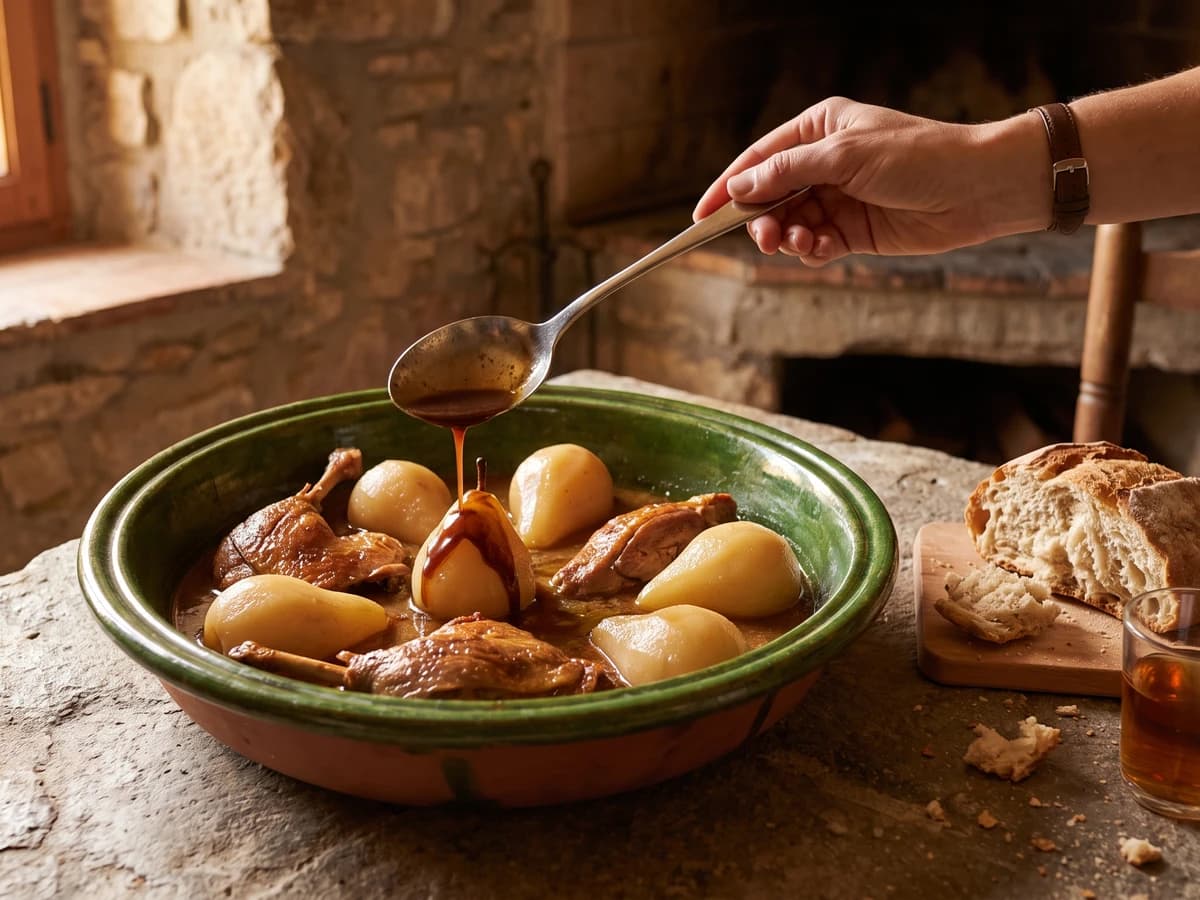
Ànec amb peres is Catalan celebration cooking: duck braised in a dark sofregit, firm autumn pears added near the end, and an almond-garlic picada that turns the juices into a close, glossy sauce.