
Chef Freja
Andelår med Rødkål
Slow-roasted duck legs with crisp, deeply golden skin, served with braised red cabbage and caramelized potatoes. The weeknight Danish duck that proves the best part of the bird is the one that takes its time.
A cooking platform built around craft, culture, and the stories behind what we eat.

Created by Chef Freja
Chicken frikadeller pan-fried golden in butter, then simmered in a gentle creamy dill sauce. The lighter weeknight answer that still tastes like being looked after, served over new potatoes with the sauce spooned generously over everything.
There's a point in late spring when the dill in Danish gardens goes from cautious little fronds to something you can gather by the handful. That's when this dish makes the most sense. Not because you can't make it in February, you can, but because the dill is different in May. It smells sharper. Greener. It reminds you that the kitchen is starting to lighten up, and so is the food.
Kyllingefrikadeller are the weeknight frikadelle. Same technique, same oval shape, same golden crust from butter and a hot pan, but chicken instead of the traditional pork and veal mixture. They're lighter without trying to be virtuous about it. The sparkling water in the mixture, the same trick that makes classic frikadeller tender, does even more important work here, because chicken mince dries out faster than pork. Those tiny bubbles are what stand between you and a dry meatball.
The sauce is the heart of the dish. A simple roux thinned with good stock and a little cream, finished with enough fresh dill to turn it pale green. I want you to pay attention to when you add the dill: at the very end, off the heat. Dill that cooks too long goes grey and loses its character. Added at the last moment, it stays bright and tastes alive. You'll know when it's right. The whole bowl should smell like early summer, even if it's raining outside.
Frikadeller appear in Danish cookbooks as early as the 1700s, the word itself arriving from French via German, fricadelle, for a pan-fried meat patty. The classic version uses a mixture of pork and veal, but chicken variations gained ground in Danish home kitchens during the 1990s as lighter weeknight cooking became more common. Dildsovs, a flour-thickened cream sauce with fresh dill, belongs to the broader Scandinavian tradition of hvid sovs, the white sauce family that accompanied everything from fish to meatballs in bourgeois Danish households of the 19th century. The combination is newer than either element alone, a modern Danish kitchen marriage that feels as though it has always existed.
Quantity
500g
thigh meat preferred
Quantity
1 small
finely grated
Quantity
1 large
Quantity
3 tablespoons
Quantity
100ml
cold
Quantity
1 teaspoon
Quantity
½ teaspoon
Quantity
30g
Quantity
1 tablespoon
Quantity
30g
Quantity
2 tablespoons
Quantity
400ml
Quantity
150ml
Quantity
large bunch, about 25g
fronds finely chopped
Quantity
1 teaspoon
Quantity
to taste
Quantity
to taste
Quantity
to serve
| Ingredient | Quantity |
|---|---|
| chicken mincethigh meat preferred | 500g |
| onionfinely grated | 1 small |
| egg | 1 large |
| plain flour (for the frikadeller) | 3 tablespoons |
| sparkling watercold | 100ml |
| fine sea salt | 1 teaspoon |
| white pepper | ½ teaspoon |
| unsalted butter (for frying) | 30g |
| neutral oil | 1 tablespoon |
| unsalted butter (for the sauce) | 30g |
| plain flour (for the sauce) | 2 tablespoons |
| chicken stock | 400ml |
| whole milk or single cream | 150ml |
| fresh dillfronds finely chopped | large bunch, about 25g |
| white wine vinegar | 1 teaspoon |
| fine sea salt | to taste |
| white pepper | to taste |
| new potatoes or parsley potatoes | to serve |
Combine the chicken mince, grated onion, egg, flour, salt, and white pepper in a large bowl. Pour in the cold sparkling water and mix everything together with a fork until the mixture is smooth and slightly loose. It should look wetter than you'd expect. That's right. The sparkling water does two things: the bubbles create tiny air pockets that survive the frying, and the extra liquid keeps the chicken mince from turning dense and dry. Let the mixture rest in the fridge for fifteen minutes. The flour absorbs the liquid and the mixture firms up just enough to shape.
Wet your hands with cold water. Take a generous tablespoon of the mixture and shape it into a slightly flattened oval, about the size of a small egg. They're not round. Danish frikadeller are always oval and slightly flat, because the flat sides give you more surface in contact with the pan, and more surface means more crust. You should get about sixteen from this amount. Set them on a plate as you go.
Heat the butter and oil together in a large heavy frying pan over medium heat. When the butter foams and the foam begins to settle, lay the frikadeller in without crowding the pan. Work in two batches if you need to. Crowding drops the temperature, and instead of a golden crust you get pale, steamed meatballs. Fry for three to four minutes on the first side without moving them. The underside should be deep golden brown. Turn carefully with a spatula and cook for another three minutes on the other side. The centres will finish in the sauce.
Transfer the fried frikadeller to a warm plate. In the same pan or a clean saucepan, melt the second portion of butter over medium heat. Add the flour and stir constantly for one minute. You're cooking the raw taste out of the flour without browning it. The roux should be pale and sandy, bubbling gently. It will smell like warm biscuits.
Pour the chicken stock in slowly, a splash at a time, whisking constantly. Each addition should be fully incorporated before you add the next. This is how you get a smooth sauce with no lumps. Once all the stock is in, add the milk or cream and bring everything to a gentle simmer. Let it cook for five minutes, stirring occasionally, until the sauce thickens enough to coat the back of a spoon. Season with salt, white pepper, and the white wine vinegar. The vinegar is a small addition but it lifts the whole sauce, cutting through the richness and bringing the dill flavour forward.
Return the frikadeller to the sauce and let them simmer gently for five minutes. This finishes cooking the centres through and lets the meatballs absorb some of the sauce. Stir in the chopped dill right at the end, off the heat. Dill loses its brightness if it cooks too long. You want it fresh and green, tasting like the herb garden, not like stewed grass. Taste the sauce one last time. Adjust the salt. Serve in a wide bowl over new potatoes or parsley potatoes, with the sauce spooned generously over everything. Tak for mad.
1 serving (about 300g)
Culinary guides, cultural storytelling, and the editorial depth that makes cooking meaningful.
Discover Culinary ExplorerChef Freja
Slow-roasted duck legs with crisp, deeply golden skin, served with braised red cabbage and caramelized potatoes. The weeknight Danish duck that proves the best part of the bird is the one that takes its time.

Chef Freja
The whole roasted duck of juleaften, stuffed with tart apples and dark prunes, slow-roasted for four patient hours until the skin crackles like something earned and the meat underneath gives way without resistance.
Chef Freja
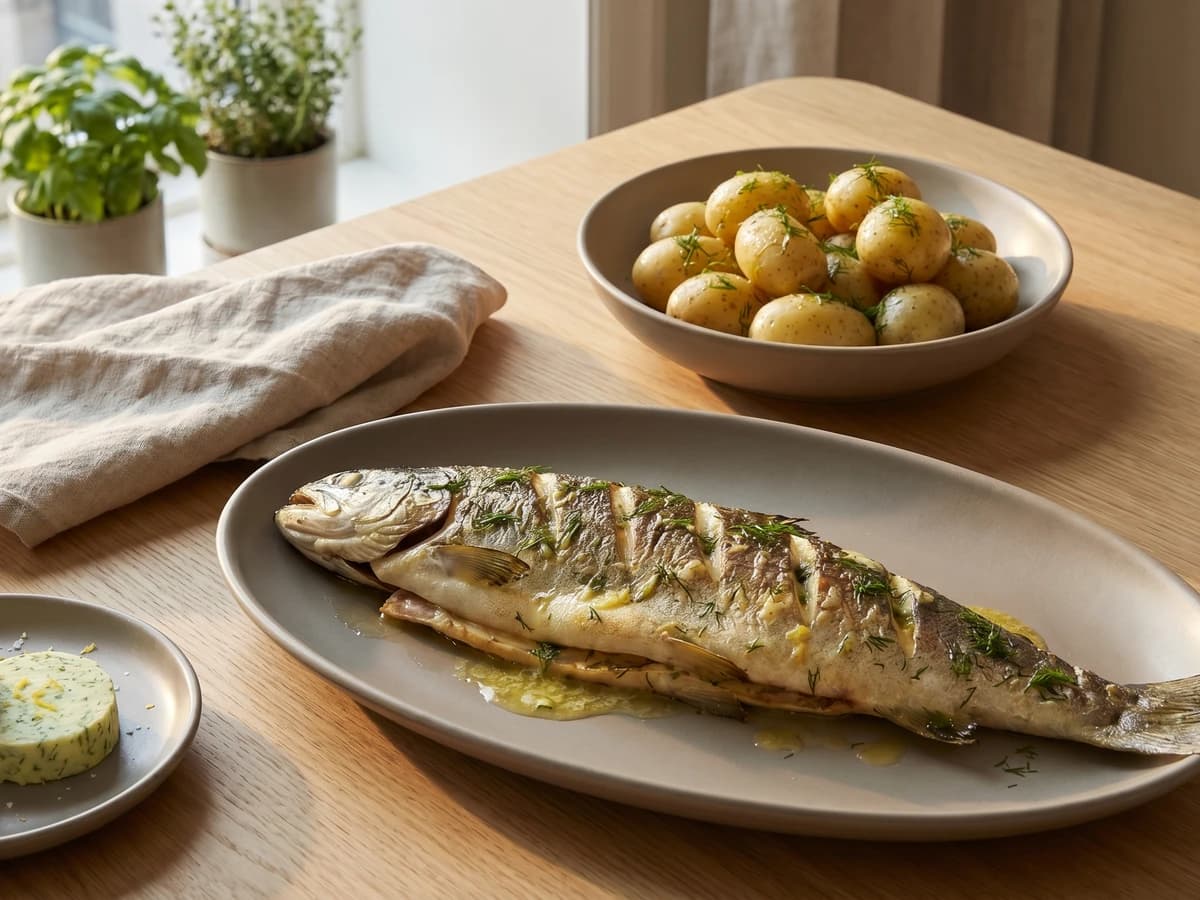
Whole sea trout baked with butter, lemon, and armfuls of dill, served beside the first nye kartofler of the season and a melting slab of dildsmor. The Danish summer table at its most generous.
Chef Freja
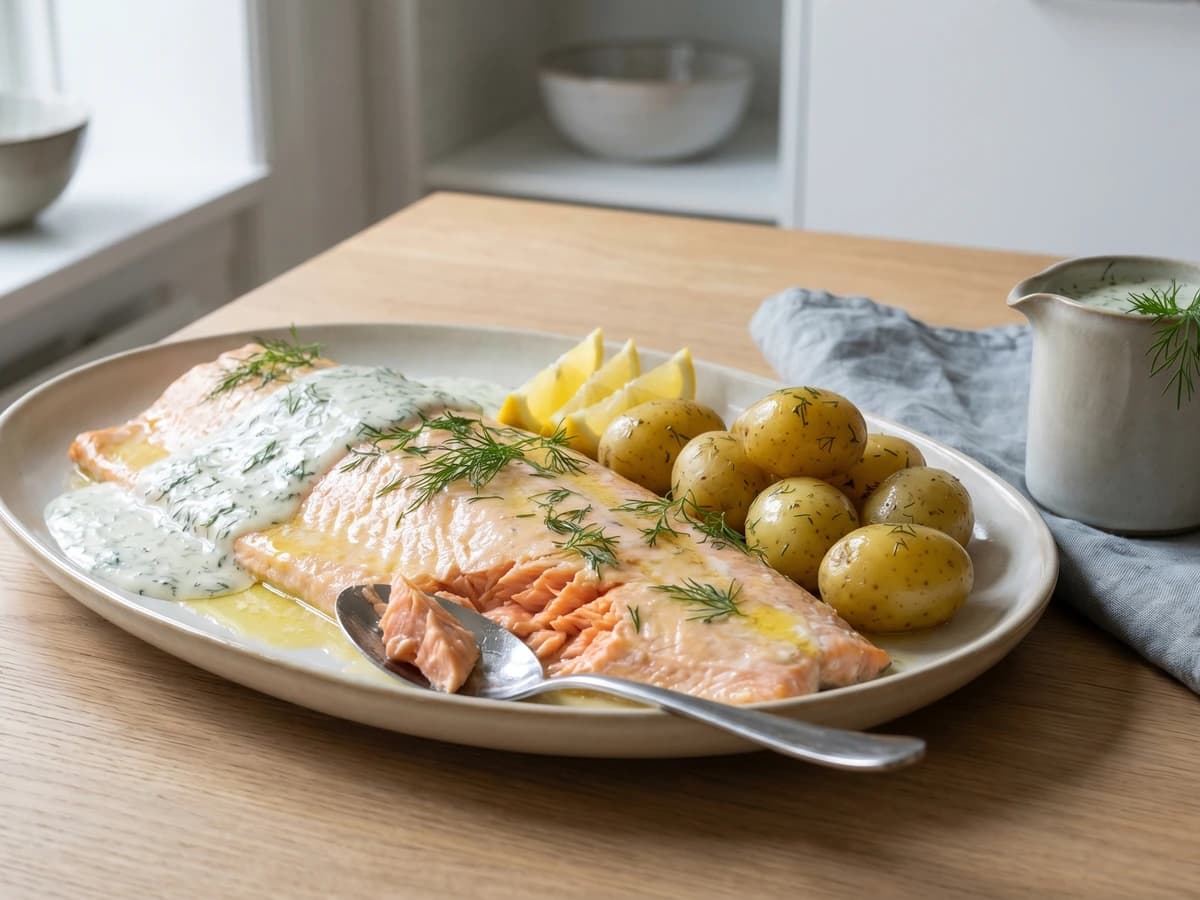
A side of salmon baked gently in butter and white wine, served warm with a bright dill cream sauce and the season's first nye kartofler. Late spring on a Danish table, cooked with love.