Chef Lesia
Bessarabskyi Borshch (бессарабський борщ, fish borshch)
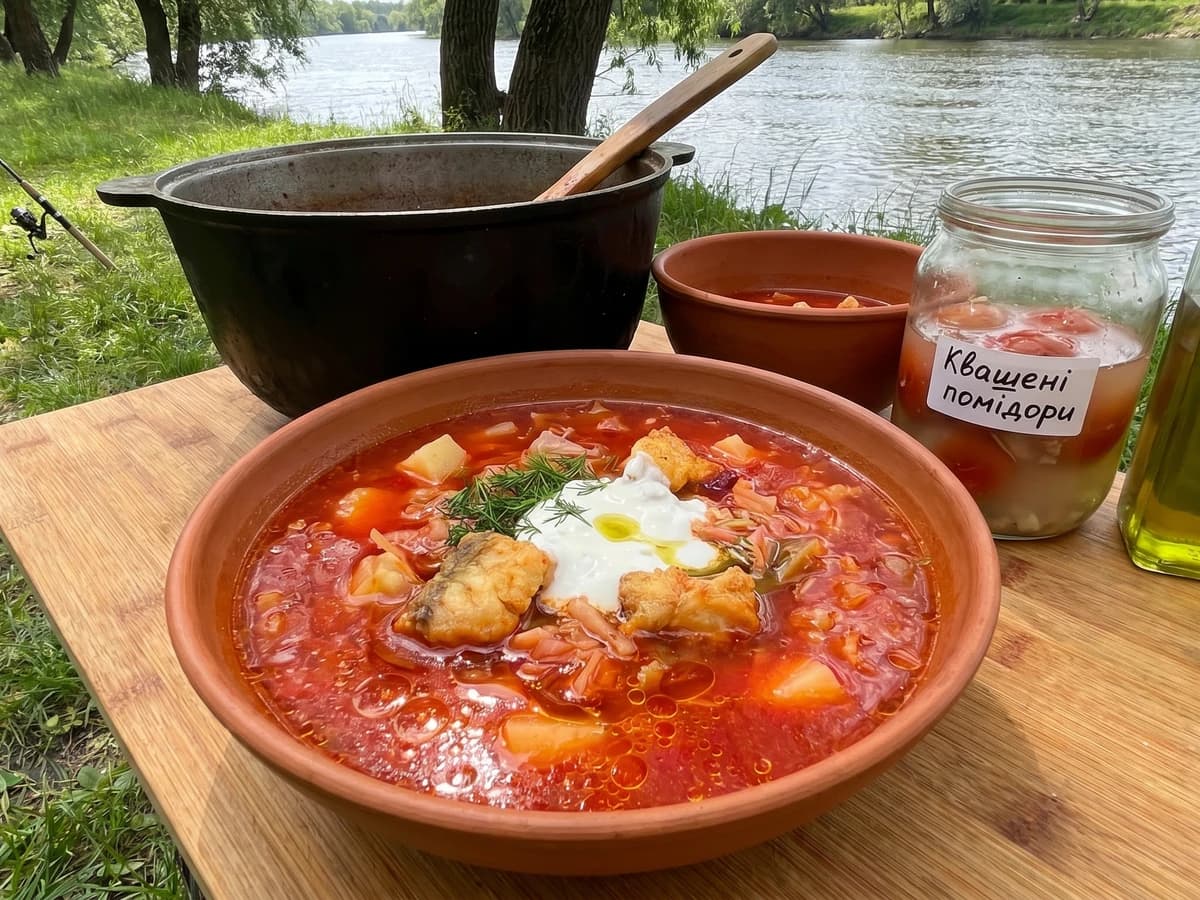
The catch goes into the pan before it ever meets the pot, so Danube fish stays whole in a tomato-red broth sour enough to wake the table.
A cooking platform built around craft, culture, and the stories behind what we eat.
Created by
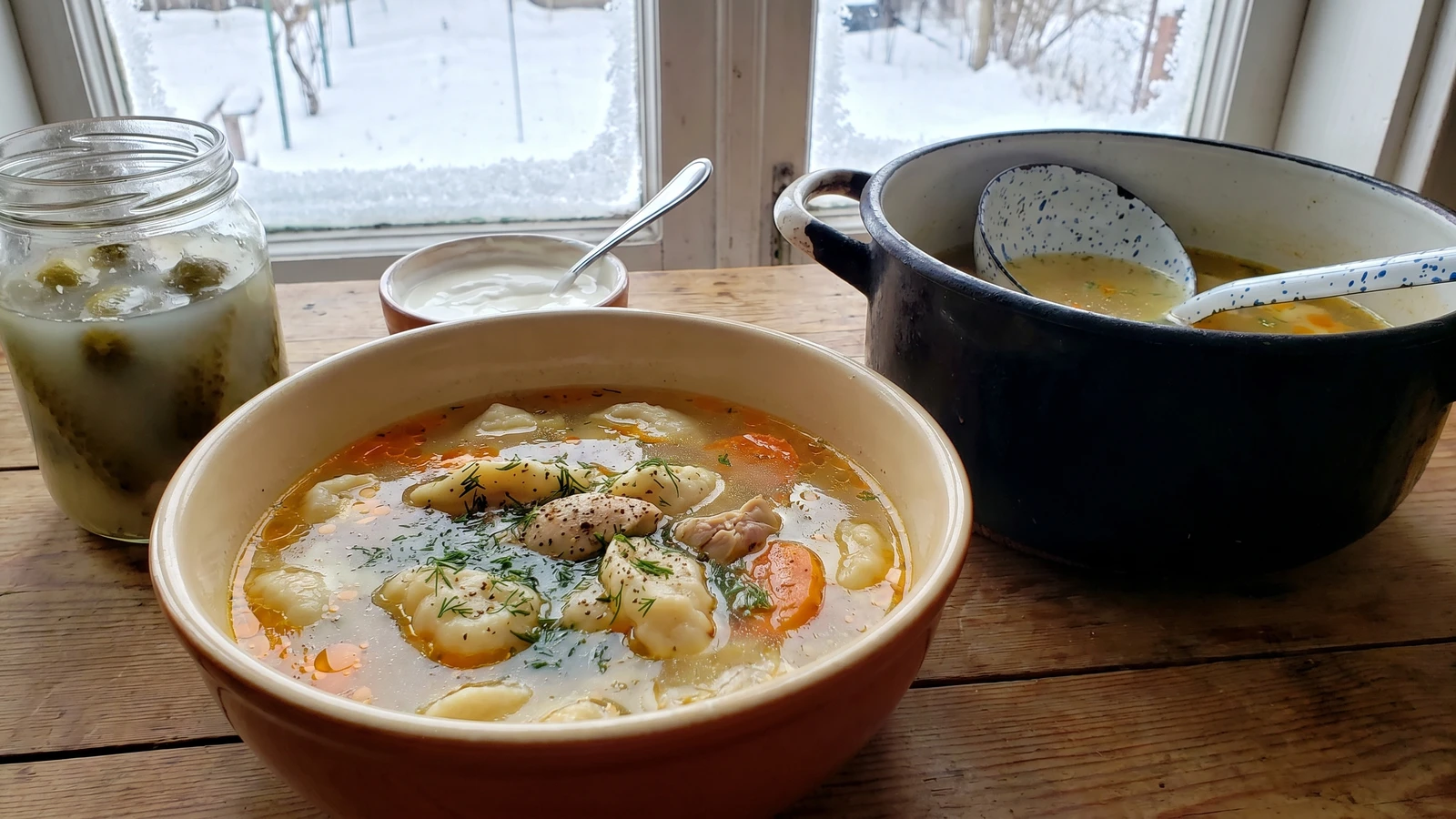
The broth is the color of late afternoon sun, clear enough to see the dill drifting through it, strong enough to carry little pinched halushky as they swell.
The first honest thing about this soup is its color: clear gold, with tiny orange beads from the chicken fat and dill floating like it has somewhere better to be. This is the soup you make when the table needs calming. Not grand. Not plain either. A good kuryacha yushka tastes of bone, onion skin, black pepper, bay, and that soft floury comfort of halushky, the little Ukrainian dumplings that puff in the broth and make the pot feel like a meal.
The broth must never be bullied. Bring the chicken up slowly, skim it, then keep it at the smallest tremble, the sound Aunt Nadia would have called "right" without giving me a number. Hard boiling gives you cloudy broth and tired meat. Gentle cooking gives you something clean, sweet, and yellow, and the dumplings deserve that kind of bath.
The one step that decides the dish comes near the end. Zasmazhka, the slow-sweated onion and carrot, goes in after the broth has done its work, so its sweetness sits brightly on top instead of disappearing into the stock. Then the halushky go in last, pinched straight from the spoon, and when they rise and soften you call people to the table. Make a big pot. There is no tradition of a small one.
Yushka is one of the older Ukrainian soup words, used for clear broths before the borrowed word "sup" became common in urban kitchens. Chicken yushka belongs especially to home cooking and Sunday tables, while halushky are claimed with particular pride in Poltava and central Ukraine, where dumpling soups, boiled dough, and flour-thickened dishes form a distinct regional kitchen. Soviet canteens often reduced these broths to standardized noodle soup, but village and family versions kept the pinched dumplings, the dill, and the late zasmazhka alive.
Quantity
1 whole chicken, about 1.6 to 1.8 kg, or 1.5 kg pieces
Quantity
3 litres
Quantity
1 large
halved, skin left on if clean
Quantity
1
scrubbed and cut into large pieces
Quantity
1
scrubbed and cut into large pieces
Quantity
2
Quantity
10
Quantity
1 tablespoon, plus more to taste
Quantity
2 medium
peeled and diced
Quantity
2 tablespoons
Quantity
1 small
finely diced
Quantity
1 medium
coarsely grated
Quantity
2
Quantity
120ml
Quantity
220g, plus a little more if needed
Quantity
1/2 teaspoon
Quantity
1 small bunch
finely chopped
Quantity
to serve
Quantity
to serve
| Ingredient | Quantity |
|---|---|
| whole chicken or bone-in chicken legs and thighs | 1 whole chicken, about 1.6 to 1.8 kg, or 1.5 kg pieces |
| cold water | 3 litres |
| onion for brothhalved, skin left on if clean | 1 large |
| carrot for brothscrubbed and cut into large pieces | 1 |
| parsley root or small parsnip (optional)scrubbed and cut into large pieces | 1 |
| bay leaves | 2 |
| black peppercorns | 10 |
| sea salt | 1 tablespoon, plus more to taste |
| potatoes (optional)peeled and diced | 2 medium |
| unrefined sunflower oil or skimmed chicken fat | 2 tablespoons |
| onion for zasmazhkafinely diced | 1 small |
| carrot for zasmazhkacoarsely grated | 1 medium |
| eggs | 2 |
| water or cooled broth | 120ml |
| plain flour | 220g, plus a little more if needed |
| fine salt for halushky | 1/2 teaspoon |
| dillfinely chopped | 1 small bunch |
| black pepper | to serve |
| smetana (optional) | to serve |
Put the chicken in a big stockpot with the cold water. Bring it up slowly, so the pot has time to give you its grey foam, then skim that foam away with a spoon. Add the halved onion, carrot pieces, parsley root if using, bay leaves, peppercorns, and salt. Keep the broth at a quiet tremble, not a rolling boil, until the chicken smells sweet and cooked through and the meat loosens when you tug it with a fork.
Lift the chicken onto a tray and strain the broth through a sieve into a clean pot. Discard the spent vegetables and spices. Pull the chicken meat from the bones in generous pieces, not tiny shreds, and return enough meat to the pot for a crowded soup. Taste the broth now. It should be savory, clean, and a little under-salted because the dumplings will drink from it.
If you're using potatoes, slide them into the clear broth and simmer until they yield when pressed against the side of the pot. They should soften without breaking into the soup. No potatoes is fine too; the halushky already make the bowl complete.
Warm the sunflower oil or skimmed chicken fat in a wide pan. Add the diced onion and let it soften slowly until translucent, then add the grated carrot and cook until the carrot relaxes and the fat turns golden-orange. You're not browning. You're coaxing sweetness. Stir the zasmazhka into the soup near the end so it sits brightly on the broth instead of flattening into it.
Beat the eggs with the water or cooled broth and the fine salt. Stir in the flour until you have a thick, sticky batter that holds on the spoon but still drops with a little persuasion. If it runs like pancake batter, add a spoonful more flour. If it stands like bread dough, loosen it with a splash of broth. Halushky forgive you if you keep them soft.
Bring the soup to a lively simmer. Dip a teaspoon into the hot broth, then pinch small pieces of batter from the spoon straight into the pot. Keep them small, they swell. Stir once, gently, so nothing sticks to the bottom. When the halushky float and look puffed through, tear one open; the middle should be soft and cooked, not floury.
Turn off the heat and stir in most of the dill. Taste again for salt and black pepper. Let the pot stand for a few minutes so the dumplings settle into the broth and the dill perfumes the top. Serve in deep bowls with more dill, black pepper, and smetana if your table wants it.
1 serving (about 520g)
Culinary guides, cultural storytelling, and the editorial depth that makes cooking meaningful.
Discover Culinary ExplorerChef Lesia
The catch goes into the pan before it ever meets the pot, so Danube fish stays whole in a tomato-red broth sour enough to wake the table.

Chef Lesia
The fish leaves the pot before the soup reaches the table: broth in the bowl, river fish on a platter, garlic salamur waiting to wake both.

Chef Lesia
Brick-red paprika blooms in bacon fat, beef darkens at the edges, and potatoes thicken the cauldron until it stands between soup and stew. This is comfort with a fire under it.
Chef Lesia
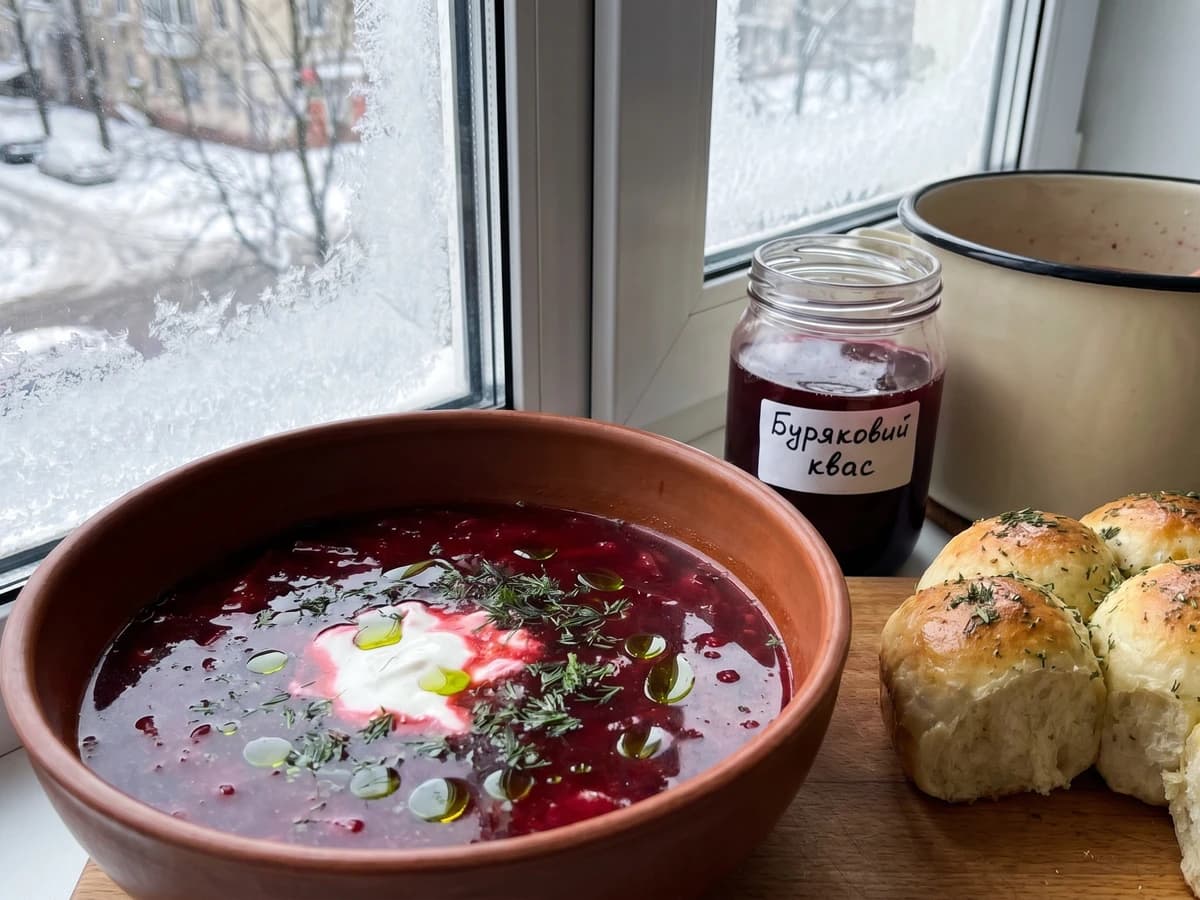
Beets hit slow-sweated zasmazhka and the broth goes dark ruby, sour from beet zakwas, sweet from bone and garden, thick enough for the spoon to stand up straight.