Culinary Explorer

A cooking platform built around craft, culture, and the stories behind what we eat.
Discover Culinary Explorer
Kraamanijs (Dutch Birth Anise Milk)

Kraamanijs (Dutch Birth Anise Milk)

Created by

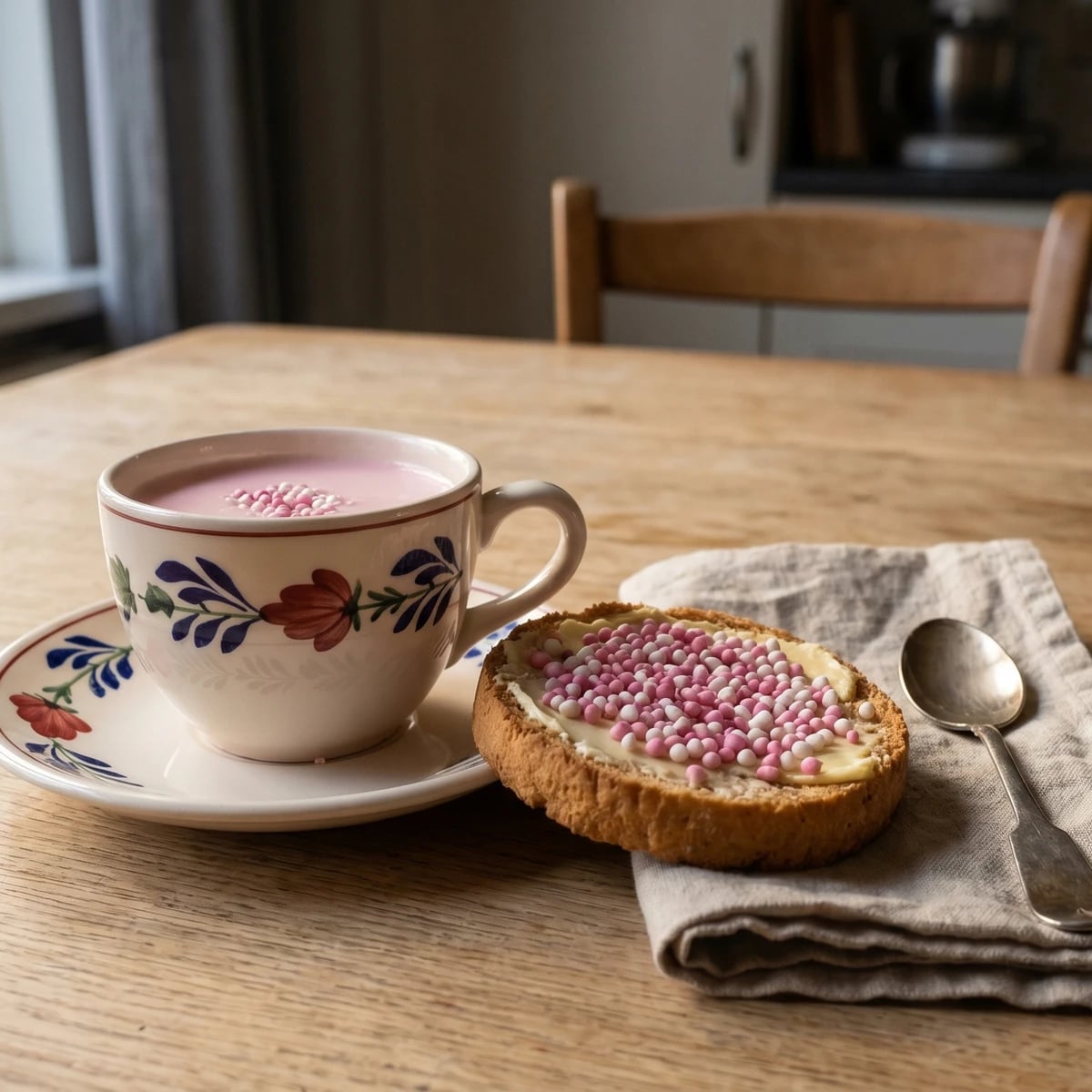
Warm anise milk for the kraamvisite, the birth visit, sweetened pink or blue with muisjes so an old household remedy becomes a small toast to the child.

Beverages
Dutch
Baby Shower
Celebration
5 min
Active Time
15 min cook20 min total
Yield4 small cups

The smallest Dutch guest is welcomed with a ritual that makes almost no noise: a rusk, a scatter of muisjes, and the kettle put on for whoever has come to see the child. Kraamvisite, the birth visit, is not a party exactly. It is quieter than that. A door opens, people lower their voices without being asked, and the house smells of clean linen, milk, sleep, and sugar.

But let me tell you a secret: kraamanijs is just anijsmelk, warm anise milk, dressed for the cradle. The name already tells you enough without forcing it to perform tricks. Kraam is the Dutch word for the lying-in time around birth, and anijs is anise, the little seed with the old household reputation for settling bellies and keeping mothers company. Muisjes means little mice, for obvious reasons once you look closely at the sugar-coated aniseeds with their tiny tails. A ridiculous name. A tender one.

The method should stay as gentle as the occasion. Do not boil the milk; milk that has shouted in the pan tastes cross at the table. Crack the aniseed so it gives its perfume, steep it quietly, then whisk in crushed pink-and-white or blue-and-white muisjes until the milk takes on a soft cradle color. Hou het altijd simpel. The drink should taste of warm milk, anise, and a little sugar, not of a sweet shop losing its nerve.

Kraamanijs belongs to the Dutch kraamvisite, the formal birth visit in the first weeks after a child is born, where guests are traditionally offered beschuit met muisjes, rusk with sugared aniseeds. Anise was long valued in European household medicine as a warming digestive and was associated with the kraamtijd, the lying-in period, which helps explain its place at the birth table. Dutch confectioners have sold muisjes since the nineteenth century, and their pink-and-white and later blue-and-white colors turned an old anise custom into the familiar cradle signal.

The technique, the tradition, and the story behind every dish.

Discover Culinary Explorer

Ingredients

whole milk

Quantity

1 liter

whole aniseed

Quantity

2 teaspoons

lightly crushed

pink-and-white or blue-and-white muisjes

Quantity

4 tablespoons

finely crushed

fine sea salt

Quantity

1 pinch

fine sugar (optional)

Quantity

1 to 2 teaspoons

extra crushed muisjes (optional)

Quantity

a small pinch per cup

for finishing

Equipment Needed

  • Small saucepan
  • Mortar and pestle or rolling pin
  • Fine-mesh sieve

Instructions

  1. 1

    Crush the seeds

    Put the whole aniseed in a mortar and crack it lightly; you want bruised seeds, not dust. Crush the muisjes separately until sandy. The colored sugar dissolves faster this way, and the anise at the center can give the milk its proper perfume.

    If you have gestampte muisjes, pounded muisjes, use 3 tablespoons of those and add 1 tablespoon of colored muisjes for the cradle color.
  2. 2

    Warm the milk

    Pour the milk into a small saucepan with the crushed aniseed and the pinch of salt. Warm it over medium-low heat until small bubbles gather at the edge of the pan, then turn off the heat. Do not let it boil. Cover and let it stand for 10 minutes, so the anise can do its quiet work.

  3. 3

    Strain and color

    Strain the milk through a fine-mesh sieve into a clean pan, pressing lightly on the aniseed. Whisk in the crushed muisjes until the sugar dissolves and the milk turns softly pink or blue. Taste before adding extra sugar; the muisjes have already brought sweetness to the room.

  4. 4

    Serve it warm

    Warm the milk gently for another minute or two, just until it feels ready for the cup. Pour into small cups and finish each with the tiniest pinch of crushed muisjes if you like. Serve at once, preferably beside beschuit met muisjes, because history and cookery, they cannot be separated.

Chef Tips

  • Use whole milk. Skimmed milk makes this taste thin, and a kraamvisite is not the hour for dairy sermons.
  • Do not chase a bright nursery color with food dye. Real muisjes give a gentle blush or a quiet blue, which is exactly right for a drink meant to be held close, not announced across the canal.
  • This is for the visitors, not the newborn. The baby has enough to do. If serving small children, strain carefully after adding crushed muisjes so no hard anise centers remain in the cup.

Advance Preparation

  • The milk can be infused with anise up to 12 hours ahead, strained, cooled, and refrigerated. Rewarm gently and add the crushed muisjes just before serving.
  • Crush the muisjes a day ahead and keep them airtight; sugar pulls moisture from the air and clumps if left uncovered.

Frequently Asked Questions

Nutrition Information

1 serving (about 270g)

Calories
215 calories
Total Fat
9 g
Saturated Fat
5 g
Trans Fat
0 g
Unsaturated Fat
3 g
Cholesterol
25 mg
Sodium
140 mg
Total Carbohydrates
25 g
Dietary Fiber
0 g
Sugars
24 g
Protein
8 g

Note: Chef personas and recipes are created with AI assistance. Cook with care: follow safe food-handling practices, check doneness with a thermometer when needed, and adapt for allergies and your kitchen.

Where cooking meets culture.

Culinary guides, cultural storytelling, and the editorial depth that makes cooking meaningful.

Discover Culinary Explorer

More from Dutch Drinks: Jenever to Anijsmelk

Browse the full collection