
Chef Dean
Melomakarona
Aromatic Greek Christmas cookies, fragrant with orange and warm spices, bathed in honey syrup until they glisten like amber jewels. These improve with each passing day, making them the ideal make-ahead holiday treat.
A cooking platform built around craft, culture, and the stories behind what we eat.

Created by
Impossibly tender Greek butter cookies wrapped in clouds of powdered sugar, their almond-studded interiors scented with brandy and orange blossom. One bite transports you to an Athenian grandmother's kitchen at Christmas.
Every Greek household has its kourabiedes maker. Usually a grandmother. Sometimes an aunt. Always someone who learned by standing at an elder's elbow, watching hands that had made these cookies for fifty Christmases. The recipe rarely gets written down. It lives in muscle memory: the exact moment the butter turns pale and fluffy, the precise feel of dough that will hold a crescent shape, the generous hand with the powdered sugar.
These cookies trace their roots to Persia, traveling through the Ottoman Empire to become Greece's most beloved Christmas sweet. The name likely derives from the Persian 'qurabiya,' itself meaning something close to 'sugar cookie.' Every Balkan country claims its own version. The Greeks distinguish theirs with brandy, almonds, and a snowfall of powdered sugar so thick the cookies practically disappear beneath it.
The texture is everything. Kourabiedes should shatter at first bite, then immediately dissolve on your tongue. This demands two things: excellent butter beaten until it forgets it was ever solid, and a light hand with the flour. Overwork this dough and you'll produce a perfectly acceptable cookie. But you won't produce kourabiedes.
I first encountered these in Thessaloniki, served by a woman who apologized that hers weren't as good as her mother's. They were transcendent. She'd been making them for forty years and still deferred to a ghost. That's the kind of humility good baking teaches. These cookies connect you to something larger than yourself.
Quantity
454g (1 pound)
at room temperature
Quantity
100g (1 cup)
sifted
Quantity
300g (3 cups)
Quantity
2
at room temperature
Quantity
60ml (1/4 cup)
Quantity
1 teaspoon
Quantity
1/2 teaspoon
Quantity
1 tablespoon
Quantity
500g (4 cups)
spooned and leveled
Quantity
1/2 teaspoon
Quantity
1/4 teaspoon
Quantity
150g (1 cup)
lightly toasted and cooled
| Ingredient | Quantity |
|---|---|
| unsalted butter, European-styleat room temperature | 454g (1 pound) |
| powdered sugar for doughsifted | 100g (1 cup) |
| powdered sugar for coating | 300g (3 cups) |
| large egg yolksat room temperature | 2 |
| brandy or Metaxa | 60ml (1/4 cup) |
| pure vanilla extract | 1 teaspoon |
| almond extract | 1/2 teaspoon |
| orange blossom water (optional) | 1 tablespoon |
| all-purpose flourspooned and leveled | 500g (4 cups) |
| baking powder | 1/2 teaspoon |
| fine sea salt | 1/4 teaspoon |
| whole blanched almondslightly toasted and cooled | 150g (1 cup) |
Place the room temperature butter in the bowl of a stand mixer fitted with the paddle attachment. Beat on medium-high speed for a full 15 minutes. This is not a typo. Set a timer. The butter will transform from a yellow mass to something pale, almost white, impossibly fluffy. It should look like buttercream frosting and hold soft peaks. This extended beating incorporates air and creates the signature melt-in-mouth texture. Nothing else in the recipe matters if you skip this step.
With the mixer running on medium, add the sifted powdered sugar in a slow stream. Beat for another 3 minutes until fully incorporated and even fluffier. Add the egg yolks one at a time, beating well after each addition. The mixture should be smooth, pale, and voluminous.
Add the brandy, vanilla extract, almond extract, and orange blossom water if using. Beat on low until just combined. The mixture may look slightly curdled from the liquid. Don't worry. The flour will bring it back together. Take a moment to appreciate the aroma rising from the bowl: butter, brandy, almonds, a whisper of orange blossoms. This is what Christmas smells like in Greece.
Whisk together the flour, baking powder, and salt in a separate bowl. With the mixer on its lowest speed, add the dry ingredients in three additions. Mix only until the flour disappears each time. The dough will be soft and slightly sticky but should hold together when pressed. Overworking develops gluten and produces tough cookies. Stop the moment you no longer see dry flour.
Cover the bowl tightly with plastic wrap and refrigerate for at least 30 minutes or up to overnight. The butter needs to firm up enough that you can shape the cookies without them spreading into puddles. If chilled overnight, let the dough sit at room temperature for 15 minutes before shaping.
Position racks in the upper and lower thirds of your oven and preheat to 350°F (175°C). Line two baking sheets with parchment paper. Have your toasted almonds within reach.
Pinch off a walnut-sized piece of dough, roughly 1 tablespoon. Roll it between your palms into a ball, then shape into a crescent by tapering the ends and curving gently. Press one whole almond into the center of each crescent. Some families shape theirs into simple rounds or ovals. Others make elaborate S-curves. The shape matters less than the size: keep them uniform so they bake evenly. Place cookies 1 inch apart on prepared sheets.
Bake for 18 to 22 minutes, rotating the pans halfway through, until the cookies are set and the bottoms show the faintest golden color. The tops should remain pale. These are not meant to brown. Overbaked kourabiedes lose their delicate texture and become merely good butter cookies instead of transcendent ones. Remove from oven and let cool on the baking sheets for 5 minutes.
While cookies are still warm, sift a generous layer of powdered sugar onto a large rimmed baking sheet. Carefully transfer the warm cookies to this sugared surface, spacing them slightly apart. Immediately sift more powdered sugar over the tops, coating them completely. The warmth helps the first layer of sugar adhere and begin to melt slightly into the surface.
Let the cookies cool completely on the sugared sheet, about 30 minutes. Once fully cooled, sift another thick layer of powdered sugar over everything. Be generous. Traditional kourabiedes are buried in sugar. You should barely be able to see the cookie beneath. This double coating creates the signature snowdrift appearance and ensures sweetness in every bite.
Layer cookies gently in an airtight container with parchment paper between layers. Sift a final coating of powdered sugar over each layer before adding the next. Store at room temperature for up to two weeks or freeze for up to three months. Before serving stored cookies, dust with additional powdered sugar to refresh their snowy appearance.
1 serving (about 31g)
Culinary guides, cultural storytelling, and the editorial depth that makes cooking meaningful.
Discover Culinary ExplorerChef Dean
Aromatic Greek Christmas cookies, fragrant with orange and warm spices, bathed in honey syrup until they glisten like amber jewels. These improve with each passing day, making them the ideal make-ahead holiday treat.

Chef Juliette
A pale short-paste shell holds silken, lightly sweet carrot purée beneath neat glazed half-discs, their butter syrup catching the light: a classical tart poised between vegetable course and sweet.
Chef Juliette
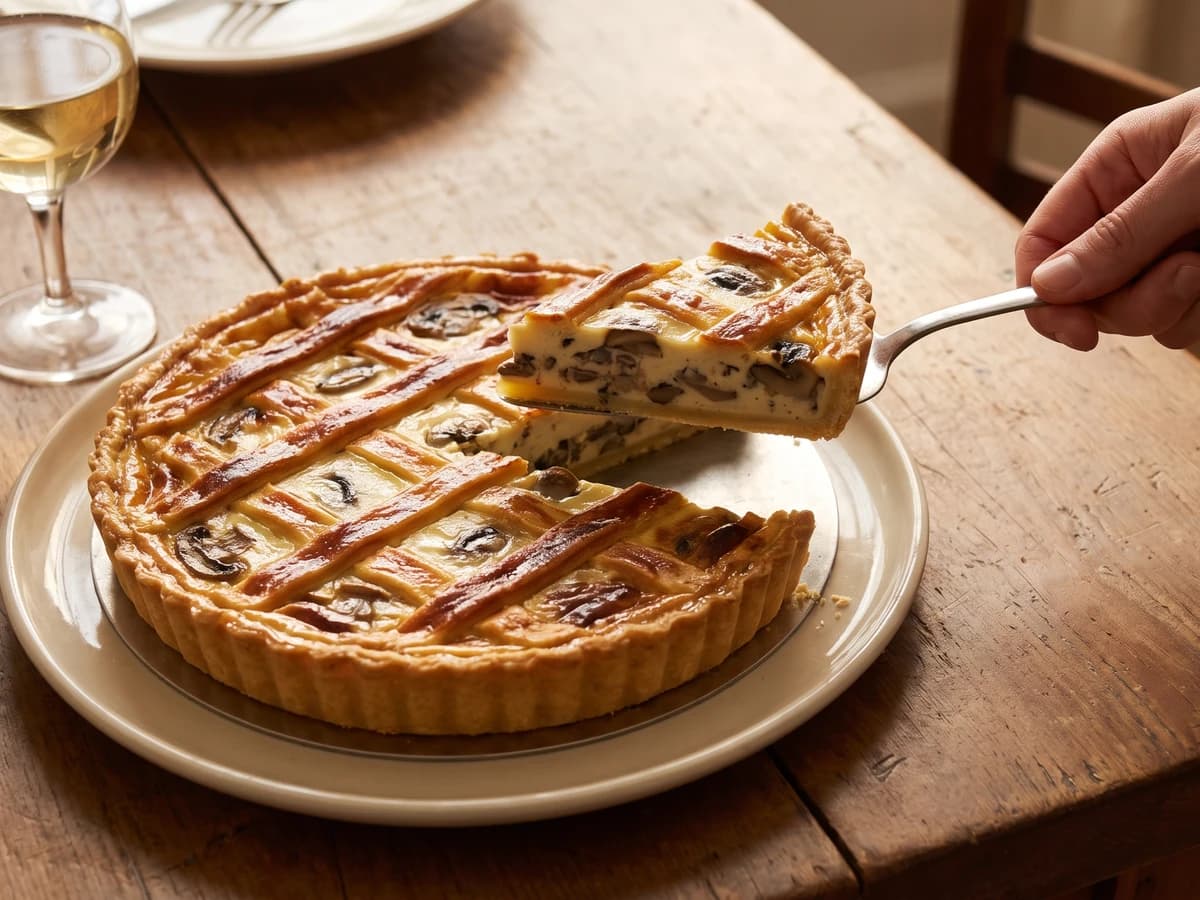
A hot mushroom flan under a butter-gold lattice, with cream reduced close around barely opened caps and a crisp short-paste base protected by one discipline: cool the filling completely.

Chef Juliette
Four little mushroom flans, latticed and gilded, baked hard and fast until butter-gold: a classical garnish scaled to the meat it accompanies and served before its crispness has time to fade.