
Chef Freja
Andelår med Rødkål
Slow-roasted duck legs with crisp, deeply golden skin, served with braised red cabbage and caramelized potatoes. The weeknight Danish duck that proves the best part of the bird is the one that takes its time.
A cooking platform built around craft, culture, and the stories behind what we eat.
Created by Chef Freja
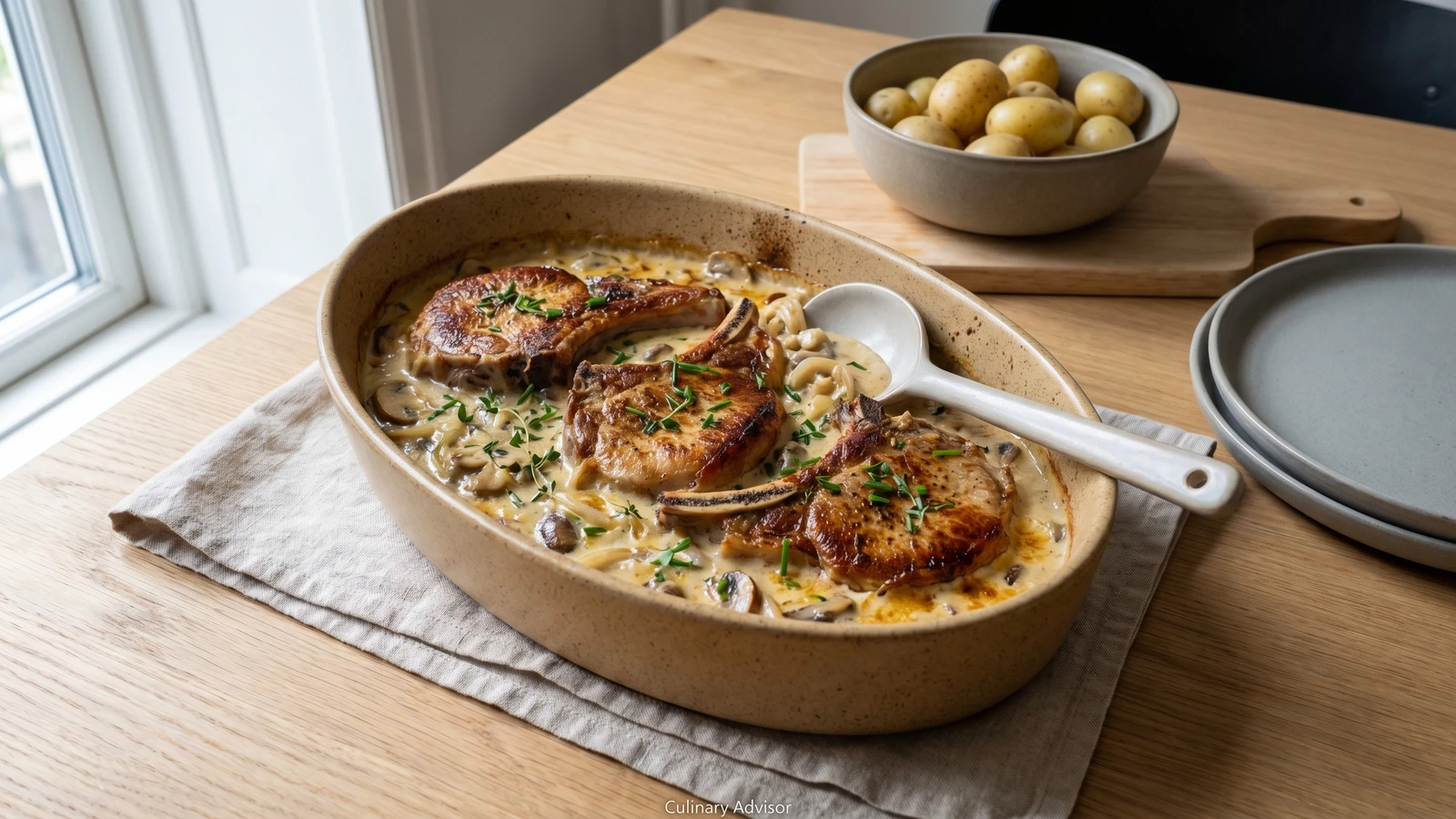
Bone-in pork chops browned in butter and baked in a mushroom cream sauce until the meat pulls from the bone. The Tuesday evening casserole that made Danish kitchens smell like someone was home.
November evenings in Denmark arrive without asking. The light is gone by four, the kitchen window turns to a mirror, and the oven becomes the warmest thing in the house. This is koteletter i fad weather.
The name means exactly what it says: pork chops in a dish. Bone-in chops browned in butter, mushrooms and onions softened in the same pan, a cream sauce poured over everything, and the whole thing baked until the meat gives when you press it with a spoon. It belongs to the category of Danish cooking nobody writes restaurant menus about, because it was never meant for restaurants. It was meant for the kitchen table, for the family sitting down after a long day, for the cook who needs the oven to do the work while there's still laundry to fold.
Pay attention to two things. First, brown the chops properly before they go into the dish. That golden crust is not just color. It is where the flavor begins, and the cream sauce builds on everything the browning leaves behind in the pan. Second, don't rush the oven. Low, steady heat is what turns a pork chop from something you chew into something that yields. The connective tissue around the bone relaxes and melts into the sauce, and you'll know when it's right because the meat pulls away from the bone just slightly, and the sauce coats the back of a spoon without being heavy. This is the kind of cooking that rewards patience. The joy of waiting.
Koteletter i fad belongs to the golden age of Danish fad-cooking, the one-dish oven meals that became the weeknight standard in Danish kitchens during the 1960s and 1970s, when reliable home ovens became common in most households. The cream sauce traces an older lineage: French-influenced sauces entered Danish home cooking through the kogebøger, the household cookbooks of the late 1800s, which taught a generation of cooks to build a sauce from pan drippings, flour, and good cream. The dish itself is a quiet monument to postwar Danish pragmatism: affordable bone-in chops, a sauce that stretches the protein, and an oven that gives the cook's hands back.
Quantity
4, about 2.5cm thick
Quantity
300g
thickly sliced
Quantity
2 medium
halved and sliced
Quantity
40g
Quantity
1 tablespoon
Quantity
2 tablespoons
Quantity
300ml
Quantity
200ml
Quantity
2 sprigs, plus extra to finish
Quantity
2
Quantity
to taste
Quantity
to taste
Quantity
small bunch
snipped, to finish
| Ingredient | Quantity |
|---|---|
| bone-in pork chops | 4, about 2.5cm thick |
| brown mushroomsthickly sliced | 300g |
| yellow onionshalved and sliced | 2 medium |
| unsalted butter | 40g |
| rapeseed oil | 1 tablespoon |
| plain flour | 2 tablespoons |
| piskefløde (heavy cream) | 300ml |
| chicken stock | 200ml |
| fresh thyme | 2 sprigs, plus extra to finish |
| bay leaves | 2 |
| fine sea salt | to taste |
| white pepper | to taste |
| chivessnipped, to finish | small bunch |
Heat your oven to 180°C. Pat the pork chops completely dry with kitchen paper and season both sides generously with salt and white pepper. Heat the butter and oil together in a heavy frying pan over medium-high heat. Butter alone burns before you get the color you need. Oil alone gives no flavor. Together they give you the golden crust and the nutty richness that the whole dish builds on. When the butter foams and the foam begins to subside, lay the chops in without crowding. You need space between them, or they'll steam instead of searing. Brown for three minutes on each side until you have a deep golden crust. Transfer the chops to a plate. They won't be cooked through. That's the oven's job.
In the same pan, with all those golden bits stuck to the bottom, add the sliced onions. Lower the heat to medium and stir them through the butter for three or four minutes until they soften and turn translucent. Now add the mushrooms. They'll release their water first, and the pan will seem too wet. Let it cook off. Once the liquid evaporates and the mushrooms start to color at the edges, you're in the right place. This takes another four or five minutes. Everything in the pan is picking up the flavor the chops left behind, and that fond is what gives the sauce its depth.
Sprinkle the flour over the onions and mushrooms and stir it through. Cook for one minute to take the raw edge off the flour. Pour in the chicken stock, stirring steadily, and let it come to a gentle simmer. The flour will thicken the liquid almost immediately. Now pour in the cream, stir everything together, and let it simmer for two minutes until you have a sauce that coats the back of a spoon. Taste it. Season with salt and white pepper. The sauce should taste well-seasoned now because it won't concentrate much further in the oven.
Lay the browned pork chops in a single layer in your oven-proof dish. Tuck the thyme sprigs and bay leaves between them. Pour the cream sauce over and around the chops, making sure the mushrooms and onions are distributed evenly. The chops should be mostly submerged but not drowned. If they sit a little proud of the sauce, that's fine: the exposed tops will pick up a little color in the oven. Cover the dish tightly with a lid or foil and bake for thirty-five minutes. The covered time is important. It traps steam, and the steam is what tenderizes the meat around the bone, turning tough connective tissue into something that dissolves into the sauce. Then remove the cover and bake for another ten to fifteen minutes, until the sauce is bubbling gently at the edges and the tops of the chops have taken on a light golden finish.
Let the dish rest out of the oven for five minutes before you bring it to the table. The sauce will settle and the meat will relax, making it more tender and easier to eat. Remove the bay leaves. Scatter snipped chives and a few fresh thyme leaves over the top. Serve straight from the dish with boiled potatoes alongside, the small waxy kind if you can find them, and let people help themselves. This is the kind of food that belongs in the middle of the table, not plated in the kitchen. Cooked with love, eaten together. Tak for mad.
1 serving (about 400g)
Culinary guides, cultural storytelling, and the editorial depth that makes cooking meaningful.
Discover Culinary ExplorerChef Freja
Slow-roasted duck legs with crisp, deeply golden skin, served with braised red cabbage and caramelized potatoes. The weeknight Danish duck that proves the best part of the bird is the one that takes its time.

Chef Freja
The whole roasted duck of juleaften, stuffed with tart apples and dark prunes, slow-roasted for four patient hours until the skin crackles like something earned and the meat underneath gives way without resistance.
Chef Freja
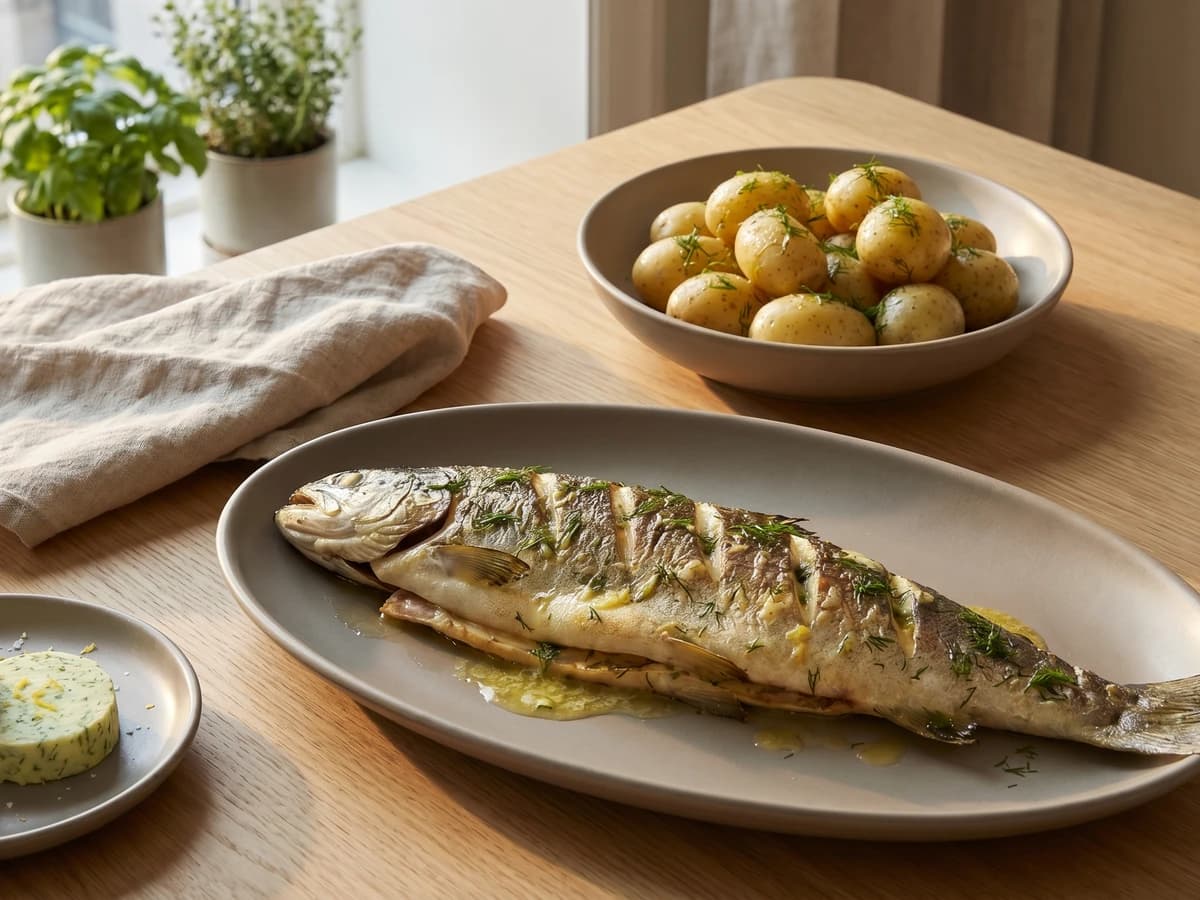
Whole sea trout baked with butter, lemon, and armfuls of dill, served beside the first nye kartofler of the season and a melting slab of dildsmor. The Danish summer table at its most generous.
Chef Freja
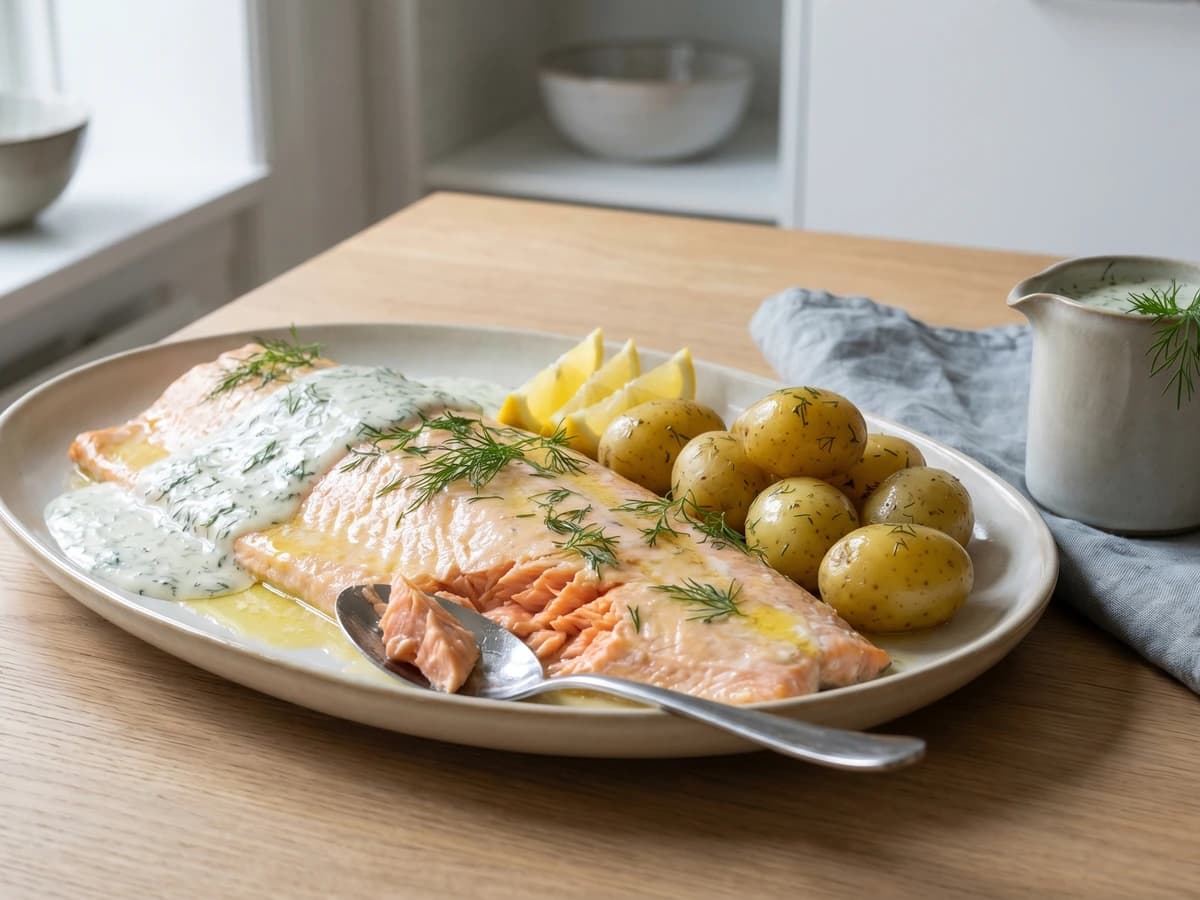
A side of salmon baked gently in butter and white wine, served warm with a bright dill cream sauce and the season's first nye kartofler. Late spring on a Danish table, cooked with love.