Chef Dimitra
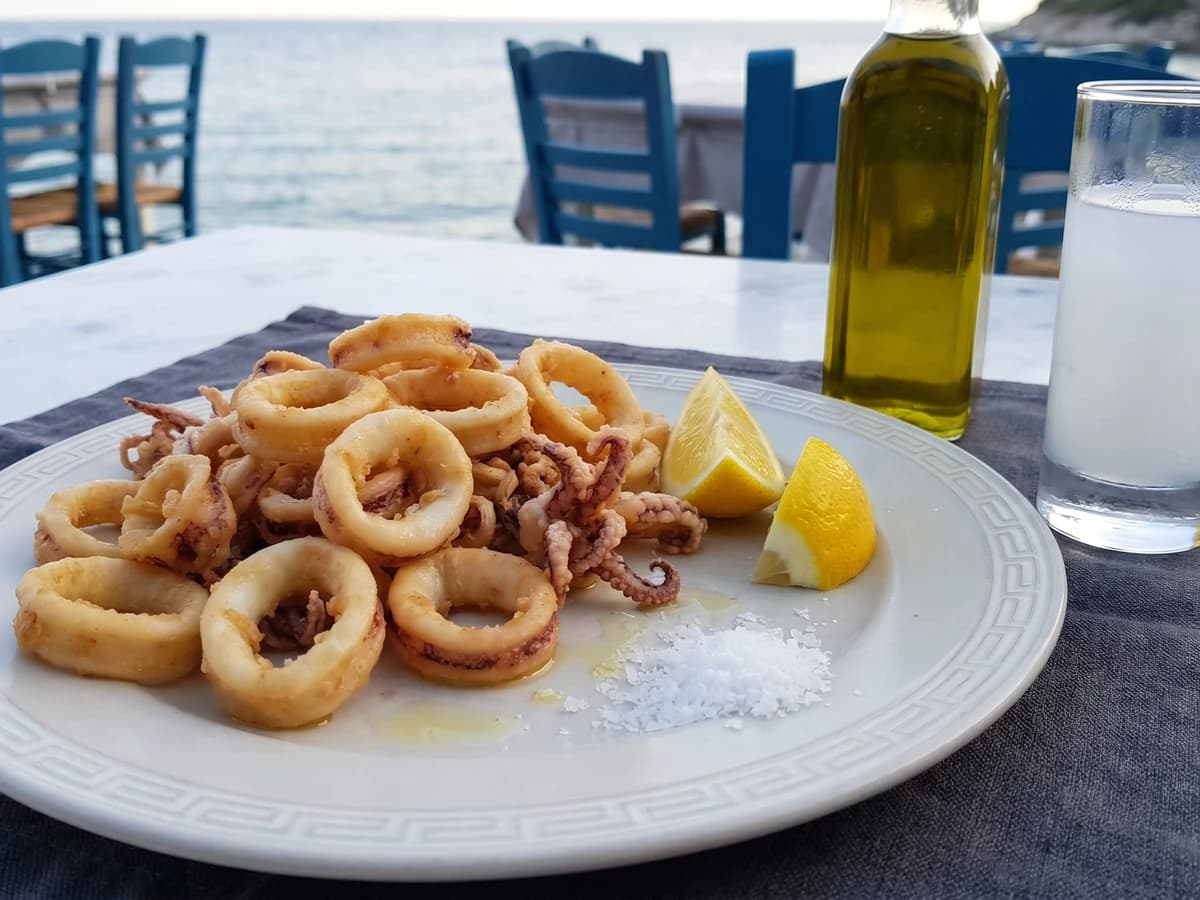
Aegean Island Kalamarakia Tiganita (Καλαμαράκια Τηγανητά)
Aegean island fried squid is flour, hot oil, lemon, and nerve. Fry it for a minute or two, no longer, and it stays tender under its crisp coat.
A cooking platform built around craft, culture, and the stories behind what we eat.

Created by
Kopanisti Mykonou is the Cyclades in a bowl: salty, peppery, alive from ripening, softened with olive oil and served simply, because the cheese has already done the talking.
Kopanisti Mykonou is the peppery cheese of Mykonos and the Cyclades, beaten soft with olive oil and served as a meze that wakes up the whole table. It isn't whipped feta. It isn't a polite white spread. It is a ripened cheese, salty and sharp, with a bite that comes from time, kneading, and the dry island air.
The method is simple because the cheese is not simple. Let it lose its refrigerator chill, then mash it by hand with olive oil until it softens but keeps its weight. Whip it in a machine and you flatten the thing that makes it itself. A fork is enough. Good olive oil, and patience.
On Mykonos it often meets tomato on a barley rusk as mostra, but the cheese remains the point. The region is the dish's surname here. If you have true Kopanisti Mykonou PDO, use it plainly and proudly. If you don't, make something else today rather than pretending a tub of mild feta has the same old bite.
Kopanisti is a protected Cycladic cheese, with Kopanisti Mykonou recognized under the EU PDO system for its local production and ripening tradition. It was traditionally made from cow, sheep, or goat milk cheeses that were salted, kneaded, and left to mature repeatedly until they developed their strong aroma and peppery character. On Mykonos it became tied to mostra, the island meze of barley rusk, kopanisti, and tomato.
Quantity
250g
at cool room temperature
Quantity
45ml
plus 15ml for finishing
Quantity
30ml
only if needed to loosen
Quantity
1 small
grated and drained, optional for serving
Quantity
6
for serving
Quantity
1 pinch
| Ingredient | Quantity |
|---|---|
| Kopanisti Mykonou PDO cheeseat cool room temperature | 250g |
| extra virgin Koroneiki olive oilplus 15ml for finishing | 45ml |
| cool water (optional)only if needed to loosen | 30ml |
| ripe tomato (optional)grated and drained, optional for serving | 1 small |
| barley rusks or country breadfor serving | 6 |
| dried Greek oregano (optional) | 1 pinch |
Take the kopanisti out of the refrigerator 20 minutes before serving. It should be cool, not cold and stiff. This is a ripened cheese with bite, and cold dulls both its smell and its peppery finish.
Put the cheese in a shallow bowl and mash it with a fork until it loosens into a rough paste. Add the 45ml olive oil little by little, pressing and folding, not whipping. That is the method that decides the dish: kopanisti should stay dense and alive, not turn airy like a cheese dip from a machine.
Taste before adding anything else. Good kopanisti is already salty, sour, and peppery from ripening, so it usually needs no salt at all. If you want the Mykonian table version, fold in a spoonful of drained grated tomato, but keep the cheese in charge.
Spoon the kopanisti into a small bowl, make a shallow well on top, and pour in the remaining 15ml olive oil. Add a pinch of oregano if you like. Serve with barley rusks, country bread, or tomato. For Mykonian mostra, spread kopanisti over a barely dampened barley rusk and top it with grated tomato.
1 serving (about 85g)
Culinary guides, cultural storytelling, and the editorial depth that makes cooking meaningful.
Discover Culinary ExplorerChef Dimitra
Aegean island fried squid is flour, hot oil, lemon, and nerve. Fry it for a minute or two, no longer, and it stays tender under its crisp coat.

Chef Dimitra
Pale Aegean taramosalata is cured roe, soaked bread, lemon, and olive oil worked slowly until it turns thick and clean, made for lagana on Clean Monday.

Chef Dimitra
Athenian March 25 salt cod, crisp in a puffed beer batter and served with garlic skordalia, the Lenten fish dish Greece keeps for Annunciation day.

Chef Dimitra
Crete names this dish by the pan motion: snails set mouth-down in salted flour, fried in good olive oil, then hit with rosemary and vinegar.