Chef Dimitra
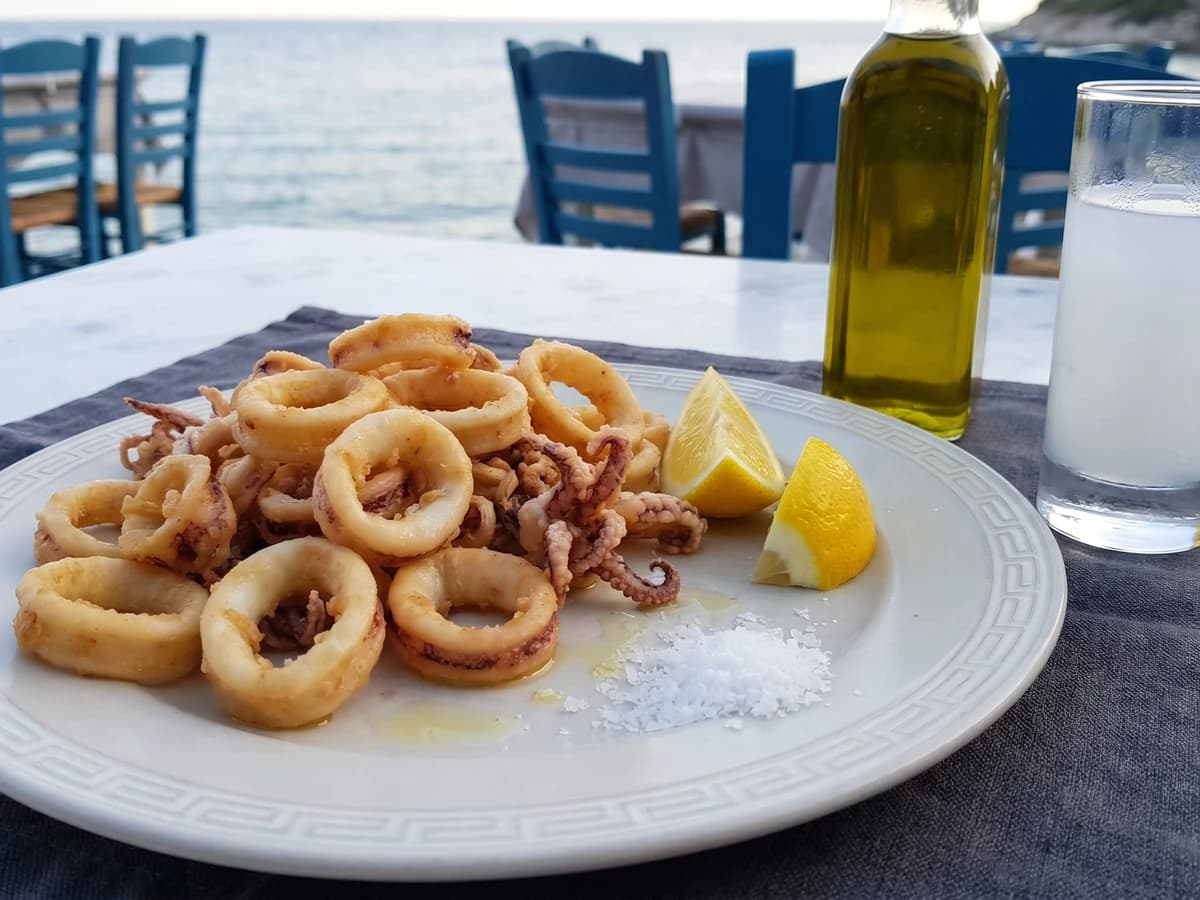
Aegean Island Kalamarakia Tiganita (Καλαμαράκια Τηγανητά)
Aegean island fried squid is flour, hot oil, lemon, and nerve. Fry it for a minute or two, no longer, and it stays tender under its crisp coat.
A cooking platform built around craft, culture, and the stories behind what we eat.
Created by
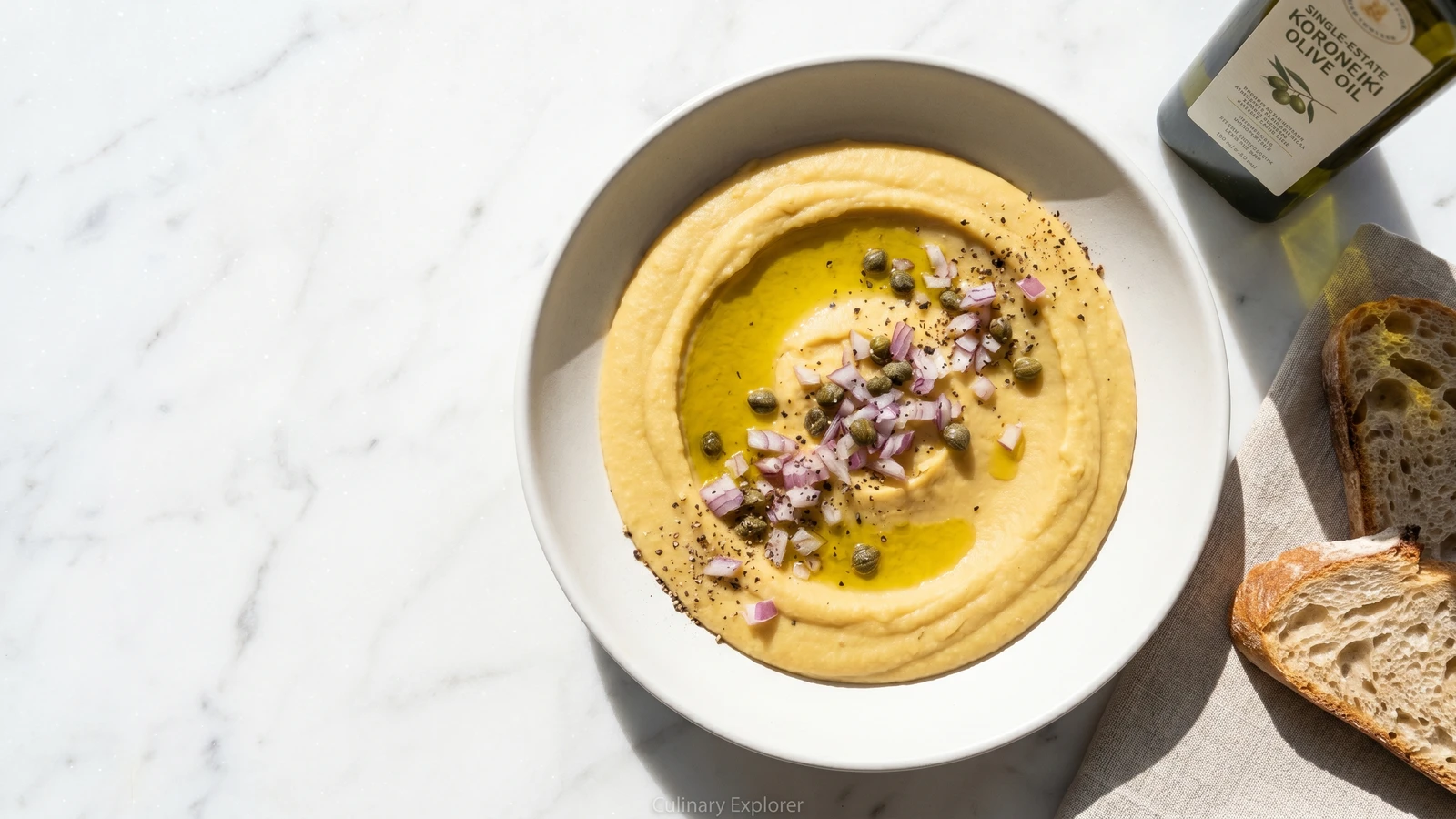
Santorini fava is a silken yellow split pea puree from volcanic soil, served warm with raw onion, capers, lemon, and green-gold olive oil.
Fava Santorinis is Santorini's yellow split pea puree, not broad beans and not a generic dip. The region is the dish's surname. On the island it comes to the table warm, smooth, pale gold, with raw onion, capers, and olive oil cutting through its sweetness.
The method is quiet. Simmer the fava gently and skim the foam early, because bitterness rises there first. Push the heat and it catches on the bottom before the peas have properly collapsed. Treat it kindly and it becomes silk with no cream, no butter, no cleverness.
This is nistisimo, fasting food, but it never feels like absence. It feeds a table with bread, olives, tomato in season, and a glass of cold white wine if the day allows. I write it down plainly because this is how a dish survives: λίγα και καλά, a few things, and good ones.
Fava Santorinis is made from Lathyrus clymenum, a small yellow legume grown on Santorini's volcanic soil for about 3,500 years; archaeobotanical remains have been identified at the Bronze Age settlement of Akrotiri. It received EU PDO status in 2010, separating the island crop from cheaper split peas sold elsewhere under the same name. The classic serving is plain fava with onion, capers, lemon, and oil, while fava pantremeni, or married fava, is the Santorini version dressed more richly with cooked onions and sometimes tomato.
Quantity
300g
rinsed
Quantity
1.2L
Quantity
1 medium
peeled and halved
Quantity
1
Quantity
60ml
plus more for serving
Quantity
2 tablespoons
Quantity
1 teaspoon
plus more to taste
Quantity
1 small
very finely chopped, for serving
Quantity
2 tablespoons
rinsed and drained, for serving
Quantity
to taste
for serving
| Ingredient | Quantity |
|---|---|
| Santorini fava (yellow split peas from Santorini)rinsed | 300g |
| cold water | 1.2L |
| yellow onionpeeled and halved | 1 medium |
| bay leaf | 1 |
| extra virgin Koroneiki olive oilplus more for serving | 60ml |
| fresh lemon juice | 2 tablespoons |
| fine sea saltplus more to taste | 1 teaspoon |
| red onionvery finely chopped, for serving | 1 small |
| capersrinsed and drained, for serving | 2 tablespoons |
| freshly ground black pepper (optional)for serving | to taste |
Rinse the Santorini fava in several changes of cold water until the water runs mostly clear. Pick out any small stones or dark pieces. This is a simple island dish, so the legume has nowhere to hide.
Put the rinsed fava in a heavy pot with 1.2L cold water, the halved yellow onion, and the bay leaf. Bring it slowly to a boil over medium heat, then lower the heat at once.
Skim off the gray foam as it rises, then simmer uncovered for 45 to 55 minutes, until the peas have collapsed and the pot looks thick and soft. Keep the flame low. The whole dish rests here: gentle simmering makes the fava sweet and silken, while hard boiling catches it on the bottom and gives bitterness to the spoon.
Remove the bay leaf. Keep the cooked onion in the pot. Add the salt, 60ml olive oil, and lemon juice, then beat the fava with an immersion blender or a wooden spoon until smooth. It should pour softly from the spoon while hot, because it firms as it cools.
Let the fava rest for 15 minutes. Spoon it into a shallow bowl, make a small hollow in the center, and finish with chopped red onion, capers, black pepper, and a generous pool of olive oil. Serve warm or at room temperature with bread.
1 serving (about 205g)
Culinary guides, cultural storytelling, and the editorial depth that makes cooking meaningful.
Discover Culinary ExplorerChef Dimitra
Aegean island fried squid is flour, hot oil, lemon, and nerve. Fry it for a minute or two, no longer, and it stays tender under its crisp coat.

Chef Dimitra
Pale Aegean taramosalata is cured roe, soaked bread, lemon, and olive oil worked slowly until it turns thick and clean, made for lagana on Clean Monday.

Chef Dimitra
Athenian March 25 salt cod, crisp in a puffed beer batter and served with garlic skordalia, the Lenten fish dish Greece keeps for Annunciation day.

Chef Dimitra
Crete names this dish by the pan motion: snails set mouth-down in salted flour, fried in good olive oil, then hit with rosemary and vinegar.