
Chef Takumi
Abura Soba (油そば, brothless ramen)
Abura soba is ramen without the hiding place of soup: hot noodles, strong shōyu tare, fragrant oil, and the discipline to mix while every strand is still hot.
A cooking platform built around craft, culture, and the stories behind what we eat.

Created by
Konnyaku looks plain, almost stubborn, until you score it, blanch it, and let it sit in oden broth. Then the quiet block becomes tender, springy, and deeply seasoned.
Konnyaku is the ingredient people look at twice and trust once. It has no rich color, no fat, no sweetness to flatter you. Good. This is why we cook it in oden: a plain block will tell you exactly whether your broth is clean and your preparation patient.
The one detail that decides it is the cut. Score both faces in a shallow lattice, not for decoration, but to give the broth somewhere to cling. Konnyaku is springy and sealed on the surface; leave it smooth and the seasoning stays outside, sulking like a guest who was not introduced properly. Score it, parboil it, and the face opens just enough.
Parboiling matters too. Konnyaku is set with calcium hydroxide, and a quick boil drains off its sharp lime-water smell. After that, the work is quiet: clear dashi, a little soy, mirin, and salt, then a slow simmer and a rest in the broth. Oden is winter comfort food, but it is also the method, not the menu. Each ingredient enters the pot with its own need, and konnyaku asks only to be cleaned, scored, and given time.
Konnyaku is made from the corm of Amorphophallus konjac, a plant that reached Japan from the Asian continent and was established as a Buddhist vegetarian food by the medieval period. Oden developed from dengaku, skewered tofu or konnyaku brushed with miso, before becoming the soy-seasoned simmered dish common in the Edo period. Regional oden broths still differ sharply, from the dark soy style of eastern Japan to lighter Kansai versions, and konnyaku belongs comfortably in both.
Quantity
2 blocks (about 250g each)
Quantity
4 cups
Quantity
2 tablespoons
Quantity
1 tablespoon
or use more regular soy sauce
Quantity
2 tablespoons
Quantity
1 tablespoon
Quantity
1 teaspoon
Quantity
1/2 teaspoon
Quantity
1 small strip
Quantity
for serving
| Ingredient | Quantity |
|---|---|
| konnyaku | 2 blocks (about 250g each) |
| first-pressing dashi | 4 cups |
| soy sauce | 2 tablespoons |
| usukuchi (light soy sauce)or use more regular soy sauce | 1 tablespoon |
| mirin | 2 tablespoons |
| sake | 1 tablespoon |
| sugar | 1 teaspoon |
| sea salt | 1/2 teaspoon |
| yuzu peel (optional) | 1 small strip |
| karashi mustard (optional) | for serving |
Rinse the konnyaku and pat it dry. With the tip of a knife, score both broad faces in a shallow lattice, about 3mm deep, then cut each block into triangles or thick rectangles. The cuts are small doors for the broth. Without them, the surface stays too smooth and the seasoning clings only to the outside.
Bring a pot of water to a boil, add the konnyaku, and boil for 3 minutes. Drain well. This step removes the sharp lime-water smell from the coagulant and leaves the konnyaku cleaner, so the dashi can taste like itself.
In a wide pot, combine the dashi, soy sauce, usukuchi, mirin, sake, sugar, and salt. Bring it just to a gentle simmer and taste. It should be savory and a little stronger than soup you would sip, because konnyaku is mild and needs time to take the seasoning in.
Add the drained konnyaku to the broth in one layer. Set a wooden drop-lid, or otoshibuta, directly on the surface, or use a circle of parchment with a small hole in the center. Simmer gently for 35 to 40 minutes. The drop-lid keeps the pieces bathed without stirring, and stirring is how you make a calm pot look busy for no reason.
Turn off the heat and let the konnyaku rest in the broth for at least 20 minutes, or up to several hours. The rest is when the seasoning settles into the scored face. Rewarm gently before serving, never at a hard boil, or the broth loses its clean edge.
Lift the konnyaku into small bowls with a little clear broth. Add a thin strip of yuzu peel if you have it, and serve karashi mustard on the side. Use only a dab. The mustard should wake the konnyaku, not bully the dashi.
1 serving (about 365g)
Culinary guides, cultural storytelling, and the editorial depth that makes cooking meaningful.
Discover Culinary ExplorerChef Takumi
Abura soba is ramen without the hiding place of soup: hot noodles, strong shōyu tare, fragrant oil, and the discipline to mix while every strand is still hot.
Chef Takumi
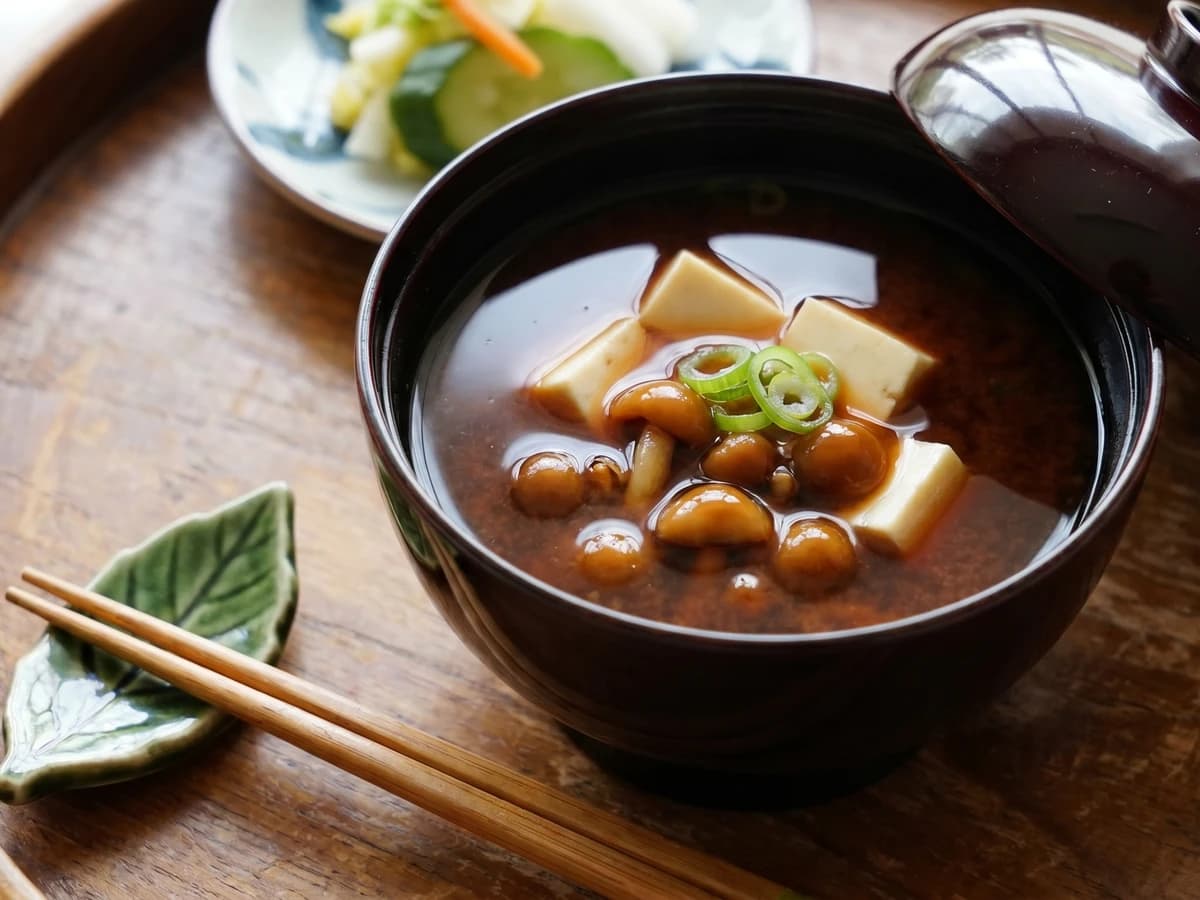
Akadashi asks you to trust the dark miso. Build a clear dashi, loosen the Hatchō mame-miso gently, and the soup turns coffee-dark, savory, and clean.

Chef Takumi
Toast the rice until its skin is firm, then let it meet chicken broth, burdock, maitake, and seri. The pot looks grand, but the work is rice, broth, and patience.
Chef Takumi
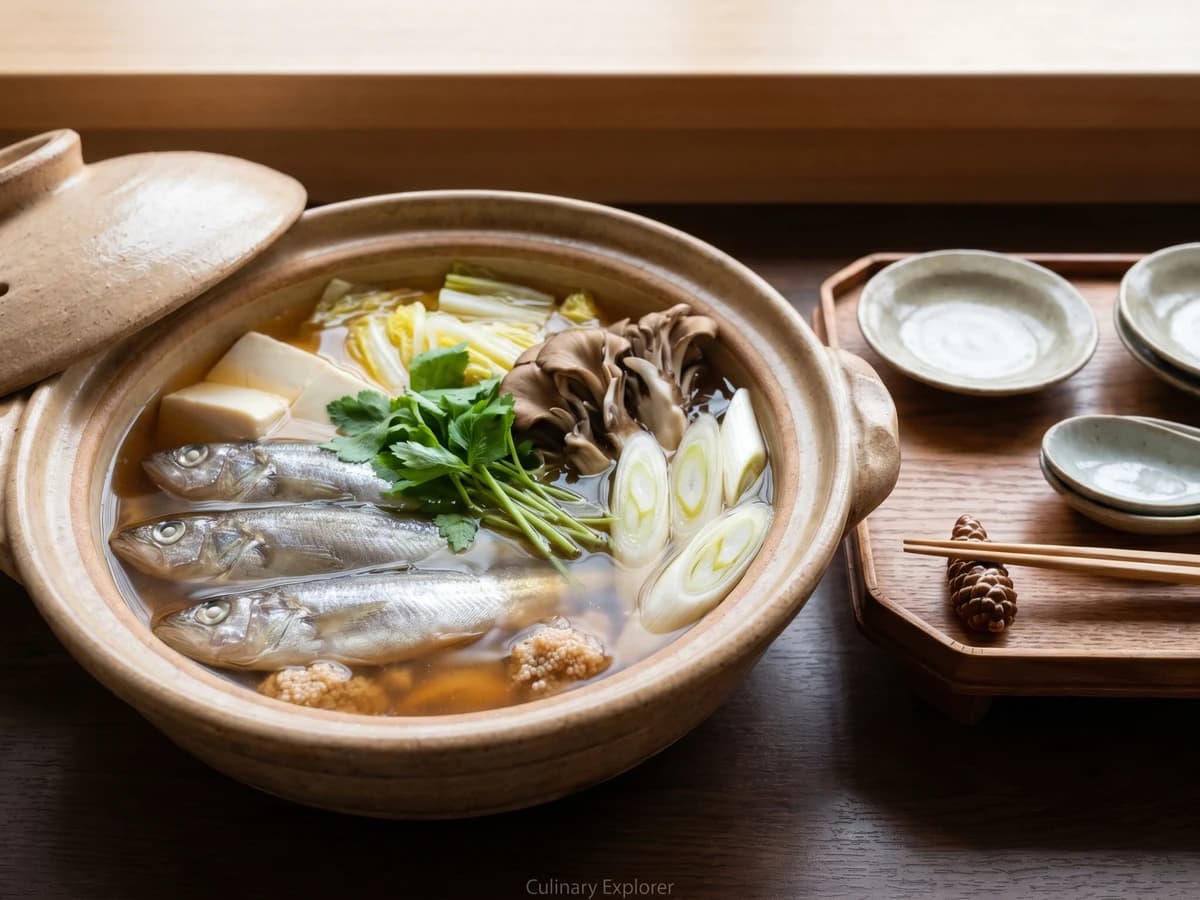
Shottsuru nabe is Akita winter in one pot: clean dashi, hatahata at shun, tofu and napa cabbage carrying a salt-deep broth without anything heavy enough to hide the fish.