Chef Jeong-sun
Amjuk (Dried-Grain Weaning Porridge)
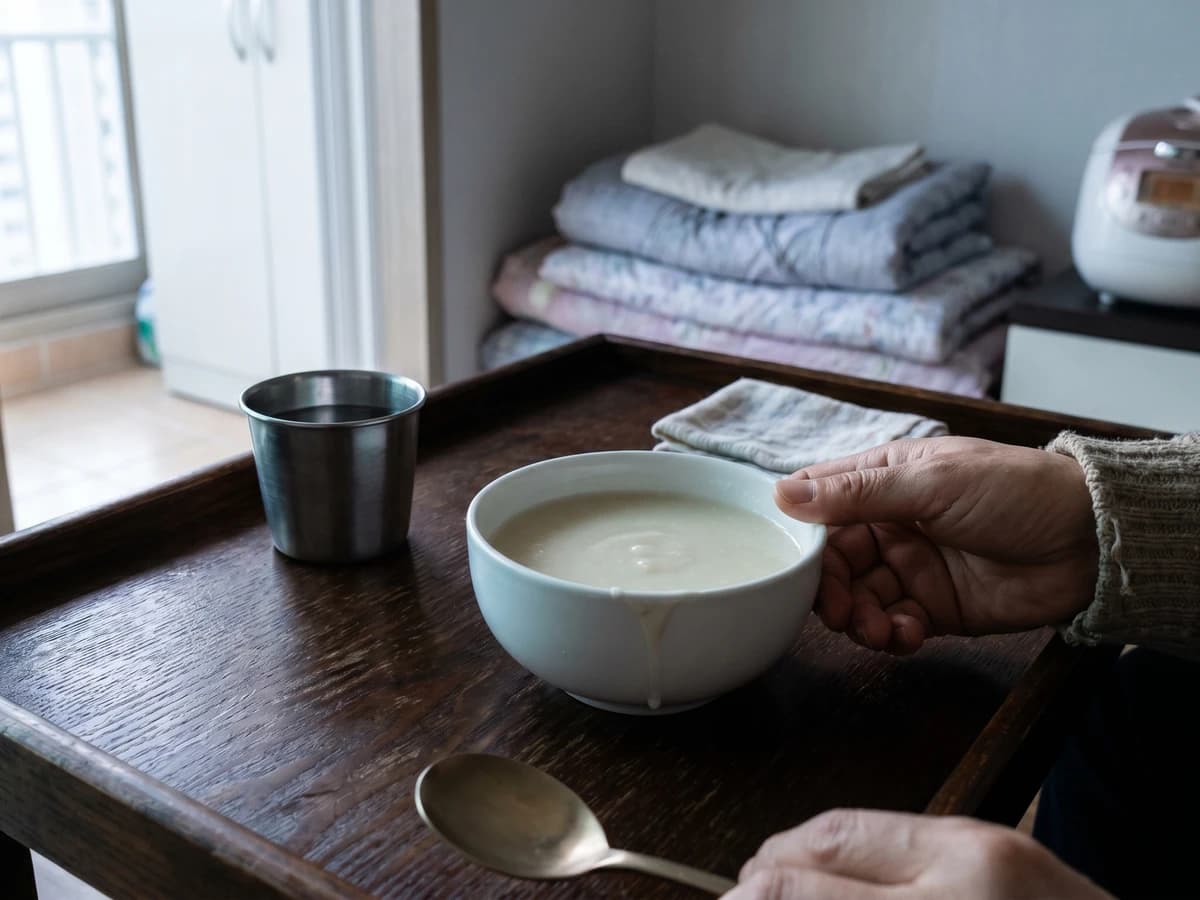
Powdered rice or dried baekseolgi cooked thin in cloudy rice water, an old Korean first-spoon porridge that asks for patience at the sieve and gentleness at the stove.
A cooking platform built around craft, culture, and the stories behind what we eat.
Created by
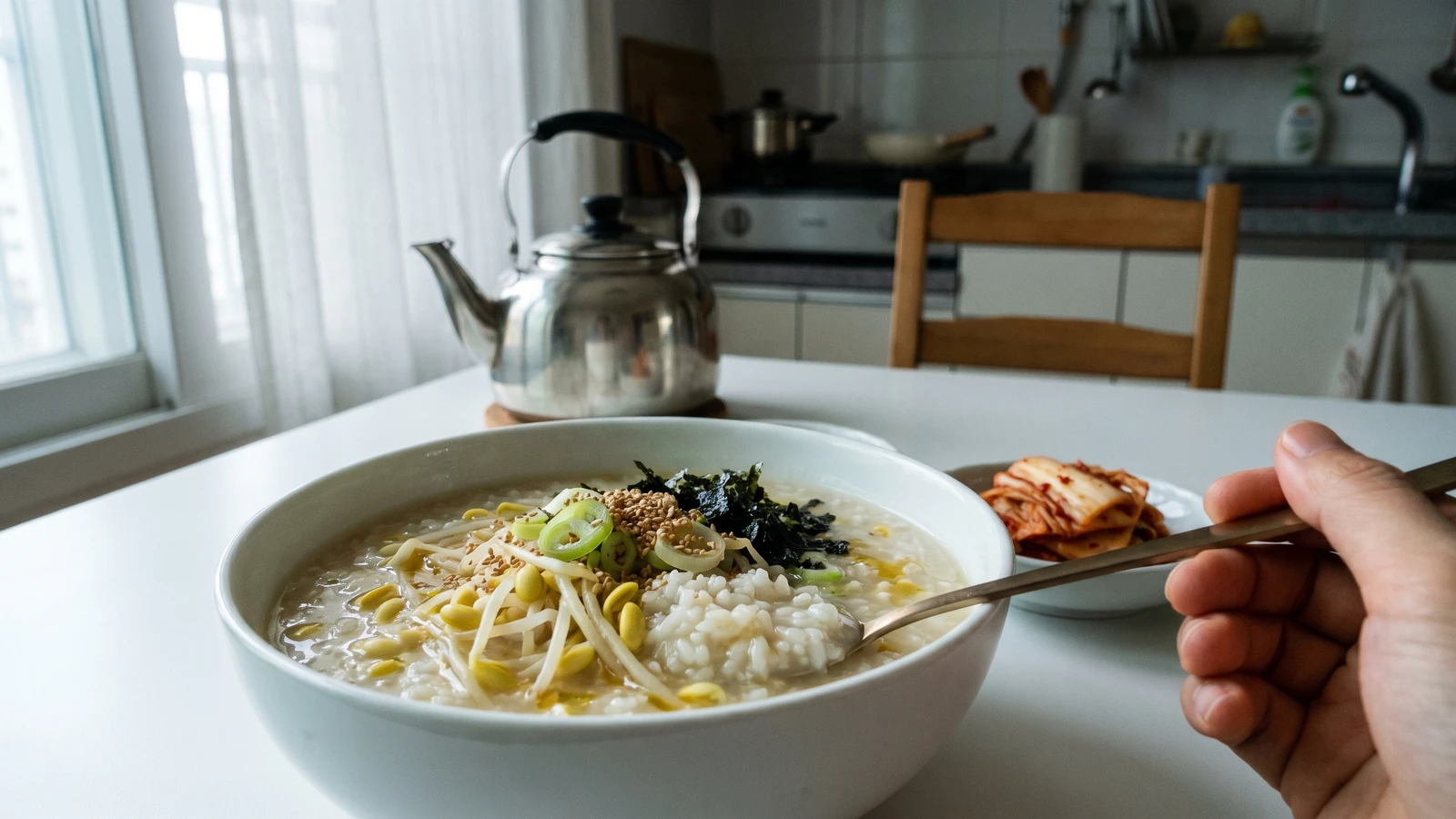
A clean Jeolla country porridge of rice cooked soft in anchovy broth, finished with soybean sprouts that stay crisp because the lid rule is respected from the beginning.
Kongnamul-juk lives or dies by one small rule: cook the soybean sprouts lid-on the whole time, or lid-off the whole time, but don't change your mind in the middle. Half-cooked sprouts meeting cold air make that raw bean smell people remember for the wrong reason. My teacher said it once and then watched to see who forgot. I did not forget twice.
This is breakfast food from a practical kitchen, not a dish that asks you to impress anyone. Rice, broth, soybean sprouts, a little guk-ganjang (Korean soup soy sauce). In Jeolla country houses it stretched a little rice into a warm bowl, light enough for the morning and honest enough when money was thin. The sprouts should still speak for themselves: pale stems, yellow heads, a clean crunch at the edge of soft rice. Let it taste like itself.
Tonight this dish asks for patience, not strength. Soak the rice so it breaks down evenly, pull the kelp from the broth before it turns bitter, and add the sprouts late enough that they don't collapse. 손맛 is real; I measure it anyway, because the next person should be able to make the same quiet bowl without guessing.
Kongnamul-juk is closely associated with the everyday foodways of Jeolla, where soybean sprouts became a dependable, inexpensive ingredient for soups, rice bowls, and porridges. The same regional affection for kongnamul is seen in Jeonju kongnamul-gukbap, a twentieth-century market and tavern food that made bean sprout broth famous outside the home. This porridge has no palace record to borrow from; its importance is poorer and sturdier than that, a country breakfast built from rice, water, sprouts, and restraint.
Quantity
3/4 cup
Quantity
5 cups
divided
Quantity
1 piece, about 3 inches square
Quantity
8
heads and guts removed
Quantity
250g
rinsed and picked over
Quantity
1 teaspoon
Quantity
1 tablespoon, plus 1 teaspoon more if needed
Quantity
1/4 teaspoon, plus more to taste
Quantity
1
thinly sliced
Quantity
1 teaspoon
Quantity
1 sheet
crushed
Quantity
a small pinch
| Ingredient | Quantity |
|---|---|
| short-grain white rice | 3/4 cup |
| waterdivided | 5 cups |
| dried kelp (dasima) | 1 piece, about 3 inches square |
| large dried anchovies (myeolchi)heads and guts removed | 8 |
| soybean sprouts (kongnamul)rinsed and picked over | 250g |
| toasted sesame oil | 1 teaspoon |
| guk-ganjang (Korean soup soy sauce) | 1 tablespoon, plus 1 teaspoon more if needed |
| fine sea salt | 1/4 teaspoon, plus more to taste |
| scallionthinly sliced | 1 |
| toasted sesame seeds | 1 teaspoon |
| roasted gim (seaweed) (optional)crushed | 1 sheet |
| white pepper or black pepper (optional) | a small pinch |
Rinse the rice in several changes of water until the water runs mostly clear, then soak it in fresh water for 30 minutes. Drain well. Soaking is not decoration here; it lets the rice soften into porridge without the outside turning gluey before the center gives way.
Put 5 cups water, the kelp, and the prepared anchovies in a pot over medium heat. When the water reaches a gentle simmer, lift out the kelp right away, because kelp left too long gives a slick bitterness. Simmer the anchovies 8 minutes more, then remove them. You should have about 4 1/2 cups clean broth.
In a heavy pot, warm the sesame oil over medium-low heat. Add the drained rice and stir for 2 minutes, just until the grains look slightly translucent at the edges. This light coating keeps the porridge round and nutty, not flat.
Pour in 4 cups of the anchovy broth and bring it to a gentle boil, then lower the heat and simmer uncovered for 20 to 25 minutes, stirring often so the rice does not catch on the bottom. The grains should swell, split, and thicken the broth. Add the remaining 1/2 cup broth if it tightens before the rice is tender.
Add the soybean sprouts and keep the pot uncovered from this point to the end. Stir them into the porridge and simmer 5 to 6 minutes, until the stems are cooked but still have a clean bite. Lid-on or lid-off, choose one. For this porridge, lid-off is safer because you need to stir the rice.
Stir in 1 tablespoon guk-ganjang and 1/4 teaspoon salt. Taste after 30 seconds, when the seasoning has moved through the pot. Add up to 1 teaspoon more guk-ganjang only if the porridge tastes thin. Soup soy sauce brings savoriness, but too much darkens the bowl and bullies the sprouts.
Ladle the porridge into warm bowls. Scatter scallion and toasted sesame seeds over each serving, and add crushed gim if you like. Serve at once, while the rice is soft and the sprouts still have life in them. A little kimchi on the side is enough.
1 serving (about 450g)
Culinary guides, cultural storytelling, and the editorial depth that makes cooking meaningful.
Discover Culinary ExplorerChef Jeong-sun
Powdered rice or dried baekseolgi cooked thin in cloudy rice water, an old Korean first-spoon porridge that asks for patience at the sieve and gentleness at the stove.

Chef Jeong-sun
A soft summer rice porridge of kneaded mallow greens, dried shrimp, and careful doenjang broth, plain enough for breakfast and exact enough to keep the grit and bitterness out.
Chef Jeong-sun
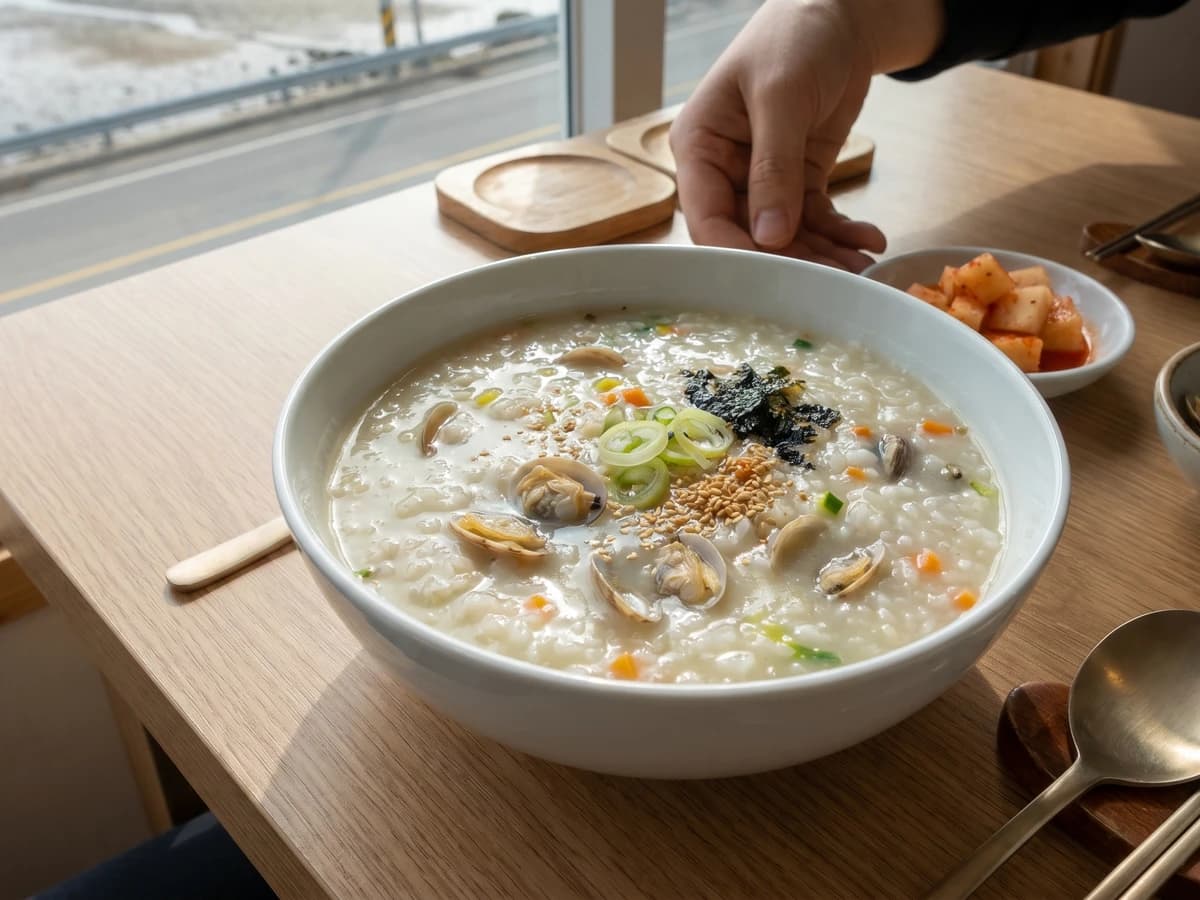
A west-coast clam porridge from Buan's tidal flats: live bajirak opened for their liquor, sesame-slicked rice toasted in the pot, and vegetables cut small enough to comfort without hiding the clams.

Chef Jeong-sun
An autumn juk of boiled chestnuts and soaked short-grain rice, simmered low until smooth and softly sweet, the kind of bowl you set before an elder, a child, or yourself.