
Chef Jeong-sun
Aehobak-guk (애호박국, Korean Zucchini Soup)
A clean summer soup of Korean zucchini and salted shrimp, built on quick anchovy-kelp broth and finished before the half-moons lose their shape on a weeknight table.
A cooking platform built around craft, culture, and the stories behind what we eat.

Created by
A summer bowl of chilled soybean milk, thick enough to coat the spoon, plain enough to show your hand, boiled only until the skins slip and seasoned after chilling.
The first hard heat of summer is when kongguk belongs on the table. In the market, dried yellow soybeans sit in plain sacks, cheaper than meat and more patient than fish, and a cook with a blender can turn them into a cold bowl that feeds the body without heating the room. Cook the month you're standing in. This is summer food, and it should be served so cold the bowl beads with water.
People call it soy milk and think the work is only blending. No. Kongguk lives or dies in the boiling. Soak the beans, boil them just until the skins rub loose and the center tastes cooked, then stop. Boil them to softness and the soup goes dull and chalky; undercook them and the raw bean taste follows you all the way to the table. My teacher Master Seong-nyeo made me split a bean with my fingernail before she let me turn off the heat. Not pretty. Accurate.
Salt comes after chilling, because cold mutes seasoning and each batch of beans drinks water differently. I give 3/4 teaspoon for four cups of soup, then each person may add a pinch at the table. If your family takes sugar, measure that too. Serve kongguk as a small cold soup with cucumber and ice, or pour it over noodles another day and call the meal done, but don't make it thin. This bowl should carry its own weight.
Kongguk belongs to Korea's summer soybean cooking, a practical home and market dish made by grinding cooked soybeans with cold water and seasoning the milk after it is chilled. Its noodle form, kongguksu (cold soy milk noodles), is recorded in the late-Joseon household cookbook Siuijeonseo (시의전서), compiled around the end of the nineteenth century, which shows the method was established before the modern restaurant bowl. The salt-or-sugar argument has no single winner; it follows household and region, with many Seoul tables salting the bowl and many southwestern tables accepting a little sweetness.
Quantity
1 cup (200g)
sorted and rinsed
Quantity
6 cups
Quantity
5 cups
Quantity
2 1/2 to 3 cups
Quantity
2 tablespoons, plus 1 teaspoon for garnish
Quantity
1 tablespoon
Quantity
3/4 teaspoon, plus more at the table
Quantity
1 teaspoon
Quantity
1/2
cut into fine matchsticks
Quantity
1 cup
| Ingredient | Quantity |
|---|---|
| dried yellow soybeanssorted and rinsed | 1 cup (200g) |
| cold water for soaking | 6 cups |
| fresh water for boiling | 5 cups |
| ice-cold water for blending | 2 1/2 to 3 cups |
| toasted sesame seeds | 2 tablespoons, plus 1 teaspoon for garnish |
| pine nuts (optional) | 1 tablespoon |
| fine sea salt | 3/4 teaspoon, plus more at the table |
| sugar (optional) | 1 teaspoon |
| Korean cucumber or Persian cucumbercut into fine matchsticks | 1/2 |
| ice cubes (optional) | 1 cup |
Put the soybeans in a large bowl, rinse until the water runs mostly clear, then cover with 6 cups cold water. Soak 8 to 12 hours, or overnight, until the beans have doubled and split cleanly when pressed. In summer heat, soak them in the refrigerator. The soak is not laziness; it lets the beans cook evenly before the outside goes soft and the center stays raw.
Drain the soaked beans and put them in a 3-quart pot with 5 cups fresh water. Bring to a lively boil over medium-high heat, then lower just enough to keep a steady boil and cook 12 to 14 minutes, skimming foam. Start checking at 10 minutes. A bean skin should rub loose between your fingers, and the split bean should taste cooked to the center, with no raw bean bite. Stop there. Boil much longer and the kongguk turns dull and chalky.
Drain the beans and rinse them under cold water to stop the cooking. Put them in a bowl of cold water and rub handfuls between your palms so the loosened skins float up. Pour off the skins and repeat 3 or 4 times. You do not need to chase every last skin like a person with no dinner to cook, but remove most of them. The soup will be cleaner and smoother.
Put the skinned beans in a blender with 2 1/2 cups ice-cold water, 2 tablespoons toasted sesame seeds, and the pine nuts if using. Blend 90 seconds, rest 20 seconds, then blend another 60 seconds, until the milk looks thick and pale ivory. Add the remaining 1/2 cup cold water only if the blender needs help or the soup is too thick to pour. It should coat a spoon lightly, not run like store-bought soy milk.
Taste the texture. If your blender left coarse grit, pour the kongguk through a fine-mesh sieve or nut milk bag and press hard. If it is smooth with only a little body, leave it as it is. Measure the finished milk; you want about 4 cups. If you are short, add cold water by the tablespoon. Do not thin it carelessly, because this dish is meant to have weight.
Refrigerate the kongguk at least 1 hour, until very cold. Stir well, because soybean solids settle. Season the full batch with 3/4 teaspoon fine sea salt, then taste it cold. Cold food hides salt, so seasoning before chilling lies to you. If your table likes a faint sweet edge, stir in 1 teaspoon sugar, not more. 손맛 (hand-taste) is real; I measure it anyway.
Pour 1 to 1 1/2 cups kongguk into each chilled bowl. Add 2 or 3 ice cubes, a small pile of cucumber matchsticks, and a pinch of toasted sesame seeds. Serve at once with a spoon, and with kimchi or rice if this is the meal. Stir before every serving; a good kongguk settles because it is made from real beans.
1 serving (about 625g)
Culinary guides, cultural storytelling, and the editorial depth that makes cooking meaningful.
Discover Culinary ExplorerChef Jeong-sun
A clean summer soup of Korean zucchini and salted shrimp, built on quick anchovy-kelp broth and finished before the half-moons lose their shape on a weeknight table.
Chef Jeong-sun
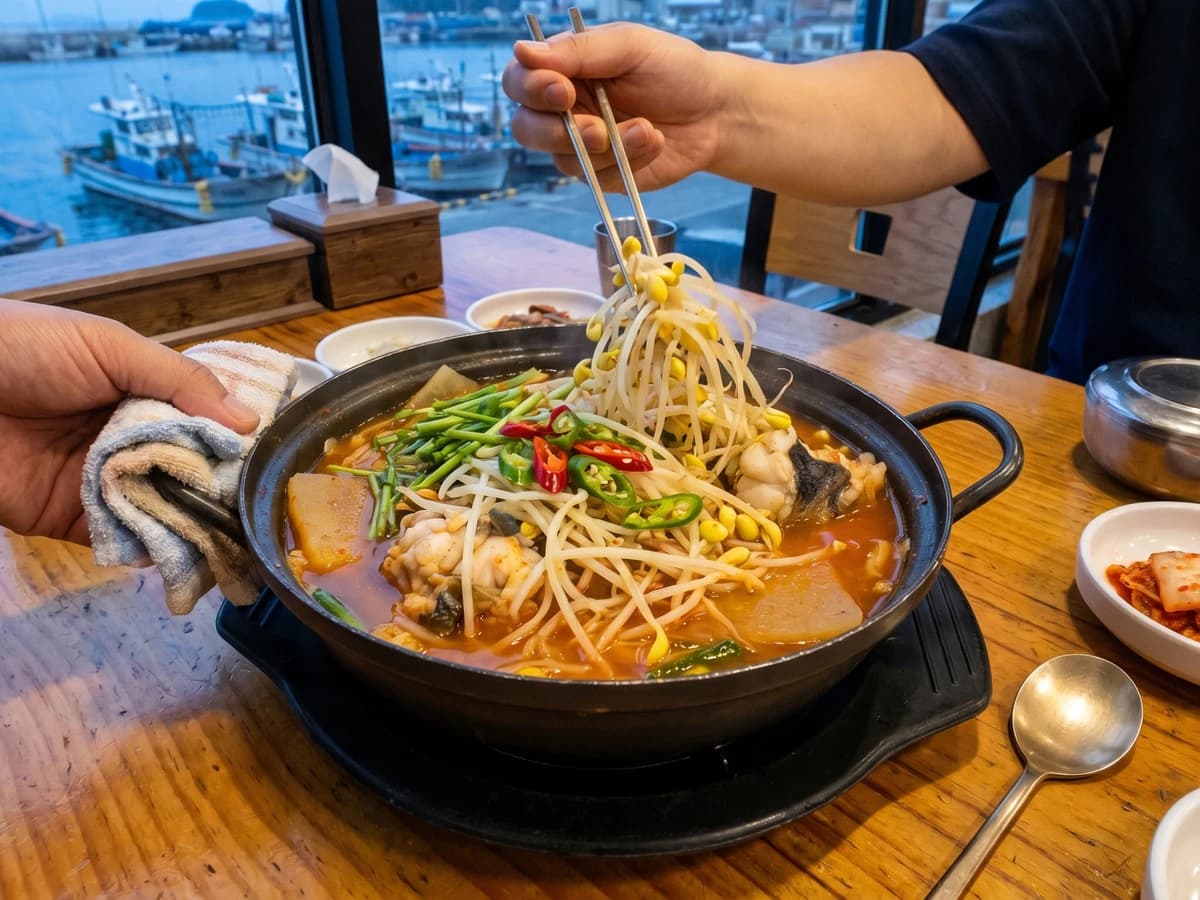
A Masan coast monkfish stew with firm white meat, gelatin at the bones, soybean sprouts for crunch, and a red broth seasoned to carry the fish, not bury it.

Chef Jeong-sun
A weeknight fish roe stew with radish and crown daisy in a clean spicy broth, where the whole success depends on adding the roe late enough that it sets tender, not chalky.

Chef Jeong-sun
Late-summer mallow leaves rubbed with salt until the bitter green water runs off, then simmered in a clean doenjang broth with dried shrimp, the quiet soup a Korean weeknight deserves.