
Chef Takumi
Abura Soba (油そば, brothless ramen)
Abura soba is ramen without the hiding place of soup: hot noodles, strong shōyu tare, fragrant oil, and the discipline to mix while every strand is still hot.
A cooking platform built around craft, culture, and the stories behind what we eat.

Created by
The whole dish is a season inside a shell: sweet kōbako meat, red uchi-ko, dark soto-ko, and kani miso set into clear oden broth and barely warmed.
Kōbako-gani, the female snow crab of Hokuriku winter, is generous in a very small way. The body is little, the legs are thin, and then you open it and find the treasure: sweet meat, orange uchi-ko (inner roe), dark soto-ko (outer eggs), and kani miso, the crab's rich inner paste. This is 旬 (shun, at its prime) with claws attached, and it doesn't wait politely all year for us.
Kanimen looks like an oden-shop trick because the crab returns to the table inside its own shell. It isn't hard. It is patient. You cook the crab just enough, pick it clean, set each part back where the eye can read it, then warm the shell in a pale oden broth. The broth is there to carry the crab, not cover it. Nothing hidden.
The one detail that decides the dish is the final heat. The crab is already cooked, so don't boil it again. Let the packed shells sit in barely trembling dashi until the meat is warm and glossy; boil them hard and the roe breaks, the miso muddies the broth, and the reward turns small. We use the method, not the menu: clear dashi, restrained seasoning, and a winter ingredient at its prime.
Kanimen is a specialty of Kanazawa oden, a local style known for pale broth and winter seafood from the Sea of Japan. Its season follows kōbako-gani, the female snow crab, whose fishing in Ishikawa traditionally opens on November 6 and ends in late December to protect the breeding stock. The name means crab face or crab mask, because the picked meat, uchi-ko, soto-ko, and kani miso are arranged back inside the shell like a small edible mask.
Quantity
4 (about 180-250g each)
live and active, or freshly boiled the same day
Quantity
3 liters
Quantity
90g
Quantity
6 cups
for dashi
Quantity
1 piece (about 15g)
Quantity
30g
Quantity
1/4 cup
Quantity
2 tablespoons
Quantity
2 tablespoons
Quantity
1/2 to 1 teaspoon
for the broth
Quantity
4 thin strips
Quantity
for serving
| Ingredient | Quantity |
|---|---|
| kōbako-gani (female snow crabs)live and active, or freshly boiled the same day | 4 (about 180-250g each) |
| water for cooking live crabs (optional) | 3 liters |
| sea salt for cooking live crabs (optional) | 90g |
| cold waterfor dashi | 6 cups |
| konbu (dried kelp) | 1 piece (about 15g) |
| katsuobushi (bonito flakes) | 30g |
| sake | 1/4 cup |
| mirin | 2 tablespoons |
| usukuchi shōyu (light soy sauce) | 2 tablespoons |
| sea saltfor the broth | 1/2 to 1 teaspoon |
| yuzu peel (optional) | 4 thin strips |
| Japanese mustard (karashi) (optional) | for serving |
Wipe the konbu with a damp cloth, but don't wash it. That pale bloom on the surface is flavor, not dirt. Put the konbu in 6 cups cold water and bring it up slowly over low heat, about 10 to 15 minutes. Pull it out when the water trembles and small bubbles climb the sides of the pot, before it boils.
Bring the konbu water just to a gentle boil, add the katsuobushi all at once, and take the pot off the heat. Leave it alone for 2 to 3 minutes, until the flakes sink. Strain through a cloth-lined sieve and let it drip on its own. Don't squeeze.
Measure about 5 cups of dashi into a wide pot. Add the sake, mirin, usukuchi shōyu, and 1/2 teaspoon salt. Simmer gently for 5 minutes to settle the alcohol and bring the seasonings together, then taste. It should be savory and clear, a little lighter than ordinary oden broth, because the crab will bring its own sweetness and sea depth.
If your crabs were boiled the same day by the fishmonger, skip this step and keep them chilled until you pick them. For live crabs, bring 3 liters water and 90g sea salt to a full boil. Rinse the crabs quickly, lower them in belly-side up, cover, and boil 10 to 12 minutes from the time the water returns to a boil. Belly-side up helps keep the kani miso and roe from washing out. Lift them to a tray and cool just until you can handle them. Don't rinse after cooking.
Work over a rimmed tray so the crab liquor isn't lost. Pull off the legs and claws, then lift off each top shell carefully and set it hollow-side up. Remove and discard the feathery gills and mouth parts. Open the abdominal flap; the dark, grainy eggs there are soto-ko. The orange-red roe inside the body is uchi-ko. Keep the shell, meat, roe, and kani miso distinct.
Split the leg shells with kitchen shears and ease the meat out with a kani-saji, or use a bamboo skewer. Pick the body meat too, checking for small shell fragments as you go. Keep the larger flakes for the top and the smaller shreds for filling the shell. The legs are narrow, so let patience do the work. Force only makes crab confetti.
Set each clean top shell on the tray. Spoon a little kani miso into the bottom, then add the body meat and leg meat. Set the uchi-ko and soto-ko in small visible mounds rather than mixing them into a paste. The shell should look full but not swollen. If a shell feels loose, tie it gently with cotton kitchen twine so it can sit level in the broth.
Bring the seasoned dashi back to a bare tremble. Set the packed shells level in the pot, with the broth coming only partway up the sides. Cover and warm 5 to 7 minutes, spooning a little broth around the shells rather than directly over the roe. The crab is already cooked; this last step is only to warm it through and let the broth take on its scent.
Set one packed shell in each shallow bowl and ladle clear broth around it, not over it. Lay one thin strip of yuzu peel on the crab if using, and offer karashi on the side for those who want the oden-shop bite. Eat the roe and meat with small sips of broth. This is a small dish, but it should not feel meager. The season is doing the generous part.
1 serving (about 440g)
Culinary guides, cultural storytelling, and the editorial depth that makes cooking meaningful.
Discover Culinary ExplorerChef Takumi
Abura soba is ramen without the hiding place of soup: hot noodles, strong shōyu tare, fragrant oil, and the discipline to mix while every strand is still hot.
Chef Takumi
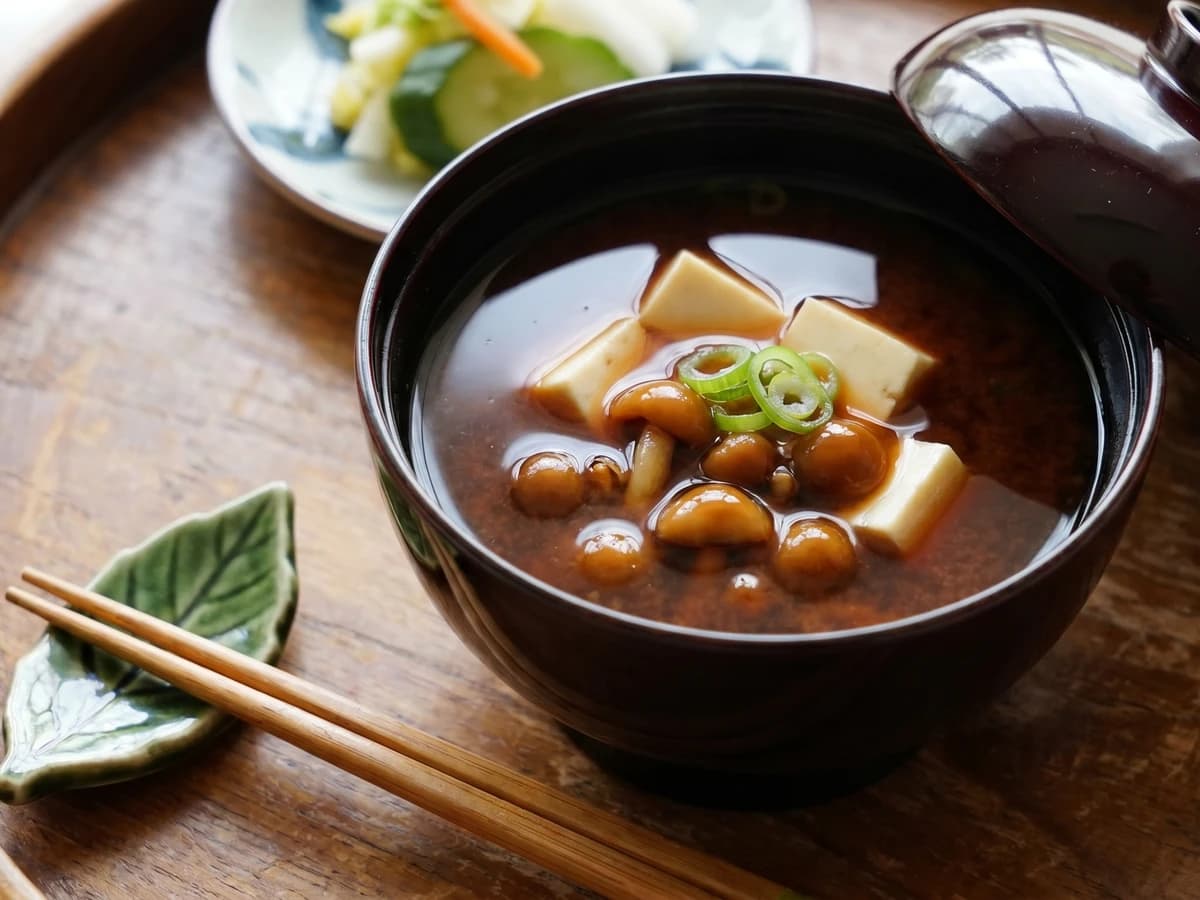
Akadashi asks you to trust the dark miso. Build a clear dashi, loosen the Hatchō mame-miso gently, and the soup turns coffee-dark, savory, and clean.

Chef Takumi
Toast the rice until its skin is firm, then let it meet chicken broth, burdock, maitake, and seri. The pot looks grand, but the work is rice, broth, and patience.
Chef Takumi
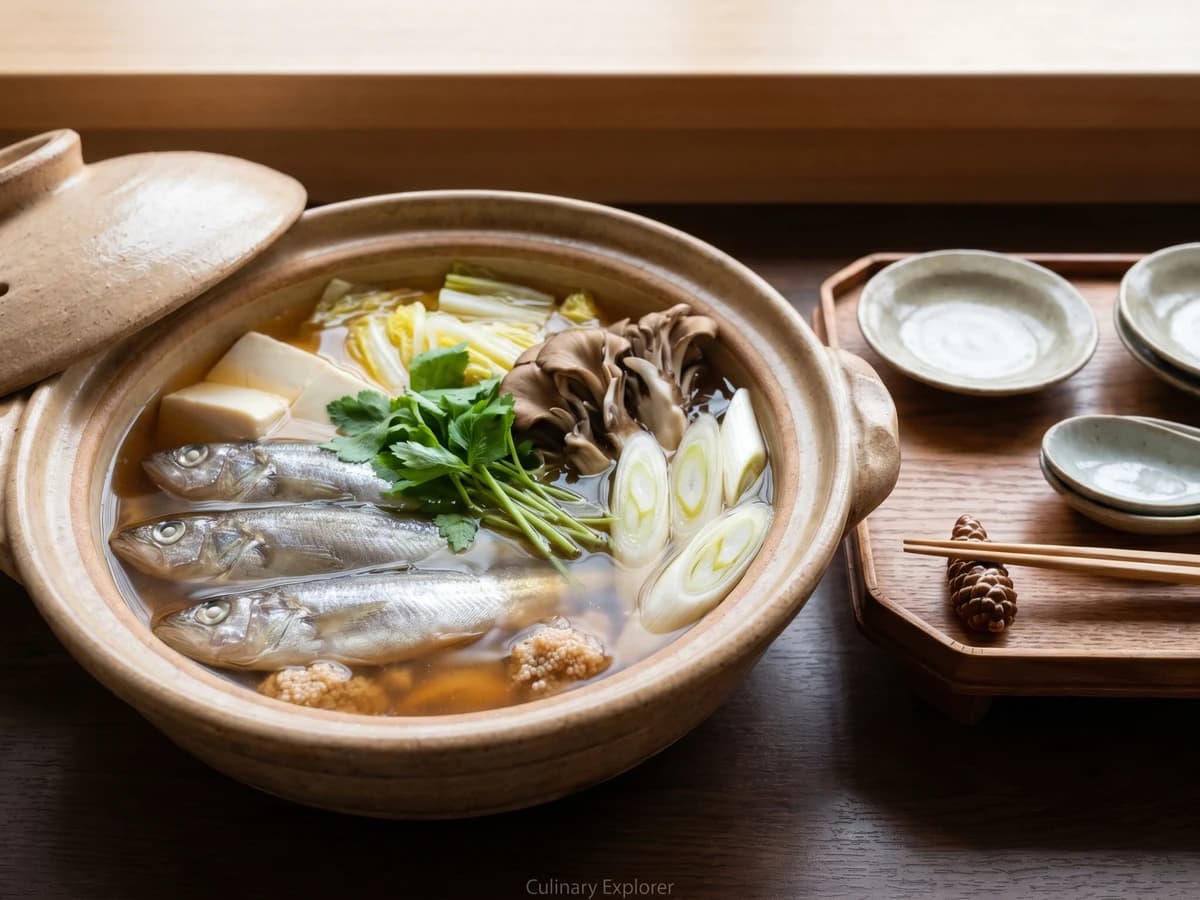
Shottsuru nabe is Akita winter in one pot: clean dashi, hatahata at shun, tofu and napa cabbage carrying a salt-deep broth without anything heavy enough to hide the fish.