
Chef Elsa
Allerheiligenstriezel
A rich, buttery braided bread that Austrian godfathers bring their godchildren on All Saints' Day. The golden six-strand braid is as much ritual as recipe, and the kitchen smells like love while it bakes.
A cooking platform built around craft, culture, and the stories behind what we eat.

Created by
Tyrolean Advent bread so dense with rum-soaked pears, figs, walnuts, and warming spices that the dough is barely holding things together. Baked on St. Thomas's Day, patient until Christmas.
Every December in Salzburg, the smell of Kletzenbrot finds you before you find it. It drifts out of bakeries and farmhouse kitchens, this deep, dark, spiced sweetness that tells you Advent has properly begun. Kletzen are dried pears, and in Austria they've been drying pears for winter baking since the Middle Ages. The bread is more fruit than bread, which is the whole point. You pack it so full of soaked pears, figs, nuts, and spices that the rye dough becomes almost a binder, just enough to hold everything together in a shape you can slice.
Gretel always said Kletzenbrot was peasant thrift turned into something extraordinary. Farmers dried their autumn pears because they had to. Then they soaked them in Schnaps, mixed them with whatever nuts and spices they could get, wrapped it all in a heavy rye dough, and baked it for the darkest days of the year. What started as preservation became ritual. In Tyrol, they bake it on Thomastag, the 21st of December, the longest night. You bake it in the dark and eat it when the light starts coming back.
I bake Kletzenbrot every Advent at my restaurant and give loaves to friends wrapped in parchment and tied with kitchen string. It keeps for weeks. It gets better with time. On Christmas morning, I slice it thin and set it on the table with good butter and coffee, and for a moment the kitchen smells exactly the way my grandmother Eva's kitchen in Kent smelled when Gretel brought her version over for the holidays. She used Obstler instead of rum, and she always added pine nuts, which is a Salzburg touch. I do the same.
Kletzenbrot dates to at least the 16th century in the Alpine regions of Austria, where drying pears was one of the few ways to preserve fruit through winter. The name comes from Kletzen, a dialect word for dried pears found across Tyrol, Salzburg, and Styria. In Tyrol, baking Kletzenbrot on Thomastag (St. Thomas's Day, December 21st) was a fixed tradition, and the bread was closely tied to pre-Christian solstice rituals marking the return of light. Regional variations are fierce: Tyrolean versions tend to be drier and spicier, Salzburg bakers add more nuts and a heavier hand with the rum, and Styrian Kletzenbrot sometimes includes dried plums and chestnuts. In farming communities, the quality of a household's Kletzenbrot was taken as a measure of the cook's skill and the family's prosperity.
Quantity
500g
roughly chopped
Quantity
200g
stems removed, roughly chopped
Quantity
100g
Quantity
100g
roughly chopped
Quantity
100g
finely diced
Quantity
150g
roughly chopped
Quantity
100g
roughly chopped
Quantity
50g
Quantity
zest of 1
Quantity
200ml
Quantity
150ml
Quantity
500g
Quantity
7g (1 sachet)
Quantity
100ml
Quantity
80g
Quantity
1 teaspoon
Quantity
1/2 teaspoon
Quantity
1/2 teaspoon
Quantity
1/4 teaspoon
Quantity
1/4 teaspoon
Quantity
1/2 teaspoon
Quantity
for greasing
| Ingredient | Quantity |
|---|---|
| dried pears (Kletzen)roughly chopped | 500g |
| dried figsstems removed, roughly chopped | 200g |
| raisins | 100g |
| pitted datesroughly chopped | 100g |
| candied orange peelfinely diced | 100g |
| walnutsroughly chopped | 150g |
| whole blanched almondsroughly chopped | 100g |
| pine nuts | 50g |
| unwaxed lemon | zest of 1 |
| dark rum or Obstler (Austrian fruit brandy) | 200ml |
| pear poaching liquid or warm water | 150ml |
| rye bread flour (Roggenmehl) | 500g |
| dried yeast | 7g (1 sachet) |
| warm whole milk | 100ml |
| honey | 80g |
| ground cinnamon | 1 teaspoon |
| ground cloves | 1/2 teaspoon |
| ground allspice | 1/2 teaspoon |
| ground star anise | 1/4 teaspoon |
| freshly grated nutmeg | 1/4 teaspoon |
| salt | 1/2 teaspoon |
| butter | for greasing |
Place the chopped dried pears, figs, raisins, dates, and candied orange peel into a large bowl. Pour over the rum or Obstler and the pear poaching liquid. Stir everything together, cover tightly with cling film, and leave at room temperature overnight, or at least eight hours. The fruit needs to drink up that liquid so it turns soft and swollen and releases its own sticky sweetness into the bowl. Don't skip this step and don't shorten it. Dry fruit in a Kletzenbrot tastes like pebbles in bread.
Spread the walnuts, almonds, and pine nuts on a baking tray in a single layer. Toast them in a 160°C oven for eight to ten minutes, shaking the tray once halfway through. You want them golden and fragrant, not dark. Pine nuts go from perfect to burnt in about thirty seconds, so stay close. Let them cool, then add them to the soaked fruit along with the lemon zest. Toss everything together.
Warm the milk to about 37°C, just body temperature. Stir in the yeast and a teaspoon of the honey. Let it sit for ten minutes until it starts to foam. If it doesn't foam, your yeast is dead and you need fresh. In a large bowl, combine the rye flour, the remaining honey, all the spices, and the salt. Pour in the yeast mixture and work it into a dough. Rye dough is stickier and denser than wheat dough. It won't feel elastic the way a bread roll does. That's normal. Knead it for five minutes until it comes together into a rough, cohesive mass.
Tip the soaked fruit and nut mixture into the dough, including every drop of liquid left in the bowl. Work it all together with your hands. This takes muscle. The ratio of fruit to dough is enormous, far more filling than bread, and at first it looks like it will never hold together. Keep folding and pressing. The dough is the glue, not the star. After three or four minutes of working, you'll have a dense, heavy, fruit-studded mass that barely resembles bread dough. That's exactly right.
Divide the mixture in half. With wet hands (the dough is very sticky), shape each half into a tight oval loaf about 25 centimeters long and 10 centimeters wide. Place them on a baking tray lined with parchment paper, leaving space between them. Cover loosely with a clean tea towel and let them rest in a warm spot for one hour. They won't rise much. Kletzenbrot is a dense bread and the rye and weight of the fruit keep it from puffing up like a Semmel. A slight swell is all you're looking for.
Preheat your oven to 160°C. Brush the tops of the loaves lightly with warm water. Bake for one hour and fifteen minutes. The surface should be dark brown and firm. If you tap the bottom of a loaf, it should sound hollow, though not as resonantly as a plain bread loaf would, because the inside is packed solid with fruit. The kitchen will smell like Christmas in the Alps. Remove from the oven and let the loaves cool completely on a wire rack. This takes at least two hours. Do not slice while warm or the dense interior will crumble insteadof cutting cleanly.
Once completely cool, wrap each loaf tightly in parchment paper, then in foil. Store in a cool, dark place. Now comes the hard part: wait. Kletzenbrot needs at least three days to mature, and it's better after a week. The flavors deepen, the spices mellow, and the rum works its way through every piece of fruit and every crumb of rye. By Christmas, it will taste like it has been holding this secret for you all Advent long. Slice it thin, about half a centimeter, and serve at room temperature with butter and strong coffee.
1 serving (about 90g)
Culinary guides, cultural storytelling, and the editorial depth that makes cooking meaningful.
Discover Culinary ExplorerChef Elsa
A rich, buttery braided bread that Austrian godfathers bring their godchildren on All Saints' Day. The golden six-strand braid is as much ritual as recipe, and the kitchen smells like love while it bakes.

Chef Elsa
Austria's rye sourdough farmhouse loaf, dark-crusted and tangy, laced with hand-crushed Brotgewürz, the kind of bread that fills a kitchen with the smell of caraway and makes everything else on the table taste better.
Chef Elsa
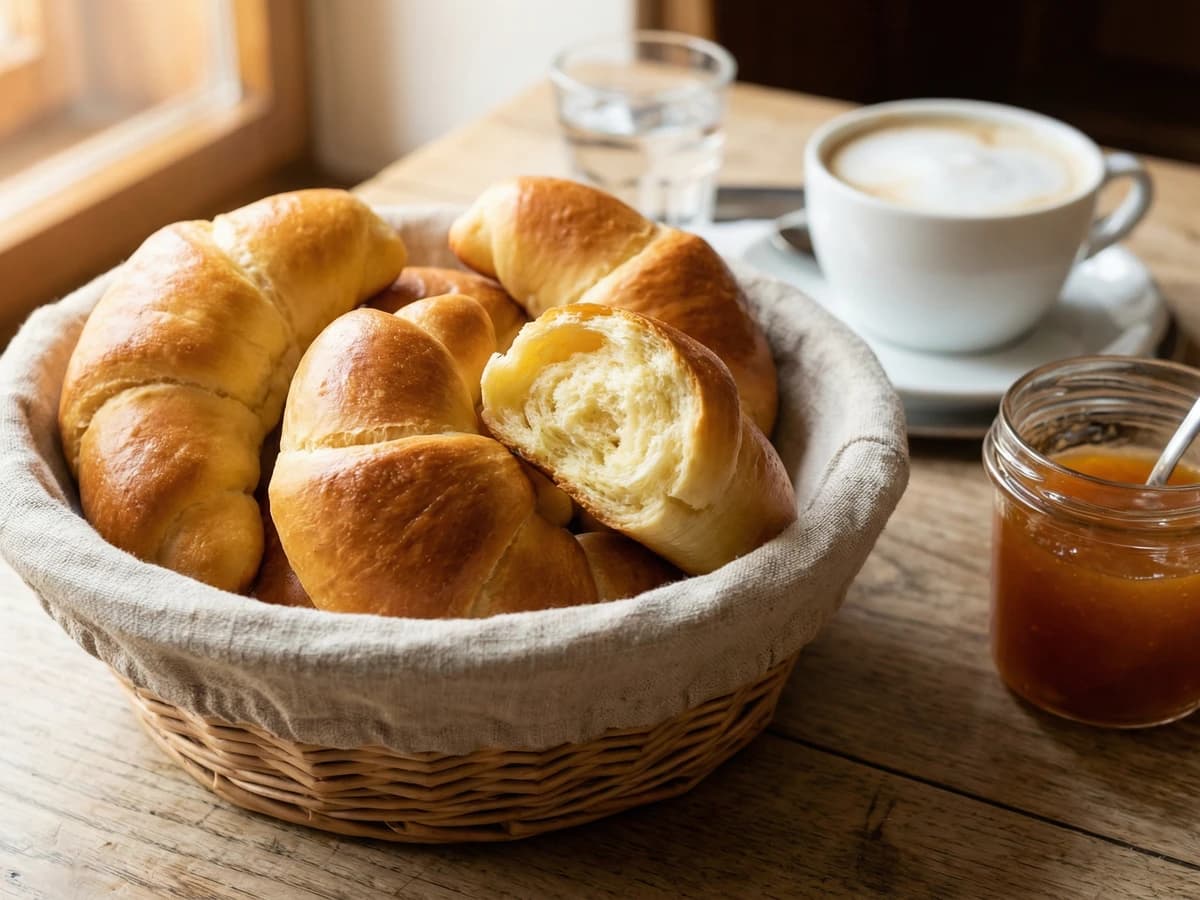
Buttery Viennese crescents, golden with egg wash and soft as a Sunday morning, shaped the way Viennese bakers have shaped them for eight hundred years.

Chef Elsa
Vienna's five-petaled imperial roll, hand-folded into a star and baked until the crust shatters at first touch, with a crumb so soft and airy it barely weighs a thing.