
Chef Dimitra
Chios Nerantzi Glyko Koutaliou (Νεράντζι Γλυκό Κουταλιού)
Chios bitter orange peel rolled into tight coils, blanched through clean waters, then preserved in a clear fragrant syrup for the spoon-sweet tray.
A cooking platform built around craft, culture, and the stories behind what we eat.
Created by
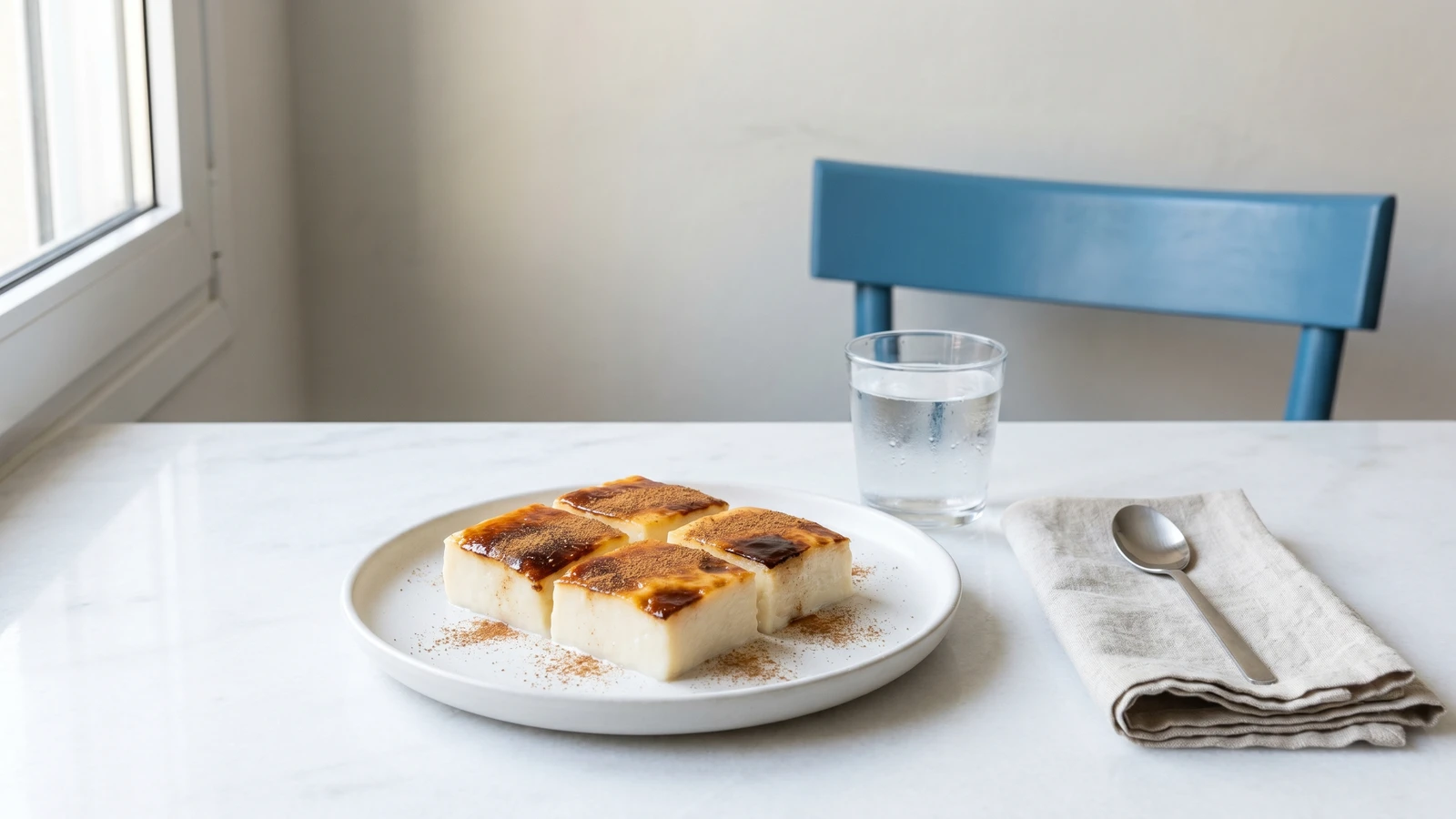
Kazan Dipi is the City’s milk pudding with its bottom burned on purpose: cool, white custard against a thin amber skin that tastes of caramel, not smoke.
Kazan Dipi belongs to Constantinople, to the Politiki kitchen, where milk sweets were handled with restraint and great nerve. It is a plain milk pudding until the bottom is deliberately scorched, then it becomes itself: white, cool, soft, with a burnt-amber skin that pulls slightly under the spoon.
The whole dish is decided in the last minutes. You cook the custard until it falls from the spoon in thick ribbons, then spread it in a buttered, sugared pan and move the pan over steady heat until the sugar underneath darkens. Don't leave it. Pale is timid, black is bitter, and the good place is a deep chestnut stain across the base.
Let it chill properly before turning or slicing. Warm Kazan Dipi tears and smears; cold Kazan Dipi lifts cleanly, showing the caramelised bottom like a secret. I keep this one exactly as the old Politiki cooks did, because I don't invent it. I find it, I test it, I write it down.
Kazan Dipi means "bottom of the cauldron" in Turkish, and the sweet comes from the Ottoman milk-pudding family that Constantinopolitan Greek cooks carried into the Politiki repertoire. In the older palace tradition it is related to tavuk göğsü, a milk pudding sometimes thickened with finely shredded chicken breast, but the Greek home version is usually made without meat, with milk, sugar, and starch. Its identity is not the custard alone, but the controlled scorching of the base.
Quantity
1 litre
Quantity
120g
Quantity
60g
Quantity
25g
Quantity
1 small pinch
Quantity
1 small piece
crushed with 1 teaspoon sugar
Quantity
1 teaspoon
Quantity
20g
softened
Quantity
35g
for the pan
Quantity
as needed
for serving
| Ingredient | Quantity |
|---|---|
| whole milk | 1 litre |
| granulated sugar | 120g |
| rice flour | 60g |
| cornflour | 25g |
| fine sea salt | 1 small pinch |
| mastic (masticha) (optional)crushed with 1 teaspoon sugar | 1 small piece |
| vanilla extract | 1 teaspoon |
| unsalted buttersoftened | 20g |
| icing sugarfor the pan | 35g |
| ground cinnamon (optional)for serving | as needed |
Put the rice flour, cornflour, granulated sugar, salt, and crushed mastic, if using, into a heavy saucepan. Whisk in 250ml of the cold milk until smooth, with no dry pockets hiding at the edge of the pan.
Whisk in the remaining milk and set the pan over medium heat. Stir constantly, scraping the bottom and corners, until the mixture thickens and falls from the spoon in heavy ribbons, 10 to 12 minutes. Stir in the vanilla off the heat.
Butter a shallow heavy pan, about 26cm, then dust the base evenly with the icing sugar. Pour in the hot custard and smooth it into an even layer with a spatula, about 2cm thick.
Set the pan over medium-low heat and cook for 8 to 12 minutes, moving and turning the pan every minute so the base colours evenly. Listen for a faint crackle and watch the edge: when you see deep amber patches and smell caramel, stop. This is the dish's one narrow line. Caramel is wanted; bitterness is not.
Let the pan cool for 20 minutes, then cover and chill for at least 4 hours. Run a thin knife around the edge. Cut into squares or wide strips, loosen carefully with a flexible spatula, and serve caramel side up or rolled, with a little cinnamon if you like.
1 serving (about 155g)
Culinary guides, cultural storytelling, and the editorial depth that makes cooking meaningful.
Discover Culinary ExplorerChef Dimitra
Chios bitter orange peel rolled into tight coils, blanched through clean waters, then preserved in a clear fragrant syrup for the spoon-sweet tray.

Chef Dimitra
Chios gives vanilla submarine its mastic breath: a pearly spoon sweet stirred stiff, served cold in water, and offered as the simplest kerasma.
Chef Dimitra
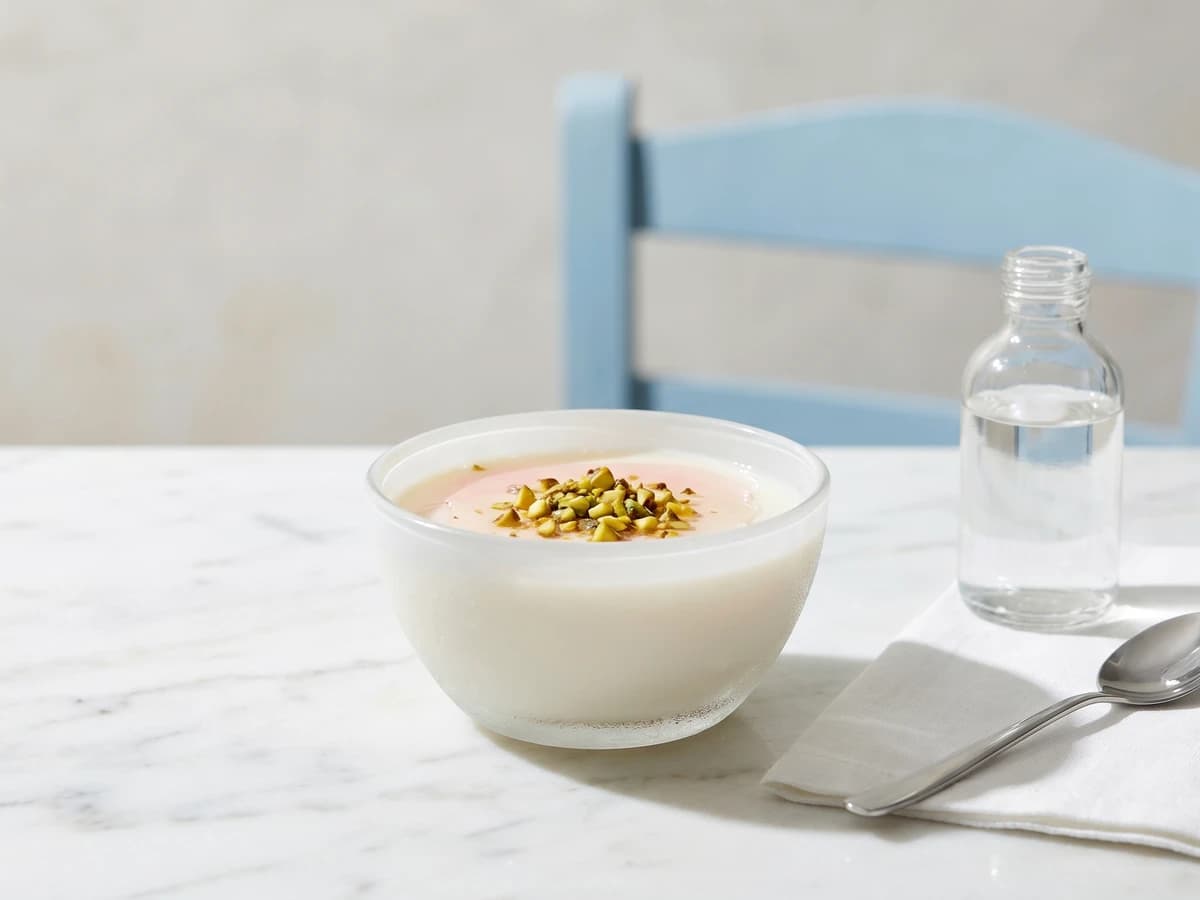
Mahalepi is the cooling milk pudding of Cyprus and the Politiki table: pale, trembling, and loosened at the spoon with cold rosewater syrup.
Chef Dimitra
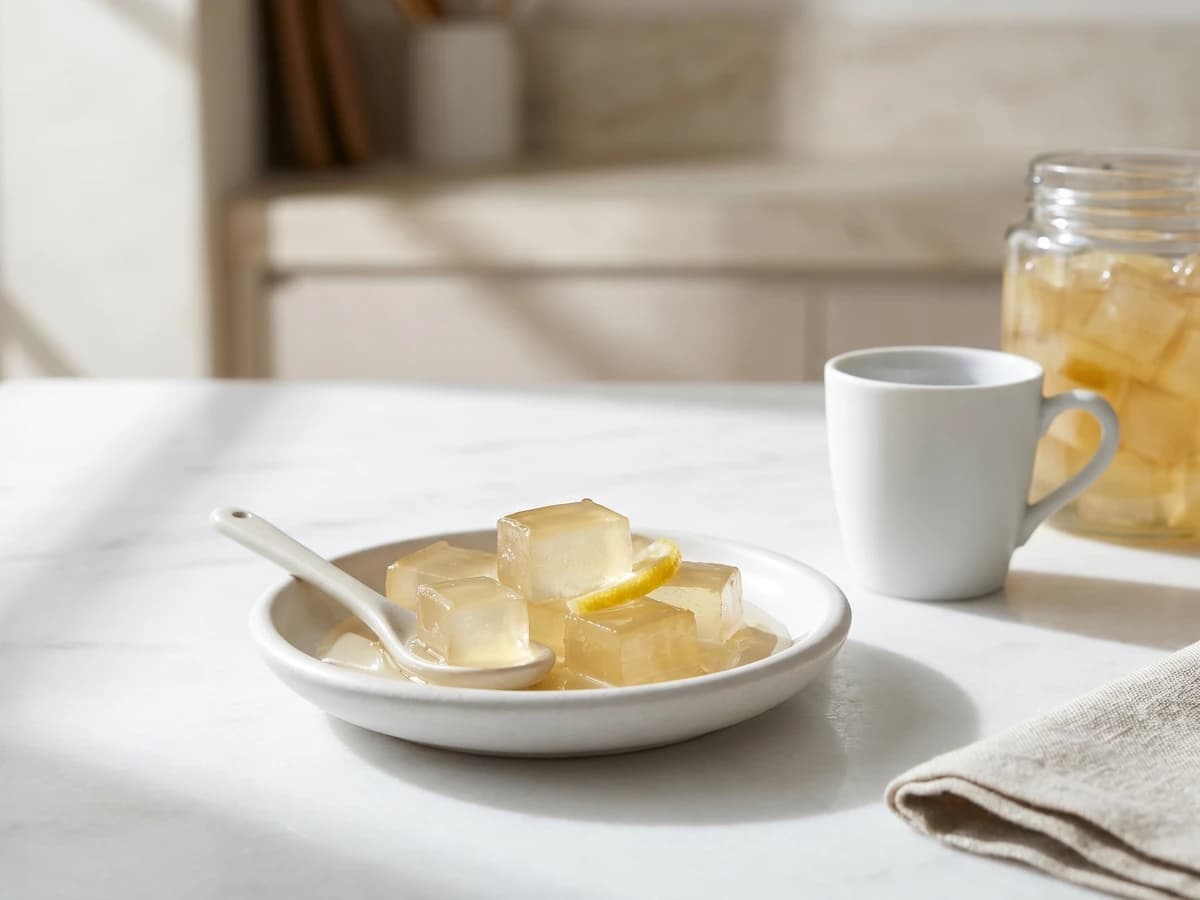
Cyprus keeps the watermelon after the red flesh is gone: firm white rind, lime-soaked for snap, simmered slowly in lemon syrup until each piece shines on the spoon.