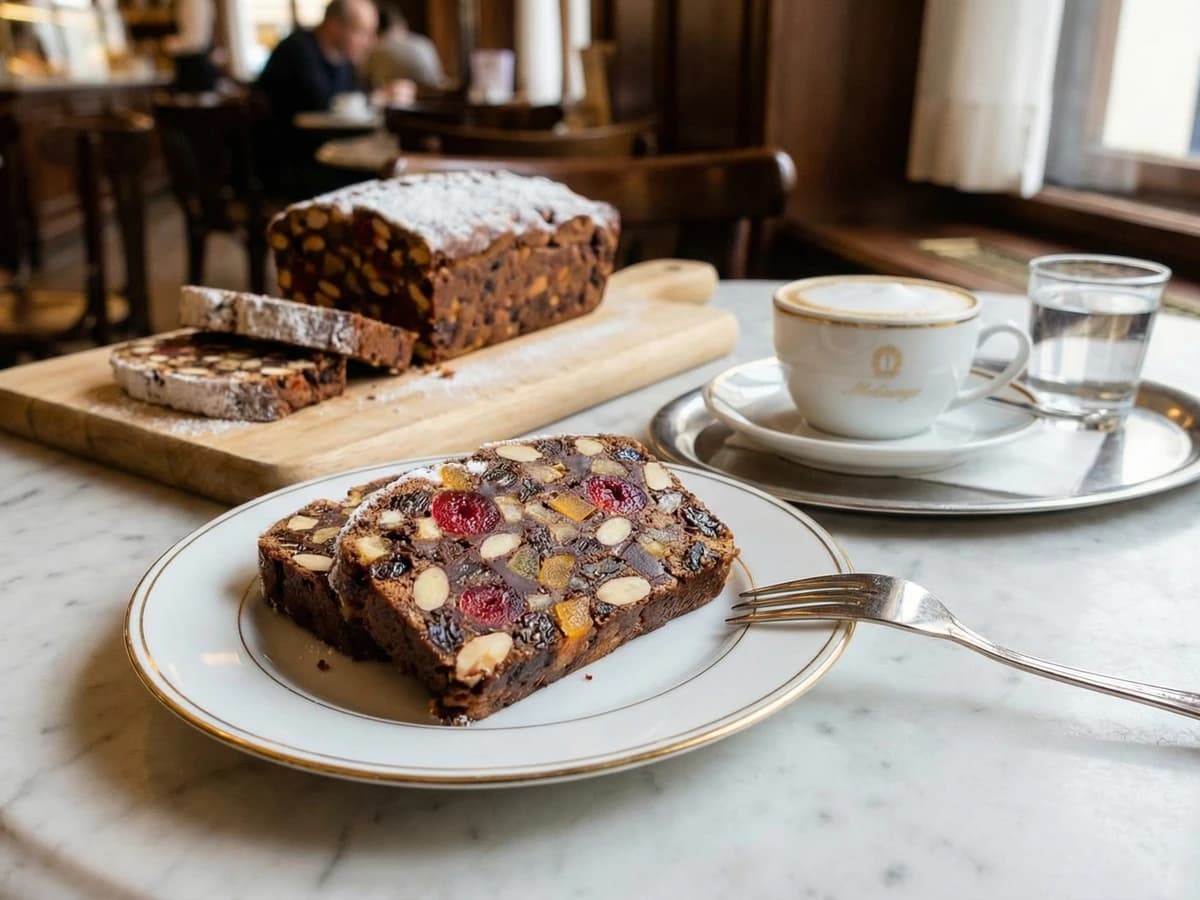
Smooth chestnut confections dipped in dark chocolate, the kind the Konditorei puts in the window when the Maronibrater carts start smoking on every Salzburg street corner in October.
Desserts
Austrian
Special Occasion
Make Ahead
45 min
Active Time
25 min cook•2 hr 30 min total
YieldAbout 30 confections
October in Salzburg smells like roasting chestnuts. You catch it before you see the carts, that smoky, sweet warmth drifting across the Grunmarkt and curling around the cathedral. The Maronibrater stands there in the cold, turning chestnuts in a blackened drum, handing them to you in a paper cone. You eat them walking, burning your fingers and not caring. That smell is the start of Austrian autumn, and Kastanienkonfekt is what happens when a Konditor takes that same chestnut and turns it into something you can wrap in a box and give to someone you love.
Gretel always said the best Austrian confections start with one perfect flavor and then get out of its way. Kastanienkonfekt is chestnut puree, real vanilla, a little butter, good dark chocolate, and a splash of rum. That's all. You cook the chestnuts in milk until they're falling apart, press them through a sieve until the puree is smooth as velvet, fold in melted chocolate and rum, shape them by hand, and dip the whole thing in tempered dark chocolate. The technique takes patience but not talent. If you can be precise for an afternoon, you can make these.
I learned to make Konfekt at GAFA in Vienna, in the Konditorei module that terrified half the class and thrilled the other half. The instructor lined up thirty confections on a marble slab and told us that if the chocolate coating wasn't perfectly smooth and shiny, the filling didn't matter. He was right about the standard, but Gretel would have reminded him that it's the chestnut inside that makes someone close their eyes when they take a bite. Both things are true. Make the filling beautiful, then dress it properly.
Kastanienkonfekt belongs to the grand tradition of Viennese Konfekt, the small, jewel-like confections displayed in glass cases at Konditorei like Demel and Gerstner since the 19th century. Chestnuts have been cultivated in Austria's southern regions, particularly Styria and southern Burgenland, for centuries, and the Maroni (roasted chestnut) carts have been a fixture of Viennese and Salzburg street life since the Habsburg era. The practice of turning chestnut puree into fine confections likely arrived through Italian and Hungarian pastry traditions, both of which contributed heavily to the Viennese Konditorei repertoire during the empire.
The technique, the tradition, and the story behind every dish.
dark chocolate (70% cocoa)finely chopped, for the filling
150g
dark couverture chocolate (60% cocoa)for dipping
200g
cocoa powder (optional)
for dusting
gold leaf or crystallized violets (optional)
for finishing
Equipment Needed
•Fine-mesh sieve or potato ricer
•Bain-marie (heatproof bowl over a small saucepan)
•Kitchen thermometer (for tempering chocolate)
•Dipping fork or two regular forks
•Baking tray lined with parchment paper
•Small heart-shaped silicone mould (optional)
Instructions
1
Prepare the chestnuts
If you're starting with fresh chestnuts, score an X into the flat side of each one with a sharp knife. This isn't decoration. The shell will crack along that line in the oven and save you ten minutes of frustrated peeling later. Roast them on a baking tray at 200°C for about twenty minutes, until the shells curl back at the cuts. Peel them while they're still warm, removing both the outer shell and the papery brown skin underneath. That inner skin is bitter and it will ruin the texture of your confections if it stays. If using vacuum-packed cooked chestnuts, skip ahead to the next step.
Peel in small batches, keeping the rest warm in the oven. Once chestnuts cool, the inner skin clings like it's been glued on. A damp tea towel helps grip the hot shells.
2
Simmer with milk and vanilla
Put the peeled chestnuts in a saucepan with the milk. Scrape the seeds from the vanilla pod and add both the seeds and the pod to the pan. Bring to a gentle simmer over low heat and cook for fifteen to twenty minutes, until the chestnuts are completely tender and starting to fall apart. They should crush easily against the side of the pan with a wooden spoon. Remove the vanilla pod.
3
Make the chestnut puree
Press the warm chestnuts and any remaining milk through a fine-mesh sieve or a potato ricer. This is the step that separates Konditorei-quality Konfekt from grainy homemade attempts. You want a puree so smooth it looks like velvet. A food processor gets you close, but pressing through a sieve gets you there. It takes ten minutes. It's worth it.
If your mixture seems dry after sieving, add a splash of warm milk, one tablespoon at a time. The puree should hold its shape when squeezed in your fist but feel soft and pliable, not crumbly.
4
Build the Konfekt mixture
While the puree is still warm, stir in the caster sugar, Vanillezucker, and softened butter until completely incorporated. Melt the 150g of dark chocolate gently in a bowl over barely simmering water. The water should not touch the bottom of the bowl. Stir the melted chocolate into the chestnut mixture along with the rum. The warmth of the chestnut puree helps everything come together into a smooth, glossy mass. Taste it now. It should be rich and sweet with a clean chestnut flavor and a warm note of rum in the back of your throat.
5
Chill and shape
Cover the mixture and refrigerate for at least one hour, until it firms up enough to hold a shape. Line a baking tray with parchment paper. Dust your hands lightly with cocoa powder and roll the mixture into balls about the size of a large cherry, roughly fifteen grams each. Or press them into small heart-shaped silicone moulds, which is the traditional Konditorei presentation. Place the shaped confections on the prepared tray and refrigerate for another thirty minutes.
If the mixture sticks to your hands, chill it longer. Warm hands and soft Konfekt mixture are a miserable combination. Work quickly and return the tray to the fridge between batches if your kitchen is warm.
6
Temper and dip the chocolate
Finely chop the 200g couverture chocolate. Melt two-thirds of it gently over a bain-marie until it reaches 50°C to 55°C, then remove from the heat and stir in the remaining third in small handfuls. Keep stirring until everything is melted and the chocolate cools to about 31°C to 32°C. This is tempering, and it's what gives the finished Konfekt that clean snap and glossy shell. If you skip this step, the chocolate will set dull and soft and streak with gray bloom within a day or two.
A kitchen thermometer takes the guesswork out of tempering. If you don't have one, test by dabbing a small amount on your lower lip. Properly tempered chocolate feels cool, not warm, and sets within three to four minutes on parchment paper with a visible sheen.
7
Coat the confections
Using a dipping fork or two regular forks, lower each chilled confection into the tempered chocolate. Turn it to coat completely, then lift it out and let the excess drip back into the bowl. Set it on a clean sheet of parchment paper. Work steadily but don't rush. If the chocolate in the bowl starts tothicken, warm it briefly over the bain-marie for a few seconds, just enough to loosen it. If you want to finish with a dusting of cocoa, do it while the chocolate is still wet. A single crystallized violet pressed into the top of each one is how the Konditorei in the Graben does it, and it's beautiful.
8
Set and store
Let the confections set at cool room temperature for at least thirty minutes. Don't put them in the fridge to speed this up. Tempered chocolate sets best at 16°C to 18°C, and fridge air makes it sweat when you bring it back out. Once fully set, the shell should be shiny and snap cleanly when you bite through. Store in a single layer in a cool place between sheets of parchment paper. They keep for two weeks, though in my experience they never last that long. Mahlzeit!
Chef Tips
•Buy chestnuts that feel heavy and firm in your hand. If the shell gives when you press it, the nut inside has dried out and your puree will taste stale. Fresh chestnuts should feel like small smooth stones.
•Stroh 80 rum is the Austrian standard for baking and confections. It's absurdly strong (80% alcohol) and has a deep, dark, almost burnt caramel flavor that regular rum can't match. A small bottle lasts forever and transforms everything from Konfekt to Gugelhupf. Find it at a good spirits shop or order it online.
•If tempering chocolate intimidates you, use compound chocolate (sometimes labeled 'candy melts' or 'coating chocolate'). The result won't have the same snap or sheen, but the flavor of the chestnut filling will still carry the day. I'd rather you make these with imperfect chocolate than not make them at all.
•These confections make one of the best homemade gifts I know. Pack them in a small box between layers of parchment paper with a dusting of cocoa powder. They look like they came from a Konditorei window and they taste better because someone made them by hand.
Advance Preparation
•The chestnut puree mixture can be made two days ahead and refrigerated, tightly wrapped. Bring it to cool room temperature for thirty minutes before shaping, as it firms considerably in the fridge.
•Shaped but undipped confections can be frozen for up to a month. Dip them straight from frozen, letting them come to room temperature after the chocolate sets.
•Finished Kastanienkonfekt keep for two weeks stored in a cool place (not the fridge) between layers of parchment paper in an airtight container.
Frequently Asked Questions
Nutrition Information
1 serving (about 30g)
Calories
110 calories
Total Fat
6 g
Saturated Fat
4 g
Trans Fat
0 g
Unsaturated Fat
2 g
Cholesterol
4 mg
Sodium
5 mg
Total Carbohydrates
12 g
Dietary Fiber
2 g
Sugars
9 g
Protein
1 g
Where cooking meets culture.
Culinary guides, cultural storytelling, and the editorial depth that makes cooking meaningful.