Chef Freja
Aebleflaesk
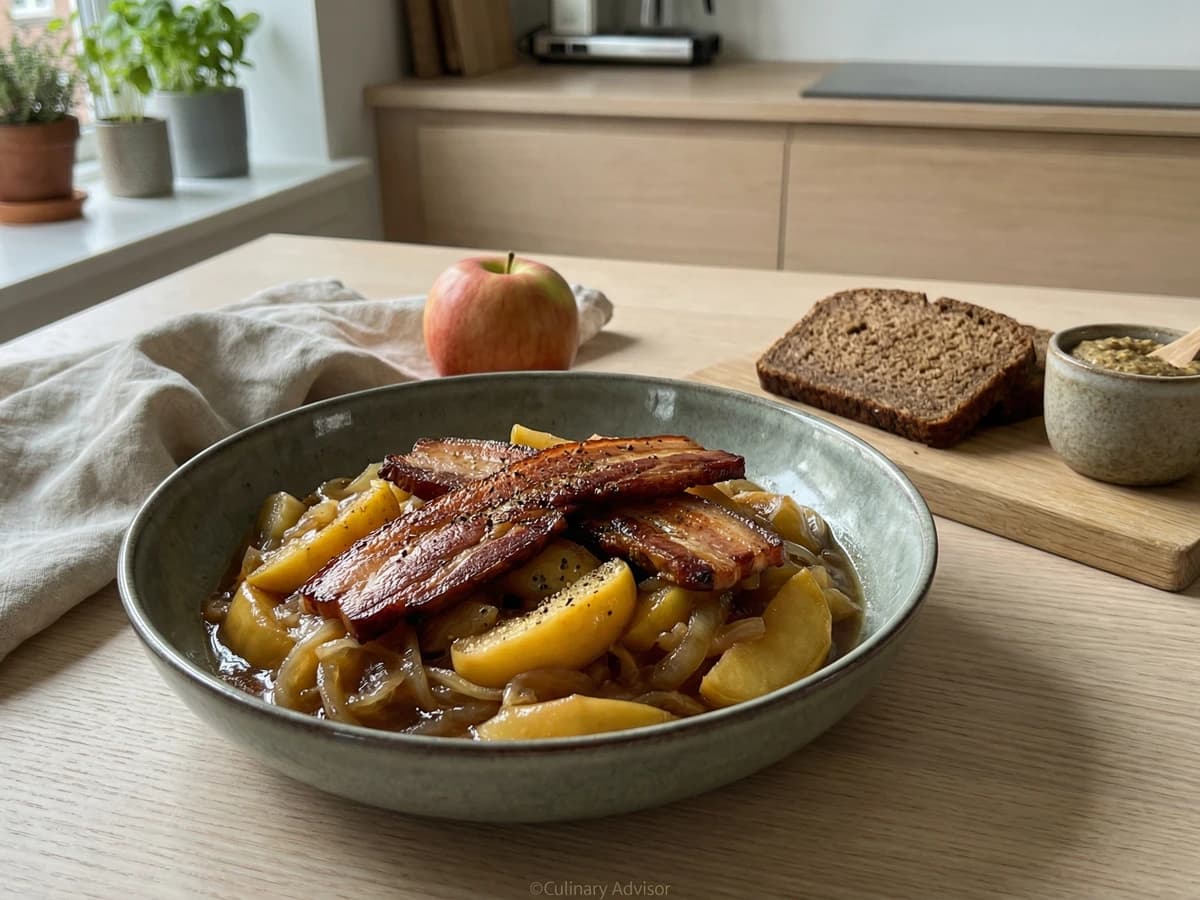
The Fyn autumn supper where thick pork belly renders slowly into its own fat, then meets apples and onions that cook down into a deep amber tangle. Sweet, salt, and the oldest pairing in the Danish larder.
A cooking platform built around craft, culture, and the stories behind what we eat.

Created by Chef Freja
The Danish potato and leek soup that returns in late October when the light changes in Copenhagen. Butter melting in golden pools on top, dark rugbrod alongside, the kind of bowl that makes a cold evening feel chosen.
There's a week in late October when the light changes in Copenhagen. Not gradually, suddenly. You walk to the market on a Tuesday and the sky is different, lower, closer. The air smells like wet leaves and cold stone, and the cyclists have pulled their scarves up over their chins. This is when potato soup comes back.
Kartoffelsuppe is not trying to impress anyone. It's potatoes, leeks, and good stock, cooked slowly until everything softens into something greater than its parts. The reason it has survived in Danish kitchens for two centuries isn't complexity. It's that itdoes exactly what you need it to do on a dark evening when the wind comes off the water. A bowl of this with a slice of rugbrod is a full meal, and a full Danish meal at that: rooted, seasonal, made with love, the kind of cooking where nothing is wasted and every step has a reason.
I want you to pay attention to two things. First, the sweat. The leeks and onion soften in butter under a lid, quietly, without color. That step is where the sweetness is built, and if you rush it with high heat, the soup loses its spine before it starts. Second, the butter at the end. Don't stir it in. Let it melt on the surface in golden pools. That's not decoration. That's where half the flavor lives, and you'll taste it and you'll understand. The season decides what's on the table in Denmark, and in late October, the table decides on this.
Potatoes arrived in Denmark in the late 1700s, brought by Huguenot refugees who settled on the heaths of central Jutland and proved, against skeptical Danish farmers, that the tuber could thrive in poor, sandy soil. Within a generation, potato dishes had moved from refugee survival food to Danish staples, and by the mid-1800s the potato had become the quiet backbone of the Danish kitchen. Kartoffelsuppe became a fixture of the late autumn table, when the new harvest was stored in cool cellars and the days had shortened enough that a warm bowl at the end of a working day felt like a small act of self-care. In Jutland the soup is often finished with a spoonful of cream cheese or creme fraiche stirred through at the last moment, a regional detail that most Copenhagen cooks have never heard of but which tells you exactly where the cook grew up.
Quantity
800g
peeled and roughly chopped
Quantity
3 medium
white and pale green parts only, sliced
Quantity
1 small
finely chopped
Quantity
60g, plus a knob for each bowl to finish
Quantity
1 small
Quantity
1 litre
Quantity
150ml
Quantity
2 tablespoons
Quantity
to taste
Quantity
freshly ground, to taste
Quantity
small bunch
snipped fine
Quantity
thick slices, to serve
| Ingredient | Quantity |
|---|---|
| floury potatoespeeled and roughly chopped | 800g |
| leekswhite and pale green parts only, sliced | 3 medium |
| yellow onionfinely chopped | 1 small |
| unsalted butter | 60g, plus a knob for each bowl to finish |
| bay leaf | 1 small |
| chicken or vegetable stock | 1 litre |
| whole milk | 150ml |
| creme fraiche (optional) | 2 tablespoons |
| fine sea salt | to taste |
| white pepper | freshly ground, to taste |
| chivessnipped fine | small bunch |
| dark rugbrod | thick slices, to serve |
Slice the leeks in half lengthwise first, then rinse each half under cold running water, fanning the layers open with your thumb. Leeks hide grit deep between their layers, and grit in a blended soup is the one thing you cannot fix later. Once they are clean, slice them across into thin half-moons.
Melt the butter in a heavy-bottomed pot over a gentle heat. Add the sliced leeks, the chopped onion, and a good pinch of salt. Stir everything through the butter, put the lid on, and let them sweat for ten minutes. You want them soft, translucent, and quietly giving up their sweetness, never browned. Browned leeks taste of caramel and bitterness, and that is not what this soup is asking for. Lift the lid once and stir. If you hear sizzling, the heat is too high. The sound you want is the soft hush of alliums softening in butter.
Add the chopped potatoes, the bay leaf, and the stock. The stock should just cover the potatoes. If you need a splash more water, add it. Bring everything to a gentle simmer, not a hard boil. A hard boil bangs the potatoes against the side of the pot and clouds the soup. Cover with the lid tilted slightly and cook for twenty to twenty-five minutes, until the potatoes are completely tender.
Slide a knife into a piece of potato. It should pass through with no resistance at all. If there is any resistance, keep cooking for a few more minutes. Undercooked potatoes give you a grainy soup, and once it is grainy, it stays grainy. This is the step where patience pays you back.
Fish out the bay leaf and take the pot off the heat. Blend the soup until it is completely smooth and velvety. A stick blender works directly in the pot, which saves you a transfer and a hot mess. If you use an upright blender, work in batches and hold the lid down with a cloth. Hot soup expands, and you learn that rule once and never forget it.
Pour in the milk and, if you're using it, the creme fraiche. Blend again until everything comes together into a pale, glossy soup that coats the back of a spoon without clinging to it. Season with salt and white pepper. White pepper belongs here, not black. Black pepper leaves dark specks in a pale soup and its flavor is too sharp. White pepper carries a warmer, rounder heat that stays underneath the potato.
Ladle the soup into deep bowls. Drop a small knob of butter onto the surface of each one and let it melt in golden pools. Do not stir it in. That is where half the flavor lives, and it is the difference between soup and this soup. The butter warms, the fat catches the light, and each spoonful carries a little pool of it up to your mouth. Scatter the chives generously over the top and serve immediately with thick slices of rugbrod alongside. Tak for mad.
1 serving (about 550g)
Culinary guides, cultural storytelling, and the editorial depth that makes cooking meaningful.
Discover Culinary ExplorerChef Freja
The Fyn autumn supper where thick pork belly renders slowly into its own fat, then meets apples and onions that cook down into a deep amber tangle. Sweet, salt, and the oldest pairing in the Danish larder.

Chef Freja
Warm Danish apple soup for the first cool evenings of autumn. Tart apples simmered with cinnamon and lemon peel, thickened to a soft gloss, and served with cold cream and buttery toasted oats.

Chef Freja
Danish white asparagus velouté with tiny veal meatballs, flour dumplings, and bright green tips scattered on the surface. The Easter soup of Copenhagen, built from five small pans of spring.
Chef Freja
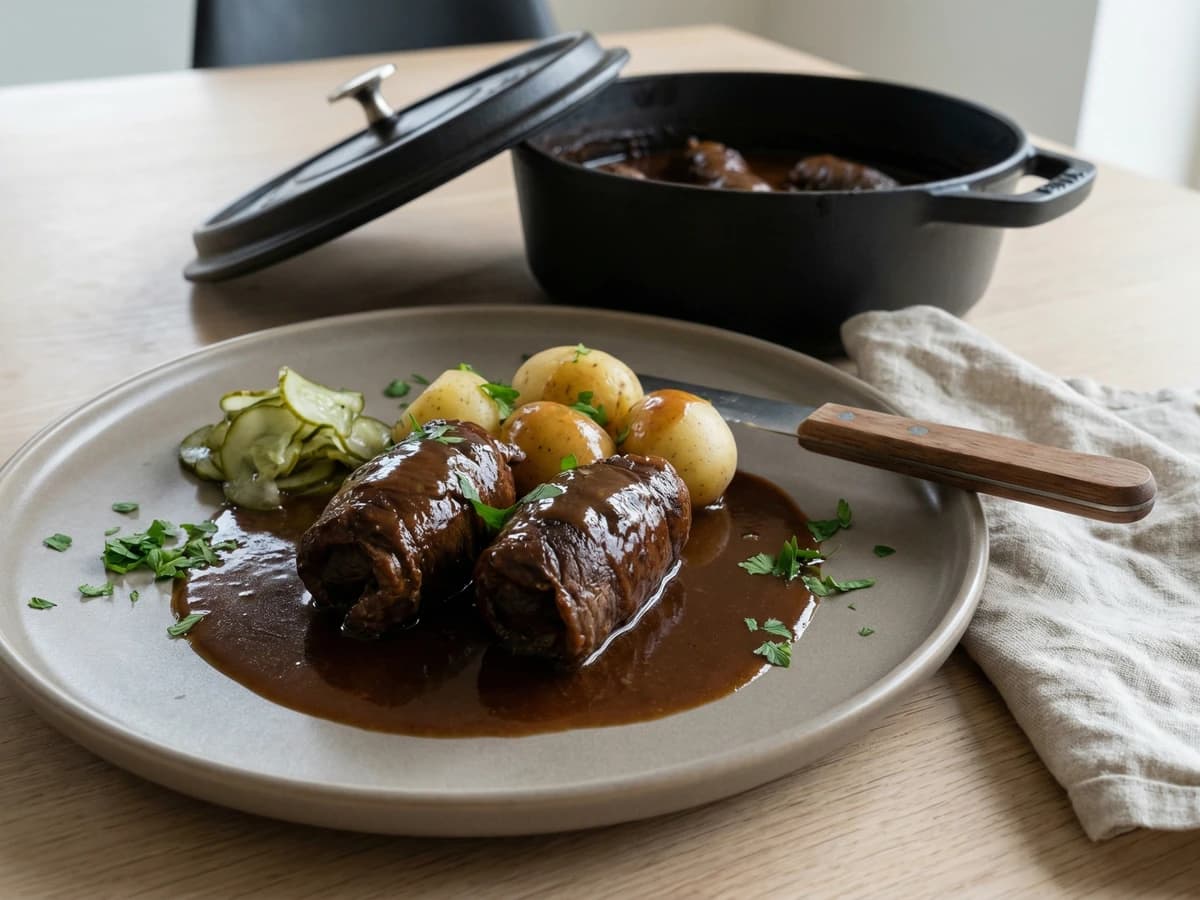
Thin beef slices rolled around bacon and onion, tied with string, and braised slowly in a dark glossy gravy finished with cream and redcurrant jelly. Danish Sunday dinner at its most comforting.