Culinary Explorer

A cooking platform built around craft, culture, and the stories behind what we eat.
Discover Culinary Explorer
Kärntner Hadnkekse (Carinthian Buckwheat Cookies)

Kärntner Hadnkekse (Carinthian Buckwheat Cookies)

Created by

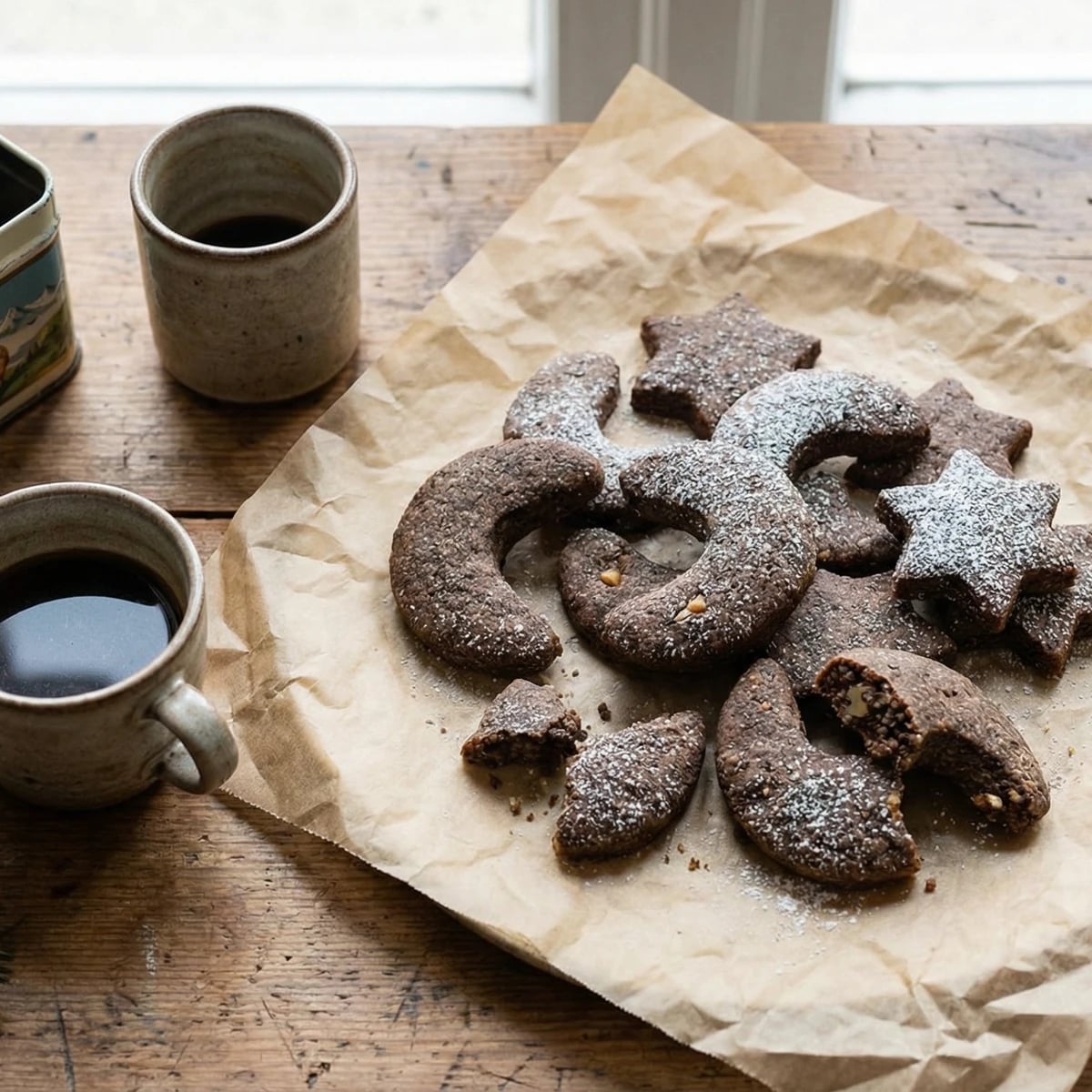
Carinthian Christmas cookies made with earthy buckwheat flour and dark honey, rolled thin, cut into shapes, and baked until they fill the kitchen with the smell of southern Austria's mountains.

Pastries & Cookies
Austrian
Christmas
Holiday
Make Ahead
30 min
Active Time
14 min cook2 hr 45 min total
YieldAbout 40 cookies

On one of our trips south from Salzburg into Kärnten, Gretel bought a paper bag of dark, crumbly cookies at a farmhouse stall near the Wörthersee. They were nothing like the pale Vanillekipferl I was used to from Eva's kitchen. These were brown, almost smoky, with a grain I couldn't place. Gretel told me it was Hadn, the Carinthian word for buckwheat, and that these cookies were as old as the mountains around us. I ate the whole bag before we reached Klagenfurt.

Kärntner Hadnkekse belong to a completely different branch of Austrian Christmas baking. Where Viennese cookies lean on butter, almonds, and Vanillezucker, Carinthian baking draws on what grows in the south: buckwheat from the hillside fields, dark forest honey, walnuts from the valleys. The buckwheat gives these cookies an earthy, almost nutty flavor that sits somewhere between rye bread and toasted hazelnuts. The honey holds everything together and deepens over the days after baking, which is why Carinthian grandmothers always made these weeks before Christmas.

The dough needs time in the cold. Don't skip the chilling. Buckwheat flour has no gluten, so the dough relies on the butter and honey firming up to hold its shape when you roll and cut it. If you try to work with it warm, it will crumble on you and you'll want to throw it across the room. Two hours in the fridge. Patience. The cookies will thank you for it.

Buckwheat has been cultivated in Kärnten (Carinthia) since the 15th century, brought along trade routes from Central Asia through the Balkans. The Carinthians call it Hadn or Heiden, from 'Heidenkorn' (heathen grain), because it arrived from non-Christian lands. Hadnkekse are part of a broader tradition of buckwheat baking in Austria's southernmost state that includes Hadnsterz (buckwheat porridge) and Hadntorte. These cookies were traditionally baked in the first week of Advent and stored in tin boxes, where the honey kept them moist through the Christmas season.

The technique, the tradition, and the story behind every dish.

Discover Culinary Explorer

Ingredients

buckwheat flour (Hadnmehl)

Quantity

200g

plain flour

Quantity

100g

dark honey

Quantity

150g

Austrian forest honey or good wildflower honey

unsalted butter

Quantity

100g

softened

egg

Quantity

1 large

walnuts

Quantity

80g

finely chopped

lemon

Quantity

1

zested

ground cinnamon

Quantity

1 teaspoon

ground cloves

Quantity

1/2 teaspoon

ground ginger

Quantity

1/4 teaspoon

ground allspice

Quantity

pinch

baking soda

Quantity

1/2 teaspoon

salt

Quantity

pinch

Equipment Needed

  • Small saucepan
  • Rolling pin
  • Cookie cutters
  • Two baking sheets
  • Parchment paper
  • Wire cooling rack
  • Airtight tin for storage

Instructions

  1. 1

    Warm the honey and butter

    In a small saucepan, warm the honey and butter together over low heat, stirring until the butter melts and the two combine into a smooth, glossy liquid. Don't let it boil. You're loosening the honey so it can coat every grain of flour evenly, not cooking it. Pull it off the heat and let it cool until you can comfortably touch the bottom of the pan. If you add the egg while it's too hot, you'll scramble it and have to start over.

    The quality of honey matters here more than in almost any other cookie. Buckwheat and honey are the two dominant flavors, so a thin, bland honey will give you a thin, bland cookie. Look for Austrian forest honey or a dark wildflower honey with real depth.
  2. 2

    Combine the dry ingredients

    In a large bowl, whisk together the buckwheat flour, plain flour, cinnamon, cloves, ginger, allspice, baking soda, and salt. The buckwheat flour is darker and coarser than wheat flour. That's exactly what you want. It gives the cookies their character. The plain flour is there to provide just enough structure, since buckwheat has no gluten at all and can't hold a dough together on its own.

  3. 3

    Build the dough

    Beat the egg into the cooled honey-butter mixture until smooth. Pour this into the dry ingredients and stir with a wooden spoon until everything comes together into a soft, sticky dough. It will look darker than you expect. That's the buckwheat. Fold in the chopped walnuts and lemon zest. The lemon cuts the earthiness of the buckwheat and lifts the whole cookie. Don't leave it out.

    Carinthian bakers use local walnuts because that's what grows in the southern valleys. If your walnuts taste bitter, toast them in a dry pan for three minutes first. It rounds out the flavor.
  4. 4

    Chill the dough

    Flatten the dough into a disc, wrap it tightly in cling film, and refrigerate for at least two hours. Overnight is better. The cold firms the butter and lets the honey hydrate the buckwheat flour fully. Cold dough rolls cleanly. Warm dough crumbles and fights you. This is not a step you can skip.

    If the dough cracks when you start rolling, let it sit at room temperature for ten minutes. You want it firm, not frozen solid. It should yield to the rolling pin without snapping.
  5. 5

    Roll and cut

    Preheat your oven to 170°C (340°F). Line two baking sheets with parchment paper. On a lightly floured surface (use the plain flour here, not buckwheat), roll the dough out to about four millimeters thick. Cut with cookie cutters into whatever shapes you like. Stars, crescents, circles. Carinthians aren't fussy about shape, just about flavor. Gather the scraps, press them together gently, chill for ten minutes if they've softened, and roll again. You should get about forty cookies.

  6. 6

    Bake the cookies

    Place the cookies on the prepared baking sheets with a centimeter of space between them. They spread a little but not much. Bake for twelve to fourteen minutes, until the edges darken slightly and the centers feel just set when you press them gently. The color change is subtle because the dough is already dark, so trust your nose. When the kitchen smells like warm honey and toasted grain, check them. They'll feel soft coming out of the oven but firm up as they cool. Let them rest on the baking sheet for five minutes, then transfer to a wire rack.

  7. 7

    Store and serve

    Once completely cool, store the cookies in an airtight tin with a sheet of parchment between each layer. Here's the secret Carinthian grandmothers know: these cookies are better on day three than day one. The honey softens the crumb, the spices meld, and the buckwheat flavor rounds out into something deeper and more complex. If you can wait, wait. If you can't, I understand completely. Mahlzeit!

Chef Tips

  • Buckwheat flour loses its flavor faster than wheat flour because the oils in the grain go stale. Buy it from somewhere with good turnover, or grind your own if you have a mill. Smell it before you use it. It should smell nutty and warm, not musty.
  • Gretel always said the best Christmas cookies are the ones you make in November. Hadnkekse are exactly this kind of cookie. Bake them in early December, store them in a tin, and by Christmas Eve they'll have the soft, spiced depth that only time and honey can give.
  • If you can't find buckwheat flour, don't substitute something else and call them Hadnkekse. The buckwheat is the whole point. Make Vanillekipferl instead and save these for when you find the right flour.
  • A thin drizzle of melted dark chocolate across the cooled cookies is not traditional but it's not unwelcome either. The bitterness of good dark chocolate and the earthiness of buckwheat get along very well.

Advance Preparation

  • The dough can be made up to three days ahead and refrigerated, or frozen for up to a month. Thaw overnight in the fridge before rolling.
  • Baked cookies improve over five to seven days stored in an airtight tin at room temperature. The honey keeps them moist and the flavors deepen. They hold beautifully for three weeks, which makes them ideal for Christmas baking in early December.
  • Unbaked cut shapes can be frozen on a parchment-lined tray, then transferred to a freezer bag. Bake straight from frozen, adding two minutes to the baking time.

Frequently Asked Questions

Nutrition Information

1 serving (about 16g)

Calories
70 calories
Total Fat
4 g
Saturated Fat
2 g
Trans Fat
0 g
Unsaturated Fat
2 g
Cholesterol
10 mg
Sodium
22 mg
Total Carbohydrates
9 g
Dietary Fiber
1 g
Sugars
3 g
Protein
1 g

Note: Chef personas and recipes are created with AI assistance. Cook with care: follow safe food-handling practices, check doneness with a thermometer when needed, and adapt for allergies and your kitchen.

Where cooking meets culture.

Culinary guides, cultural storytelling, and the editorial depth that makes cooking meaningful.

Discover Culinary Explorer

More from Weihnachtsbäckerei (Austrian Christmas Cookies)

Browse the full collection