
Chef Takumi
Abura Soba (油そば, brothless ramen)
Abura soba is ramen without the hiding place of soup: hot noodles, strong shōyu tare, fragrant oil, and the discipline to mix while every strand is still hot.
A cooking platform built around craft, culture, and the stories behind what we eat.
Created by
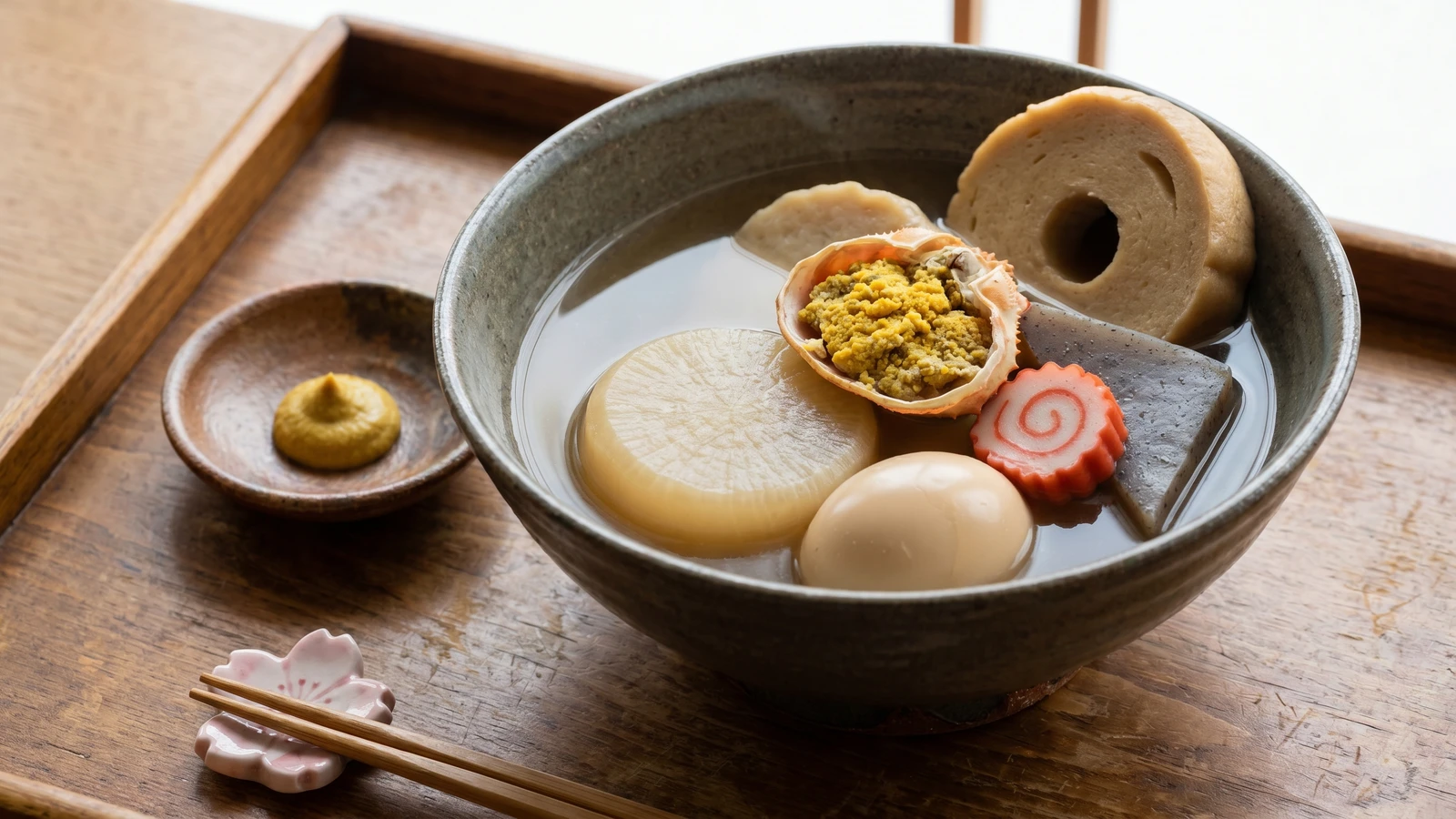
Kanazawa oden is a pale winter pot, not a heavy stew: clear dashi, Ōno shōyu, daikon, eggs, kuruma-fu, akamaki, and the patience to keep it just below a boil.
In Kanazawa, oden looks pale enough to underestimate. That is its confidence. The broth is clear, the seasoning is quiet, and the local pieces do their work without shouting: kuruma-fu drinking dashi, akamaki showing its red-white spiral, daikon turning soft all the way through. Deep winter suits it, especially when kōbako-gani is in its short shun and a kani-men can sit in the pot like a small sign of the coast.
You may look at the ingredients and think the dish is difficult. It isn't. Kanazawa oden is not about hunting every piece on a tourist poster; it is about a pale, clean broth and a patient simmer. If you can get kuruma-fu and akamaki, you already have the city's accent. If crab is out of season, leave it out plainly. Honmono does not need disguises.
The detail that decides it is restraint. Hold the pot at the smallest tremble, never a hard boil. A hard boil clouds the dashi, toughens the fish cake, and knocks the daikon edges loose, which is a lot of damage for such noisy work. Let the broth enter slowly, and let the cooked pieces rest in it. Oden seasons as it cools, which is why yesterday's pot often wins the argument.
Kanazawa oden is a local style of oden from Kanazawa, Ishikawa Prefecture, recognized by a pale dashi, Ōno shōyu, and local pieces such as kuruma-fu, akamaki, baigai, and kani-men. The crab piece is tied to kōbako-gani, female snow crab from the Sea of Japan, whose Ishikawa season usually opens on November 6 and closes near the end of December. Ōno, on Kanazawa's coast, has been a soy-sauce district since the Edo period, when the Kaga domain and Sea of Japan shipping routes fed the city with salt, kelp, and preserved seafood.
Quantity
2 pieces (about 20g total)
Quantity
2.4L
plus more for parboiling
Quantity
40g
Quantity
1 large (about 700g)
peeled, cut into 2.5cm rounds, edges beveled
Quantity
1/2 cup
or 1 tablespoon raw rice for parboiling daikon
Quantity
4 to 6
Quantity
1 block (about 250g)
scored and cut into triangles
Quantity
4 wheels
soaked and gently squeezed
Quantity
4 pieces
blanched
Quantity
1
cut into 8 thick slices
Quantity
4
blanched
Quantity
4
Quantity
4
snow crab shells filled with crab meat and roe
Quantity
60ml
or mild Japanese koikuchi shōyu
Quantity
3 tablespoons
Quantity
2 tablespoons
Quantity
1 teaspoon
plus more as needed
Quantity
for serving
| Ingredient | Quantity |
|---|---|
| konbu (dried kelp) | 2 pieces (about 20g total) |
| cold waterplus more for parboiling | 2.4L |
| katsuobushi (bonito flakes) | 40g |
| daikonpeeled, cut into 2.5cm rounds, edges beveled | 1 large (about 700g) |
| rice rinsing wateror 1 tablespoon raw rice for parboiling daikon | 1/2 cup |
| large eggs | 4 to 6 |
| konnyakuscored and cut into triangles | 1 block (about 250g) |
| kuruma-fu (wheel-shaped dried wheat gluten)soaked and gently squeezed | 4 wheels |
| ganmodoki or atsuageblanched | 4 pieces |
| akamaki fish cakecut into 8 thick slices | 1 |
| chikuwa or firm oden fish cakesblanched | 4 |
| cooked baigai (whelks) (optional) | 4 |
| prepared kani-men (optional)snow crab shells filled with crab meat and roe | 4 |
| Ōno shōyuor mild Japanese koikuchi shōyu | 60ml |
| mirin | 3 tablespoons |
| sake | 2 tablespoons |
| sea saltplus more as needed | 1 teaspoon |
| Japanese karashi mustard (optional) | for serving |
Wipe the konbu with a damp cloth, but don't wash it. That pale bloom on the surface is flavor. Put the konbu in the cold water and warm it slowly over low heat, about 20 minutes. Lift it out just before the water boils, when small bubbles gather along the pot. Boil the kelp and the stock turns faintly bitter and slick, which is not the Kanazawa paleness we're trying to keep.
Bring the water to a gentle boil after the konbu is out. Add the katsuobushi all at once, take the pot off the heat, and leave it alone for 3 minutes. Don't stir. The flakes give up their aroma as they sink, and stirring only brings roughness into a stock that should taste clean.
Strain the dashi through a cloth-lined sieve and let it drip by itself. Don't squeeze the flakes. Squeezing presses out oily, heavy flavors and clouds the broth. Measure about 2L for the oden pot; if you are short, add a little water rather than forcing the flakes.
Peel the daikon thickly, cut it into rounds, bevel the edges, and score a shallow cross on one face of each round. Cover with fresh water and add the rice rinsing water, or the spoonful of raw rice. Simmer about 20 minutes, until a skewer enters with a little resistance. The rice helps draw out harshness, and the parboiling keeps the final oden broth clean. Rinse the daikon gently before it goes into the dashi.
Cook the eggs in simmering water for 10 minutes, cool them in cold water, and peel them. Score the konnyaku lightly on both sides, cut it into triangles, and boil it in fresh water for 3 minutes. Konnyaku has an alkaline smell when it comes from the package; the quick boil removes it, and the shallow scoring gives the broth places to enter.
Soak the kuruma-fu in warm water for 10 minutes, then press it gently between your palms so it is pliant but not crushed. Pour just-boiled water over the ganmodoki, chikuwa, and akamaki, then drain them. This removes surface oil and excess salt, both of which would cloud the broth. Keep baigai and kani-men chilled until they are added, because they need warming, not punishment.
Put the strained dashi in a wide pot with the Ōno shōyu, mirin, sake, and sea salt. Taste it now. It should be deeper than a clear soup but much lighter than a sauce, because the daikon, egg, and konnyaku will sit in it for a long time. Add the daikon, eggs, and konnyaku, arranging them in a single layer if you can.
Bring the pot to the smallest simmer and set a wooden drop-lid, otoshibuta, over the ingredients. A circle of parchment with a small hole in the center works well. Cook quietly for 45 minutes, then turn off the heat and let the pot rest for 20 to 30 minutes. The rest is not idleness. As the ingredients cool, they pull seasoning inward.
Return the pot to a low simmer. Add the ganmodoki, chikuwa, baigai, and kuruma-fu, and cook for 20 minutes. Add the akamaki for the final 8 to 10 minutes so its red-white spiral stays clear and the fish cake does not toughen. If using kani-men, nestle it shell-side down for the last 5 to 8 minutes and spoon broth over it. Crab that is already cooked only needs to be warmed through.
Serve three or five pieces per bowl with enough clear broth to surround them, not drown them. Put a small dab of karashi on the side so each person can sharpen the sweetness of the daikon and the richness of the tofu pieces. Keep the remaining pot at a low tremble for second helpings. Leave the bowl room; a crowded oden bowl looks anxious, and this dish has no need to hurry.
1 serving (about 800g)
Culinary guides, cultural storytelling, and the editorial depth that makes cooking meaningful.
Discover Culinary ExplorerChef Takumi
Abura soba is ramen without the hiding place of soup: hot noodles, strong shōyu tare, fragrant oil, and the discipline to mix while every strand is still hot.
Chef Takumi
Akadashi asks you to trust the dark miso. Build a clear dashi, loosen the Hatchō mame-miso gently, and the soup turns coffee-dark, savory, and clean.

Chef Takumi
Toast the rice until its skin is firm, then let it meet chicken broth, burdock, maitake, and seri. The pot looks grand, but the work is rice, broth, and patience.
Chef Takumi
Shottsuru nabe is Akita winter in one pot: clean dashi, hatahata at shun, tofu and napa cabbage carrying a salt-deep broth without anything heavy enough to hide the fish.