
Chef Jeong-sun
Agwi-jjim (Braised Monkfish with Bean Sprouts)
Firm monkfish buried under crisp soybean sprouts, minari, and a red gochugaru sauce thickened at the end; Masan's market dish asks for heat, timing, and a steady hand.
A cooking platform built around craft, culture, and the stories behind what we eat.
Created by
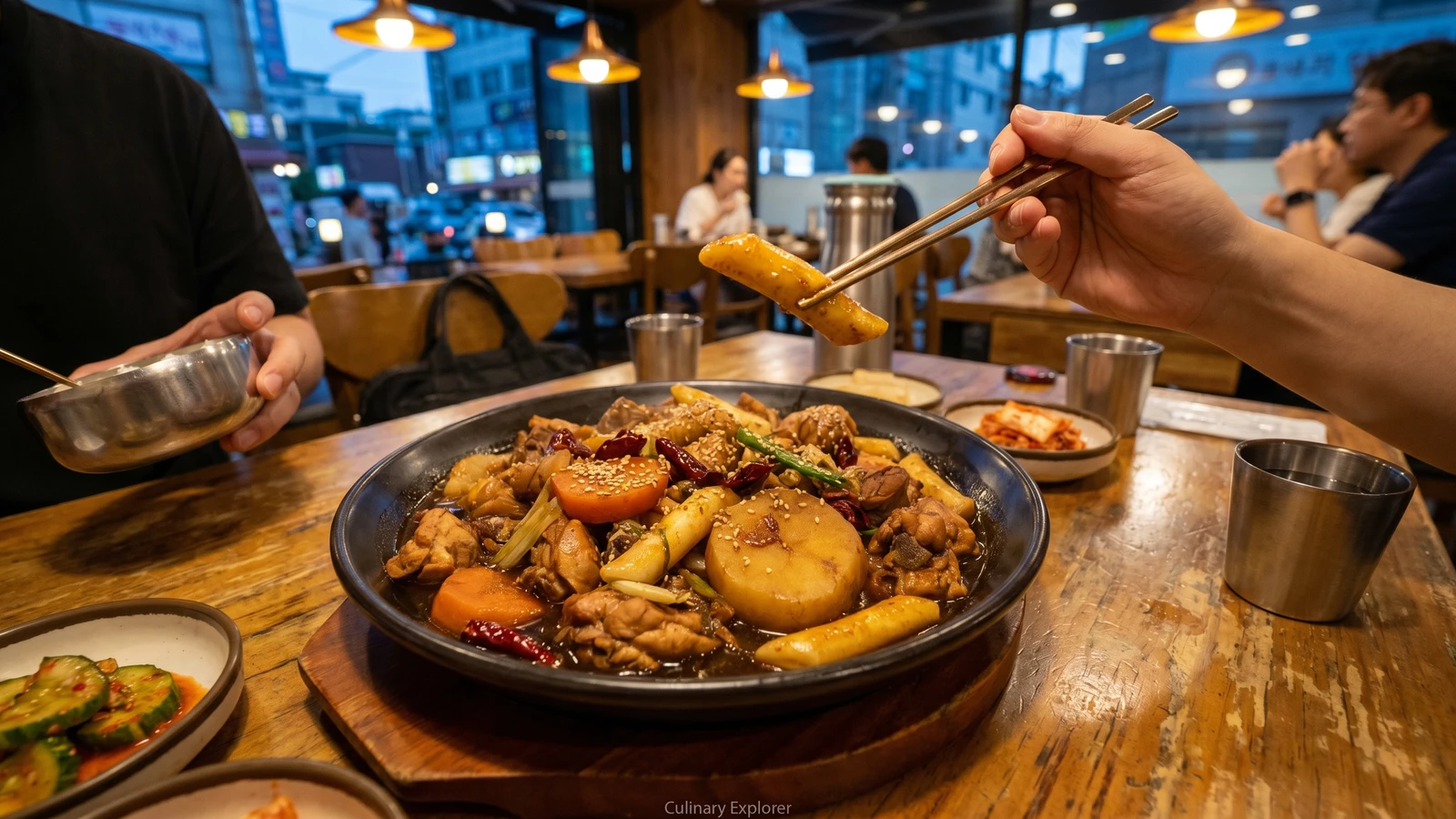
Andong's darker, chewier braised chicken, cooked down with rice cakes instead of glass noodles until the soy, chile, and garlic sauce coats the chicken like it means to stay.
Jorimdak lives or dies by reduction. Not the chicken first, not the rice cakes first, the sauce. If it sits in the pot like soup, you made jjimdak's wetter cousin. If it boils down until it clings to the chicken skin and stains the rice cakes dark, now you are close.
People know Andong for jjimdak, the market chicken with glass noodles, but locals know there is another pleasure in the same family: chewy garaetteok (rice cakes) drinking in a soy-dark braise. The rice cakes make it heavier, more direct, and better for a table where people are reaching in with chopsticks while the rice waits. You need a wide pot, steady heat, and the patience to let the liquid reduce without scorching. That is the whole bargain.
Cut the vegetables large enough to survive the braise. Soak the rice cakes if they are firm. Taste before you add more sugar, because sweetness should round the soy and chile, not turn the dish sticky like candy. 손맛 is real. I still measure it, so it can be handed on.
Andong's famous jjimdak is tied to the Dak-golmok chicken alley of Andong Gu Market, where soy-braised chicken with vegetables and glass noodles became widely known in the late twentieth century as a generous market dish. Jorimdak belongs to the same Andong braised-chicken family, but the word jorim points to the method: simmering down until the seasoning liquid reduces and coats. The rice-cake version is a local, practical variation, valued for chew and for a darker, tighter sauce rather than for any palace lineage.
Quantity
1.2kg
cut for braising
Quantity
300g
Quantity
1 medium, about 200g
cut into 1 1/2-inch chunks
Quantity
1 medium, about 150g
cut into thick diagonal pieces
Quantity
1 medium
cut into 8 wedges
Quantity
2
cut into 2-inch lengths
Quantity
4
cut in half, seeds shaken out for less heat
Quantity
8 cloves
thinly sliced
Quantity
1 thumb-size piece
sliced
Quantity
1 1/4 cups
Quantity
1/2 cup
Quantity
3 tablespoons
Quantity
1 tablespoon
Quantity
2 tablespoons
Quantity
1 tablespoon
Quantity
1 tablespoon
Quantity
1/2 teaspoon
freshly ground
Quantity
1 tablespoon
Quantity
to serve
| Ingredient | Quantity |
|---|---|
| bone-in chicken piecescut for braising | 1.2kg |
| garaetteok or tteokbokki rice cakes | 300g |
| potatocut into 1 1/2-inch chunks | 1 medium, about 200g |
| carrotcut into thick diagonal pieces | 1 medium, about 150g |
| onioncut into 8 wedges | 1 medium |
| scallionscut into 2-inch lengths | 2 |
| dried red chilescut in half, seeds shaken out for less heat | 4 |
| garlicthinly sliced | 8 cloves |
| gingersliced | 1 thumb-size piece |
| water | 1 1/4 cups |
| soy sauce | 1/2 cup |
| rice syrup or corn syrup | 3 tablespoons |
| sugar | 1 tablespoon |
| mirin or rice wine | 2 tablespoons |
| oyster sauce (optional) | 1 tablespoon |
| toasted sesame oil | 1 tablespoon |
| black pepperfreshly ground | 1/2 teaspoon |
| toasted sesame seeds | 1 tablespoon |
| cooked short-grain rice (optional) | to serve |
If the rice cakes are fresh and soft, rinse them and set them aside. If they are refrigerated or firm, soak them in warm water for 20 minutes until they bend without cracking. Rice cakes go in late, but they must be ready early, because a hard center will not soften evenly once the sauce has reduced.
Put the chicken in a pot, cover with water, and bring it to a boil for 3 minutes. Drain, rinse the pieces under warm water, and wipe out the pot. This is not fussing. It removes blood foam and loose bone bits so the final sauce tastes clean and looks dark, not muddy.
In the cleaned pot, combine the water, soy sauce, rice syrup, sugar, mirin, oyster sauce if using, dried chiles, garlic, ginger, sesame oil, and black pepper. Stir until the sugar dissolves. Taste the liquid now. It should be salty, lightly sweet, and sharp with pepper and chile, because the chicken and vegetables will soften it.
Add the blanched chicken to the sauce and bring it to a strong simmer over medium-high heat. Cover and cook 15 minutes, turning the pieces once. This first covered cooking gets the meat done near the bone before the sauce reduces; if you reduce too early, the outside gets salty while the inside is still plain.
Add the potato, carrot, and onion. Cover again and simmer 10 minutes, until the potato edges begin to soften but the pieces still hold their shape. Cut them large. Small pieces break down and thicken the sauce before the chicken has had its time.
Uncover the pot and raise the heat enough to keep the sauce bubbling steadily, not violently. Cook 10 to 12 minutes, spooning sauce over the chicken every few minutes. Watch the sides of the pot: when the liquid drops to about one third of its starting depth and turns glossy, you are entering jorim territory. This is the step that makes the dish.
Drain the rice cakes and add them to the pot with the scallions. Stir gently so they settle into the sauce without tearing the softened vegetables. Cook 5 to 7 minutes, uncovered, until the rice cakes are chewy all the way through and stained brown. If the sauce tightens before the rice cakes soften, add 2 tablespoons water, no more, and keep reducing.
Turn off the heat when the sauce coats the chicken and rice cakes in a shiny layer, with only a few spoonfuls pooling at the bottom. Scatter with toasted sesame seeds. Rest 5 minutes before serving, because the rice cakes continue to drink in the sauce and the chicken settles. Bring rice to the table. Someone will want the last dark spoonful.
1 serving (about 590g)
Culinary guides, cultural storytelling, and the editorial depth that makes cooking meaningful.
Discover Culinary ExplorerChef Jeong-sun
Firm monkfish buried under crisp soybean sprouts, minari, and a red gochugaru sauce thickened at the end; Masan's market dish asks for heat, timing, and a steady hand.

Chef Jeong-sun
A quick Korean rice bowl built on contrast: warm rice, cold popping flying-fish roe, chopped vegetables, gim, sesame oil, and the crisp rice bottom a hot stone bowl gives you.
Chef Jeong-sun
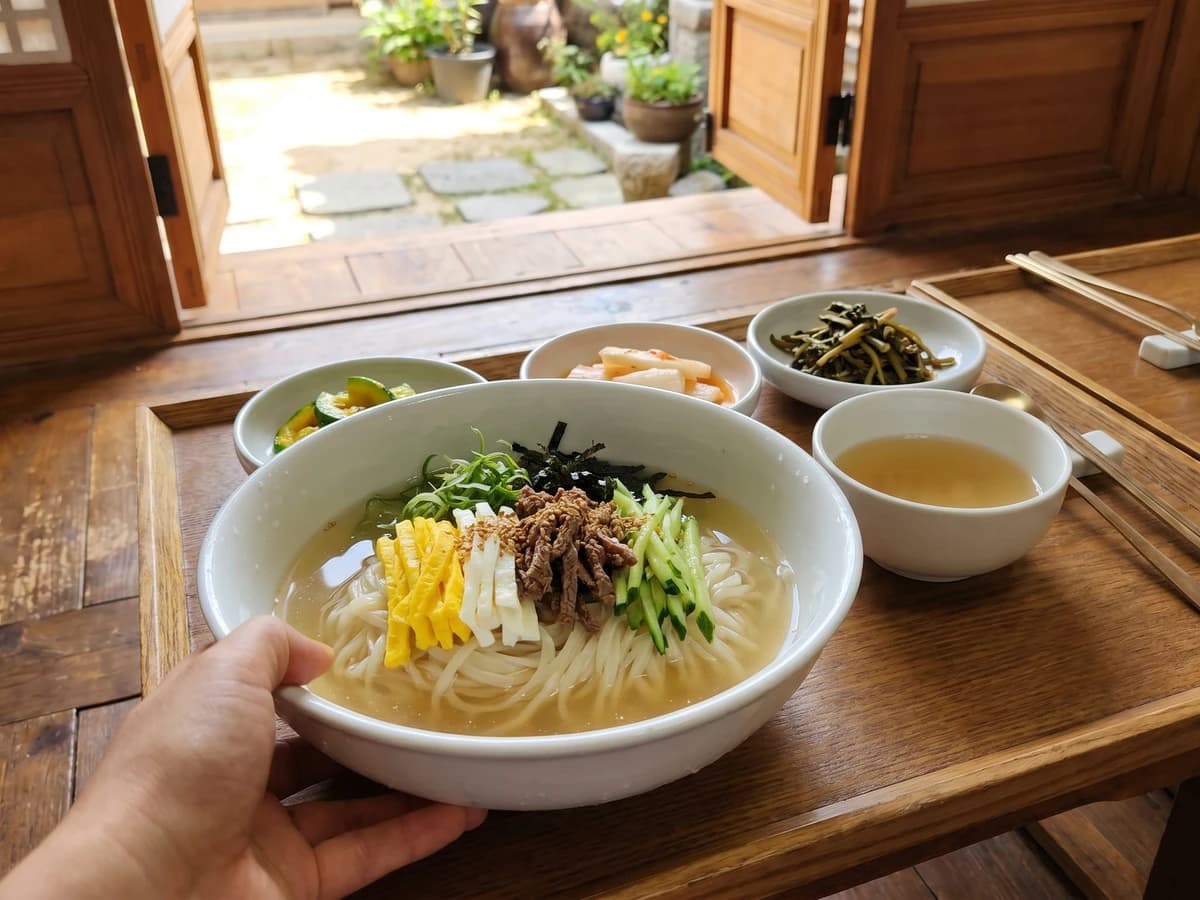
Andong's guest noodles, wheat and roasted soybean flour rolled thin, boiled and rinsed cold, then set in a clear chilled anchovy broth with careful strips of beef, egg, and cucumber.

Chef Jeong-sun
Andong's ritual-table rice served on an ordinary day: separate soy-sesame namul, warm rice, and clear radish soup, mixed without gochujang so every vegetable keeps its own voice.