
Chef Freja
Andelår med Rødkål
Slow-roasted duck legs with crisp, deeply golden skin, served with braised red cabbage and caramelized potatoes. The weeknight Danish duck that proves the best part of the bird is the one that takes its time.
A cooking platform built around craft, culture, and the stories behind what we eat.
Created by Chef Freja
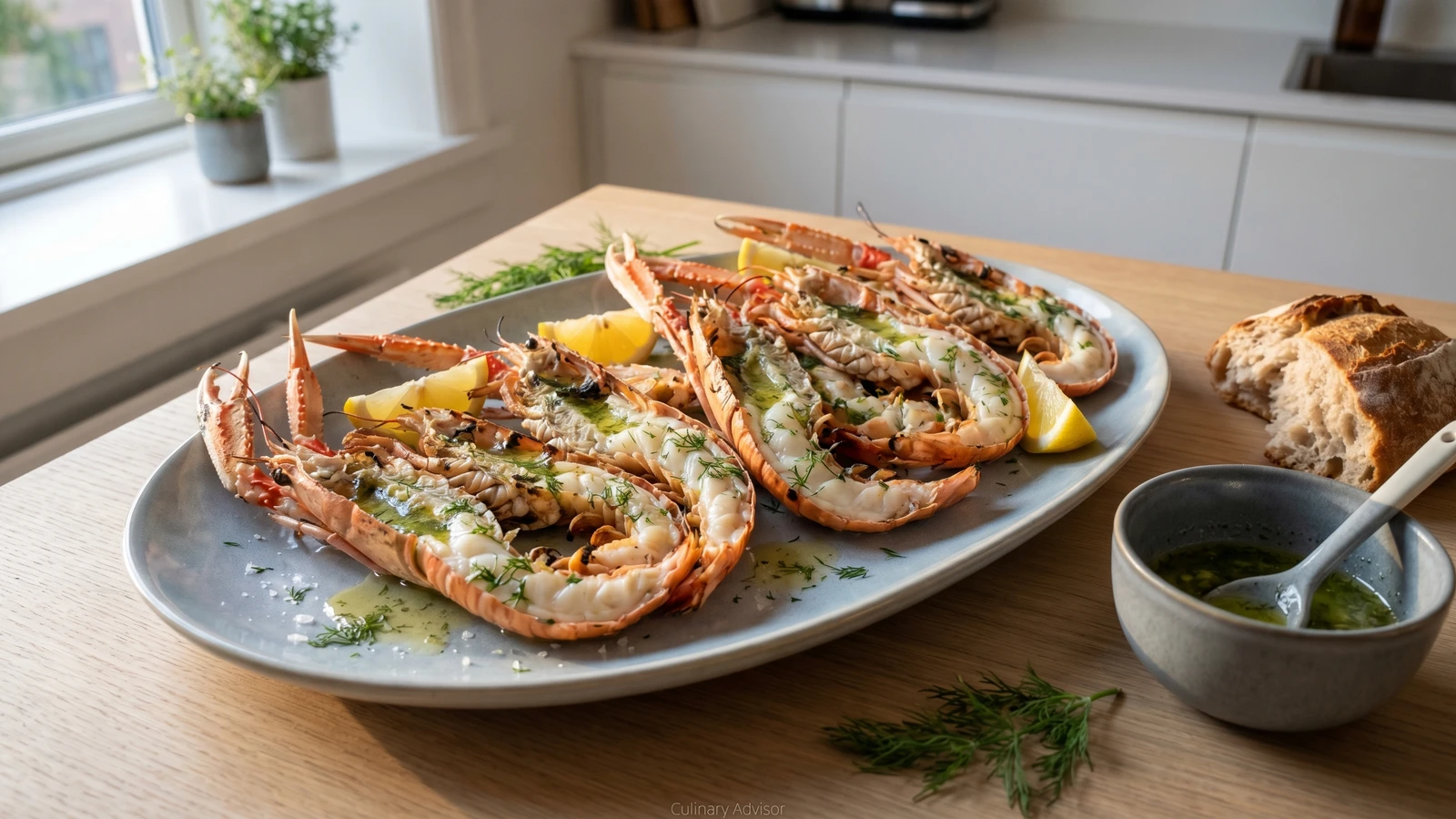
Langoustines split and grilled with garlic butter and dill, the shells crackling over high heat while the butter pools and bastes the sweet flesh. The dish that says summer has arrived on the Danish coast.
The longest evenings of the Danish year belong to jomfruhummer. Late June, early July, when the sun barely dips below the horizon and the light over the coast goes amber and stays there. The air smells of salt and warm grass. Somebody has been to the harbor that morning and come back with a crate of langoustines still cool from the Kattegat, and now the grill is hot and the table is set outside.
Jomfruhummer is Denmark's celebration shellfish. Not a weeknight dinner, not something you throw together. This is the dish you cook when friends arrive at the summer house, when the aquavit is cold and the bread is torn and nobody is checking the time. You halve the langoustines, spoon garlic butter thick with dill into each shell, and grill them until the flesh turns from glassy to pearly white and the edges of the shells char and crackle. The butter pools in the cavity, bastes the meat, picks up the sweet juices of the shellfish itself. The whole thing takes less than ten minutes on the grill. The result is one of the finest things the Danish coast puts on a table.
What matters most is restraint. Don't overcook them. Langoustine flesh is sweet and delicate, and it turns tight and rubbery the moment it goes a minute too long. Four to five minutes on a hot grill, shell-side down, no flipping. You'll know when it's right: the flesh is opaque, it pulls slightly from the shell, and the butter in the cavity bubbles gently. Trust your eyes, not a timer. I'll walk you through every step so you feel ready to put this on your own table and share it with the people who matter. The season decides, and in June it decides on jomfruhummer.
Langoustines have been fished from the cold, deep waters of the Kattegat and Skagerrak for over a century, though for much of that time Danish fishermen regarded them as bycatch, too small and fiddly to bother with when there were plaice and cod in the nets. Most were exported to France and Spain, where they fetched better prices and were treated as the luxury they are. It was only from the 1960s onward that Danes began to recognize what they had been sending abroad, and jomfruhummer claimed its place as the centerpiece of summer coastal dining, particularly along the harbors of northern Jutland and across the islands.
Quantity
16 large, about 1.2 kg total
Quantity
100g
softened to room temperature
Quantity
3 cloves
finely minced
Quantity
1 large bunch
finely chopped, plus extra fronds for serving
Quantity
from 1 lemon
Quantity
1 tablespoon
Quantity
to taste
Quantity
freshly ground, to taste
Quantity
to finish
Quantity
to serve
| Ingredient | Quantity |
|---|---|
| fresh langoustines (jomfruhummer) | 16 large, about 1.2 kg total |
| unsalted buttersoftened to room temperature | 100g |
| garlicfinely minced | 3 cloves |
| fresh dillfinely chopped, plus extra fronds for serving | 1 large bunch |
| lemon zest | from 1 lemon |
| fresh lemon juice | 1 tablespoon |
| fine sea salt | to taste |
| white pepper | freshly ground, to taste |
| flaky sea salt | to finish |
| lemon wedges | to serve |
In a bowl, work the softened butter with a fork until it's smooth and pliable. Add the minced garlic, the chopped dill, the lemon zest, the lemon juice, a good pinch of fine sea salt, and a few grinds of white pepper. Mix until everything is evenly distributed through the butter. The garlic should be minced fine enough that it disappears into the mixture. Coarse pieces will burn on the grill before they cook through, and raw burnt garlic is bitter and acrid. Fine garlic melts into the butter and becomes gentle, sweet, and golden.
Place each langoustine belly-down on a sturdy cutting board. Set the heel of a heavy, sharp knife at the top of the head and press down firmly in one decisive motion, cutting straight through the body and tail to split it in two. Open the halves. You'll see a thin dark line running along the tail: the intestinal tract. Pull it out with the tip of your knife and discard it. Rinse the halves briefly under cold water and pat them completely dry with kitchen paper. Don't be tentative with the knife. A hesitant cut crushes the shell rather than splitting it cleanly, and crushed shell splinters into the flesh.
Get your grill very hot. If you're using an outdoor grill, let the coals burn down to white-hot embers with no visible flame. If you're using a cast-iron grill pan indoors, set it over high heat for a full five minutes before anything goes on it. The langoustines cook quickly. They need fierce, immediate heat to char the shells and set the flesh without overcooking it. A lukewarm grill steams the flesh instead of searing it, and the difference between grilled jomfruhummer and steamed jomfruhummer is the difference between the dish you're making and something else entirely.
Spoon a generous amount of the dill and garlic butter into the cavity of each langoustine half, filling the space where the flesh meets the shell. Place them on the grill shell-side down. Do not flip them. The shell is your cooking vessel. It shields the delicate flesh from direct flame while the butter melts, pools, and bastes the meat from above. Grill for four to five minutes. Watch the flesh. It will turn from translucent to opaque, pearly white. The butter will bubble. The edges of the shells will char and crackle. That's when they're done. If the flesh has curled tightly and pulled away from the shell entirely, you've gone too far. Pull them off the heat immediately.
Transfer the langoustines to a warm serving platter, shell-side down so the butter stays pooled in the cavities. Scatter fresh dill fronds over the top, finish with a pinch of flaky sea salt, and arrange lemon wedges alongside. Serve immediately. This is not a dish that waits. The butter cools, the flesh tightens, and the magic lives in the first minutes after it leaves the grill. Put it on the table, let everyone reach for their own, and have good bread ready to soak up every drop of butter that runs onto the plate. Tak for mad.
1 serving (about 300g)
Culinary guides, cultural storytelling, and the editorial depth that makes cooking meaningful.
Discover Culinary ExplorerChef Freja
Slow-roasted duck legs with crisp, deeply golden skin, served with braised red cabbage and caramelized potatoes. The weeknight Danish duck that proves the best part of the bird is the one that takes its time.

Chef Freja
The whole roasted duck of juleaften, stuffed with tart apples and dark prunes, slow-roasted for four patient hours until the skin crackles like something earned and the meat underneath gives way without resistance.
Chef Freja
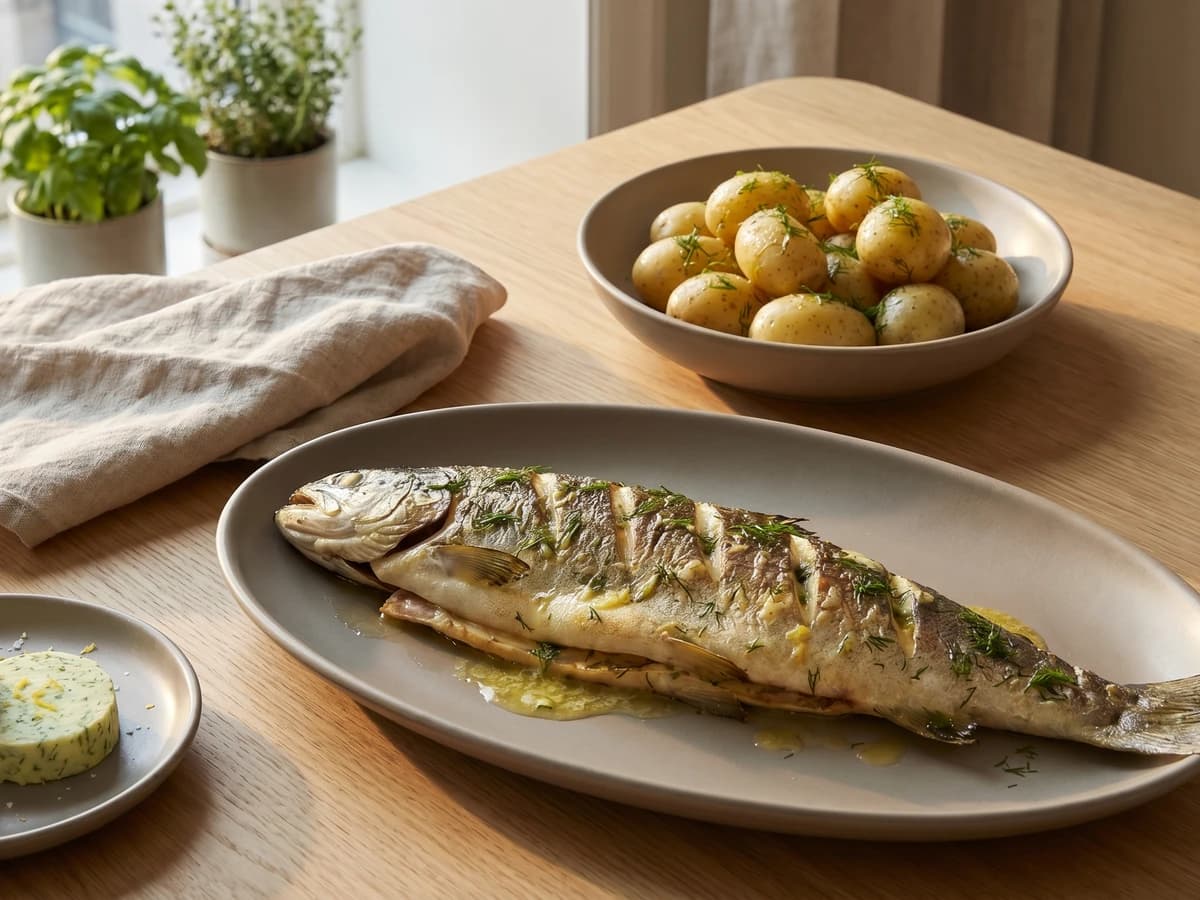
Whole sea trout baked with butter, lemon, and armfuls of dill, served beside the first nye kartofler of the season and a melting slab of dildsmor. The Danish summer table at its most generous.
Chef Freja
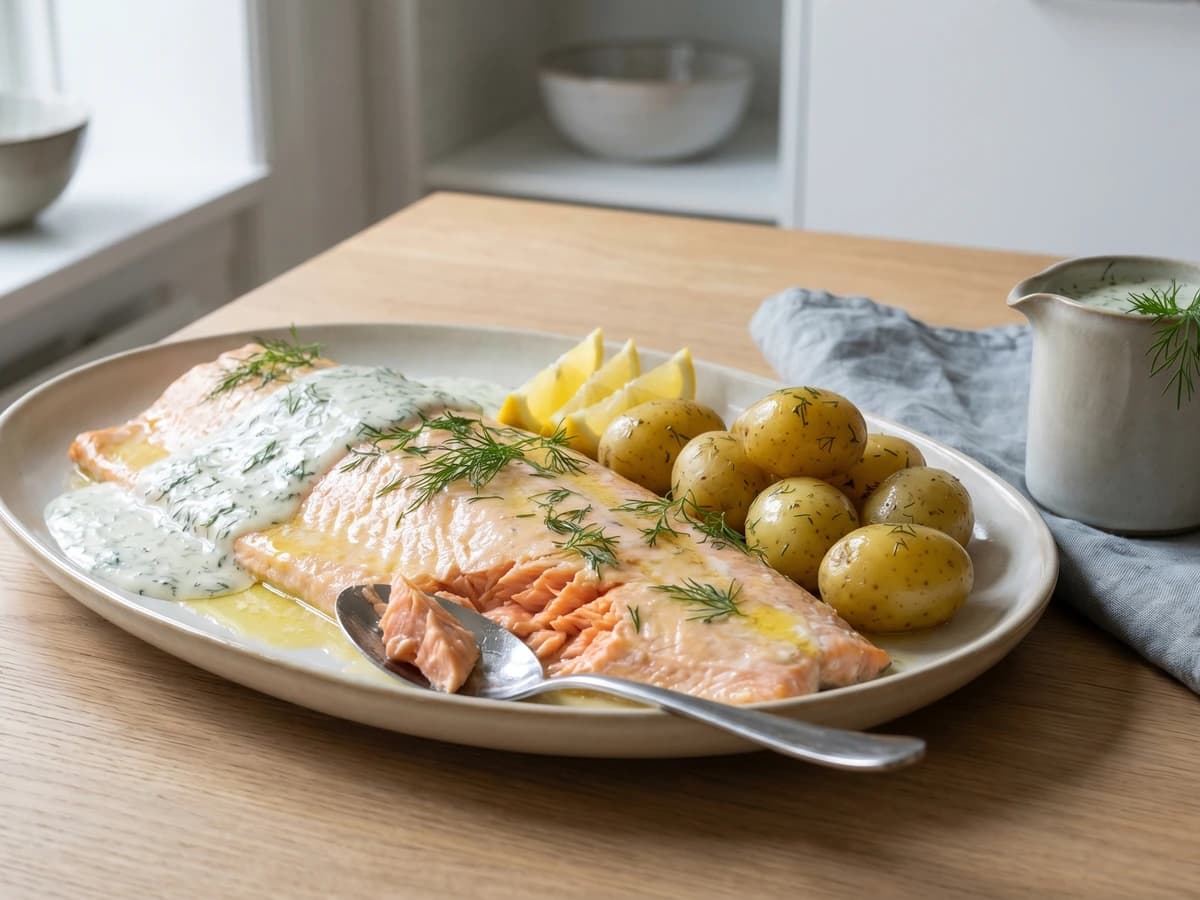
A side of salmon baked gently in butter and white wine, served warm with a bright dill cream sauce and the season's first nye kartofler. Late spring on a Danish table, cooked with love.