
Chef Lupita
Guadalajara Fruit & Cream Cup (Bionico Tapatio)
Jalisco's market fruit cup from Guadalajara, cold chopped fruit under sweet crema, granola, coconut and raisins, the quick meal that proved a city can invent tradition in a plastic cup.
A cooking platform built around craft, culture, and the stories behind what we eat.
Created by
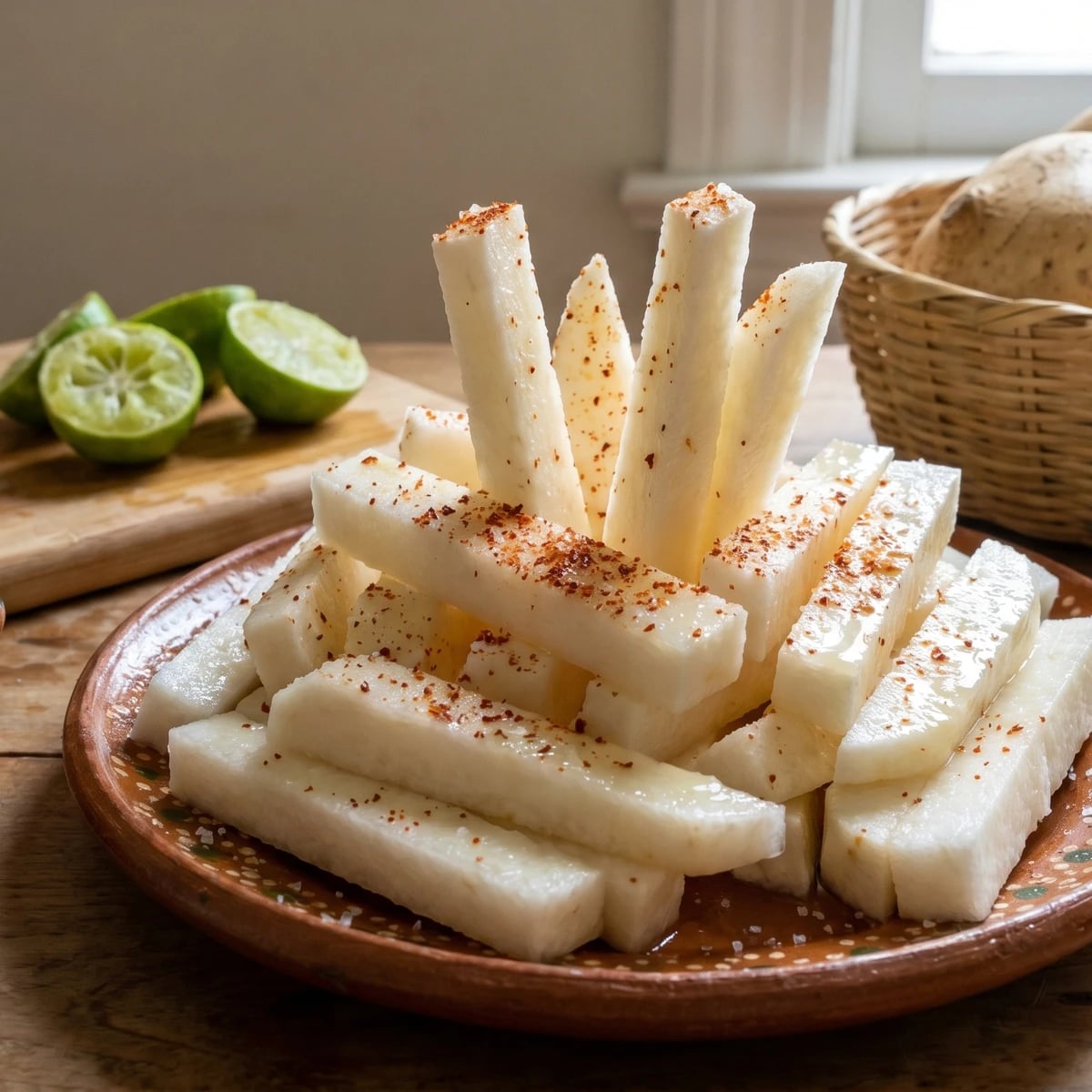
Jalisco's fruit-cart botana: cold jicama batons dressed with Mexican lime, sal de grano, and chile piquín, the cheap, crisp snack that belongs to markets, plazas, and picnic tables.
Jalisco, especially Guadalajara and the mercado towns around it, knows this botana by sight: white jicama cut into thick batons, lime squeezed hard over the top, sal de grano, and chile piquín. No dressing. No lettuce. No sweet syrup. The crunch is the point.
At Mercado Libertad in Guadalajara, the fruit vendors keep jicama in big peeled chunks under damp cloths, ready to cut when a customer asks. The chile is not just any red powder. It is chile piquín, small, sharp, and clean, the kind that hits fast and leaves room for the jicama's sweetness. If you use one of those orange commercial powders full of sugar and citric acid, don't tell me you made the same thing. You made candy dust on a vegetable.
My mother packed jicama this way for bus rides when we left Ciudad de México to visit family in Jalisco. She would wrap the cut pieces in a cloth, carry the limes whole, and season everything at the last minute because she knew the rule: crisp food stays crisp until the cook gets lazy. Saber cocinar es saber vivir.
This is comida de mercado, but don't confuse cheap with careless. The cut matters. The lime matters. The chile matters. Cada estado, su propia cocina, even when the dish fits in a paper cup.
Jicama, Pachyrhizus erosus, is native to Mexico and Central America and was cultivated before the Spanish conquest for its crisp, water-rich root. The street-cart habit of serving fruit and vegetables with lime, salt, and powdered chile expanded in Mexican cities during the 20th century as public markets, school exits, bus stations, and plazas became everyday eating spaces. In western Mexico, especially Jalisco and the Bajío corridor, chile piquín became the preferred dusting chile for snacks like jicama because it brings quick heat without covering the vegetable's clean sweetness.
Quantity
1 large, about 1 1/2 pounds
peeled and cut into thick batons
Quantity
1/4 cup
from 5 to 6 small limes
Quantity
1 teaspoon, plus more to taste
Quantity
1 1/2 teaspoons, plus more for serving
Quantity
1/2 teaspoon
Quantity
for serving
| Ingredient | Quantity |
|---|---|
| jicamapeeled and cut into thick batons | 1 large, about 1 1/2 pounds |
| fresh Mexican lime juicefrom 5 to 6 small limes | 1/4 cup |
| sal de grano or kosher salt | 1 teaspoon, plus more to taste |
| ground chile piquín | 1 1/2 teaspoons, plus more for serving |
| finely grated lime zest (optional) | 1/2 teaspoon |
| lime halves (optional) | for serving |
Pick a jicama that feels heavy for its size, with dry tan skin and no soft spots. The flesh should be white, wet, and crisp when you cut it. If it looks fibrous or beige inside, it sat too long. No chile can rescue tired jicama. Si no conoces el mercado, no conoces la cocina.
Trim the top and bottom so the jicama sits flat. Cut away the thick skin with a knife, not a vegetable peeler, because the peel is tougher than it looks. Slice the flesh into slabs, then into batons about the thickness of your little finger. Too thin and they go limp. Too thick and the lime only seasons the outside.
Put the jicama batons in a wide bowl. Pour the fresh lime juice over them and toss with your hands until every piece shines. Let them sit for 5 minutes, no longer than 10. You want the lime to wake up the sweetness and cling to the surface, not make the jicama weep into a puddle.
Sprinkle with sal de grano and ground chile piquín. Toss again. The chile should speckle the jicama in red dots, not bury it under powder. This dish is cooling first, sharp second, hot third. People who call all Mexican food spicy have not paid attention.
Pile the jicama into a shallow barro canelo plate or paper cups the way the fruit carts do in Guadalajara. Add lime halves and a small dish of extra chile piquín at the table. Eat it cold and crisp. This is not a salad that waits politely. Así se hace y punto.
1 serving (about 165g)
Culinary guides, cultural storytelling, and the editorial depth that makes cooking meaningful.
Discover Culinary Explorer
Chef Lupita
Jalisco's market fruit cup from Guadalajara, cold chopped fruit under sweet crema, granola, coconut and raisins, the quick meal that proved a city can invent tradition in a plastic cup.

Chef Lupita
Michoacán's avocado country meets Cotija's sharp mountain cheese in a fast table salad dressed with lime, white onion, serrano, and Mexican oregano.

Chef Lupita
Guadalajara's party-table coditos, cold elbow macaroni bound with crema and mayonnaise, folded with ham, carrot, corn, and sharpened by chile jalapeño en escabeche.

Chef Lupita
Nayarit's cabbage slaw is the cold, creamy side that belongs beside fried Pacific fish, birria, and tostadas, with carrot, pineapple, lime, and crema doing quiet work.