Chef Joost
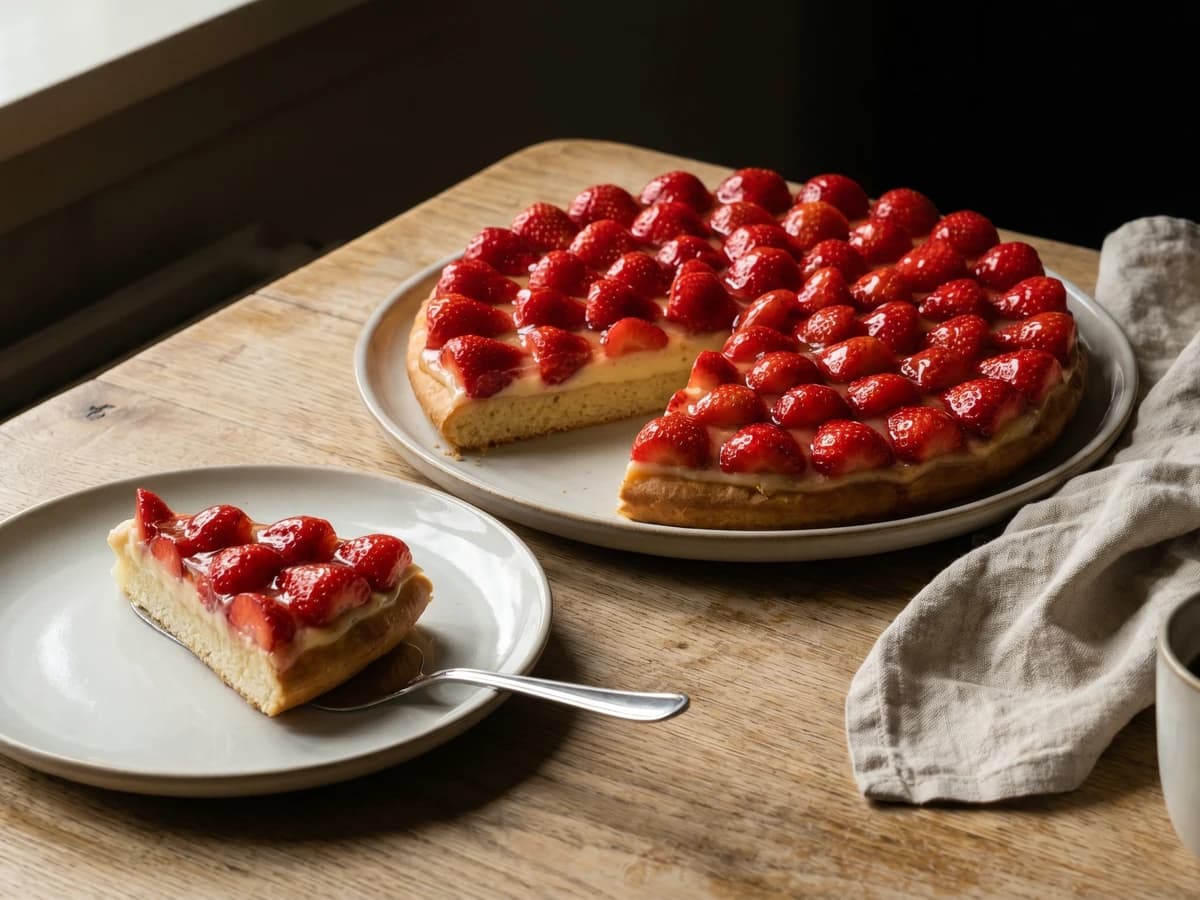
Aardbeienvlaai (Limburg Strawberry Vlaai)
The summer vlaai that politely breaks Limburg's baked-fruit rule: soft gistdeeg, cool pastry cream, and strawberries left fresh because June knows better than the oven.
A cooking platform built around craft, culture, and the stories behind what we eat.

Created by
The old Dutch tray cookie named for the rabble: one buttery slab, almond and sugar scattered like a noisy crowd, baked thin and cut while warm.
The name already tells you there is mischief here. Janhagel is not the name of a saint, a duke, or a respectable pastry guild. Jan is everyman, and hagel, in this old expression, is the rough crowd, the rabble, the people pressed together in the street. A fine thing, then, that Dutch baking gave the rabble butter, cinnamon, almonds, and pearl sugar.
But let me tell you a secret: this is one of the cleverest cookies in the old Dutch kitchen because it refuses fuss. No rolling individual biscuits, no carved mold, no little performance. You press one slab of dough into a tray, scatter it generously, bake it until the edges go gold, and score it while still warm. Hou het altijd simpel, always keep it simple. The slab becomes bars because you knew when to cut.
There is a spice-route whisper in it too, not loud like speculaas, but enough. Cinnamon in a weekday cookie is the Golden Age cupboard speaking softly. The topping matters: pearl sugar for crunch, sliced almonds for a pale, nutty edge, and egg wash so everything grips the dough instead of wandering off like its namesake crowd.
Janhagel belongs to the family of thin Dutch plate cookies that became common in household baking by the eighteenth and nineteenth centuries, when butter, sugar, cinnamon, and imported almonds were regular luxuries in urban kitchens. The name Jan Hagel was an old Dutch term for the common crowd or rabble, with Jan standing for the ordinary man. Its method, baking one sheet and cutting it hot into bars, reflects a practical home economy: fast to make, easy to carry, and well suited to coffee tables, church fairs, and holiday tins.
Quantity
250g
Quantity
150g
cold and diced
Quantity
100g
Quantity
50g
Quantity
1 teaspoon
Quantity
1/4 teaspoon
Quantity
1
beaten and divided
Quantity
1 teaspoon
Quantity
60g
Quantity
50g
| Ingredient | Quantity |
|---|---|
| all-purpose flour | 250g |
| unsalted buttercold and diced | 150g |
| light brown sugar | 100g |
| white caster sugar | 50g |
| ground cinnamon | 1 teaspoon |
| fine salt | 1/4 teaspoon |
| eggbeaten and divided | 1 |
| cold water (optional) | 1 teaspoon |
| sliced almonds | 60g |
| pearl sugar or coarse decorating sugar | 50g |
Heat the oven to 180C and line a 30 by 40cm baking tray with parchment. Rub the flour, cold butter, brown sugar, caster sugar, cinnamon, and salt together until the mixture looks like damp sand with a few pea-sized bits of butter left. Stir in half the beaten egg. If the dough will not gather when pressed, add the teaspoon of cold water, but only then.
Tip the dough onto the lined tray and press it into a thin, even rectangle about 5mm thick. Use the flat of your hand first, then a rolling pin or straight glass to level it. Thinness is the whole trick here: too thick and you have shortbread, pleasant but no longer janhagel.
Brush the surface with the remaining beaten egg, right to the edges. Scatter over the sliced almonds and pearl sugar, then press them lightly with your palm so they cling. Be generous but not theatrical; the topping should look like a crowded market square, not a shop window.
Bake for 16 to 20 minutes, until the edges are deep golden and the centre is set but still a little tender when touched. Watch the almonds in the last few minutes. Pale almonds taste unfinished; dark almonds turn bitter, and bitterness is a poor historian.
Let the slab stand for 3 minutes, then score it into bars with a sharp knife while it is still warm and obedient. Cut long strips first, then crosswise into rectangles or diamonds. Leave the pieces on the tray until completely cool; they firm as they cool, and then they snap cleanly along the lines you gave them.
1 serving (about 21g)
Culinary guides, cultural storytelling, and the editorial depth that makes cooking meaningful.
Discover Culinary ExplorerChef Joost
The summer vlaai that politely breaks Limburg's baked-fruit rule: soft gistdeeg, cool pastry cream, and strawberries left fresh because June knows better than the oven.

Chef Joost
A Limburg vlaai is not a pie trying to be grand. It is a thin yeast-dough round, fruit-bright and generous, made for birthdays, coffee, and second slices.

Chef Joost
The December bakery counter made small: cold leafed pastry wrapped around lemon-scented amandelspijs, brushed gold, and scattered with almonds so one person gets the whole holiday in both hands.
Chef Joost
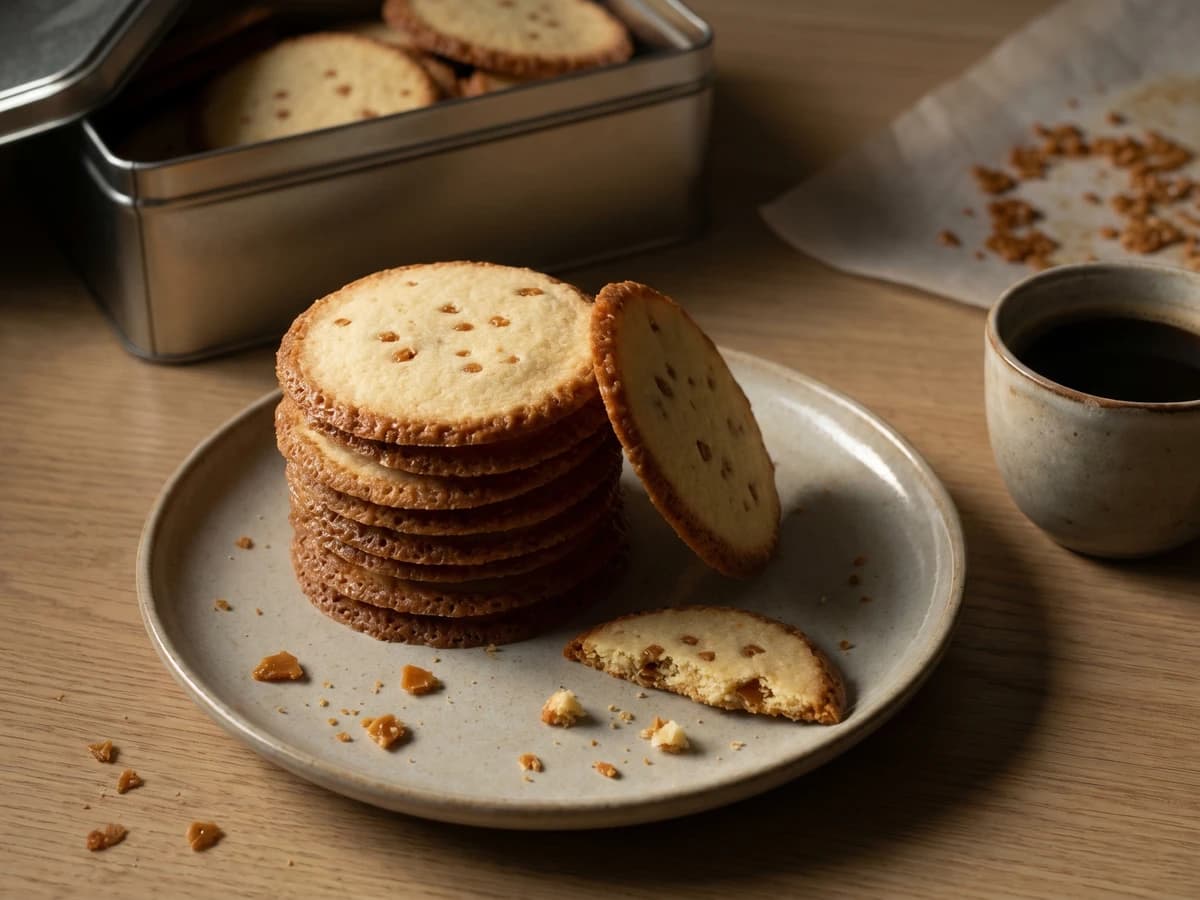
A thin Amsterdam cookie carrying a cog ship in its name: caramelized butter dough, almond nougatine, and a 1934 contest that turned municipal pride into something for coffee.