
Chef Jeong-sun
Agwi-jjim (Braised Monkfish with Bean Sprouts)
Firm monkfish buried under crisp soybean sprouts, minari, and a red gochugaru sauce thickened at the end; Masan's market dish asks for heat, timing, and a steady hand.
A cooking platform built around craft, culture, and the stories behind what we eat.

Created by
Lean beef, quail eggs, and wrinkled green peppers simmered in a clear soy broth until a little salty meat stretches across a week of rice bowls.
Jangjorim lives or dies by the way the beef is cut after it softens. You simmer lean meat gently, let the grain open, then tear it into long strands with your hands. Cut across the grain and the pieces turn short and dry. Tear with the grain and one salty strip can season a whole spoonful of rice.
Master Seong-nyeo kept jangjorim in a small enamel box, not for guests, for the days when the rice was hot and the table needed one steady thing. Notebook 19 says 700 g beef to 1/2 cup soy sauce, because this banchan must be assertive enough to stand beside plain rice, quail eggs, and green peppers, but not so salty that it scolds you. That is the line.
This is refrigerator food in the best Korean sense: cooked once, eaten in small amounts for days, stretched without tasting poor. Tonight it asks for patience, a gentle simmer, clean peeling on the eggs, and restraint with the sugar. The peppers go in at the end so they stay green and a little sharp. Write it down. Memory is a borrowed bowl.
Jangjorim belongs to the jorim family, dishes simmered in a seasoned soy sauce base until the ingredient absorbs the jang. The beef version grew practical in twentieth-century home kitchens, especially after refrigerators became common in South Korea in the 1960s and 1970s, because a small amount of costly meat could be cooked salty, chilled, and stretched across many rice meals. Quail eggs and kkwari-gochu are common modern additions, giving protein and green bitterness to a dish once centered simply on beef and soy.
Quantity
700g
cut into 2-inch blocks with the grain visible
Quantity
enough to cover
for soaking the beef
Quantity
6 cups
for simmering
Quantity
1/2 medium
peeled
Quantity
1 large
cut into 3-inch lengths
Quantity
6
lightly crushed, for simmering
Quantity
3 thin slices, about 10g
Quantity
1 teaspoon
Quantity
3 cups
strained from simmering the beef
Quantity
1/2 cup
Quantity
2 tablespoons
Quantity
1 tablespoon
Quantity
8
peeled, for the braise
Quantity
24
Quantity
150g
stems trimmed, each pepper pricked once
| Ingredient | Quantity |
|---|---|
| lean beef eye of round, brisket flat, or shankcut into 2-inch blocks with the grain visible | 700g |
| cold waterfor soaking the beef | enough to cover |
| waterfor simmering | 6 cups |
| onionpeeled | 1/2 medium |
| scallioncut into 3-inch lengths | 1 large |
| garlic cloveslightly crushed, for simmering | 6 |
| fresh ginger | 3 thin slices, about 10g |
| black peppercorns | 1 teaspoon |
| reserved beef brothstrained from simmering the beef | 3 cups |
| Korean soy sauce (jin-ganjang) | 1/2 cup |
| sugar | 2 tablespoons |
| cheongju (rice wine) or mirim | 1 tablespoon |
| garlic clovespeeled, for the braise | 8 |
| cooked peeled quail eggs | 24 |
| kkwari-gochu (Korean wrinkled peppers) or shishito peppersstems trimmed, each pepper pricked once | 150g |
Cut the beef into 2-inch blocks, keeping the long fibers running lengthwise where you can see them. Soak the pieces in cold water for 20 minutes, changing the water once, then drain and rinse. This is not to wash away flavor. It clears the blood proteins that cloud the broth and turn harsh in a long soy braise.
Put the beef and 6 cups water in a 4-quart pot. Bring it just to a boil over medium-high heat, skimming the foam for 5 minutes. Add the onion, scallion, crushed garlic, ginger, and peppercorns. Lower the heat, set the lid slightly ajar, and simmer gently for 55 to 65 minutes, until a skewer slides into the beef with only a little resistance. A hard boil tightens lean meat. Patience keeps it tender.
Lift the beef into a bowl and let it rest for 10 minutes. Strain the broth and measure out 3 cups; if you are short, add water to make the measure. When the beef is cool enough to handle, tear it with the grain into pencil-thick strips, 2 to 3 inches long. Knife-cut beef goes neat and dry. Hand-torn beef catches the soy in its fibers, which is why this dish asks for your hands.
Rinse the pot clean. Add the torn beef, 3 cups strained broth, soy sauce, sugar, rice wine, and 8 peeled garlic cloves. Simmer uncovered over medium-low heat for 15 minutes. Taste the broth after 10 minutes. It should be saltier than soup because it has to season rice and eggs, but it should not make you wince. If it is too strong, add 1/4 cup water. If it tastes flat, add 1 tablespoon soy sauce.
Add the peeled quail eggs and nudge them under the liquid. Simmer gently for 10 minutes, rolling them once or twice so they stain evenly. The edges should turn tea-brown. Keep the simmer low, because hard boiling makes the whites rubbery and can split them.
Prick each pepper once with a knife tip so the soy can enter without bursting it. Add the kkwari-gochu or shishitos and simmer 3 to 4 minutes, just until they wrinkle and deepen in color. Turn off the heat. Do not cook them until they collapse. Their slight green bitterness is what cuts the soy and sugar.
Let the pot stand for 20 minutes, then transfer everything to a clean glass container with the meat and eggs covered by the braising liquid. Cool it promptly and refrigerate within 2 hours. Chill at least 4 hours, and overnight is better. Serve cold or at room temperature with rice, spooning a little soy broth over the bowl. Use clean chopsticks each time and keep the solids under the liquid.
1 serving (about 165g)
Culinary guides, cultural storytelling, and the editorial depth that makes cooking meaningful.
Discover Culinary ExplorerChef Jeong-sun
Firm monkfish buried under crisp soybean sprouts, minari, and a red gochugaru sauce thickened at the end; Masan's market dish asks for heat, timing, and a steady hand.

Chef Jeong-sun
A quick Korean rice bowl built on contrast: warm rice, cold popping flying-fish roe, chopped vegetables, gim, sesame oil, and the crisp rice bottom a hot stone bowl gives you.
Chef Jeong-sun
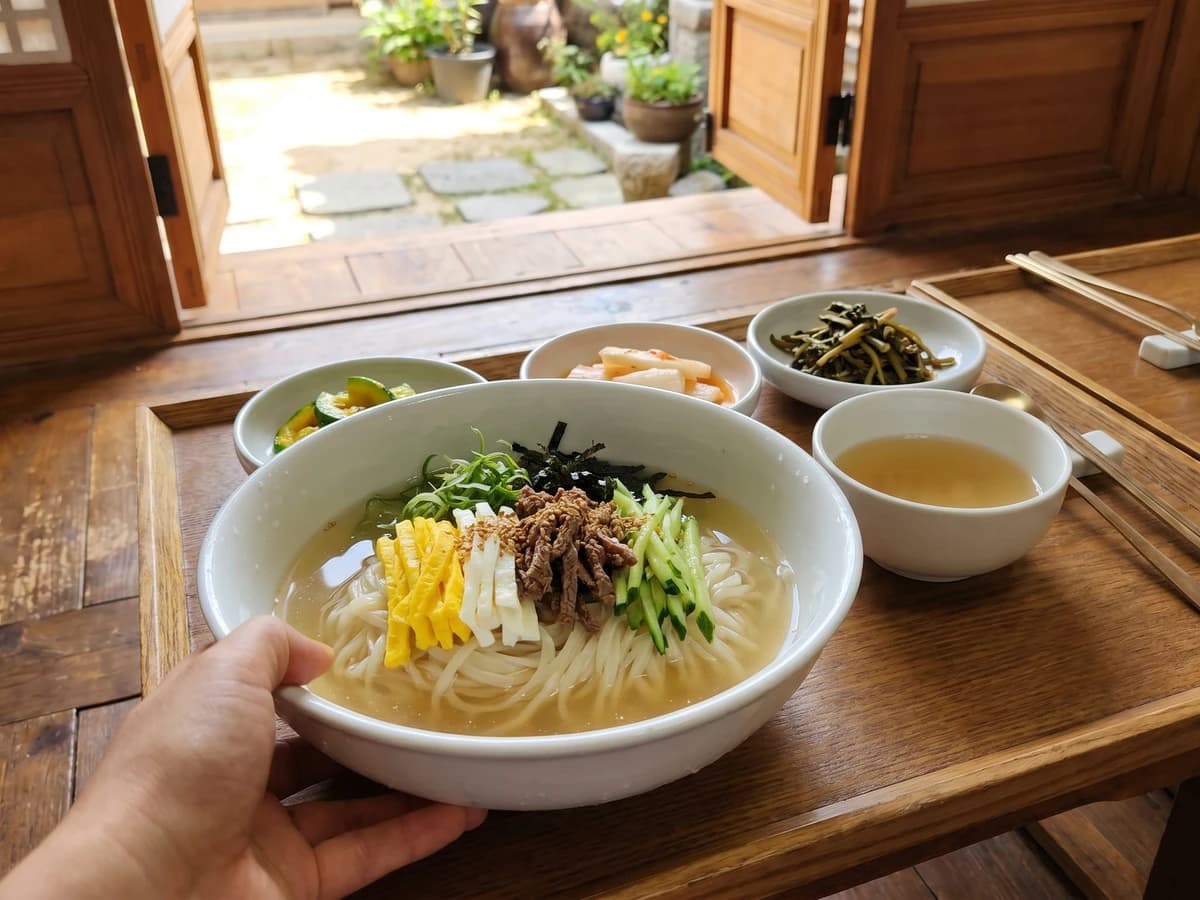
Andong's guest noodles, wheat and roasted soybean flour rolled thin, boiled and rinsed cold, then set in a clear chilled anchovy broth with careful strips of beef, egg, and cucumber.

Chef Jeong-sun
Andong's ritual-table rice served on an ordinary day: separate soy-sesame namul, warm rice, and clear radish soup, mixed without gochujang so every vegetable keeps its own voice.