Chef Jeong-sun
Amjuk (Dried-Grain Weaning Porridge)
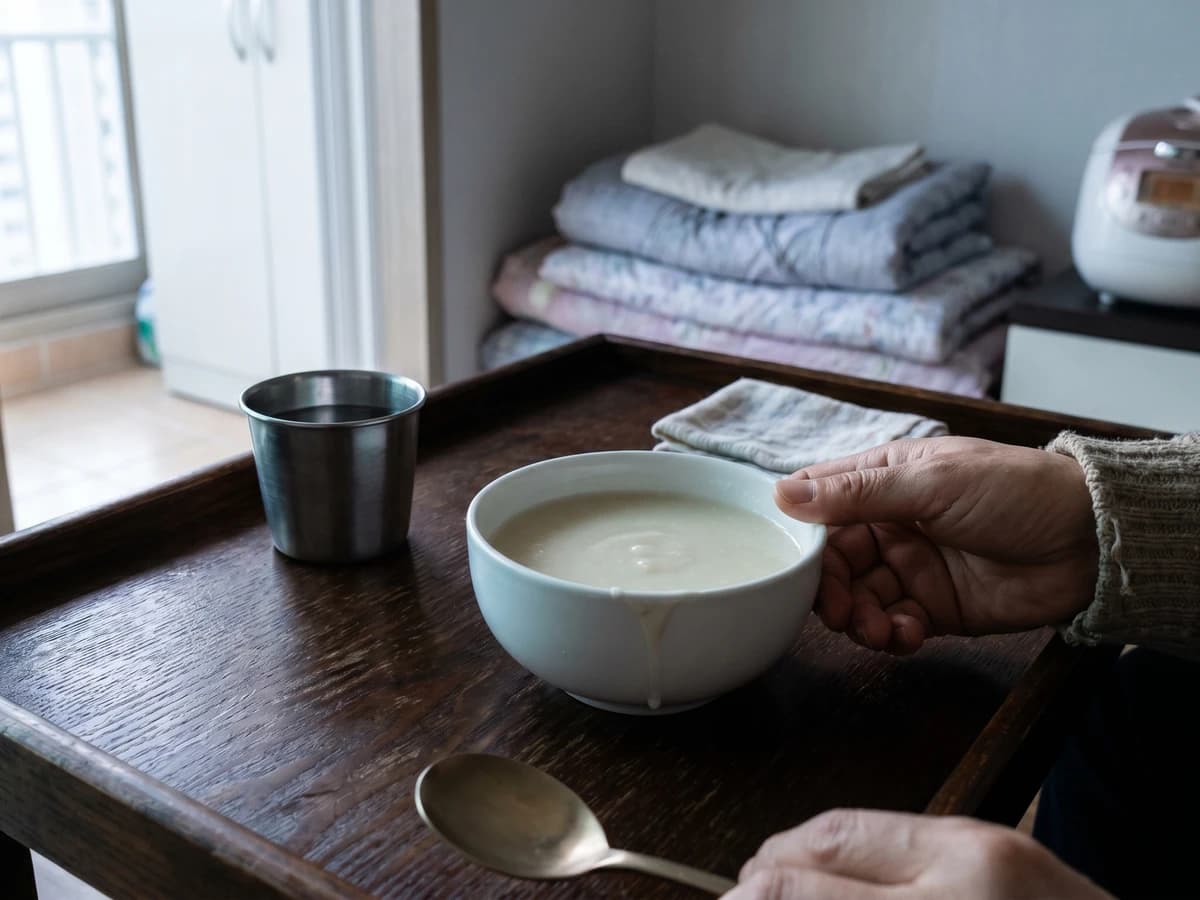
Powdered rice or dried baekseolgi cooked thin in cloudy rice water, an old Korean first-spoon porridge that asks for patience at the sieve and gentleness at the stove.
A cooking platform built around craft, culture, and the stories behind what we eat.

Created by
A sustaining Korean juk where soaked rice is toasted in sesame oil with beef and shiitake, then simmered into a soy-seasoned broth that eats like breakfast, not a sickbed apology.
People hear juk (rice porridge) and think of a sickbed bowl, pale and obedient. Jangguk-juk (beef and soy porridge) is not that bowl. This one belongs to the full-meal end of the family: beef minced small, shiitake cut thin, ganjang (soy sauce) giving the broth its backbone, and rice toasted in sesame oil before any liquid touches it.
Master Seong-nyeo made us drain soaked rice until the sieve stopped dripping. Then she made us toast it slowly, no browning, just until the grains turned pearly at the edges. That step is the dish. It keeps the porridge from tasting like plain rice boiled in soup and gives each grain enough body to carry the beef and mushroom.
Tonight it asks for patience, not difficulty. Chop the beef finer than stew meat, strain the shiitake soaking liquid so grit stays behind, and season at the end with restraint. The bowl should taste of beef, soy, sesame, and mushroom in that order, each still clear. 손맛 is real; I measure it anyway, because the next cook should not have to guess.
Jangguk means a clear broth seasoned with ganjang (soy sauce), and the name keeps this porridge tied to Korea's older habit of seasoning light soups with soy rather than chili. Jangguk-juk is documented in the twentieth-century royal-cuisine transmission of Han Hui-sun (1889-1972) and Hwang Hye-seong (1920-2006), with beef, shiitake, sesame oil, and soy sauce making it more substantial than huin-juk (plain white rice porridge). It belongs just as naturally to the home breakfast table, where juk has long moved between comfort, recovery, and a quiet full meal.
Quantity
1 cup (200g)
rinsed, soaked 30 minutes, and drained
Quantity
4 mushrooms (about 18g)
Quantity
1 cup
for soaking the mushrooms
Quantity
180g
finely minced by hand
Quantity
2 tablespoons, plus 1 teaspoon more if needed
divided
Quantity
1 tablespoon
Quantity
1
thinly sliced for serving
Quantity
1 teaspoon
minced
Quantity
1 tablespoon plus 1 teaspoon
divided
Quantity
1/8 teaspoon
Quantity
6 1/2 cups, plus 1/2 cup extra if needed
reserved shiitake soaking liquid plus unsalted beef broth or water
Quantity
1/2 teaspoon, plus up to 1/4 teaspoon more after tasting
Quantity
1 large
separated
Quantity
1 teaspoon
for wiping the garnish pan
Quantity
1 teaspoon
Quantity
1 small sheet
cut into thin shreds
| Ingredient | Quantity |
|---|---|
| short-grain white ricerinsed, soaked 30 minutes, and drained | 1 cup (200g) |
| dried shiitake mushrooms | 4 mushrooms (about 18g) |
| warm waterfor soaking the mushrooms | 1 cup |
| beef brisket, sirloin, or lean chuckfinely minced by hand | 180g |
| guk-ganjang (Korean soup soy sauce)divided | 2 tablespoons, plus 1 teaspoon more if needed |
| finely minced scallion | 1 tablespoon |
| scallionthinly sliced for serving | 1 |
| garlicminced | 1 teaspoon |
| toasted sesame oildivided | 1 tablespoon plus 1 teaspoon |
| freshly ground black pepper | 1/8 teaspoon |
| total cooking liquidreserved shiitake soaking liquid plus unsalted beef broth or water | 6 1/2 cups, plus 1/2 cup extra if needed |
| kosher salt | 1/2 teaspoon, plus up to 1/4 teaspoon more after tasting |
| egg (optional)separated | 1 large |
| neutral oil (optional)for wiping the garnish pan | 1 teaspoon |
| toasted sesame seeds (optional) | 1 teaspoon |
| gim (roasted seaweed) (optional)cut into thin shreds | 1 small sheet |
Rinse the rice in 3 changes of cold water, rubbing the grains lightly, until the water is cloudy but no longer thick and milky. Soak 30 minutes, then drain in a sieve for 10 minutes. Soaking lets the center of each grain cook at the same pace as the outside; draining lets the rice toast instead of sliding wet around the pot.
Put the dried shiitake in 1 cup warm water and soak 25 to 30 minutes, until the caps bend easily. Squeeze them gently, trim away the tough stems, and slice the caps thin, about 1/8 inch. Strain the soaking liquid through a fine sieve, leaving the grit behind, then add unsalted beef broth or water until you have 6 1/2 cups total liquid.
Mix the minced beef, sliced shiitake, 1 tablespoon guk-ganjang, 1 tablespoon minced scallion, garlic, 1 teaspoon sesame oil, and black pepper. Let it stand 10 minutes while the rice drains. The beef should be cut small enough to move through the porridge with the rice, not sit in it like stew meat.
If using the egg garnish, beat the yolk and white separately with a tiny pinch of the measured salt. Wipe a small skillet with neutral oil and cook each over low heat into a thin sheet, keeping the color clean, not browned. Cool, then slice into fine threads. This is a safe corner to cut when breakfast is waiting; the porridge itself still has to be done properly.
Warm a heavy 3- to 4-quart pot over medium heat and add the remaining 1 tablespoon sesame oil. Add the seasoned beef and shiitake and stir about 2 minutes, until the beef loses its raw red color. Add the drained rice and stir 3 to 4 minutes, until the grains look pearly at the edges. Do not brown them. This step is why jangguk-juk tastes like toasted rice in broth, not plain rice boiled until it gives up.
Pour in 2 cups of the measured liquid first and scrape the bottom of the pot clean, then add the remaining 4 1/2 cups. Bring it to a simmer, lower the heat, and cook with the lid slightly ajar for 35 to 40 minutes. Stir every 5 minutes at first and every 2 minutes near the end, because rice catches quietly on the bottom. The grains should bloom open and the porridge should fall slowly from the spoon. If it turns too thick before the rice is tender, add the extra liquid 1/4 cup at a time.
Stir in the remaining 1 tablespoon guk-ganjang and 1/2 teaspoon kosher salt. Simmer 2 minutes, then taste. It should be savory but still pale brown, with beef, soy, sesame, and mushroom all clear. If it tastes flat, add up to 1/4 teaspoon more salt; if it lacks jang character, add 1 teaspoon more guk-ganjang. More soy sauce makes the bowl dark before it makes it better, so stop early.
Turn off the heat and let the juk rest 5 minutes, because it tightens as it stands and settles into the right spoonful. Ladle into warm bowls and finish with jidan, gim, sesame seeds, and sliced scallion if using. Serve with baechu-kimchi (napa cabbage kimchi) or dongchimi (radish water kimchi), something bright beside the beef and soy.
1 serving (about 500g)
Culinary guides, cultural storytelling, and the editorial depth that makes cooking meaningful.
Discover Culinary ExplorerChef Jeong-sun
Powdered rice or dried baekseolgi cooked thin in cloudy rice water, an old Korean first-spoon porridge that asks for patience at the sieve and gentleness at the stove.

Chef Jeong-sun
A soft summer rice porridge of kneaded mallow greens, dried shrimp, and careful doenjang broth, plain enough for breakfast and exact enough to keep the grit and bitterness out.
Chef Jeong-sun
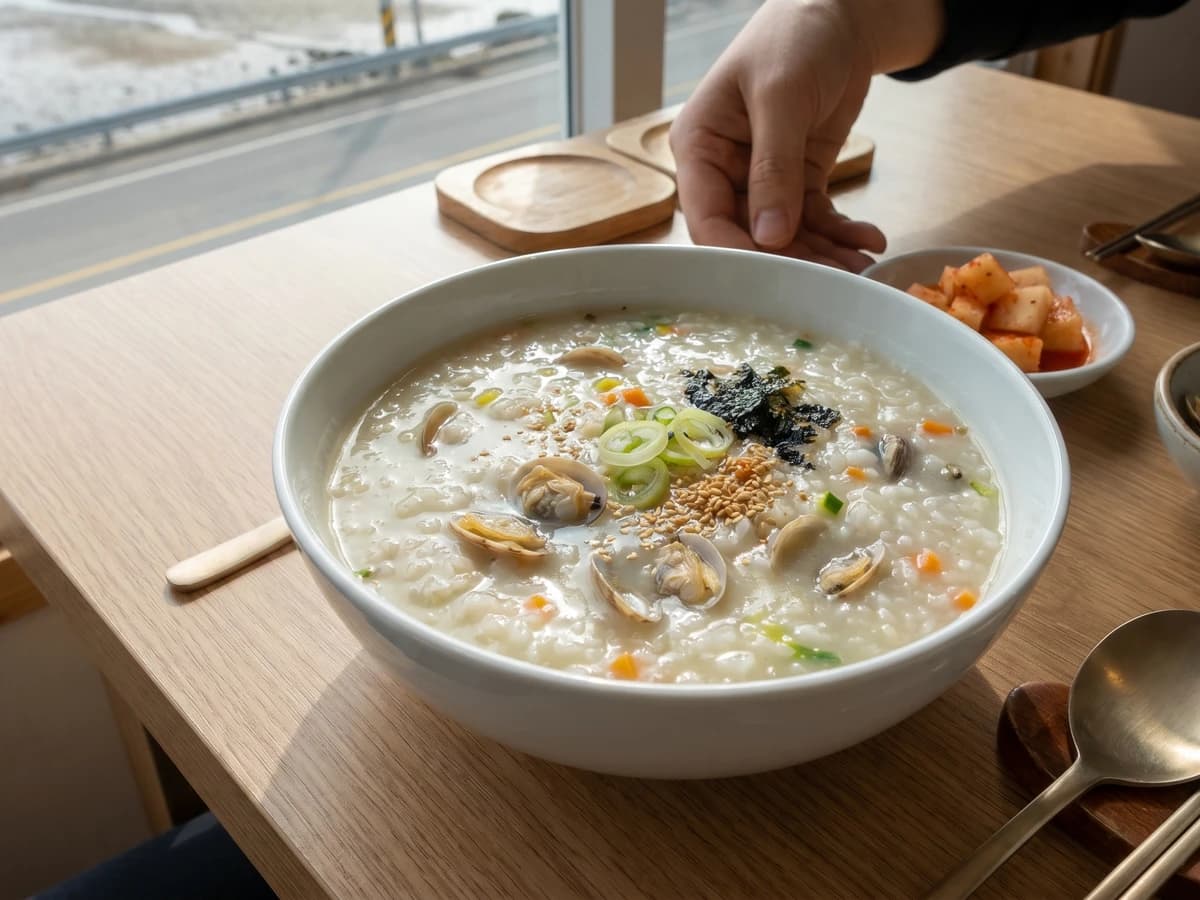
A west-coast clam porridge from Buan's tidal flats: live bajirak opened for their liquor, sesame-slicked rice toasted in the pot, and vegetables cut small enough to comfort without hiding the clams.

Chef Jeong-sun
An autumn juk of boiled chestnuts and soaked short-grain rice, simmered low until smooth and softly sweet, the kind of bowl you set before an elder, a child, or yourself.