Chef Isabel
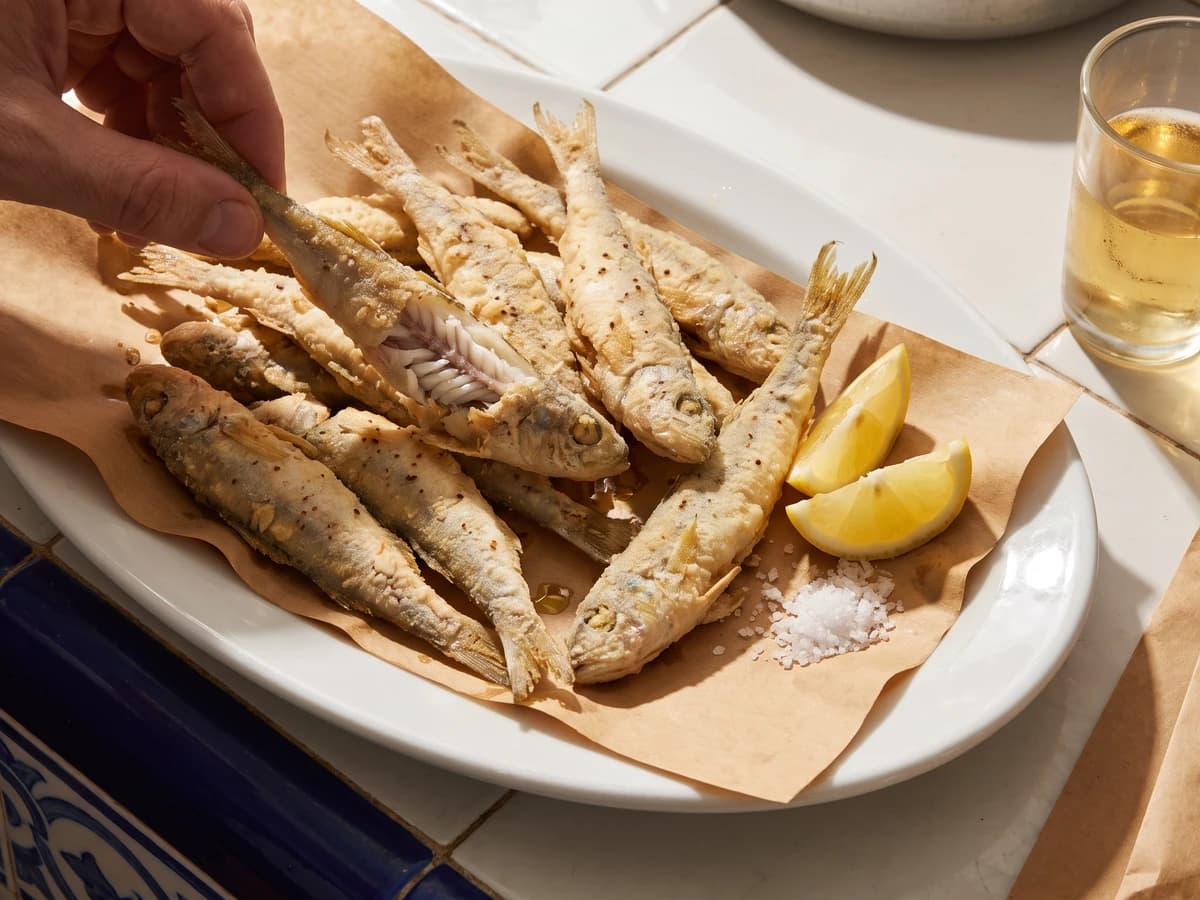
Acedías Fritas de Cádiz
Acedías fritas belong to Cádiz: tiny wedge sole, salted, dusted in frying flour, and dropped into very hot olive oil so the rims crisp while the fish stays tender.
A cooking platform built around craft, culture, and the stories behind what we eat.
Created by
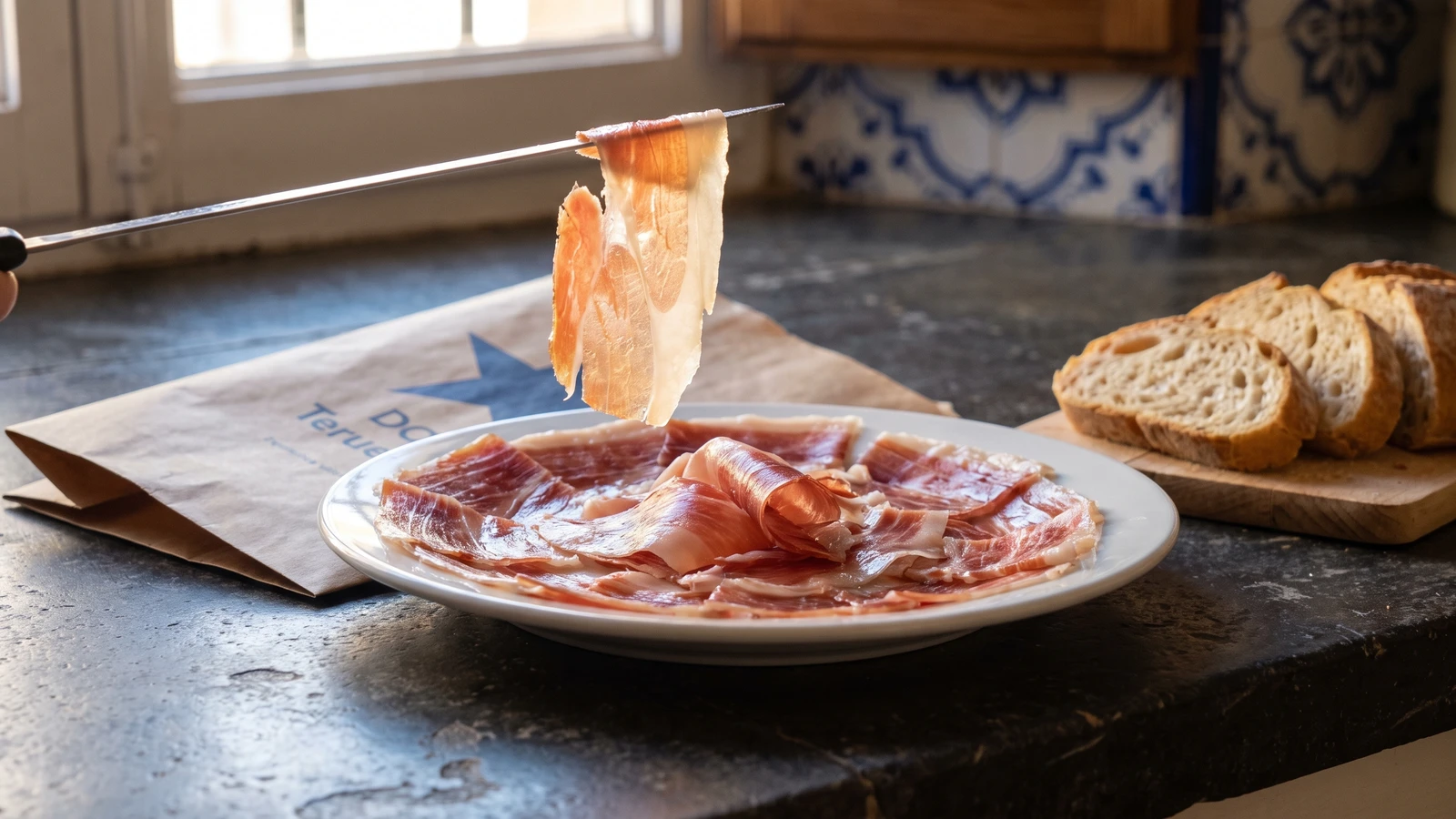
Jamón de Teruel is Aragón's clean, sweet mountain ham: white pig, slow cure, fine fat. Your job is not to cook it, but to let it warm, slice it thin, and leave it alone.
Jamón de Teruel belongs to Aragón, to the high dry province where the air does half the work and the ham comes out clean, sweet, and gently nutty. This is not ibérico, and it isn't a random serrano with a prettier name. It is DOP ham from white pigs, cured slowly in Teruel, with the fat firm enough to slice fine and soft enough to melt once it reaches the table.
The method that decides it is almost embarrassingly small: room temperature and thin slices. Serve it cold and the fat goes waxy, the salt comes forward, and the sweetness disappears. Cut it thick and you chew when you should be letting it melt. So bring it out of the fridge in time, slice it fine, and lay it in one loose layer. The curing was the producer's work. Your work is not to spoil it at the last minute.
If you can't find Jamón de Teruel DOP where you are, buy a good jamón serrano reserva or gran reserva from white pig, sliced very thin. It will usually be a little saltier and less rounded, but it stays in the right family. No hace falta haber pisado España, but you do need to buy carefully. Count 50g per person as a starter. Pésalo, no lo adivines.
Serve it with plain bread, pan de cañada if you can find it, and nothing poured over the ham. Not oil, not vinegar, not a shower of herbs. My Margin note for this one is short: cold is the enemy. Siempre sale, si lo sigues.
Jamón de Teruel belongs to Aragón's high sierra, where cold winters, dry air, and household pig curing made preservation part of the region's larder. The DOP protects ham from white pigs, commonly Duroc crossed with Landrace or Large White lines, cured within Teruel and marked by the eight-point Mudéjar star and the word Teruel on the rind. It was the first cured ham in Spain to receive a Denominación de Origen, proof that this quieter mountain ham has its own rules and name.
Quantity
200g
freshly sliced 1 to 1.5mm thick, or vacuum-packed slices
Quantity
200g
sliced
Quantity
20ml
for the bread only
| Ingredient | Quantity |
|---|---|
| Jamón de Teruel DOPfreshly sliced 1 to 1.5mm thick, or vacuum-packed slices | 200g |
| pan de cañada or plain rustic breadsliced | 200g |
| extra virgin olive oil (optional)for the bread only | 20ml |
Choose Jamón de Teruel DOP, not just any serrano. Look for the DOP label, and if you are buying from a whole leg, the eight-point star and the word Teruel marked on the rind. The slices should be rose to deep pink, with clean ivory fat and no grey, dry edges.
Take the ham out of the refrigerator 30 to 45 minutes before serving, still covered or sealed so it does not dry. You want the fat to relax and turn slightly glossy. Cold ham tastes flatter, and that is not the ham's fault.
If slicing from a leg, secure it in a jamonero, trim only the rind and yellowed outer fat from the area you will cut, and use a long flexible ham knife. Slice thin, almost translucent pieces, 5 to 7cm long, each with a little fat. Thick strips make good ham seem hard work, and this is not a dish for hard work.
If using vacuum-packed slices, open the packet 10 minutes before plating and separate the slices gently with clean hands or the tip of a knife. Do not pull them cold from the plastic and stack them like cards; let the air loosen them and the fat shine.
Lay the slices in one loose, overlapping layer on a room-temperature plate, never in a tight pile. Put the bread beside the ham, not under it, and keep any olive oil for the bread only. Serve within 2 hours, while the slices still look supple and glossy.
1 serving (about 105g)
Culinary guides, cultural storytelling, and the editorial depth that makes cooking meaningful.
Discover Culinary ExplorerChef Isabel
Acedías fritas belong to Cádiz: tiny wedge sole, salted, dusted in frying flour, and dropped into very hot olive oil so the rims crisp while the fish stays tender.
Chef Isabel
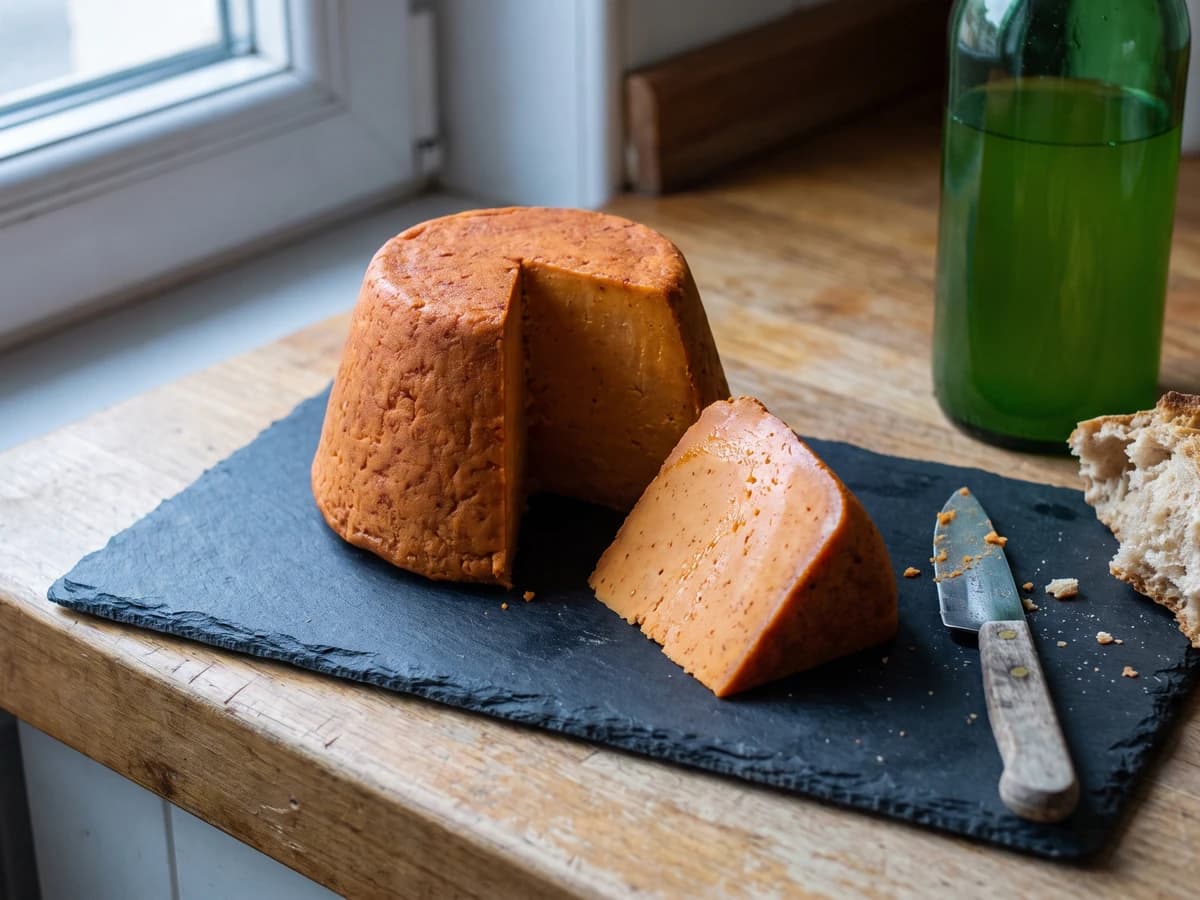
Afuega'l Pitu Roxu is Asturias in a small cheese: cow's milk set slowly to a dense curd, drained without squeezing, then kneaded with pimentón until it turns orange and grips the throat.
Chef Isabel
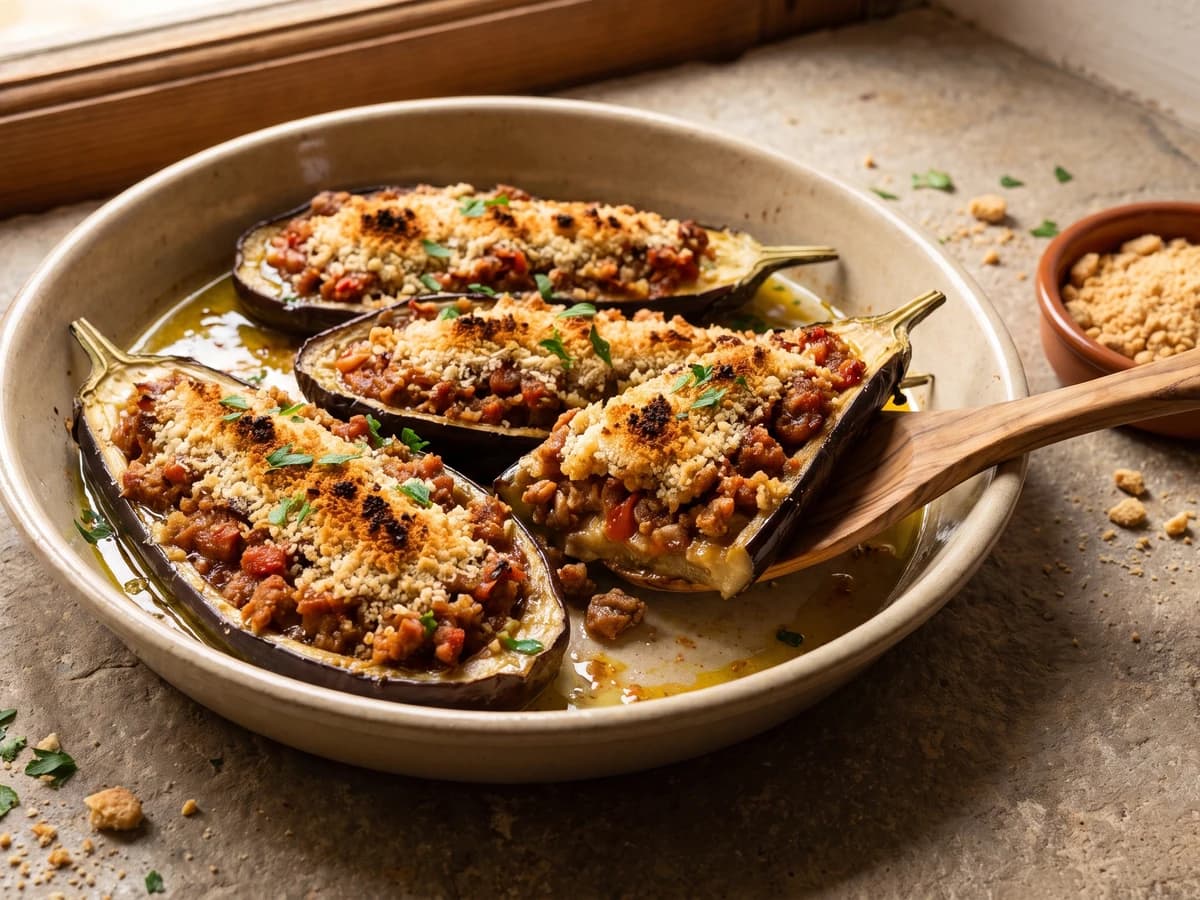
Albergínies farcides are Mallorca's summer stuffed aubergines: tender boiled shells, a slow pork sofrito with moraduix, and a plain breadcrumb cap baked until the top turns crisp and golden.

Chef Isabel
Carxofes farcides are Catalan stuffed artichokes: tender hearts filled with jamón, slow sweet onion, and breadcrumbs, then baked in a light creamy sauce until the tops turn golden.