Culinary Explorer

A cooking platform built around craft, culture, and the stories behind what we eat.
Discover Culinary Explorer
Jam Tarts

Jam Tarts

Created by Chef Thomas

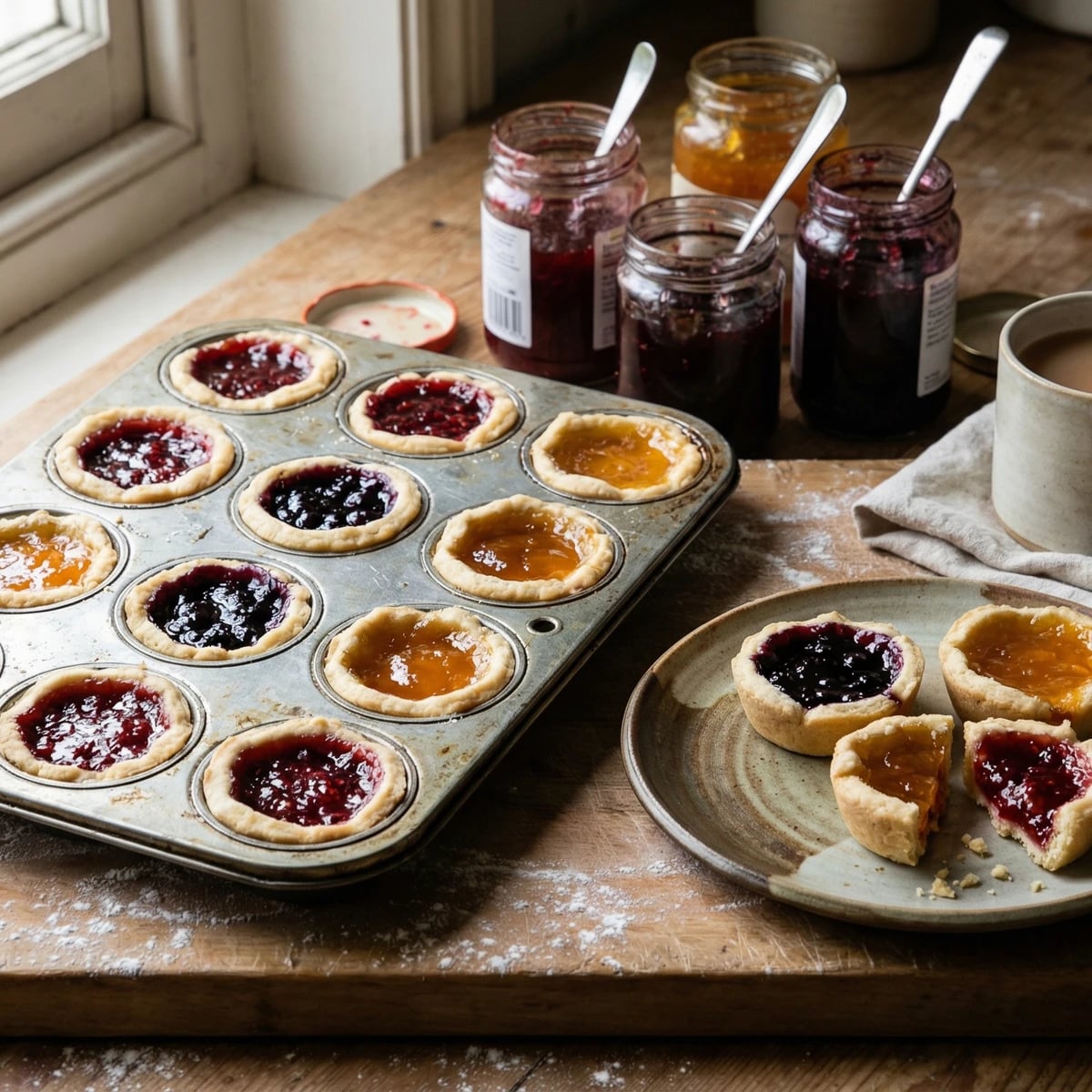
Twelve small shortcrust tarts filled with spoonfuls of whatever jam is in the cupboard, baked until the pastry is pale gold and the fruit bubbles in their centres like tiny stained-glass windows.

Pastries & Cookies
British
Weeknight
Batch Cooking
25 min
Active Time
15 min cookPT40M plus 30 minutes resting total
Yield12 tarts

There's a particular kind of afternoon that calls for jam tarts. Rain on the window, nothing urgent on the calendar, a few half-finished jars of jam at the back of the cupboard that need using. That's the afternoon. You don't plan for it. It arrives, and you put the kettle on, and you make pastry.

These were the first thing I ever baked. I expect they were the first thing you baked too, or your mother, or someone who taught you. There's a reason they're the recipe handed to small children with floury hands: the dough is forgiving, the cutter is fun, and the moment when the jam goes glossy in the oven feels like a small piece of magic that you made happen yourself. We're only making dinner, or in this case, only making tarts. The pleasure is in the doing.

Use whatever jam you have. That's the whole point. A row of identical raspberry tarts is fine, but a tin with raspberry next to apricot next to blackcurrant next to a single defiant marmalade one is much better. Each tart is its own small surprise. I wrote it down in the notebook once, the day I cleared out the cupboard and made twelve of them in twelve different colours: "Tarts. Tuesday. Rain. Used up the marmalade." That's all it needed.

They're at their best within a few hours of baking, eaten with a cup of tea, ideally given to someone who wasn't expecting them. There are few better feelings than putting a warm plate of small bright tarts in front of someone on an ordinary afternoon.

The technique, the tradition, and the story behind every dish.

Discover Culinary Explorer

Ingredients

plain flour

Quantity

200g

plus extra for dusting

cold unsalted butter

Quantity

100g

cubed

caster sugar

Quantity

1 tablespoon

fine sea salt

Quantity

pinch

large egg yolk

Quantity

1

very cold water

Quantity

2-3 tablespoons

mixed jams

Quantity

about 6 tablespoons

raspberry, strawberry, apricot, blackcurrant, marmalade, lemon curd, whatever you have

Equipment Needed

  • 12-hole bun tin (the shallow kind, not a deep muffin tin)
  • 7-8cm round pastry cutter
  • Rolling pin
  • Wire cooling rack

Instructions

  1. 1

    Make the pastry

    Tip the flour, sugar, and salt into a bowl. Add the cold cubed butter and rub it in with your fingertips, lifting your hands to let air in, until the mixture looks like coarse breadcrumbs with a few larger flecks of butter still visible. Those flecks are good. They make the pastry short.

    Cold hands help. Run them under the tap before you start if your kitchen is warm. Pastry hates a hot kitchen and a heavy hand.
  2. 2

    Bring it together

    Stir the egg yolk into two tablespoons of cold water and pour it over the crumbs. Bring the dough together with a knife first, then your hands, just until it forms a rough ball. Add the last spoonful of water only if it needs it. Don't knead. The less you handle it, the shorter it will be. Flatten into a disc, wrap, and rest in the fridge for thirty minutes.

  3. 3

    Roll and cut

    Set the oven to 200C/180C fan. Lightly flour the worktop and roll the pastry out to about three millimetres thick. Don't be precious about it. Use a round cutter slightly larger than the holes in your bun tin, around seven or eight centimetres, and stamp out twelve circles. Re-roll the scraps once if you need to, but only once. Pastry that's been worked too many times turns tough.

  4. 4

    Line the tin

    Press a pastry circle gently into each hole of a twelve-hole bun tin. They don't need to come right up to the top. Just enough to hold the jam. Prick each base once with a fork.

  5. 5

    Fill with jam

    Spoon about half a teaspoon of jam into each tart. No more. Jam expands and bubbles in the oven, and an overfilled tart is a sticky catastrophe that welds itself to the tin. Mix the jams up. Some raspberry here, some apricot there, a couple of marmalade ones in the middle. The variety is the whole pleasure of it.

    Lemon curd needs gentler heat. If you're using it, drop a little less in and check those tarts a minute or two earlier. Curd catches faster than jam.
  6. 6

    Bake until golden

    Bake for twelve to fifteen minutes. You're looking for pastry that has gone pale gold at the edges and just starting to colour on top, with the jam glossy and bubbling in the centre. Trust your nose. When the kitchen smells of warm butter and hot fruit, they're nearly there.

  7. 7

    Cool in the tin

    Take the tin out and leave the tarts where they are for at least ten minutes. The jam is molten and merciless straight from the oven. Once they've settled, lift them out carefully with the tip of a knife and let them finish cooling on a wire rack. Or eat one warm, standing at the counter, while no one is looking.

Chef Tips

  • The jam matters more than you'd think. A good jam, the proper kind with real fruit and not too much sugar, tastes of itself when it bakes. A cheap jam tastes of sweetness and not much else. If you've got a jar from a farm shop or a friend's kitchen, this is where it earns its keep.
  • Don't overfill. Half a teaspoon is plenty. Jam puffs up and bubbles over, and once it touches the metal of the tin it sets like glue. The neat tart is the happy tart.
  • If your pastry tears or cracks when you're lifting the circles into the tin, just patch it with a scrap and press the seam together. Nobody is grading you. Shortcrust is generous about being repaired.
  • These are best on the day, but they keep in a tin for two or three days. The pastry softens slightly, which some people prefer. I'm one of them.

Advance Preparation

  • The pastry can be made up to two days ahead and kept wrapped in the fridge. Let it sit out for ten minutes before rolling, or it will crack.
  • The pastry also freezes well for up to a month. Defrost overnight in the fridge before using.
  • Baked tarts keep in an airtight tin for two to three days. They will not freeze well once filled.

Frequently Asked Questions

Nutrition Information

1 serving (about 37g)

Calories
150 calories
Total Fat
7 g
Saturated Fat
4 g
Trans Fat
0 g
Unsaturated Fat
2 g
Cholesterol
33 mg
Sodium
20 mg
Total Carbohydrates
19 g
Dietary Fiber
1 g
Sugars
7 g
Protein
2 g

Note: Chef personas and recipes are created with AI assistance. Cook with care: follow safe food-handling practices, check doneness with a thermometer when needed, and adapt for allergies and your kitchen.

Where cooking meets culture.

Culinary guides, cultural storytelling, and the editorial depth that makes cooking meaningful.

Discover Culinary Explorer

More from British Tarts & Sweet Pies

Browse the full collection