Chef Thomas
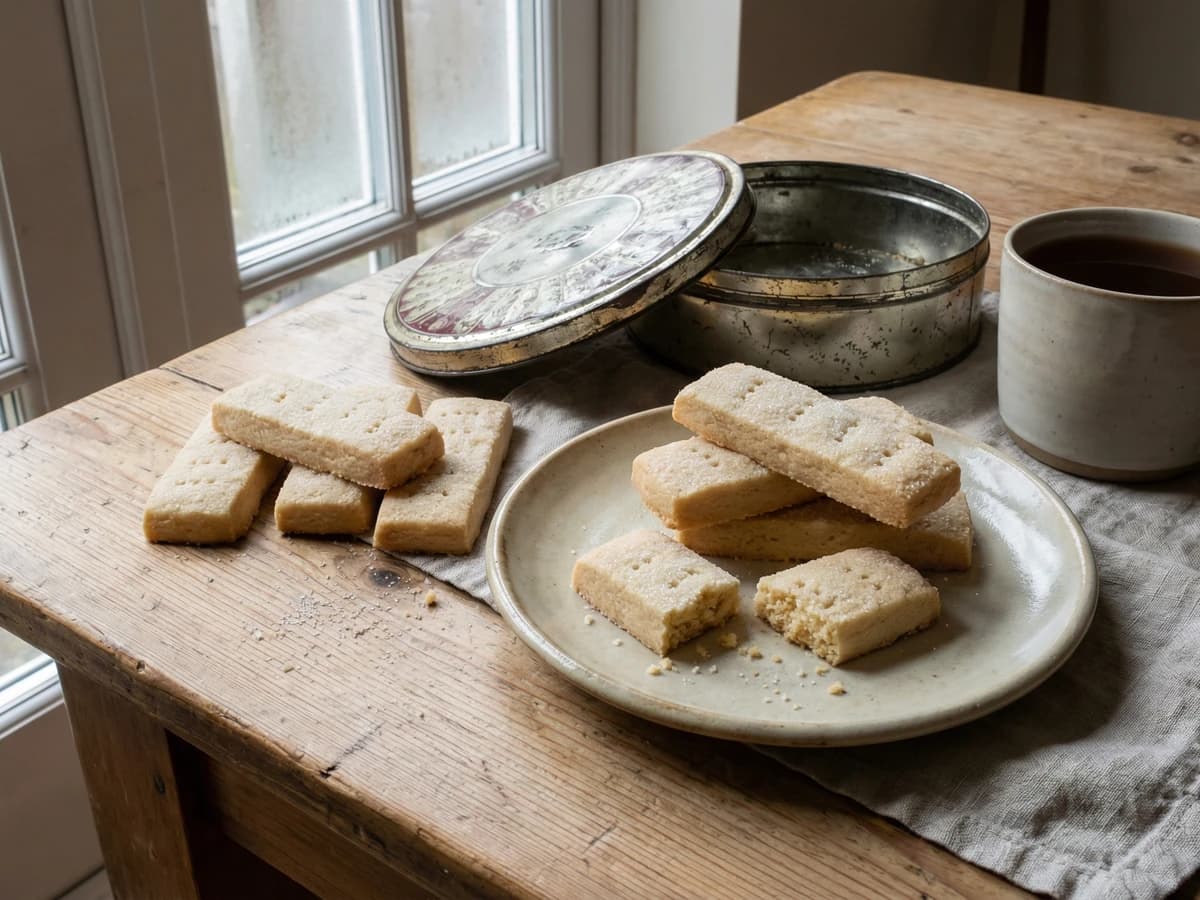
All-Butter Shortbread Fingers
The plainest biscuit in the tin and the hardest one to stop eating, three ingredients and a slow oven turning good butter into something quietly perfect with a cup of tea.
A cooking platform built around craft, culture, and the stories behind what we eat.
Created by Chef Thomas
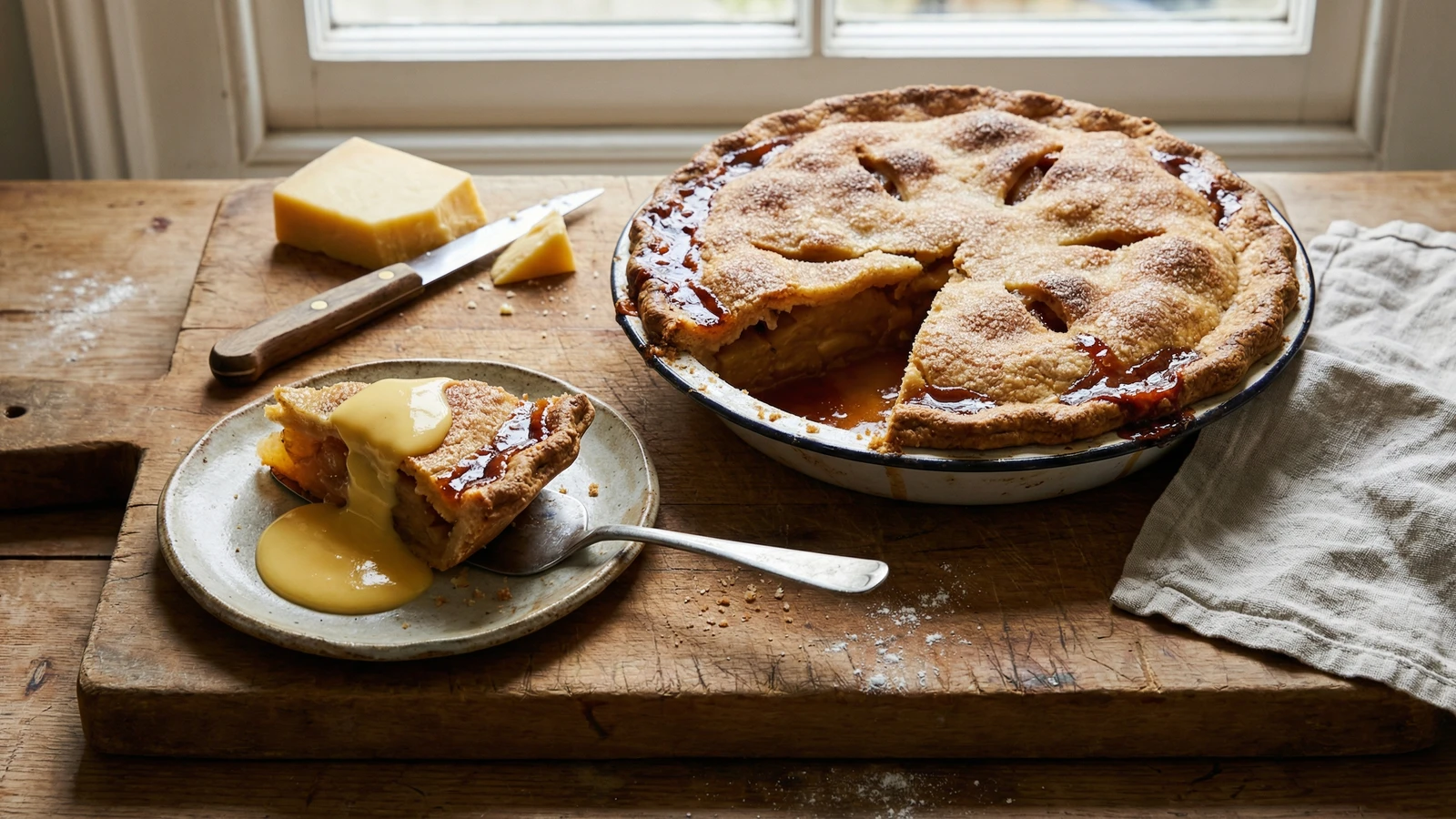
A proper Bramley apple pie with a buttery shortcrust and a filling that collapses into tart, fluffy puree, the kind of pudding the back end of October was made for.
October has arrived properly now. The light is shorter, the kitchen is darker by five o'clock, and the Bramleys at the market have started to come in by the crateload, knobbly and green and impossible to mistake for anything else. This is their season. A Bramley is no good in a fruit bowl. It exists to be cooked, and it exists, more than anything else, to be made into a pie.
There's something about a pie at the end of an autumn supper that asks for nothing else from the evening. The crust is gold and shattered with sugar, the apples inside have gone soft and tart and almost fluffy, and the kitchen smells of butter and lemon and something nearly like Christmas, though we're not there yet. We're only making dinner. But a pie like this turns dinner into an occasion without ever raising its voice.
I grew up with apple pie served with proper custard, but my grandmother used to put a wedge of sharp Cheddar on the side and I've never quite gotten over it. The salt against the sweet, the cool cheese against the warm fruit, it makes a kind of sense the first time you try it. Don't take my word for it. Try both. Your kitchen, your rules.
I wrote it down in the notebook this week: "Bramleys, October, rain on the windows. Pie crust gone almost too dark on one edge. Better for it." That's the whole entry. Some meals don't need more.
Quantity
300g
plus extra for dusting
Quantity
pinch
Quantity
60g
cubed
Quantity
60g
cubed
Quantity
1 tablespoon
Quantity
1
Quantity
3-4 tablespoons
Quantity
1kg (about 4 large)
Quantity
100g, plus more to taste
Quantity
1 tablespoon
Quantity
1/2 teaspoon
Quantity
a few gratings
freshly grated
Quantity
from 1/2 lemon
Quantity
1 tablespoon
in small pieces
Quantity
1
beaten, for glazing
Quantity
for sprinkling
Quantity
to serve
| Ingredient | Quantity |
|---|---|
| plain flourplus extra for dusting | 300g |
| fine sea salt | pinch |
| cold unsalted buttercubed | 60g |
| cold lardcubed | 60g |
| caster sugar (for pastry) | 1 tablespoon |
| large egg yolk | 1 |
| ice-cold water | 3-4 tablespoons |
| Bramley apples | 1kg (about 4 large) |
| caster sugar (for filling) | 100g, plus more to taste |
| plain flour or cornflour | 1 tablespoon |
| ground cinnamon (optional) | 1/2 teaspoon |
| nutmegfreshly grated | a few gratings |
| lemon zest | from 1/2 lemon |
| unsalted butter (for filling)in small pieces | 1 tablespoon |
| eggbeaten, for glazing | 1 |
| demerara or caster sugar | for sprinkling |
| custard, double cream, or sharp Cheddar (optional) | to serve |
Tip the flour and salt into a large bowl. Add the butter and lard and rub them in with your fingertips, lifting your hands to let air in, until the mixture looks like coarse breadcrumbs with some larger flecks of fat still visible. Those flecks are what give you flake. Stir in the tablespoon of sugar. Mix the yolk with three tablespoons of cold water and add to the bowl, bringing it together with a knife and then your hands until it just forms a dough. Add the last spoonful of water only if it needs it. Stop the moment it comes together.
Divide the dough into two pieces, one slightly larger than the other. Pat each into a flat disc, wrap in cling film or beeswax wrap, and rest in the fridge for at least thirty minutes. This is not optional. Resting lets the gluten relax and the fat firm up, and it's the difference between a tender crust and a tough one.
Peel, core, and slice the Bramleys into thick wedges, about a centimetre across. Don't go thinner. Bramleys collapse fast and you want some of them to hold their shape against the puree. Toss them in a bowl with the sugar, the spoonful of flour, the cinnamon if you're using it, the nutmeg, and the lemon zest. Taste a slice. If your apples are particularly sharp, add another spoonful of sugar. Bramleys vary, and so should you.
Heat the oven to 200C/180C fan and put a heavy baking tray on the middle shelf to heat up. Lightly flour the worktop and roll out the larger disc of pastry into a circle big enough to line a 23cm pie dish with a little overhang. Lift it with the rolling pin and lay it gently into the dish, easing it into the corners without stretching. Stretched pastry shrinks back in the oven and you'll regret it.
Tip the apples into the pastry-lined dish, mounding them up generously in the middle. They'll cook down considerably, so be brave with the height. Dot the small pieces of butter over the top of the apples.
Roll out the second disc of pastry into a circle slightly larger than the dish. Brush the rim of the bottom crust with beaten egg, then lay the lid over the apples. Press the edges together firmly with your fingers or the tines of a fork to seal. Trim the overhang with a knife, leaving a small lip. Cut two or three short slashes in the centre of the lid for steam to escape.
Brush the whole top with beaten egg and scatter generously with sugar. Demerara if you have it, for a bit of crunch. Slide the pie onto the hot baking tray in the oven and bake for forty-five to fifty minutes. You're looking for a deep golden top, juices bubbling thickly through the slashes, and the smell of caramelizing apples filling the kitchen. Trust your nose. It knows before you do.
Let the pie rest for at least twenty minutes before cutting into it. The filling needs time to settle, and a hot Bramley pie cut too soon will run all over the plate. Serve in generous wedges with custard, a pour of double cream, or a thick wedge of sharp Cheddar. All three are correct. Pick your evening.
1 serving (about 180g)
Culinary guides, cultural storytelling, and the editorial depth that makes cooking meaningful.
Discover Culinary ExplorerChef Thomas
The plainest biscuit in the tin and the hardest one to stop eating, three ingredients and a slow oven turning good butter into something quietly perfect with a cup of tea.
Chef Thomas
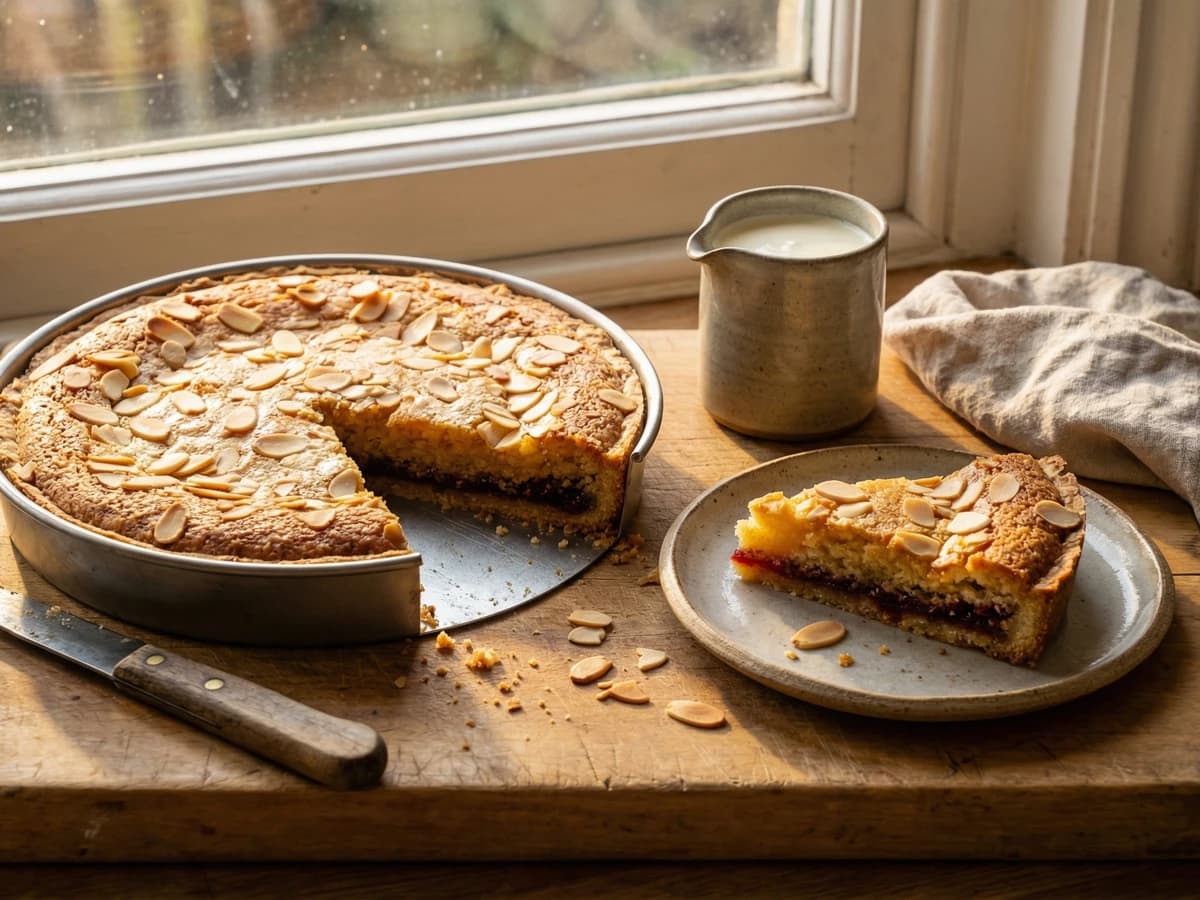
A proper Bakewell tart with buttery shortcrust, a thick layer of raspberry jam, and almond frangipane baked golden under a scattering of flaked almonds. No icing. No nonsense.
Chef Thomas
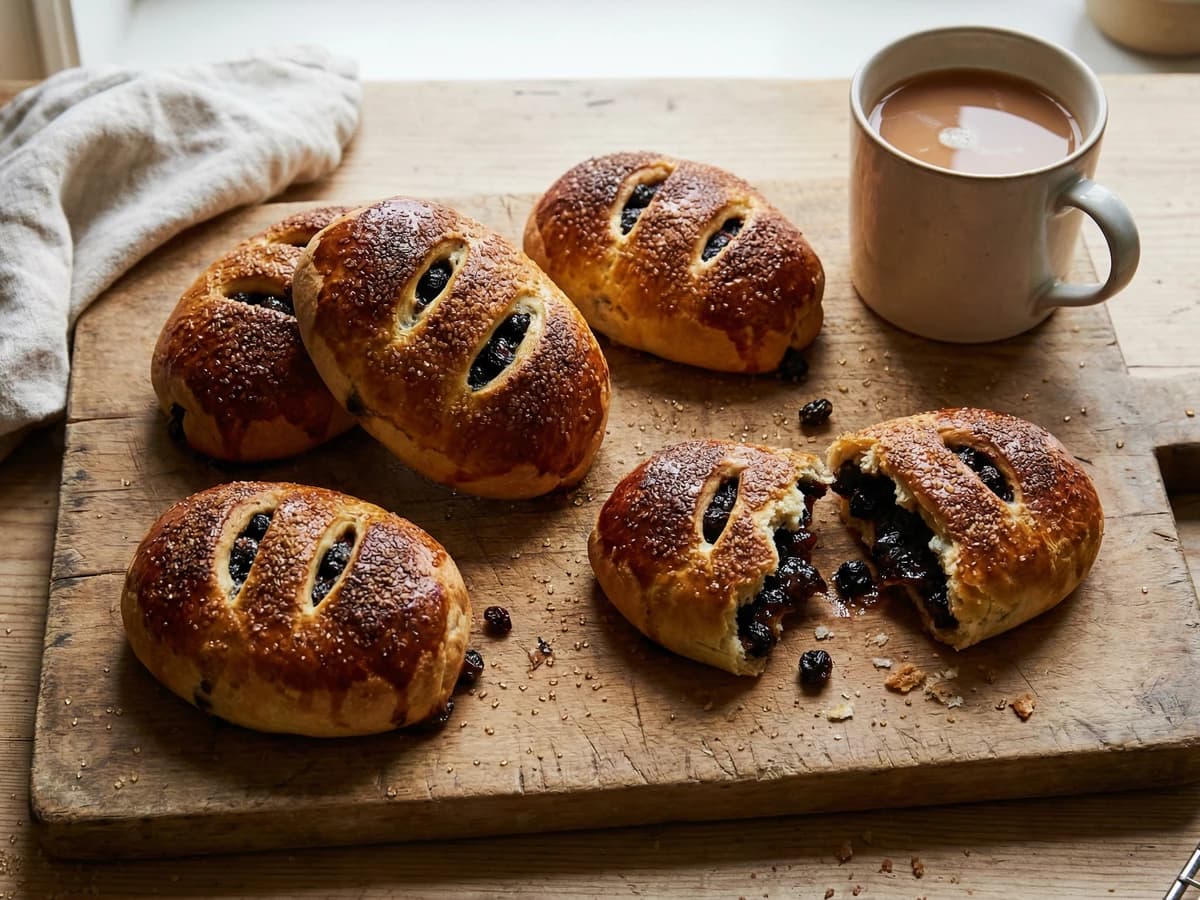
Oval pastries filled with rum-soaked currants and spice, baked until the tops crackle with sugar. The kind of thing to make on a wet Sunday afternoon when you want the kitchen to smell of something.
Chef Thomas
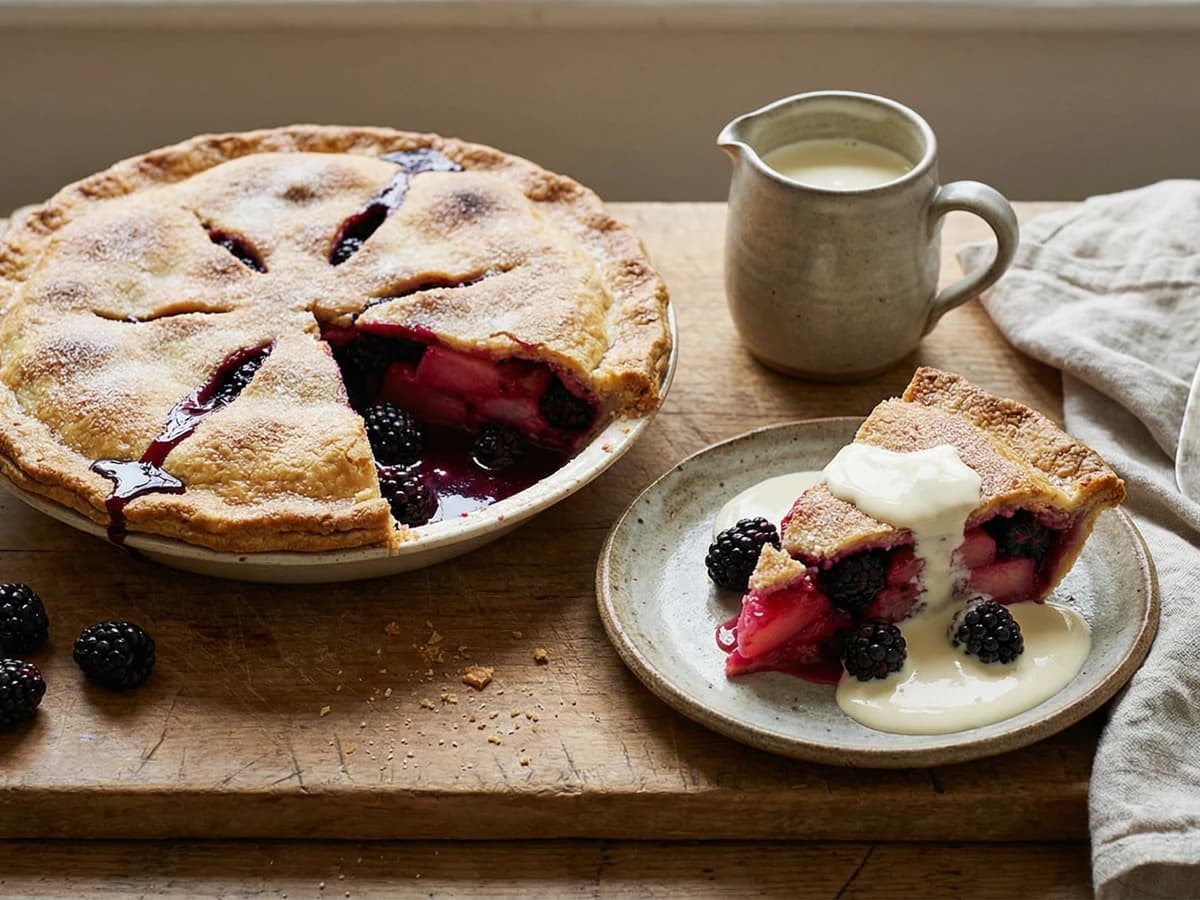
A proper hedgerow pie of Bramley apples and blackberries under a sugar-crusted pastry lid, the kind of pudding that turns a Sunday in September into something you'll remember.