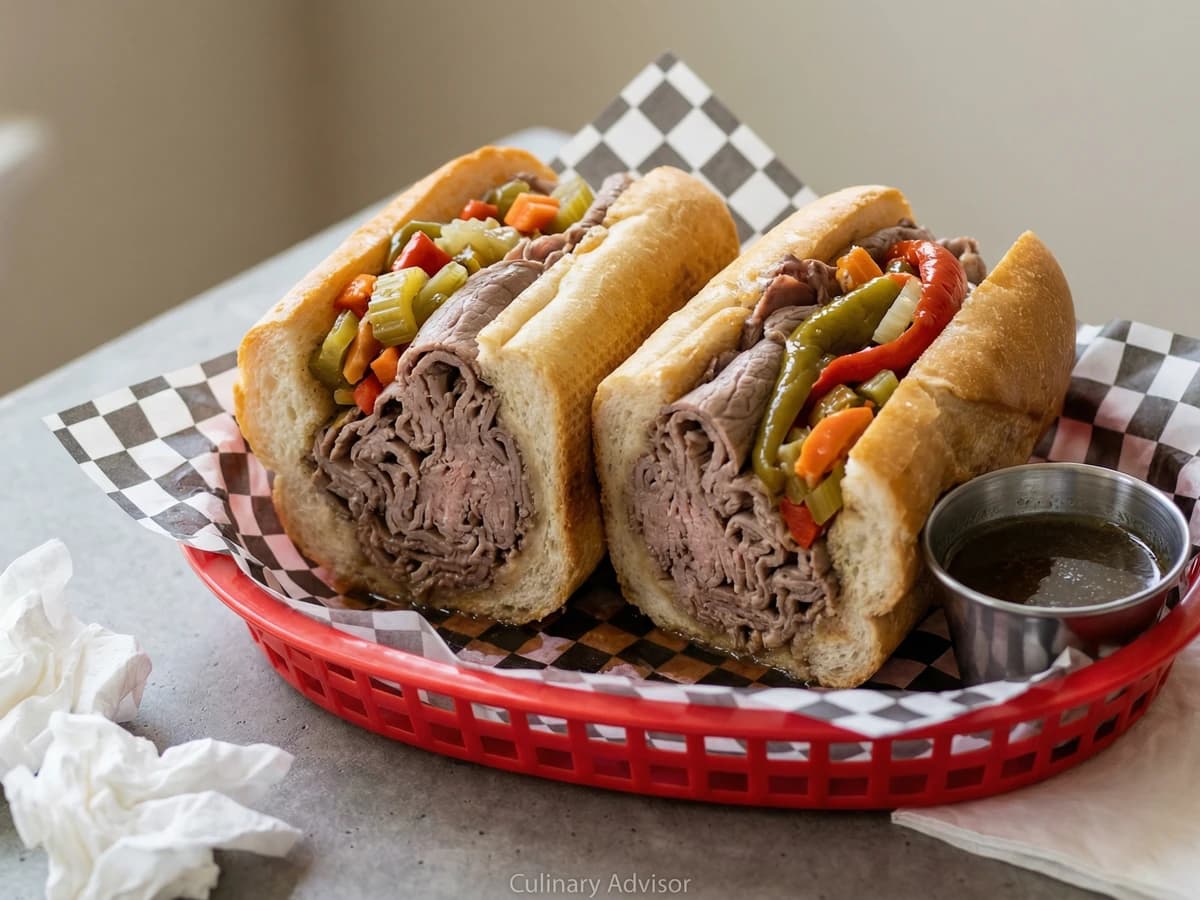
The sandwich that built South Philly: three Italian cured meats layered with sharp provolone, crisp vegetables, and a garlicky oil-and-vinegar dressing on bread that crackles when you bite through it.
Sandwiches & Wraps
Italian
Weeknight
Picnic
Meal Prep
25 min
Active Time
0 min cook•25 min total
Yield4 hoagies
The Italian hoagie is Philadelphia's gift to American sandwich making. Walk into any corner deli from Passyunk to Port Richmond and you'll find the same beautiful architecture: cured meats shingled like roof tiles, sharp provolone draped over the top, shredded lettuce and tomatoes dressed in oil and oregano, all of it stuffed into bread that shatters at first bite. This is not a submarine sandwich. It is not a hero. It is a hoagie, and the distinction matters to people who grew up eating them.
The name likely comes from Hog Island, the shipyard where Italian immigrants built warships during the First World War. They brought their lunches in crusty rolls stuffed with cold cuts and cheese. Those sandwiches became hoggies, then hoagies, and eventually the defining food of a city that takes its sandwiches as seriously as its sports teams.
What makes a proper hoagie is restraint in some places and generosity in others. The bread must have structure. Soft rolls collapse under the weight and soak through with dressing. The meats should be sliced thin enough to fold, never so thick they require chewing. The vegetables stay crisp because you dress them separately and add them at the last moment. Every element earns its place.
The technique, the tradition, and the story behind every dish.
Whisk together the olive oil, red wine vinegar, oregano, granulated garlic, salt, and pepper in a small bowl until emulsified. The dressing should taste sharp and garlicky, with the oregano perfuming every bite. This is not subtle. Taste it and adjust the vinegar if you want more punch. Set aside while you prepare the other components.
Make double and keep the extra refrigerated. It separates overnight but comes back together with a good shake.
2
Prepare the bread
Slice each hoagie roll lengthwise, cutting about three-quarters of the way through so the halves remain connected like a hinge. Open the rolls and press gently to create a trough for the fillings. If the bread is exceptionally crusty, remove a small amount of the soft interior to make room. Good hoagie bread should crackle when you squeeze it, then give way to a tender crumb inside.
3
Layer the meats
Fold each slice of meat loosely rather than laying it flat. This creates texture and pockets that catch the dressing. Arrange the capicola along the bottom half of each roll first, slightly overlapping. Follow with the salami, then the ham. You want roughly two ounces of each meat per sandwich. The layers should billow, not stack flat like tiles.
Ask your deli counter to slice the meats fresh and thin. Pre-packaged cold cuts lack the supple texture you need for proper folding.
4
Add the cheese
Drape the provolone slices over the meat in a single layer, slightly overlapping. The cheese acts as a barrier between the wet vegetables and the bread, and its sharpness cuts through the richness of the cured meats. Two slices per sandwich is about right. Let the edges hang over slightly for visual appeal.
5
Dress the vegetables
In a medium bowl, toss the shredded lettuce with about half the dressing until lightly coated. The lettuce should glisten but not swim. Add the tomato slices and onion rings on top of the cheese layer. Mound the dressed lettuce generously over the tomatoes and onions. The vegetables should threaten to spill out. This is not a tidy sandwich.
Dress the lettuce separately right before building. Dressed lettuce added to a sandwich made hours ago turns to wet confetti.
6
Add peppers if using
For those who want heat, scatter sliced hot cherry peppers over the vegetables. For sweetness, lay strips of roasted red pepper alongside. Many Philadelphians insist on both. The combination of sharp, sweet, and spicy is what separates an excellent hoagie from a merely good one.
7
Finish and serve
Drizzle the remaining dressing over the vegetables and across the exposed bread on the top half of the roll. The bread should absorb some of the oil without becoming soggy. Close the sandwich gently, pressing just enough to compact the fillings without crushing them. Cut each hoagie in half on a sharp diagonal. Wrap in butcher paper if transporting, or serve immediately on a plate that can catch the inevitable drips.
Chef Tips
•The bread is non-negotiable. Seek out a proper Italian bakery roll with a shatteringly crisp crust and soft interior. Amoroso's is the Philadelphia standard, but any quality Italian roll with sesame seeds will serve. Soft hoagie rolls from the supermarket bread aisle produce an inferior sandwich.
•Sharp provolone has more character than mild. If your deli offers both, choose sharp. The slight bite stands up to the fatty richness of the cured meats.
•Traditional Philadelphia hoagies use iceberg lettuce, not romaine or mixed greens. The crunch matters more than nutritional virtue here. Shred it fine so it distributes evenly.
•For a proper meat ratio, think of it this way: the meats should be abundant enough that you taste them in every bite, but not so thick that you're chewing through a wall of protein. Each slice folded loosely, about two ounces per meat variety, creates the right balance.
Advance Preparation
•The dressing can be made up to one week ahead and refrigerated. Shake vigorously before using.
•For picnics and packed lunches, wrap the dressed hoagie tightly in butcher paper, then aluminum foil. The sandwich improves slightly as it sits for thirty minutes to an hour, the dressing soaking into the bread just enough.
•Never refrigerate a fully assembled hoagie for more than a few hours. The bread suffers. For meal prep, store components separately: meats and cheese wrapped together, vegetables prepped but undressed, dressing in a jar. Assemble when ready to eat.
•If making hoagies for a crowd, set up an assembly line with all components in order. Four sandwiches take about five minutes once you have a rhythm.
Frequently Asked Questions
Nutrition Information
1 serving (about 610g)
Calories
1520 calories
Total Fat
106 g
Saturated Fat
30 g
Trans Fat
0 g
Unsaturated Fat
70 g
Cholesterol
150 mg
Sodium
2450 mg
Total Carbohydrates
51 g
Dietary Fiber
3 g
Sugars
5 g
Protein
84 g
Where cooking meets culture.
Culinary guides, cultural storytelling, and the editorial depth that makes cooking meaningful.