
Chef Dimitra
Athenian Freddo Espresso (Φρέντο Εσπρέσο)
Athens made espresso Greek by serving it cold: a double shot shaken with ice until the crema turns thick, then poured over cubes for the cafe standard.
A cooking platform built around craft, culture, and the stories behind what we eat.
Created by
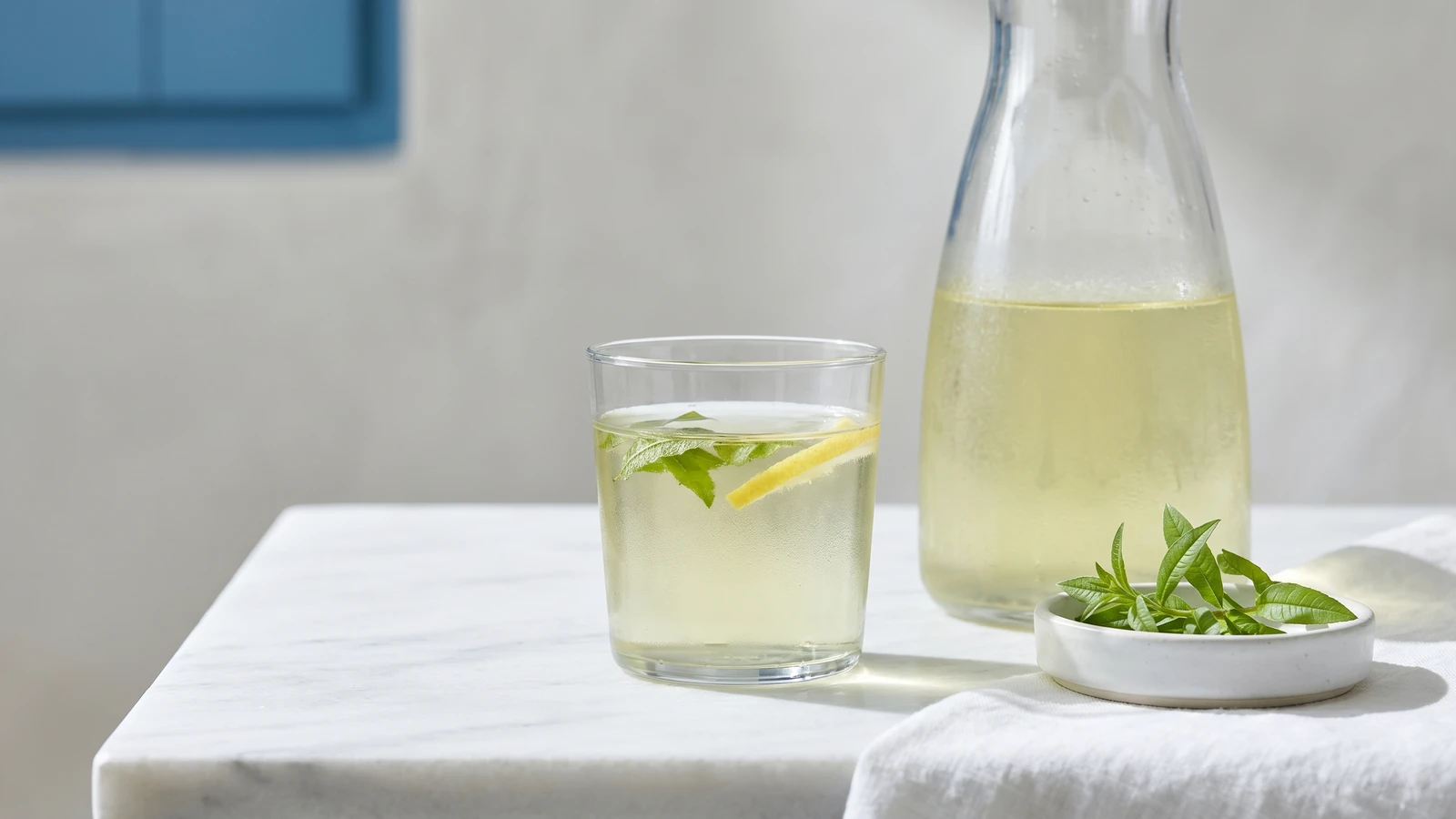
Ionian louiza is the garden-pot lemon verbena infusion, bright, pale, and clean, served hot after food or cold over ice when the afternoon is hard.
Ionian louiza is lemon verbena tea from the courtyard pot, the kind of drink that belongs to summer houses and shaded balconies from Corfu down to Zakynthos. It is pale in the cup, almost shy, but the scent is sharp and clean: lemon leaf, not lemon juice.
The method is small, and it matters. Tear the leaves before steeping them. Don't mince them, don't boil them hard, and don't leave them sulking in the pot until they turn bitter. Tear, cover, wait. That is enough.
I keep louiza for the end of a meal, especially outdoors, when the plates are cleared and no one wants another sweet. In my notebook the measures are simple because the drink is simple. Λίγα και καλά: good leaves, fresh water, patience for five minutes.
Louiza, Aloysia citriodora, reached Europe from South America in the late eighteenth century and took its Greek name through the European name Louisa. In the Ionian Islands, where Venetian and later European garden plants entered household courtyards early, it became one of the common herbs dried for domestic infusions. Its place in Greek cooking is not as a formal tea-house drink, but as the home tisane served after food and in hot weather.
Quantity
12g
rinsed and gently dried
Quantity
1 liter
Quantity
2 thin strips
yellow part only
Quantity
1 tablespoon
Quantity
as needed
| Ingredient | Quantity |
|---|---|
| fresh lemon verbena leaves (louiza)rinsed and gently dried | 12g |
| fresh water | 1 liter |
| unwaxed lemon peelyellow part only | 2 thin strips |
| Greek thyme honey (optional) | 1 tablespoon |
| ice (optional) | as needed |
Rinse the louiza and pat it dry. Tear the leaves once or twice with your fingers before they meet the water. This is the step that decides the cup: tearing wakes the lemon oils, while chopping bruises the herb too hard and can bring a green bitterness.
Bring 1 liter of fresh water just to a boil, then take it off the heat and wait 1 minute. Louiza wants hot water, not a rolling boil sitting on the leaves.
Put the torn louiza and lemon peel in a teapot or heatproof jug. Pour over the hot water, cover, and steep for 5 minutes if using fresh leaves, or 7 minutes if using dried. The color stays pale. Trust the fragrance, not the shade.
Strain into cups. Sweeten lightly with thyme honey only if you want it, and serve hot after a meal, or cool it to room temperature and chill it for the table later.
For a cleaner summer glass, combine the torn leaves, lemon peel, and cold water in a covered jug. Refrigerate for 6 to 8 hours, then strain and pour over ice. It will taste softer and rounder than the hot infusion.
1 serving (about 250g)
Culinary guides, cultural storytelling, and the editorial depth that makes cooking meaningful.
Discover Culinary ExplorerChef Dimitra
Athens made espresso Greek by serving it cold: a double shot shaken with ice until the crema turns thick, then poured over cubes for the cafe standard.

Chef Dimitra
Athens cafe freddo cappuccino is iced double espresso crowned with cold afrogala, the dense milk foam that makes the drink clean, bitter, and properly Greek.

Chef Dimitra
Attiki lemonada is the kafeneio summer glass: fresh lemon juice, a light syrup, and a little zest steeped just long enough to smell like the peel.

Chef Dimitra
Chamomili from Greek Macedonia is a cup of dried spring flowers, steeped covered until pale gold and apple-sweet. The rule is plain: hot water, patient steeping, no boiling.