
Chef Graziella
Cavolo Cappuccio in Insalata
The cabbage slaw of the Alto Adige, where Austrian traditions meet Italian restraint. Caraway seeds give it character, vinegar gives it brightness, and time gives it depth.
A cooking platform built around craft, culture, and the stories behind what we eat.

Created by
The rice salad Italians pack for the beach, the train, the Sunday picnic. Dressed while warm, rested until the flavors become one, served at the temperature where you can actually taste it.
Every Italian family has their insalata di riso. It appears on ferragosto, when the cities empty and everyone escapes to the sea. It travels in ceramic bowls wrapped in cloth to picnics in the hills. It waits in refrigerators for whoever comes home hungry. This is not a composed salad meant to impress. It is practical food, meant to feed people well when the kitchen is too hot for real cooking.
The secret is dressing the rice while it is still warm. Hot rice drinks the oil and vinegar, absorbing flavor into each grain. Cold rice resists. It sits there with the dressing pooled around it, never becoming one thing. You must work quickly after draining, before the grains cool and close themselves off.
Americans may find the combination strange: pickled vegetables, olives, capers, tuna. Where is the fresh corn? The avocado? This is not that kind of salad. Insalata di riso is Mediterranean through and through, built on preserved ingredients that intensify with time. In Italy, you can buy jars of condiriso, vegetables already pickled and cut specifically for this purpose. Here, giardiniera serves well. What matters is the balance of acid, salt, and richness.
Insalata di riso became a fixture of Italian summer eating in the postwar years, when refrigeration made it practical to prepare large batches and eat over several days. The dish reflects the Italian genius for preserved ingredients: olives, capers, pickled vegetables, oil-packed tuna. By the 1960s, Italian food companies began selling condiriso, pre-mixed vegetables designed specifically for rice salad, and the dish cemented its place as essential summer fare.
Quantity
2 cups (400g)
Quantity
1/2 cup, divided
Quantity
3 tablespoons
Quantity
1 jar (7 ounces)
drained and flaked
Quantity
1 cup
drained and chopped if large
Quantity
1/2 cup
pitted
Quantity
1/2 cup
pitted
Quantity
4
sliced thin
Quantity
2 tablespoons
rinsed if salt-packed
Quantity
1 small
diced small
Quantity
1 small
diced small
Quantity
1
diced fine
Quantity
2 tablespoons
chopped
Quantity
to taste
Quantity
to taste
freshly ground
| Ingredient | Quantity |
|---|---|
| Italian rice (Arborio or Carnaroli) | 2 cups (400g) |
| extra virgin olive oil | 1/2 cup, divided |
| red wine vinegar | 3 tablespoons |
| Italian tuna in olive oil (tonno)drained and flaked | 1 jar (7 ounces) |
| mixed pickled vegetables (giardiniera or condiriso)drained and chopped if large | 1 cup |
| black olives (Taggiasca or Gaeta)pitted | 1/2 cup |
| green olivespitted | 1/2 cup |
| cornichons or small picklessliced thin | 4 |
| capersrinsed if salt-packed | 2 tablespoons |
| red bell pepperdiced small | 1 small |
| yellow bell pepperdiced small | 1 small |
| celery stalkdiced fine | 1 |
| flat-leaf parsleychopped | 2 tablespoons |
| kosher salt | to taste |
| black pepperfreshly ground | to taste |
Bring a large pot of well-salted water to a boil. Add the rice and cook until tender but with a slight firmness at the center, about 15 minutes. This is not risotto. You cook the rice like pasta, in abundant water, so each grain cooks evenly and remains separate. Taste a grain at 12 minutes and every minute after. When done, drain thoroughly in a fine-mesh strainer.
Transfer the drained rice immediately to a large, wide bowl. While the rice is still warm, drizzle with half the olive oil and all the vinegar. Toss gently with a fork, lifting and separating the grains. The warm rice absorbs the dressing and develops flavor that cold rice cannot. Spread the rice in the bowl and let it cool to room temperature. Do not refrigerate yet.
While the rice cools, prepare your vegetables. The pickled vegetables should be drained well and chopped to bite-size pieces if necessary. The fresh peppers and celery should be cut smaller than you think, no larger than the rice grains themselves. This ensures every forkful contains a balanced variety.
When the rice has cooled to room temperature, add the flaked tuna, pickled vegetables, both olives, cornichons, capers, peppers, and celery. Drizzle with the remaining olive oil. Toss gently but thoroughly, turning from the bottom so nothing hides at the base of the bowl. Season with salt and pepper. Go carefully with the salt. The olives, capers, and pickled vegetables bring considerable salt already.
Cover the salad and refrigerate for at least one hour, or up to two days. The flavors marry and deepen. Before serving, remove from the refrigerator 30 minutes early. Cold dulls flavor. Taste again and adjust the seasoning. Add the chopped parsley, toss once more, and serve at cool room temperature.
1 serving (about 240g)
Culinary guides, cultural storytelling, and the editorial depth that makes cooking meaningful.
Discover Culinary ExplorerChef Graziella
The cabbage slaw of the Alto Adige, where Austrian traditions meet Italian restraint. Caraway seeds give it character, vinegar gives it brightness, and time gives it depth.

Chef Graziella
Squid poached for mere seconds, dressed while still warm with good olive oil and lemon, scattered with celery and olives. The restraint of coastal Italian cooking, where the sea provides and the cook does not interfere.
Chef Graziella
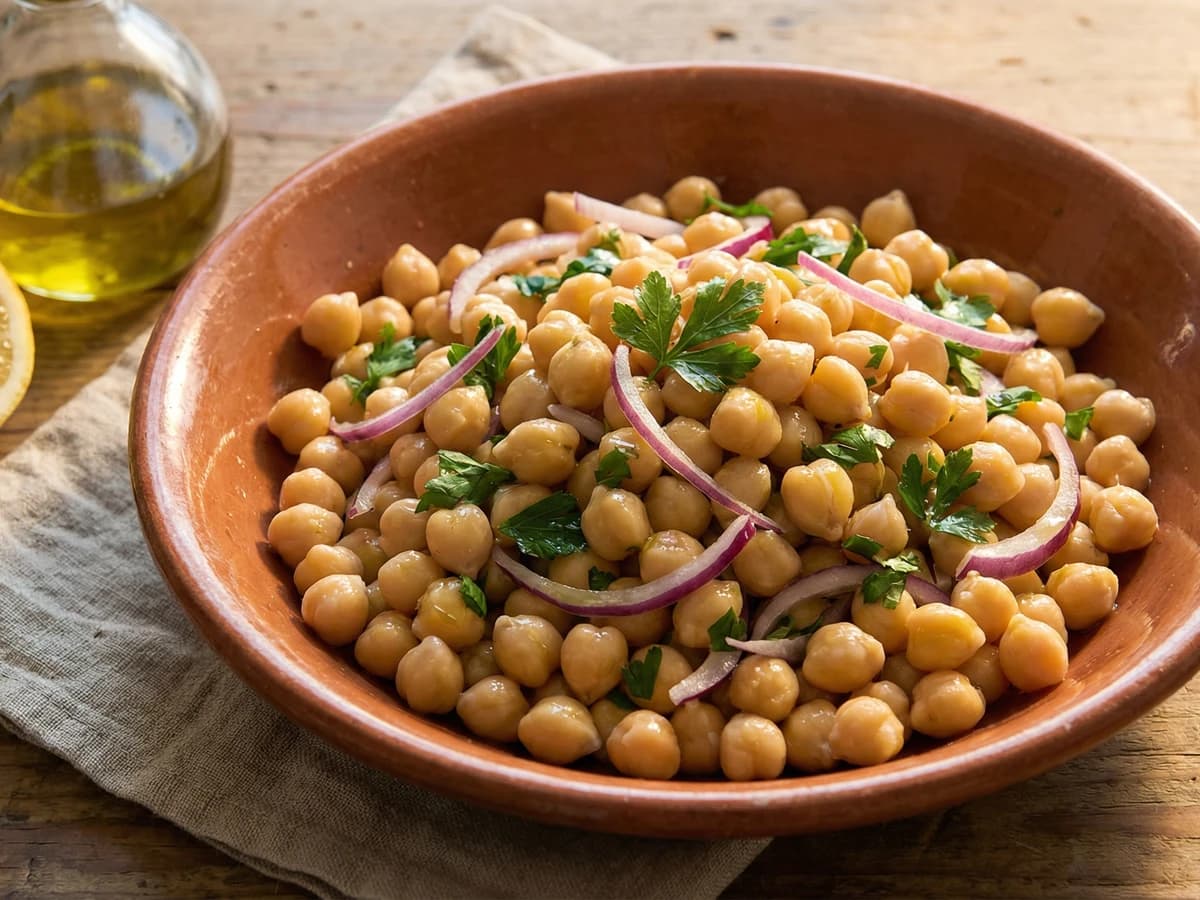
Warm chickpeas drink in olive oil and lemon as cold ones never can. This is the salad of Italian home cooks: five ingredients, honest technique, and nothing to hide behind.
Chef Graziella
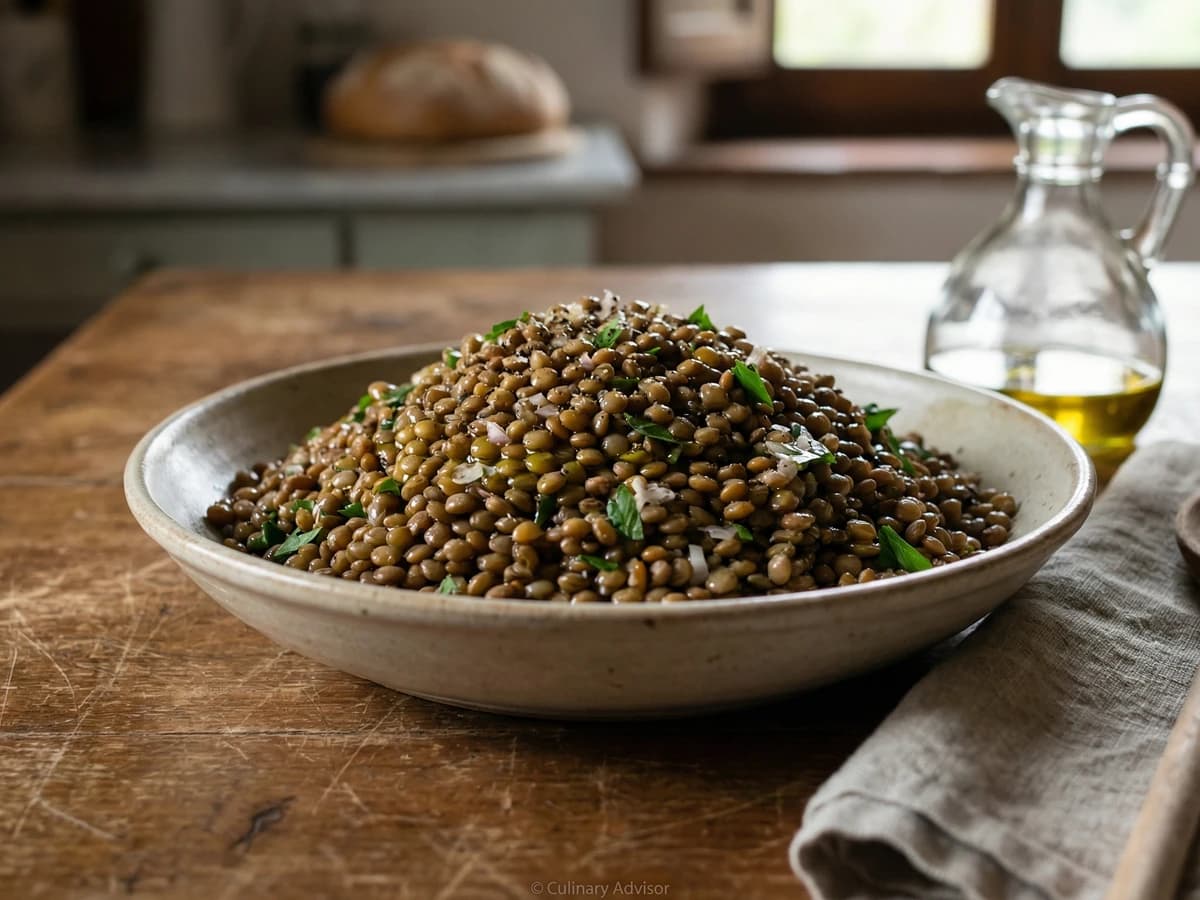
The tiny lentils of Umbria's high plateau, cooked until just tender and dressed simply with olive oil, vinegar, and parsley. What you keep out matters as much as what you put in.