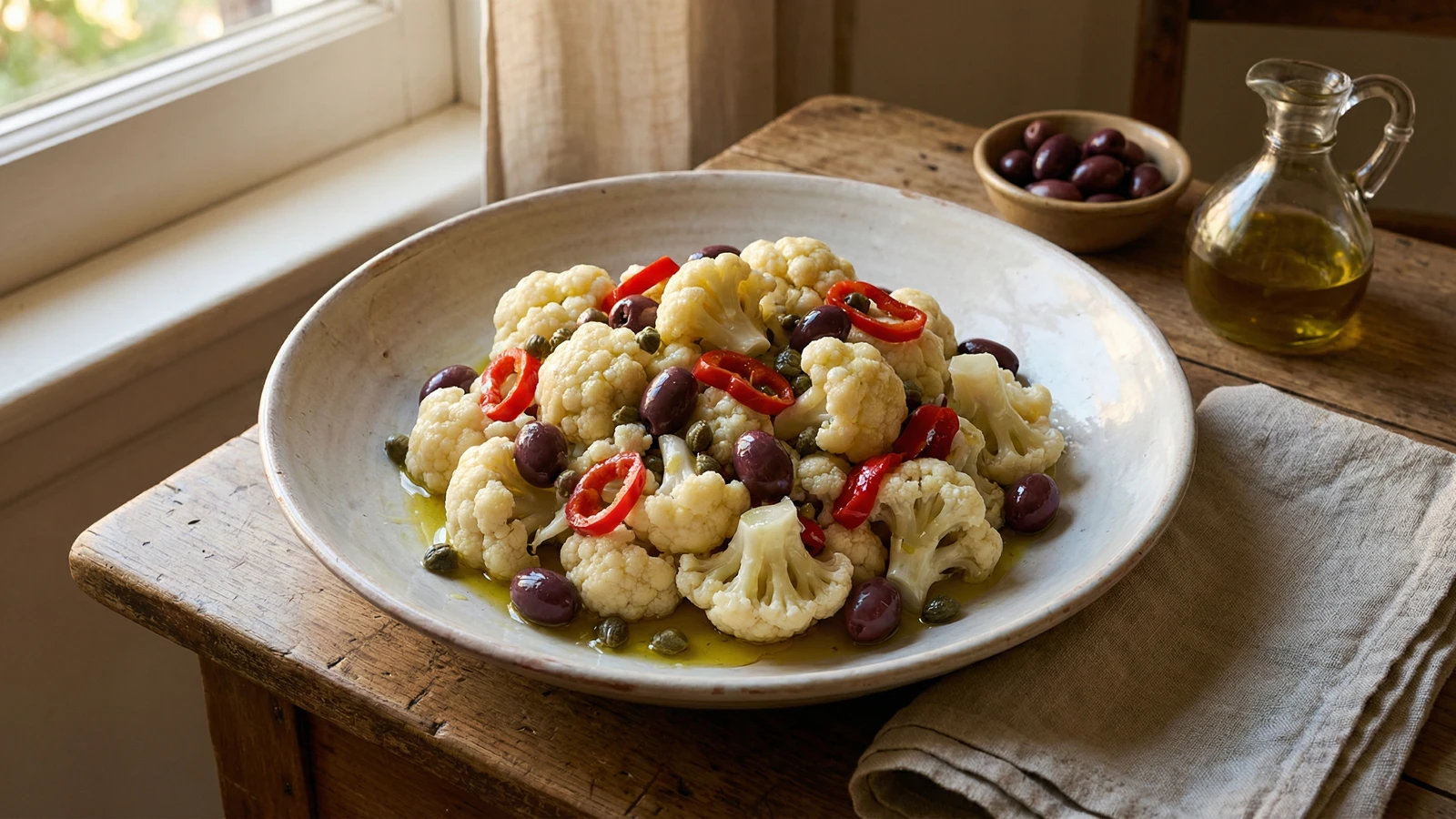
The Christmas salad of Naples, built once and replenished throughout the holidays. Cauliflower, olives, capers, and pickled peppers create a harmony that improves with time.
Salads
Italian, Neapolitan
Christmas
Holiday
Make Ahead
30 min
Active Time
10 min cook•40 min total
Yield8 servings
Neapolitan families do not make this salad for one meal. They make it for the season. The rinforzo, the reinforcement, is not a suggestion but a tradition: as the bowl empties, you add more cauliflower, more olives, more peppers, and dress them again. The salad lives on the table from Christmas Eve through Epiphany, a constant presence during days when the kitchen is already exhausted from larger productions.
The genius is in what the salad does not require. No cooking during the chaos of the holidays. No fussing over timing. You assemble it once, then tend to it like a garden. The vinegar from the pickled peppers mingles with the olive oil, the capers bloom in the brine, and the cauliflower absorbs everything while holding its shape.
Americans may find the combination unusual: cauliflower with olives and pickled things. But this is winter food from a southern Italian port city, where preserved ingredients carried families through lean months. The pickled peppers, the salt-packed capers, the oil-cured olives: these are the pantry of Campania, assembled with restraint into something that tastes of celebration.
Insalata di rinforzo appears on Neapolitan tables during the Christmas season, traditionally served alongside baccalà and other dishes of La Vigilia, the meatless Christmas Eve feast. The name means 'reinforcement salad,' referring to the practice of replenishing it with fresh ingredients as portions are eaten. Families maintain the same bowl from December 24th through January 6th, the Feast of the Epiphany.
The technique, the tradition, and the story behind every dish.
Bring a large pot of well-salted water to a boil. Add the cauliflower florets and cook until tender but not soft, 4 to 5 minutes. The florets must retain their shape and offer slight resistance when pierced with a knife. Drain immediately and spread on a clean kitchen towel to cool completely. The cauliflower must be dry. Wet cauliflower will dilute the dressing and turn the salad watery within hours.
Test one floret after 4 minutes. Overcooked cauliflower crumbles and ruins the salad. You want firmness that will hold up through days of marinating.
2
Prepare the capers
If using salt-packed capers, soak them in cool water for 20 minutes, changing the water twice. Drain and pat dry. Salt-packed capers have superior flavor and texture to those swimming in brine. The soaking removes excess salt while preserving their intense, floral quality.
3
Combine the salad
In a large serving bowl, combine the cooled cauliflower, olives, prepared capers, sliced pickled peppers, and giardiniera. If using anchovies, tear them into pieces and scatter throughout. The anchovies are traditional but optional. Toss gently to distribute everything evenly.
4
Dress the salad
Drizzle the olive oil and vinegar over the salad. Season with salt (sparingly, as the capers and olives contribute salt) and freshly ground black pepper. Toss again, gently, using your hands if necessary to coat every floret without breaking them.
Taste before adding salt. The capers, olives, anchovies, and pickled vegetables all bring salt. You may need none at all.
5
Rest before serving
Cover and refrigerate for at least 2 hours, or overnight. The salad improves as the flavors meld. Before serving, taste and adjust the vinegar and oil. The cauliflower will have absorbed some dressing. Add more oil if it seems dry. Bring to cool room temperature for the best flavor.
6
Reinforce as tradition demands
As you eat the salad over the following days, add more cauliflower, olives, and peppers to replenish it. Dress the additions lightly before folding them in. This is the rinforzo, the reinforcement that gives the salad its name. A properly maintained insalata di rinforzo can last through the Feast of the Epiphany.
Chef Tips
•Gaeta olives, small and purple-black with a mild, fruity flavor, are traditional. Kalamata olives work but will shift the flavor toward something more Greek than Neapolitan. Whatever you use, leave them unpitted. Pitted olives lose their texture and weep into the dressing.
•Papaccelle, the small pickled sweet peppers of Campania, can be difficult to find outside Italy. Substitute any good-quality pickled sweet pepper, avoiding the overly vinegary varieties in supermarket jars. Italian delicatessens often carry proper ones.
•The anchovies are optional but add depth that salt alone cannot provide. If you include them, use good ones packed in olive oil, never the harsh, overly salty fillets from a tin.
•Do not dress the salad heavily at first. The vegetables release liquid as they sit, and you will add more dressing when you reinforce. A light hand now prevents a pool of oil later.
Advance Preparation
•The salad should be made at least 2 hours ahead but improves overnight. The flavors meld as it sits.
•Kept covered in the refrigerator and reinforced with fresh ingredients, the salad remains excellent for 5 to 7 days.
•Bring to cool room temperature 30 minutes before serving for the best flavor. Cold dulls the olive oil.
Frequently Asked Questions
Nutrition Information
1 serving (about 175g)
Calories
175 calories
Total Fat
16 g
Saturated Fat
2 g
Trans Fat
0 g
Unsaturated Fat
13 g
Cholesterol
1 mg
Sodium
555 mg
Total Carbohydrates
8 g
Dietary Fiber
3 g
Sugars
3 g
Protein
3 g
Where cooking meets culture.
Culinary guides, cultural storytelling, and the editorial depth that makes cooking meaningful.