
Chef Graziella
Cavolo Cappuccio in Insalata
The cabbage slaw of the Alto Adige, where Austrian traditions meet Italian restraint. Caraway seeds give it character, vinegar gives it brightness, and time gives it depth.
A cooking platform built around craft, culture, and the stories behind what we eat.
Created by
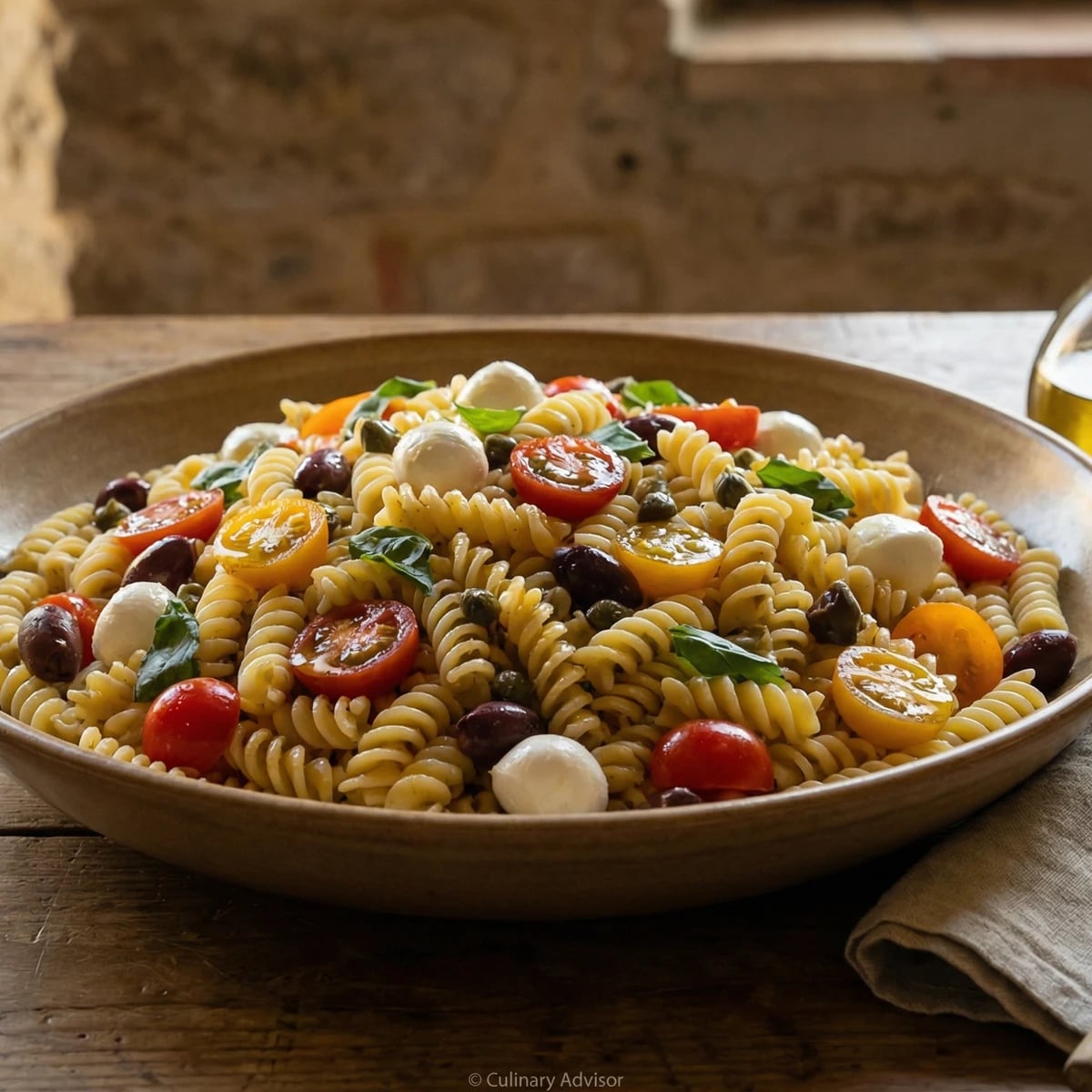
Cold pasta as Italians actually eat it: dressed while warm so it absorbs flavor, tossed with summer's best tomatoes and fresh mozzarella, served at room temperature when the flavors are alive.
Americans have ruined cold pasta salad with mayonnaise, canned vegetables, and overnight refrigeration. True Italian pasta fredda has none of these things. It has olive oil. It has summer vegetables at their peak. It has fresh herbs torn at the last moment. And it is served at room temperature, when flavors actually taste like something.
The technique that separates Italian cold pasta from American is simple but essential: dress the pasta while it is still warm. Warm pasta absorbs oil. Warm pasta absorbs vinegar. Cold pasta sits there like a stone in a river, letting everything wash past. If you learn nothing else from this recipe, learn this: dress it warm.
This is a summer dish. Do not make it in February with those pale, cottony tomatoes that taste like refrigerated water. Wait for July. Wait for tomatoes that smell like tomatoes. Wait for basil you can smell from across the room. Then make this, and understand why Italian cooks have no interest in mayonnaise-drowned pasta with canned olives.
Cold pasta dishes appeared in Italy after refrigeration made storing cooked pasta practical, but the tradition of room-temperature pasta dressed with oil stretches back much further. Southern Italian workers carried dressed pasta to the fields for midday meals long before anyone called it insalata di pasta. The modern version, with its summer vegetables and fresh cheese, became popular in the 1970s as Italian home cooks embraced lighter summer eating.
Quantity
1 pound
Quantity
1/2 cup, plus more for finishing
Quantity
3 tablespoons
Quantity
1 clove
lightly crushed
Quantity
1 pound
halved
Quantity
8 ounces
halved if using bocconcini
Quantity
1/2 cup
pitted
Quantity
2 tablespoons
rinsed and soaked
Quantity
1 small
sliced paper-thin
Quantity
1 large bunch (about 1 ounce)
leaves torn
Quantity
to taste
Quantity
to taste
freshly ground
| Ingredient | Quantity |
|---|---|
| fusilli or farfalle | 1 pound |
| extra virgin olive oil | 1/2 cup, plus more for finishing |
| white wine vinegar | 3 tablespoons |
| garliclightly crushed | 1 clove |
| cherry tomatoeshalved | 1 pound |
| fresh mozzarellahalved if using bocconcini | 8 ounces |
| Taggiasca or Gaeta olivespitted | 1/2 cup |
| salt-packed capersrinsed and soaked | 2 tablespoons |
| red onionsliced paper-thin | 1 small |
| fresh basilleaves torn | 1 large bunch (about 1 ounce) |
| kosher salt | to taste |
| black pepperfreshly ground | to taste |
In a small bowl, combine the olive oil and white wine vinegar. Add the crushed garlic clove and let it infuse while you prepare the other ingredients. The garlic will flavor the dressing gently. You will discard it before using. This is how garlic should work: as perfume, not presence.
Bring abundant salted water to a vigorous boil. The water should taste like the sea. Cook the pasta one minute less than the package directs. For cold pasta salad, the pasta will soften slightly as it sits. Mushy cold pasta is unforgivable.
Drain the pasta and immediately transfer it to a large, wide bowl. Do not rinse it. Remove the garlic clove from the dressing and discard it. Pour the dressing over the warm pasta and toss thoroughly. The warm pasta will absorb the oil and vinegar. This is the critical step that most Americans skip, and then they wonder why their pasta salad tastes like nothing.
Spread the dressed pasta in a single layer and let it cool to room temperature. This takes about 30 minutes. Do not refrigerate warm pasta. The condensation makes it gummy. Toss it occasionally as it cools to prevent sticking.
When the pasta has cooled completely, add the halved tomatoes, mozzarella, olives, drained capers, and sliced red onion. The onion should be paper-thin. Thick slices of raw onion overwhelm everything else. Toss gently to combine.
Tear the basil leaves and scatter them over the salad. Do not chop basil with a knife. The metal bruises the leaves and turns them black. Tear it with your hands. Season with salt and pepper, toss once more, and drizzle with additional olive oil.
Let the salad rest at room temperature for at least 30 minutes before serving. The flavors need time to marry. Taste and adjust the seasoning. If you made it ahead and refrigerated it, bring it to room temperature before serving. Cold pasta is dull pasta. Italians serve this at room temperature, and so should you.
1 serving (about 235g)
Culinary guides, cultural storytelling, and the editorial depth that makes cooking meaningful.
Discover Culinary Explorer
Chef Graziella
The cabbage slaw of the Alto Adige, where Austrian traditions meet Italian restraint. Caraway seeds give it character, vinegar gives it brightness, and time gives it depth.

Chef Graziella
The bean and tuna salad of Tuscany, where four ingredients become dinner. This is what Italian home cooks have made for generations when the pantry seems bare and the day is too warm for the stove.

Chef Graziella
The orange salad of Syracuse, where winter citrus needs nothing but olive oil, salt, and the restraint to add nothing more. A lesson in what happens when you trust perfect ingredients.

Chef Graziella
The Christmas Eve salad of the Venetian and Neapolitan table, where salt cod, patient soaking, and a generous hand with olive oil create something that tastes nothing like the preserved fish you started with.