
Chef Graziella
Cavolo Cappuccio in Insalata
The cabbage slaw of the Alto Adige, where Austrian traditions meet Italian restraint. Caraway seeds give it character, vinegar gives it brightness, and time gives it depth.
A cooking platform built around craft, culture, and the stories behind what we eat.
Created by
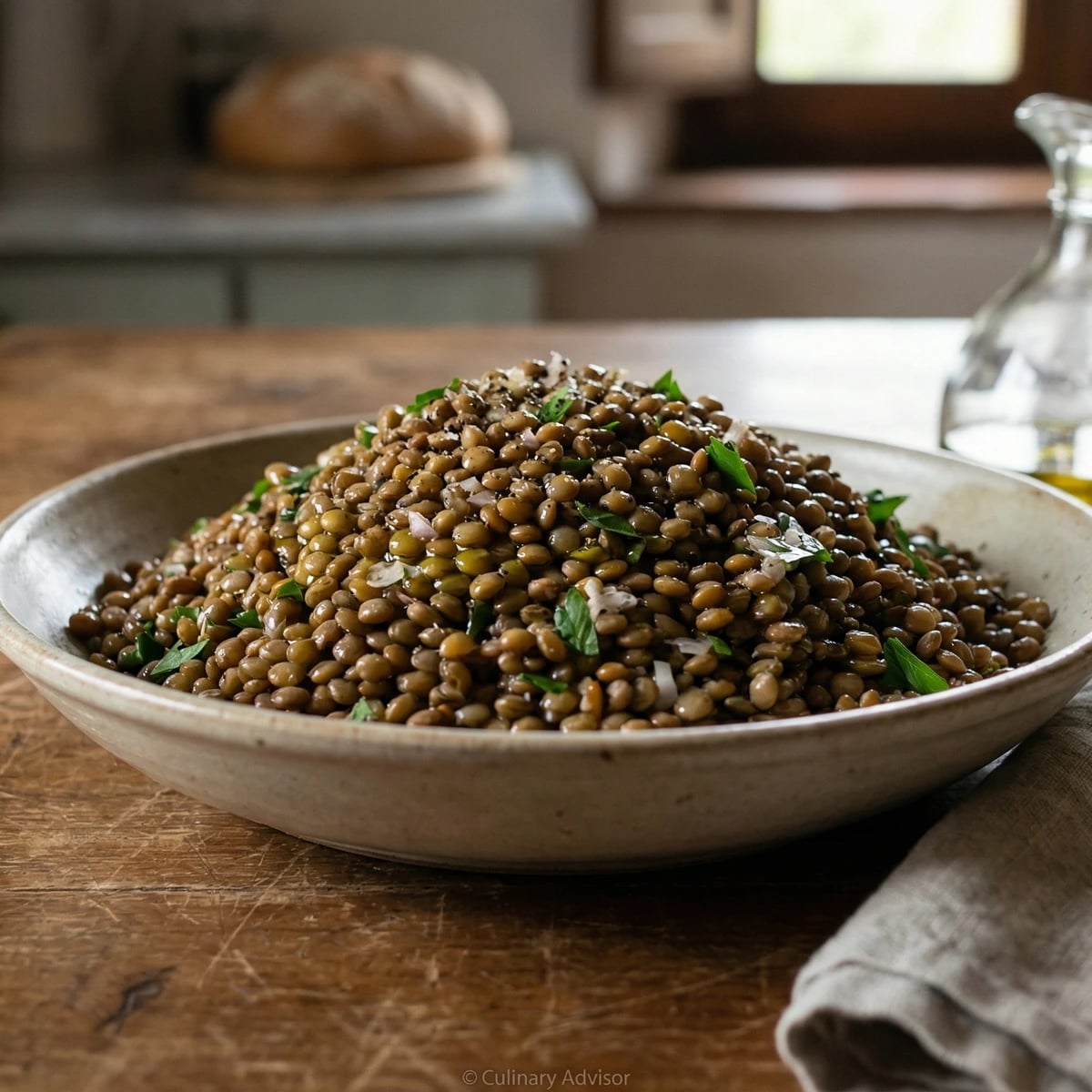
The tiny lentils of Umbria's high plateau, cooked until just tender and dressed simply with olive oil, vinegar, and parsley. What you keep out matters as much as what you put in.
In Umbria, in the shadow of the Sibillini Mountains, there is a high plateau called the Piano Grande. The lentils grown there are small, no bigger than the head of a nail, with skins so thin they cook evenly without soaking. Italians eat them on New Year's Eve because they resemble tiny coins, and coins mean prosperity. This is superstition, but it is also good sense. You should eat lentils more often.
The cooking is simple. The lentils simmer with aromatics until tender, then meet warm olive oil and a splash of vinegar. Chopped parsley. Salt. Nothing else needs to be there. The lentil itself has an earthy sweetness that heavier legumes lack. You do not want to bury it.
Americans want to add things. Feta cheese. Sun-dried tomatoes. Dried cranberries. I beg you not to do this. The lentil salads of Umbria are dressed simply because the lentils deserve attention. What you keep out is as significant as what you put in. If your lentils are good, you will not miss what is not there.
Castelluccio's lentils have been cultivated on the Piano Grande plateau since at least the 15th century, their survival ensured by an altitude too high for most other crops. The 2016 earthquake devastated the village and its famous lentil cooperative, yet farmers returned to plant the following spring. The IGP designation protects not just a product but a way of life that has persisted for five centuries.
Quantity
1 pound
Quantity
1
Quantity
2
peeled and left whole
Quantity
1 small
Quantity
1/2 cup, plus more for serving
Quantity
2 tablespoons
Quantity
1 small
minced fine
Quantity
3 tablespoons
chopped
Quantity
to taste
Quantity
to taste
freshly ground
| Ingredient | Quantity |
|---|---|
| lenticchie di Castelluccio | 1 pound |
| bay leaf | 1 |
| garlic clovespeeled and left whole | 2 |
| celery stalk with leaves | 1 small |
| extra virgin olive oil | 1/2 cup, plus more for serving |
| red wine vinegar | 2 tablespoons |
| shallotminced fine | 1 small |
| fresh flat-leaf Italian parsleychopped | 3 tablespoons |
| kosher salt | to taste |
| black pepperfreshly ground | to taste |
Spread the lentils on a baking sheet and pick through them, discarding any small stones or debris. Rinse under cold running water and drain. True Castelluccio lentils do not require soaking. Their thin skins cook through in the same time as their centers. This is one reason they are prized.
Place the lentils in a pot and cover with cold water by two inches. Add the bay leaf, whole garlic cloves, and celery stalk. Do not add salt. Bring to a gentle simmer over medium heat, then reduce heat to maintain the laziest bubble. Cook uncovered until the lentils are tender but still hold their shape, 25 to 35 minutes. They should offer slight resistance when bitten, not collapse into mush.
Drain the lentils thoroughly. Remove and discard the bay leaf, garlic, and celery. These have done their work. Transfer the warm lentils to a large serving bowl.
While the lentils are still warm, add the olive oil, vinegar, and minced shallot. Season generously with salt and pepper. Toss gently to coat. The warmth opens the lentils slightly, allowing them to absorb the dressing. This cannot be replicated with cold lentils.
Fold in the chopped parsley. Let the salad rest at room temperature for at least 20 minutes before serving. This allows the flavors to marry. Taste and adjust salt. The lentils will absorb seasoning as they sit.
Serve at room temperature or slightly warm, never cold from the refrigerator. Drizzle with additional olive oil and grind fresh pepper over the top. The lentils should glisten. If they look dry, you have not used enough oil.
1 serving (about 230g)
Culinary guides, cultural storytelling, and the editorial depth that makes cooking meaningful.
Discover Culinary Explorer
Chef Graziella
The cabbage slaw of the Alto Adige, where Austrian traditions meet Italian restraint. Caraway seeds give it character, vinegar gives it brightness, and time gives it depth.

Chef Graziella
The bean and tuna salad of Tuscany, where four ingredients become dinner. This is what Italian home cooks have made for generations when the pantry seems bare and the day is too warm for the stove.

Chef Graziella
The orange salad of Syracuse, where winter citrus needs nothing but olive oil, salt, and the restraint to add nothing more. A lesson in what happens when you trust perfect ingredients.

Chef Graziella
The Christmas Eve salad of the Venetian and Neapolitan table, where salt cod, patient soaking, and a generous hand with olive oil create something that tastes nothing like the preserved fish you started with.