
Chef Graziella
Cavolo Cappuccio in Insalata
The cabbage slaw of the Alto Adige, where Austrian traditions meet Italian restraint. Caraway seeds give it character, vinegar gives it brightness, and time gives it depth.
A cooking platform built around craft, culture, and the stories behind what we eat.
Created by
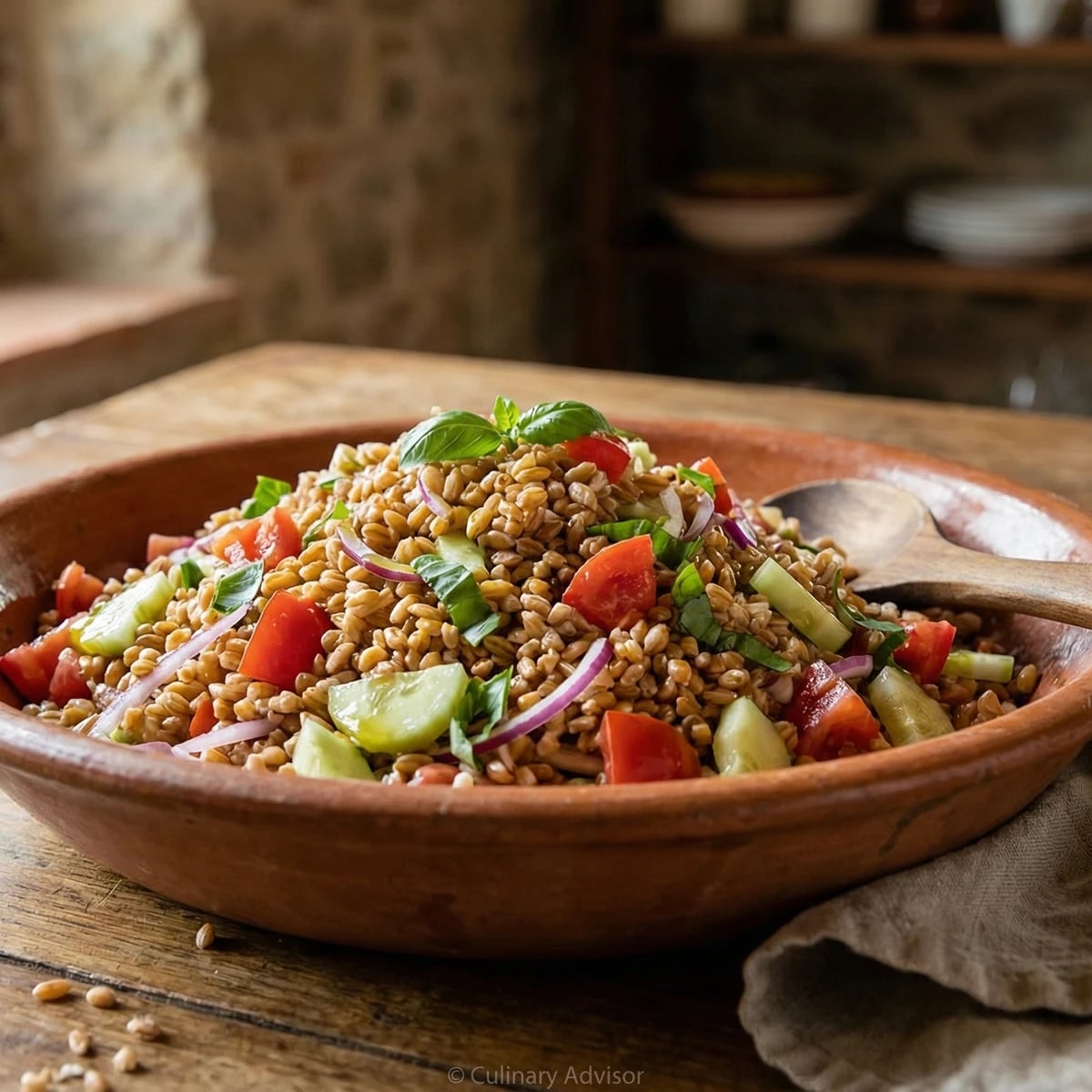
The ancient grain of the Roman legions, chewy and nutty, tossed with summer vegetables and dressed with nothing more than superb olive oil and a whisper of red wine vinegar. This is how Tuscans have eaten for centuries.
Farro is not a trendy grain. It is possibly the oldest cultivated wheat in existence, the grain that built Rome, the food that sustained legionaries on their march across the known world. That it has become fashionable in American restaurants does not change what it is: peasant food from the hills of Tuscany, where farmers grew it because soft wheat would not thrive in rocky soil.
This salad requires restraint. Americans want to add feta cheese, kalamata olives, sun-dried tomatoes, artichoke hearts. They want to turn a simple Tuscan grain salad into a Mediterranean greatest hits compilation. Resist this impulse. The farro itself has flavor: nutty, slightly sweet, with a pleasant chew that no other grain matches. Your job is to support that flavor, not bury it.
The vegetables must be ripe and seasonal. Tomatoes in January will ruin this dish no matter what else you do. Wait for summer. Wait for tomatoes that smell like tomatoes. The cucumber should be crisp, the herbs freshly picked. And the olive oil must be Tuscan if you can find it, grassy and peppery, the kind that catches in your throat. This is where you taste it most directly.
Farro, the emmer wheat of antiquity, gave Rome its word for flour: 'farina.' For centuries it was the primary grain of central Italy, falling from favor only when softer wheat varieties arrived from the East. Tuscan farmers in the Garfagnana valley never abandoned it, and their stubbornness preserved a tradition that now feeds the world's renewed appetite for ancient grains.
Quantity
1 1/2 cups
semi-perlato preferred
Quantity
to taste
Quantity
1 pound
at room temperature
Quantity
1 large, or 3 Persian cucumbers
Quantity
1/2 small
Quantity
1/3 cup, plus more for drizzling
Quantity
2 tablespoons
Quantity
1 small clove
Quantity
1/2 cup
torn
Quantity
2 tablespoons
chopped
Quantity
to taste
freshly ground
| Ingredient | Quantity |
|---|---|
| farrosemi-perlato preferred | 1 1/2 cups |
| kosher salt | to taste |
| ripe tomatoesat room temperature | 1 pound |
| English cucumber | 1 large, or 3 Persian cucumbers |
| red onion | 1/2 small |
| extra virgin olive oil | 1/3 cup, plus more for drizzling |
| red wine vinegar | 2 tablespoons |
| garlic | 1 small clove |
| fresh basil leavestorn | 1/2 cup |
| fresh flat-leaf parsleychopped | 2 tablespoons |
| black pepperfreshly ground | to taste |
Bring a large pot of water to a boil and salt it generously, as you would for pasta. Add the farro and reduce to a steady simmer. Cook until the grains are tender but retain a pleasant chew, 25 to 35 minutes depending on your farro. Taste frequently after 20 minutes. The grain should yield to your teeth without being soft or mushy. Drain thoroughly.
While the farro cooks, prepare the dressing. Crush the garlic clove with the flat of your knife and rub it vigorously around the inside of your serving bowl. The garlic should perfume the bowl, nothing more. Discard the clove. Add the olive oil and red wine vinegar to the bowl with a generous pinch of salt. Whisk to combine.
Add the drained farro to the bowl while it is still slightly warm. Toss thoroughly to coat every grain with the dressing. The warm grain absorbs flavor in a way that cold grain cannot. Let it cool to room temperature, tossing occasionally. This takes about 20 minutes.
Core the tomatoes and cut them into bite-sized pieces. Let them drain briefly in a colander if they are very juicy. Peel the cucumber if the skin is thick or waxed, then cut into half-moons or small dice. Slice the red onion paper-thin. If the onion is sharp, soak the slices in cold water for 10 minutes, then drain and pat dry.
Add the tomatoes, cucumber, and red onion to the cooled farro. Toss gently. Add most of the basil and all of the parsley. Toss again. Taste and adjust salt. The salad should taste bright and well-seasoned. Add more vinegar by the half teaspoon if it tastes flat. Grind black pepper generously over all.
Let the salad rest at room temperature for at least 15 minutes before serving, allowing the flavors to marry. The salad improves over the first hour. Just before serving, scatter the remaining torn basil over the top and drizzle with a little more olive oil. Serve at room temperature, never cold.
1 serving (about 260g)
Culinary guides, cultural storytelling, and the editorial depth that makes cooking meaningful.
Discover Culinary Explorer
Chef Graziella
The cabbage slaw of the Alto Adige, where Austrian traditions meet Italian restraint. Caraway seeds give it character, vinegar gives it brightness, and time gives it depth.

Chef Graziella
The bean and tuna salad of Tuscany, where four ingredients become dinner. This is what Italian home cooks have made for generations when the pantry seems bare and the day is too warm for the stove.

Chef Graziella
The orange salad of Syracuse, where winter citrus needs nothing but olive oil, salt, and the restraint to add nothing more. A lesson in what happens when you trust perfect ingredients.

Chef Graziella
The Christmas Eve salad of the Venetian and Neapolitan table, where salt cod, patient soaking, and a generous hand with olive oil create something that tastes nothing like the preserved fish you started with.