
Chef Jeong-sun
Aehobak-guk (애호박국, Korean Zucchini Soup)
A clean summer soup of Korean zucchini and salted shrimp, built on quick anchovy-kelp broth and finished before the half-moons lose their shape on a weeknight table.
A cooking platform built around craft, culture, and the stories behind what we eat.

Created by
A Joseon court summer soup made for heat, with shredded chicken and cucumber in a cold broth thickened by finely ground toasted sesame until it turns pale, nutty, and clean.
Imjasu-tang lives or dies in the grinding. Toasted sesame seeds must become fine enough to cloud and thicken the chicken broth, not float around like sand. My teacher made me pass the broth through cloth twice the first summer she taught it. I complained once. Only once.
This is a special-occasion soup, but it isn't difficult in the way people imagine court food is difficult. It asks for patience and clean hands: simmer the chicken gently, skim the broth, chill it until the fat lifts off, shred the meat neatly, salt the cucumber so it keeps its snap, and grind the sesame until the broth turns the color of pale cream. The seasoning is quiet because the sesame has to taste like sesame, the chicken like chicken, the cucumber like summer.
When times change, food must change too, so a blender is allowed here. The corner you cannot cut is straining. A gritty imjasu-tang is a sad bowl with an old name. Write down how much salt your broth needed after chilling, because cold dulls seasoning and every chicken gives a different strength. 손맛 is real. I still measure it, so it can be handed on.
Imjasu-tang belongs to Joseon gungjung eumsik (royal court cuisine), where chilled soups were served in summer to answer heat without heavy spice; imja is an older Korean word for sesame. The dish is part of the palace-cooking repertoire transmitted in the twentieth century through Han Hui-sun, the last court kitchen lady, and through the lineage later protected as National Intangible Cultural Heritage No. 38, Joseon Wangjo Gungjung Eumsik, designated in 1970. Its court origin is real, but the method still rests on ordinary Korean kitchen logic: good broth, careful shredding, and sesame ground fine.
Quantity
1, about 1.2kg
Quantity
8 cups
Quantity
1/2 medium
peeled
Quantity
4 cloves
lightly crushed
Quantity
2 white parts only
Quantity
1 thin slice, about 5g
Quantity
1 teaspoon, plus more to season
Quantity
1 cup
Quantity
1 tablespoon, plus more for garnish
Quantity
1 tablespoon
Quantity
1 tablespoon
Quantity
1 teaspoon
Quantity
1/4 teaspoon
freshly ground
Quantity
1 English cucumber or 2 Korean cucumbers
julienned
Quantity
1/2 teaspoon
for cucumbers
Quantity
2 large
Quantity
1 teaspoon
for egg garnish
Quantity
4
seeded and thinly sliced
Quantity
as needed
| Ingredient | Quantity |
|---|---|
| small whole chicken | 1, about 1.2kg |
| water | 8 cups |
| onionpeeled | 1/2 medium |
| garliclightly crushed | 4 cloves |
| scallions | 2 white parts only |
| fresh ginger | 1 thin slice, about 5g |
| kosher salt | 1 teaspoon, plus more to season |
| toasted white sesame seeds | 1 cup |
| pine nuts | 1 tablespoon, plus more for garnish |
| soup soy sauce (guk-ganjang) | 1 tablespoon |
| rice vinegar | 1 tablespoon |
| sugar | 1 teaspoon |
| white pepperfreshly ground | 1/4 teaspoon |
| English cucumber or Korean cucumbersjulienned | 1 English cucumber or 2 Korean cucumbers |
| fine sea saltfor cucumbers | 1/2 teaspoon |
| eggs | 2 large |
| neutral oilfor egg garnish | 1 teaspoon |
| jujubes (daechu) (optional)seeded and thinly sliced | 4 |
| ice cubes (optional) | as needed |
Put the chicken, water, onion, garlic, scallion whites, ginger, and 1 teaspoon kosher salt in a large pot. Bring it just to a boil, then lower the heat so the surface moves gently. Skim the foam for the first 10 minutes. Simmer 45 to 55 minutes, until the thickest part of the thigh reaches 74C or 165F and the meat pulls cleanly from the bone.
Lift out the chicken and let it cool until you can handle it. Strain the broth through a fine sieve into a bowl, discard the aromatics, and chill the broth until the fat firms on top, at least 2 hours. If you are cooking tonight, set the bowl over ice and stir, then refrigerate. Skim off every bit of fat you can; cold soup shows fat more plainly than hot soup.
Pull the chicken meat from the bones and shred it by hand into fine strips, about 5cm long. Keep the pieces narrow and even so they sit lightly in the broth. Measure out 2 cups shredded chicken for the soup; save the rest for rice porridge or muchim.
Toss the julienned cucumber with 1/2 teaspoon fine sea salt and let it stand 10 minutes. Squeeze it gently, just enough to remove excess water without crushing it. This keeps the cucumber crisp and stops it from thinning the sesame broth.
Separate the eggs into yolks and whites. Beat each with a pinch of salt. Oil a nonstick skillet lightly, wipe out the excess, and cook thin yellow and white sheets over low heat. Let them cool, then cut into fine threads for jidan (egg garnish). Low heat matters because browned egg tastes heavy in a cold, pale soup.
Put the toasted sesame seeds, 1 tablespoon pine nuts, and 2 cups cold chicken broth in a blender. Blend 2 full minutes, rest 30 seconds, then blend 1 minute more. The mixture should look milky and thick, not speckled. If using a mortar, grind the sesame first to a paste, then loosen it slowly with broth.
Pour the sesame mixture through a very fine sieve lined with damp cheesecloth into a bowl. Press firmly with a spoon, then gather the cloth and squeeze until only a dry sesame meal remains. Stir in 2 more cups cold chicken broth, the soup soy sauce, rice vinegar, sugar, and white pepper. Taste cold, then add salt 1/4 teaspoon at a time until it tastes nutty, savory, and clean.
Refrigerate the sesame broth until very cold, at least 1 hour. Stir before serving because finely ground sesame settles. If the broth thickens too much, loosen it with 2 to 4 tablespoons cold chicken broth. It should coat a spoon lightly and pour like thin cream.
Divide the shredded chicken among 4 chilled bowls. Ladle about 1 cup sesame broth into each bowl. Arrange cucumber, yellow and white jidan, pine nuts, and jujube slices on top. Serve immediately, cold enough that condensation beads on the bowl. This is not a soup to wait on the table.
1 serving (about 650g)
Culinary guides, cultural storytelling, and the editorial depth that makes cooking meaningful.
Discover Culinary ExplorerChef Jeong-sun
A clean summer soup of Korean zucchini and salted shrimp, built on quick anchovy-kelp broth and finished before the half-moons lose their shape on a weeknight table.
Chef Jeong-sun
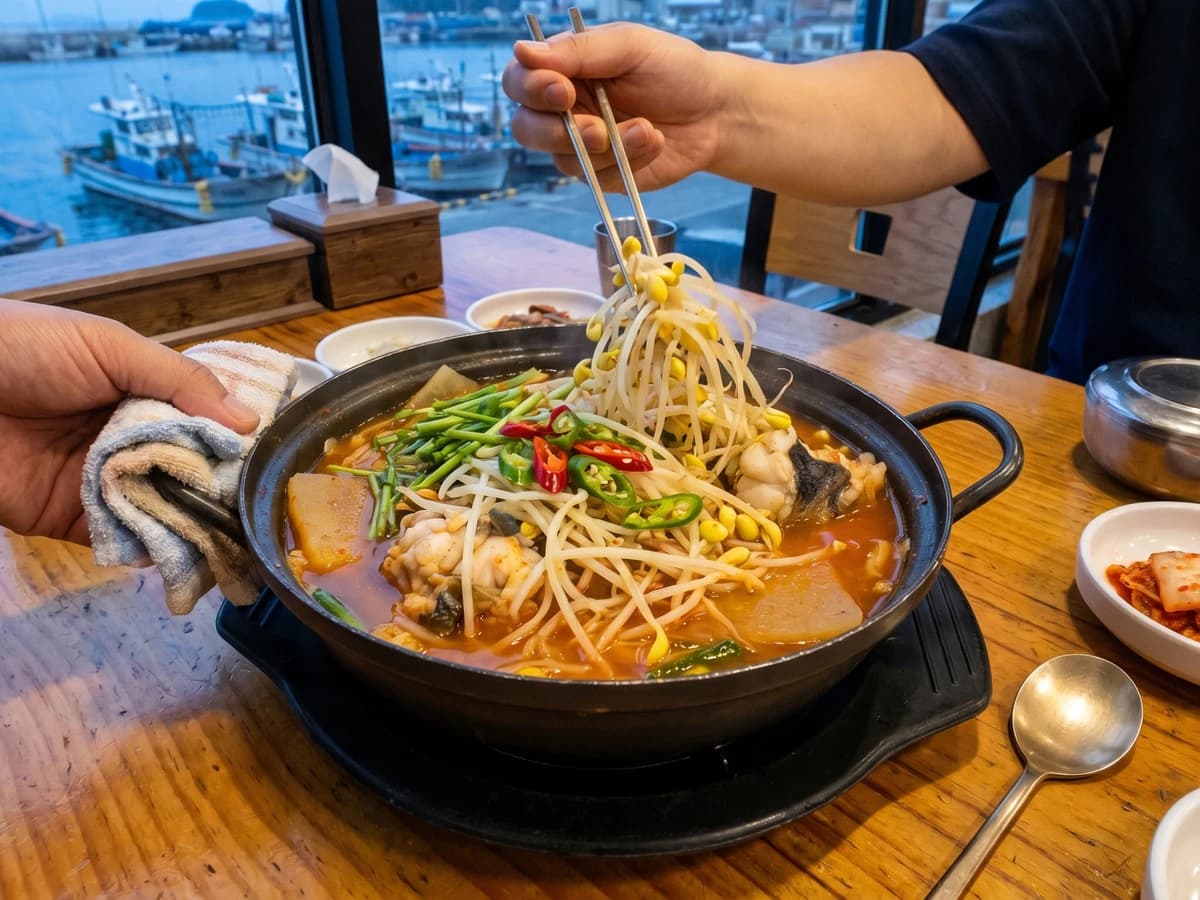
A Masan coast monkfish stew with firm white meat, gelatin at the bones, soybean sprouts for crunch, and a red broth seasoned to carry the fish, not bury it.

Chef Jeong-sun
A weeknight fish roe stew with radish and crown daisy in a clean spicy broth, where the whole success depends on adding the roe late enough that it sets tender, not chalky.

Chef Jeong-sun
Late-summer mallow leaves rubbed with salt until the bitter green water runs off, then simmered in a clean doenjang broth with dried shrimp, the quiet soup a Korean weeknight deserves.