Culinary Explorer

A cooking platform built around craft, culture, and the stories behind what we eat.
Discover Culinary Explorer
Imabari Tai-meshi (今治鯛めし, Ehime sea bream rice)

Imabari Tai-meshi (今治鯛めし, Ehime sea bream rice)

Created by

A whole sea bream, clear dashi, washed rice, and patience. Imabari tai-meshi looks grand at the table, but the fish at its prime does most of the work.

Side Dishes
Japanese
Special Occasion
Celebration
Dinner Party
35 min
Active Time
40 min cook1 hr 15 min total
Yield4 servings

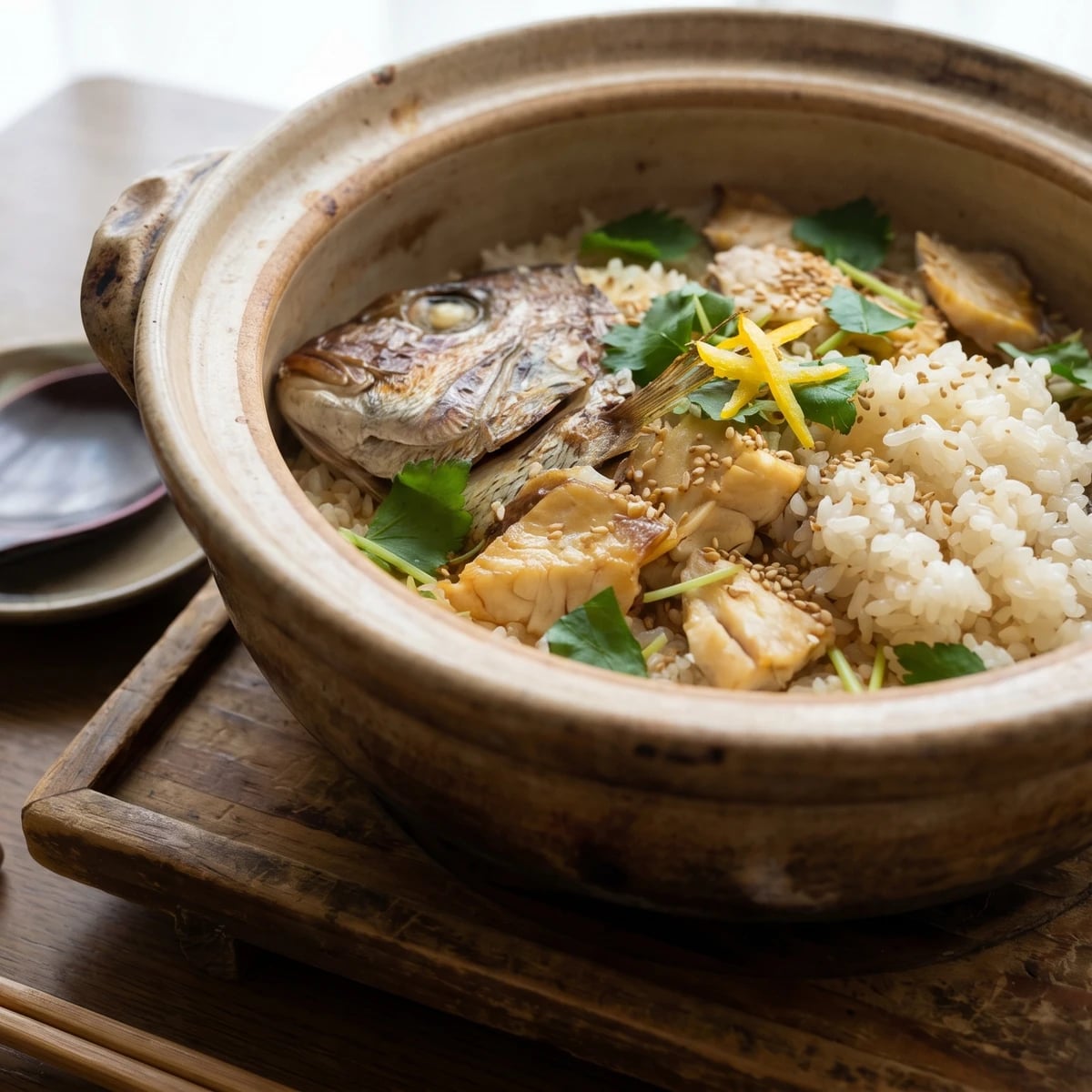
Awhole sea bream laid over rice looks like ceremony, because it is. The fish keeps its shape, the rice drinks the dashi beneath it, and when you lift the tai away and flake it back through, the pot becomes generous without ever becoming heavy. This is celebration food, but not difficult food. It only asks that you begin with the right fish.

Madai, red sea bream, is the keystone. In spring, when it is called sakura-dai for its pale blossom color, it has the clean sweetness this dish needs. In the Seto Inland Sea, we cook it almost plainly because a good fish doesn't need rescue. Salt it first so the flesh firms and seasons through, then give it a brief grilling or hard sear before it meets the rice. That little browning keeps the skin fragrant and prevents the pot from tasting flat. No theater. Just the part that matters.

The rice cooks in dashi, soy, sake, and a little mirin, our quiet two-seasoning foundation doing its work under the lid. The sea bream rests on top so its juices fall into the grains without breaking the fish apart. When the rice is done, wait. Ten minutes of resting finishes the center, settles the seasoning, and lets the bottom loosen. Then remove the bones carefully, flake the fish, and fold it back with a light hand. Leave some pieces visible. Tai-meshi should still remember the fish it came from.

Ehime has two famous styles of tai-meshi: the southern Uwajima version serves raw sea bream with a soy and egg sauce over hot rice, while the Imabari and Matsuyama area is known for cooking a whole sea bream together with seasoned rice. The dish is tied to the Seto Inland Sea, where madai has long been abundant and prized for celebrations because the word tai echoes medetai, meaning auspicious. Imabari's version belongs to that northern Ehime table, where the spectacle is the whole fish opened at the pot, not a sauce poured over it.

The technique, the tradition, and the story behind every dish.

Discover Culinary Explorer

Ingredients

Japanese short-grain rice

Quantity

2 cups

whole madai (red sea bream)

Quantity

1 fish (about 600 to 800g)

scaled, gutted, rinsed, and dried

sea salt

Quantity

1 1/2 teaspoons

divided

ichiban dashi

Quantity

2 1/4 cups

cooled

konbu (dried kelp) (optional)

Quantity

1 small piece (about 5g)

usukuchi shōyu (light soy sauce)

Quantity

2 tablespoons

sake

Quantity

2 tablespoons

mirin

Quantity

1 tablespoon

ginger juice (optional)

Quantity

1 teaspoon

freshly grated and squeezed

mitsuba leaves

Quantity

2 tablespoons

cut into 1-inch lengths

toasted white sesame seeds

Quantity

1 tablespoon

yuzu peel (optional)

Quantity

a few thin strips

Equipment Needed

  • Donabe rice pot, or a rice cooker
  • Fish grill, broiler, or wide skillet
  • Rice paddle (shamoji)
  • Fish tweezers or clean chopsticks for removing bones
  • Fine-mesh strainer lined with cloth for dashi

Instructions

  1. 1

    Wash the rice

    Wash the rice in several changes of cold water, turning it gently with your hand until the water runs mostly clear. Drain it in a sieve for 20 to 30 minutes. This is not fussing over rice for sport. Washing removes loose starch so the grains cook distinct, and draining lets them take in the seasoned dashi evenly instead of turning wet at the surface and hard at the center.

    Short-grain rice needs that resting drain. Skip it and the timing becomes guesswork, which is a poor way to treat a good fish.
  2. 2

    Salt the sea bream

    Pat the sea bream very dry, inside and out. Sprinkle it with 1 teaspoon of the salt, including a little inside the belly, and leave it on a rack for 20 minutes. The salt seasons the flesh and draws out surface moisture, so the skin can brown instead of steaming against the grill. Wipe away any beads of moisture before cooking.

    Fresh fish should smell clean and faintly sweet, never strong. If the fish isn't good enough to cook plainly, change the dish. Nothing hidden.
  3. 3

    Brown the fish

    Heat a fish grill, broiler, or wide skillet. Grill or sear the sea bream over medium-high heat just until the skin is lightly browned on both sides, 2 to 3 minutes per side. You are not cooking it through. You are giving the skin fragrance and tightening the surface so the fish holds together when it sits on the rice.

    If the tail is thin, wrap it in a small piece of foil while browning. It protects the shape, and this dish is partly about carrying the whole fish to the table with dignity.
  4. 4

    Season the dashi

    In the rice cooker bowl or a heavy donabe, combine the cooled dashi, usukuchi shōyu, sake, mirin, the remaining 1/2 teaspoon salt, and the ginger juice if using. Taste it before the rice goes in. It should be slightly more seasoned than a broth you would drink, because the rice will soften it as it cooks.

    Use clear homemade dashi here. Instant powder gives salt before depth, and in tai-meshi the stock is not background. It is what the rice becomes.
  5. 5

    Set the pot

    Add the drained rice to the seasoned dashi and level it gently. Lay the small piece of konbu on top if using, then set the browned sea bream over the rice. Keep the fish above the grains rather than burying it. As the rice cooks, the fish juices fall down into the pot while the flesh stays intact enough to lift cleanly.

    A donabe, an earthenware rice pot, gives a beautiful table presentation. A rice cooker works honestly too. The method matters more than the romance of the vessel.
  6. 6

    Cook the rice

    Cook on the regular white-rice setting, or set the covered donabe over medium heat until it comes to a steady boil, then lower the heat and cook for 13 minutes. Turn off the heat and let it rest, still covered, for 10 minutes. The rest is part of the cooking. It finishes the grains, settles the moisture, and keeps the fish from tearing when you move it.

    Don't keep lifting the lid to inspect your courage. Each look releases heat and throws off the rice.
  7. 7

    Bone and fold

    Lift the sea bream onto a tray. Remove the head, backbone, ribs, pin bones, and any small bones around the fins with chopsticks or tweezers, then flake the flesh into generous pieces. Discard the konbu. Return the fish to the rice and fold gently from the bottom with a rice paddle, cutting through the grains rather than mashing them. Keep some flakes large enough to see.

    The one danger in this dish is bones hidden in the rice. Work slowly now. A celebration should not require dental bravery.
  8. 8

    Finish and serve

    Scatter the mitsuba and sesame over the rice, with a few threads of yuzu peel if you have them. Serve from the pot or mound restrained portions in individual bowls. The rice should be glossy and separate, scented with sea bream and dashi, with the fish carried through in clean flakes rather than paste.

Chef Tips

  • Ask the fishmonger for whole madai that came in today, scaled and gutted but not filleted. The eyes should be clear, the gills bright red, and the skin glistening fresh. Sourcing first, always.
  • If whole madai is unavailable, use a smaller whole sea bream or porgy from clean cold water. Fillets will make good rice, but not this dish in the same way, because the bones and skin help season the pot and the whole fish is part of the occasion.
  • Make ichiban dashi for this, not a powdered substitute. Wipe the konbu, steep it slowly, pull it before the boil, then add katsuobushi off the heat and strain without squeezing. Clarity is the flavor here.
  • A donabe is the handsome vessel, but a rice cooker is a sensible stand-in. Brown the fish first either way. That step gives the rice a roasted fragrance a raw fish cannot provide.
  • Fold the fish back into the rice lightly. Pressing with the paddle breaks the grains and turns a celebratory pot into fish porridge, which is not the triumph we're after.

Advance Preparation

  • The ichiban dashi can be made up to 2 days ahead and refrigerated. Bring it back to cool room temperature before measuring it for the rice.
  • The rice can be washed and drained 30 minutes before cooking. Do not leave washed rice sitting wet for hours, or the grains take in water unevenly.
  • The sea bream can be scaled, gutted, salted, and refrigerated on a rack up to 4 hours ahead. Wipe it dry again before browning.
  • Tai-meshi is best served soon after cooking. Leftovers keep 1 day refrigerated and make a fine ochazuke with hot tea or light dashi poured over, but the first serving is the dish at its clearest.

Frequently Asked Questions

Nutrition Information

1 serving (about 320g)

Calories
500 calories
Total Fat
6 g
Saturated Fat
1 g
Trans Fat
0 g
Unsaturated Fat
4 g
Cholesterol
50 mg
Sodium
1450 mg
Total Carbohydrates
84 g
Dietary Fiber
2 g
Sugars
2 g
Protein
25 g

Note: Chef personas and recipes are created with AI assistance. Cook with care: follow safe food-handling practices, check doneness with a thermometer when needed, and adapt for allergies and your kitchen.

Where cooking meets culture.

Culinary guides, cultural storytelling, and the editorial depth that makes cooking meaningful.

Discover Culinary Explorer

More from Rice Sides: Takikomi Gohan & Sekihan

Browse the full collection